



Os vírus da gripe são membros da família Orthomyxoviridae Orthomyxoviridae A family of RNA viruses causing influenza and other diseases. There are five recognized genera: influenzavirus a; influenzavirus b; influenzavirus c; isavirus; and thogotovirus. Influenza Viruses/Influenza e os organismos causadores da gripe, uma doença respiratória febril altamente contagiosa. Existem 3 vírus influenza Influenza Influenza viruses are members of the Orthomyxoviridae family and the causative organisms of influenza, a highly contagious febrile respiratory disease. There are 3 primary influenza viruses (A, B, and C) and various subtypes, which are classified based on their virulent surface antigens, hemagglutinin (HA) and neuraminidase (NA). Influenza typically presents with a fever, myalgia, headache, and symptoms of an upper respiratory infection. Influenza Viruses/Influenza primários (A, B e C) e vários subtipos, classificados com base nos seus antigénios de superfície, a hemaglutinina ( HA HA Hemolytic anemia (HA) is the term given to a large group of anemias that are caused by the premature destruction/hemolysis of circulating red blood cells (RBCs). Hemolysis can occur within (intravascular hemolysis) or outside the blood vessels (extravascular hemolysis). Hemolytic Anemia) e a neuraminidase Neuraminidase An enzyme that catalyzes the hydrolysis of alpha-2, 3, alpha-2, 6-, and alpha-2, 8-glycosidic linkages (at a decreasing rate, respectively) of terminal sialic residues in oligosaccharides, glycoproteins, glycolipids, colominic acid, and synthetic substrate. Antivirals for Influenza (NA). A gripe apresenta-se geralmente com febre, mialgias, cefaleias e sintomas de uma infeção respiratória superior. Também podem ocorrer sintomas de gastroenterite, habitualmente nas crianças. A gripe é geralmente uma condição autolimitada, embora a pneumonia Pneumonia Pneumonia or pulmonary inflammation is an acute or chronic inflammation of lung tissue. Causes include infection with bacteria, viruses, or fungi. In more rare cases, pneumonia can also be caused through toxic triggers through inhalation of toxic substances, immunological processes, or in the course of radiotherapy. Pneumonia vírica ou bacteriana secundária possa complicar a doença. O tratamento é habitualmente de suporte, embora os inibidores da NA possam ser úteis se iniciados dentro de 48 horas após a infeção. A prevenção baseia-se na vacinação anual da população e na prática de uma boa higiene.
Last updated: Dec 15, 2025
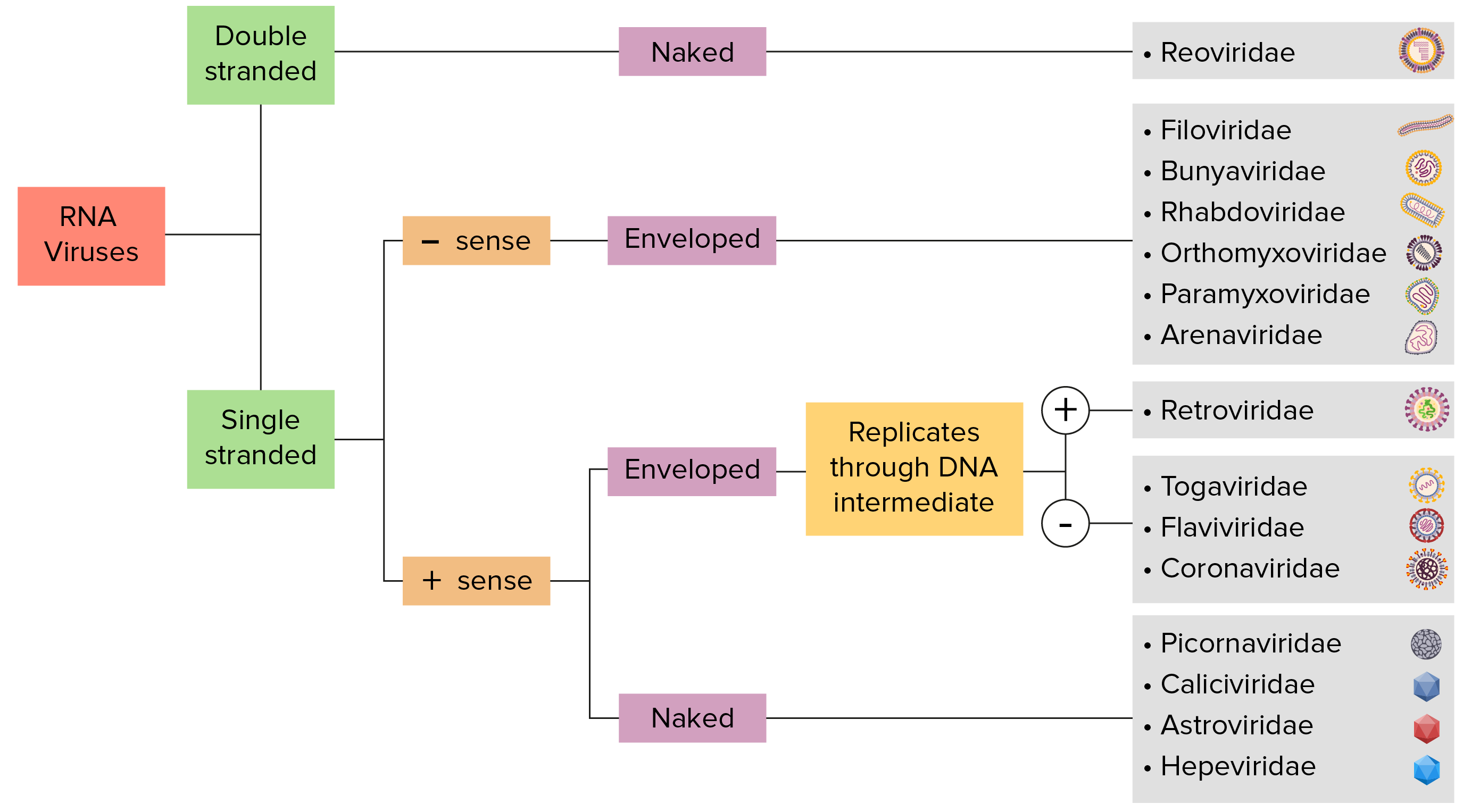
Identificação dos vírus de RNA:
Os vírus podem ser classificados de várias formas. A maioria dos vírus terá, no entanto, um genoma formado por DNA ou por RNA. Os vírus com um genoma de RNA podem ser melhor caracterizados por um RNA de cadeia simples ou dupla. Os vírus com invólucro são cobertos por uma fina camada de membrana celular (geralmente retirada da célula hospedeira). Se o invólucro estiver ausente, os vírus são chamados de vírus “nus”. Os vírus com genomas de cadeia simples são considerados vírus de “sentido positivo” se o genoma for usado diretamente como RNA mensageiro (mRNA), que é traduzido para proteínas. Os vírus de “sentido negativo” de cadeia simples usam a RNA polimerase dependente de RNA, uma enzima vírica, para transcrever o seu genoma em RNA mensageiro.
O vírus da gripe é um membro da família Orthomyxoviridae Orthomyxoviridae A family of RNA viruses causing influenza and other diseases. There are five recognized genera: influenzavirus a; influenzavirus b; influenzavirus c; isavirus; and thogotovirus. Influenza Viruses/Influenza.
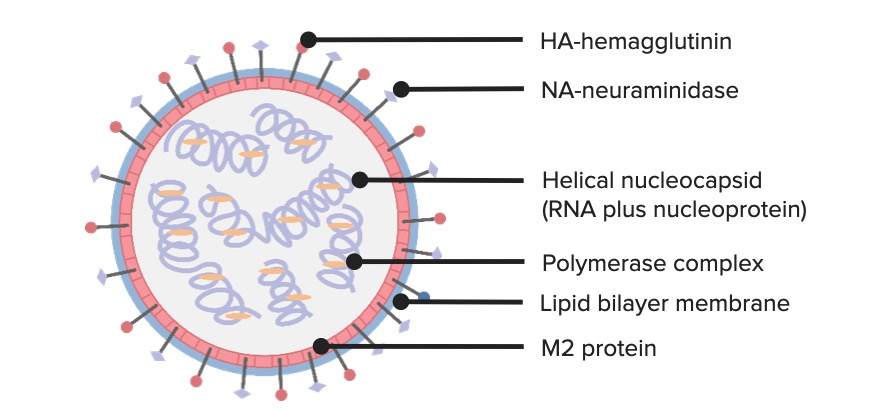
Diagrama da estrutura do vírus influenza
Imagem de Lecturio. Licença: CC BY-NC-SA 4.0Os vírus
influenza
Influenza
Influenza viruses are members of the Orthomyxoviridae family and the causative organisms of influenza, a highly contagious febrile respiratory disease. There are 3 primary influenza viruses (A, B, and C) and various subtypes, which are classified based on their virulent surface antigens, hemagglutinin (HA) and neuraminidase (NA). Influenza typically presents with a fever, myalgia, headache, and symptoms of an upper respiratory infection.
Influenza Viruses/Influenza causam uma doença respiratória febril conhecida como gripe.
Existem 3 espécies distintas clinicamente relevantes do vírus:
| Características | Influenza A Influenza A Antivirals for Influenza | Influenza Influenza Influenza viruses are members of the Orthomyxoviridae family and the causative organisms of influenza, a highly contagious febrile respiratory disease. There are 3 primary influenza viruses (A, B, and C) and various subtypes, which are classified based on their virulent surface antigens, hemagglutinin (HA) and neuraminidase (NA). Influenza typically presents with a fever, myalgia, headache, and symptoms of an upper respiratory infection. Influenza Viruses/Influenza B | Influenza Influenza Influenza viruses are members of the Orthomyxoviridae family and the causative organisms of influenza, a highly contagious febrile respiratory disease. There are 3 primary influenza viruses (A, B, and C) and various subtypes, which are classified based on their virulent surface antigens, hemagglutinin (HA) and neuraminidase (NA). Influenza typically presents with a fever, myalgia, headache, and symptoms of an upper respiratory infection. Influenza Viruses/Influenza C |
|---|---|---|---|
| Hospedeiros naturais |
|
Apenas humanos |
|
| Epidemiologia | Shift e drift antigénico | Apenas drift antigénico | Apenas drift antigénico |
| Manifestações | Epidemias e pandemias de grandes dimensões, com mortalidade significativa | Não causa pandemias; doentes idosos e imunocomprometidos | Doença leve sem sazonalidade |
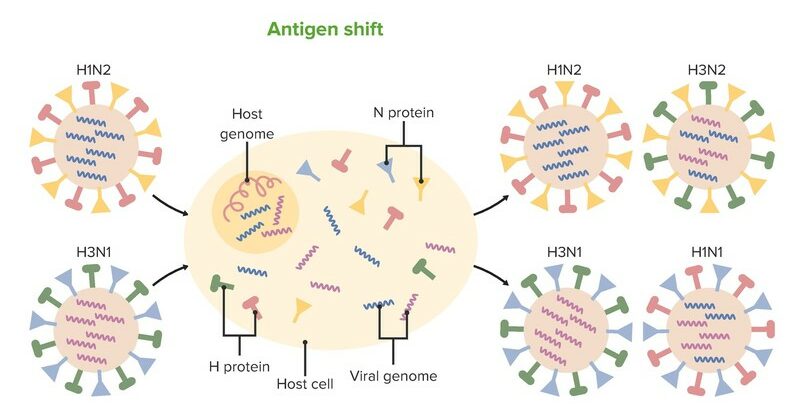
Mudança antigénica (shift):
Duas ou mais estirpes diferentes de um vírus combinam-se para formar um novo subtipo radicalmente diferente.
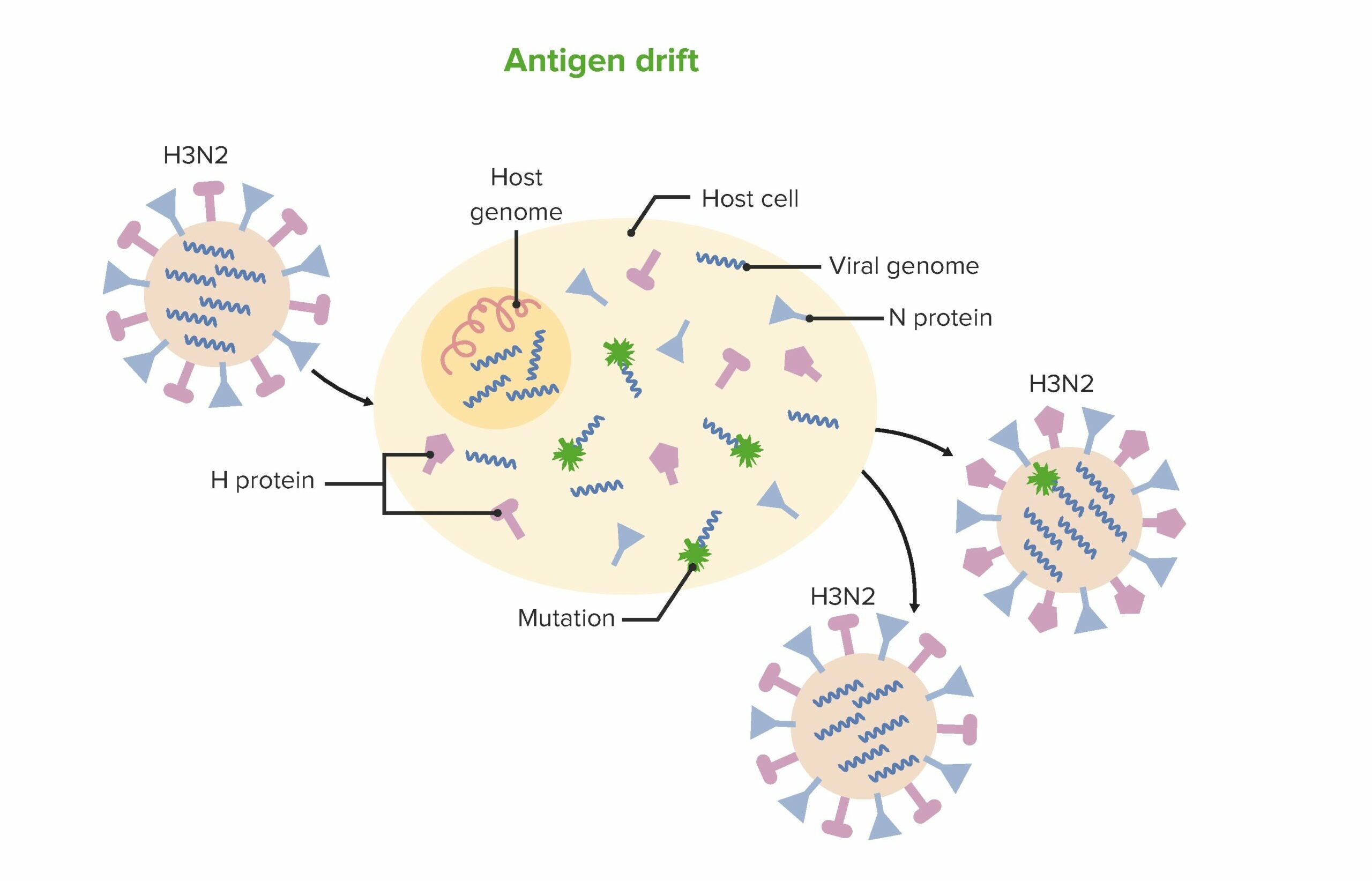
Deriva antigénica (drift):
Acumulam-se mutações nos genes virais que codificam proteínas da sua superfície, resultando em novos locais antigénicos. As alterações são geralmente pequenas.
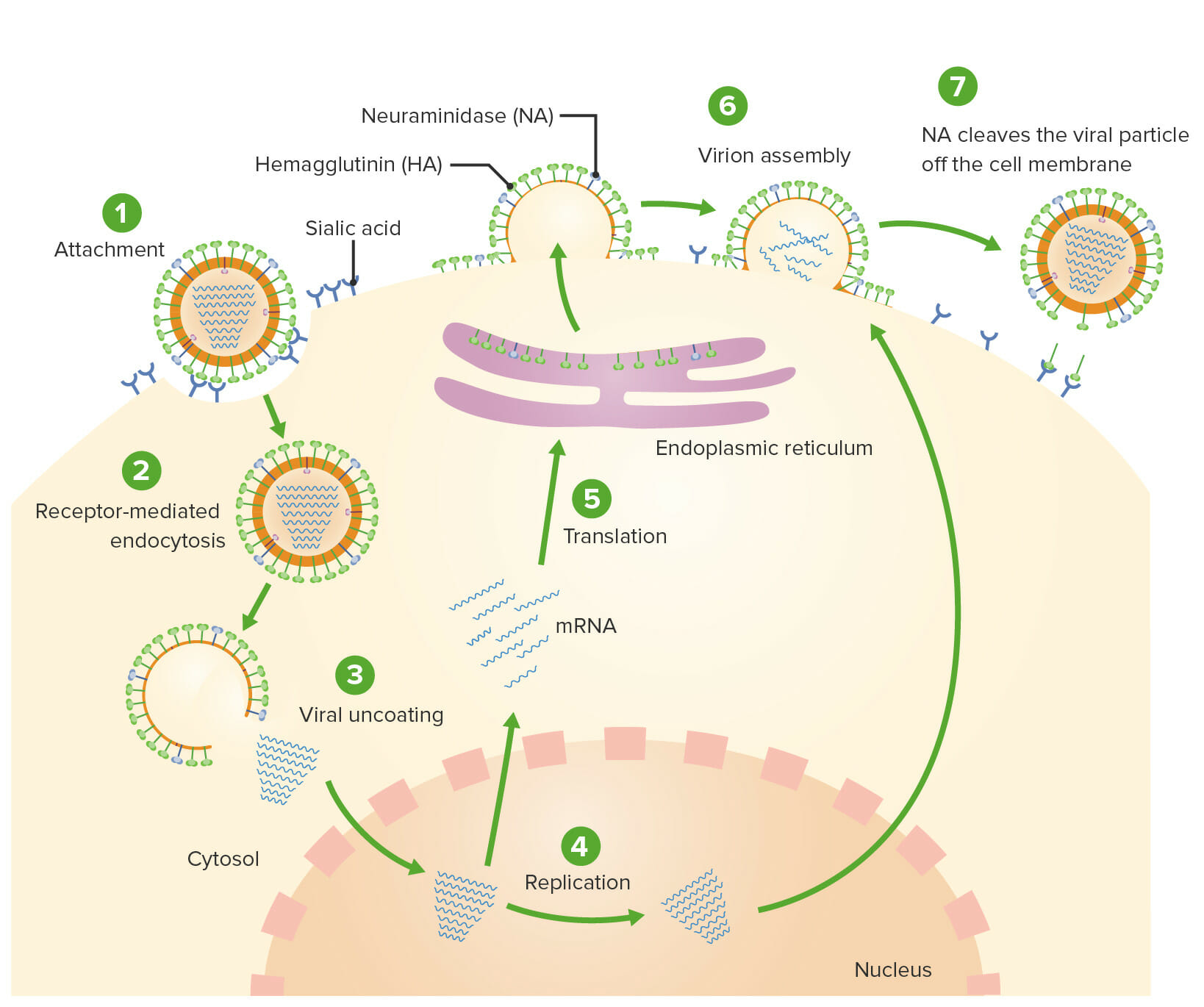
Replicação do vírus influenza:
1: Uma partícula viral liga as suas hemaglutininas (HA) aos recetores com ácido siálico da superfície das células epiteliais respiratórias.
2: A partícula viral é internalizada via endocitose mediada por recetor.
3: Uma vez dentro da célula, a proteína M2 atua como um canal iónico, permitindo um influxo de partículas de hidrogénio, o que resulta na descapsulação do vírus.
4: O RNA viral move-se então para o núcleo da célula, onde é replicado e o RNA mensageiro é sintetizado.
5: O mRNA é então traduzido em novas proteínas virais utilizando a maquinaria celular.
6: As partículas virais e o RNA recém-replicado são trazidos para a superfície da célula e montados em viriões.
7: À medida que oo novos vírus saem das células epiteliais respiratórias por gemulação, a hemaglutinina liga-se novamente aos recetores com ácido siálico. A neuraminidase (NA) cliva, então, a nova partícula viral da célula epitelial respiratória para que esta possa infetar as células próximas.
A gripe A e B causam os mesmos padrões de doença.
Adultos:
Crianças:
O diagnóstico da infeção por influenza Influenza Influenza viruses are members of the Orthomyxoviridae family and the causative organisms of influenza, a highly contagious febrile respiratory disease. There are 3 primary influenza viruses (A, B, and C) and various subtypes, which are classified based on their virulent surface antigens, hemagglutinin (HA) and neuraminidase (NA). Influenza typically presents with a fever, myalgia, headache, and symptoms of an upper respiratory infection. Influenza Viruses/Influenza (gripe) é geralmente clínico; no entanto, existem testes Testes Gonadal Hormones diagnósticos rápidos que podem ser úteis se os resultados influenciarem a abordagem.
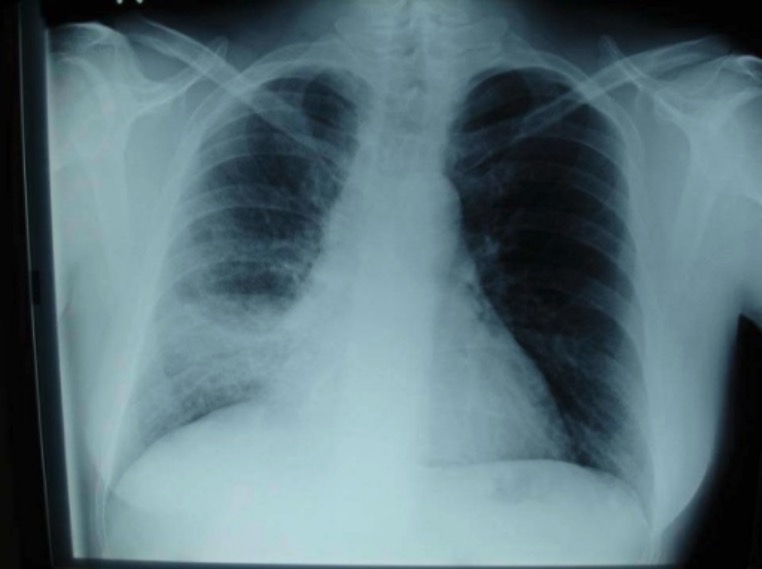
Radiografia de tórax que mostra uma pneumonia bacteriana no lobo inferior direito
Imagem: “Chest radiography” do Department of Critical Care Medicine, University Hospital Thessaly, Larissa, Greece. Licença: CC BY 2.0
Radiografia AP em decúbito dorsal de um doente entubado que mostra consolidações irregulares em ambos os campos pulmonares, mais proeminentes à esquerda devido a uma pneumonia adquirida no hospital
Imagem: “AP supine radiograph” do King Fahad Hospital, King Abdulaziz Medical City, Riyadh, Saudi Arabia. Licença: CC BY 2.0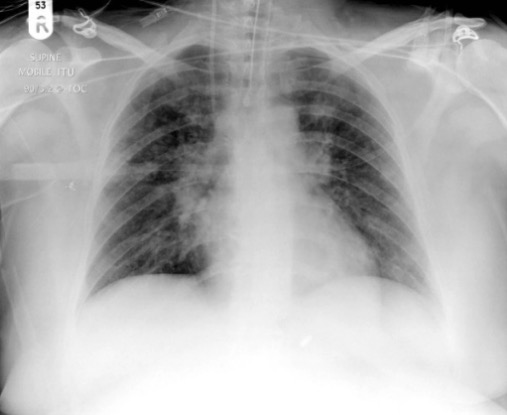
Radiografia de tórax de um doente com pneumonia vírica que mostra infiltrados intersticiais bilaterais difusos
Imagem: “Chest radiograph” do Department of Infectious Diseases, Leicester Royal Infirmary, Level 6 Windsor Building, Leicester, LE1 5WW, UK. Licença: CC BY 2.0A maioria dos doentes necessita apenas de cuidados de suporte e recupera sem complicações. São usados fármacos antivíricos nos doentes hospitalizados ou de alto risco.