



A febre Q é uma infeção bacteriana zoonótica causada por Coxiella burnetii Coxiella burnetii A species of gram-negative bacteria that grows preferentially in the vacuoles of the host cell. It is the etiological agent of q fever. Coxiella/Q Fever. A transmissão ocorre sobretudo através da inalação de aerossóis contaminados e exposição a produtos de animais infetados. A apresentação clínica é variável, frequentemente na forma de doença ligeira com sintomas semelhantes aos da gripe. Outras manifestações incluem pneumonia Pneumonia Pneumonia or pulmonary inflammation is an acute or chronic inflammation of lung tissue. Causes include infection with bacteria, viruses, or fungi. In more rare cases, pneumonia can also be caused through toxic triggers through inhalation of toxic substances, immunological processes, or in the course of radiotherapy. Pneumonia, hepatite, endocardite e meningite assética. A doença pode evoluir para crónica numa pequena percentagem de pacientes. O diagnóstico baseia-se numa elevada suspeita clínica associada a testes Testes Gonadal Hormones serológicos e PCR PCR Polymerase chain reaction (PCR) is a technique that amplifies DNA fragments exponentially for analysis. The process is highly specific, allowing for the targeting of specific genomic sequences, even with minuscule sample amounts. The PCR cycles multiple times through 3 phases: denaturation of the template DNA, annealing of a specific primer to the individual DNA strands, and synthesis/elongation of new DNA molecules. Polymerase Chain Reaction (PCR). A antibioterapia é a base do tratamento.
Last updated: Jul 10, 2026
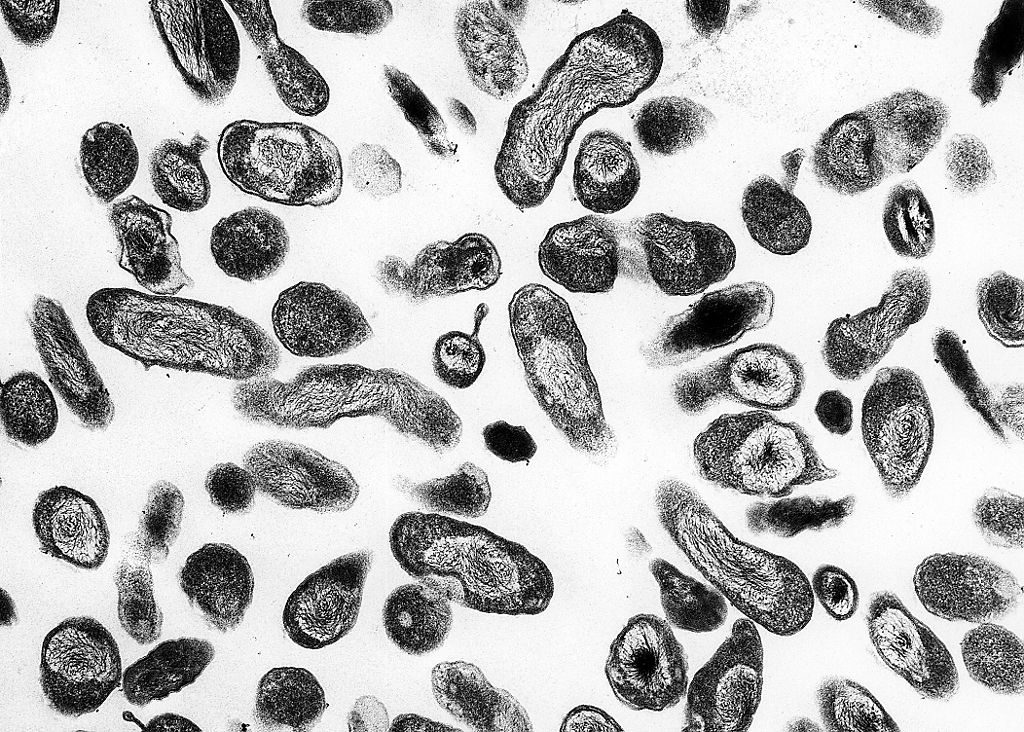
Coxiella em microscópio de luz
Imagem: “Coxiella burnetii” por NIAID. Licença: Domínio Público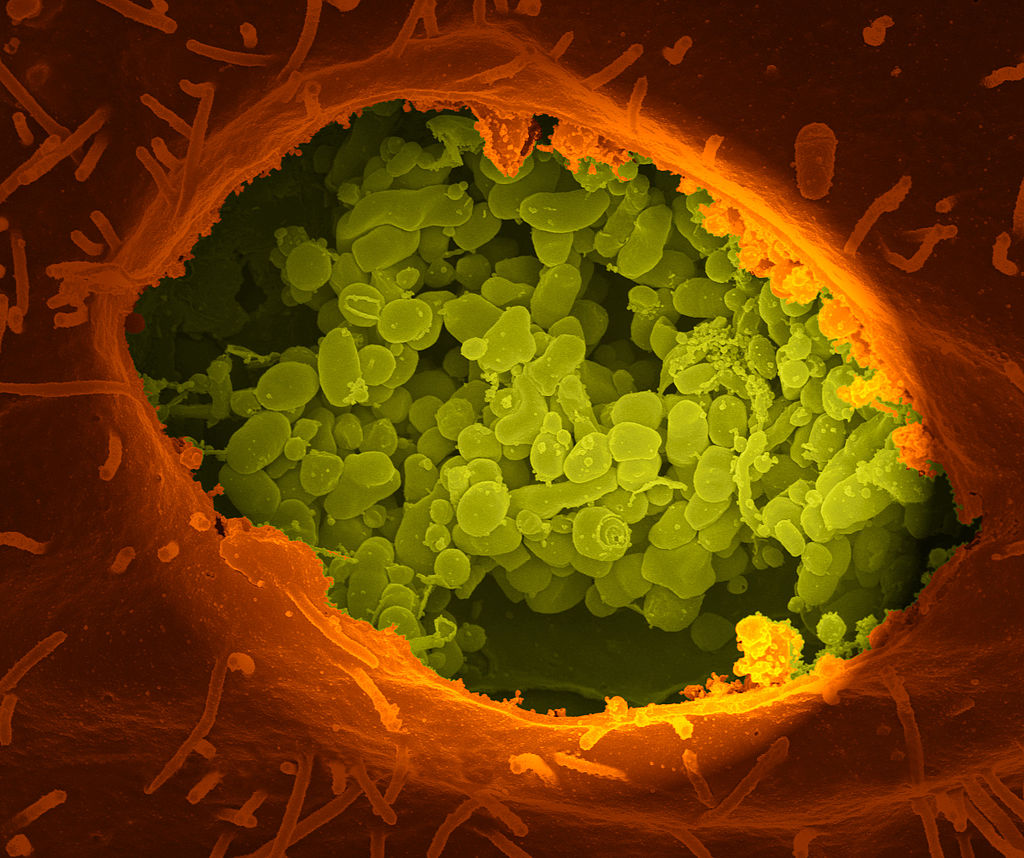
Fratura seca de uma célula Vero onde se visualiza o conteúdo de um vacúolo com Coxiella burnetii (cor verde) em crescimento
Imagem: “A dry fracture of a Vero cell” por National Institutes of Health (NIH). Licença: Domínio PúblicoA espécie Coxiella burnetii Coxiella burnetii A species of gram-negative bacteria that grows preferentially in the vacuoles of the host cell. It is the etiological agent of q fever. Coxiella/Q Fever causa a febre Q.
Variação de fase antigénica:
Variantes morfológicas:
Mecanismos de escape à morte intracelular:
Os pacientes podem apresentar uma ampla variedade de sintomas que variam em gravidade de doença assintomática a grave.
O período de incubação para infecção aguda é de aproximadamente 20 dias. Os pacientes podem apresentar qualquer uma das seguintes condições:
A infeção crónica pode manifestar-se meses ou anos após uma infeção aguda.
A febre Q na gravidez está associada a:
A apresentação clínica da febre Q é inespecífica; portanto, o diagnóstico depende de um alto índice de suspeição, baseado nos fatores de risco do paciente.
Exames de diagnóstico:
Dados de suporte:
A antibioticoterapia inclui:
| Microorganismo | Coxiella burnetii Coxiella burnetii A species of gram-negative bacteria that grows preferentially in the vacuoles of the host cell. It is the etiological agent of q fever. Coxiella/Q Fever | Legionella pneumophila Legionella pneumophila A species of gram-negative, aerobic bacteria that is the causative agent of legionnaires’ disease. It has been isolated from numerous environmental sites as well as from human lung tissue, respiratory secretions, and blood. Legionella/Legionellosis | Francisella tularensis Francisella Tularensis Aminoglycosides |
|---|---|---|---|
| Características |
|
|
|
| Reservatório |
|
Aquático |
|
| Transmissão |
|
|
|
| Apresentação clínica | Febre Q |
|
Tularemia |
| Diagnóstico |
|
|
|
| Tratamento | Doxiciclina |
|
Estreptomicina |
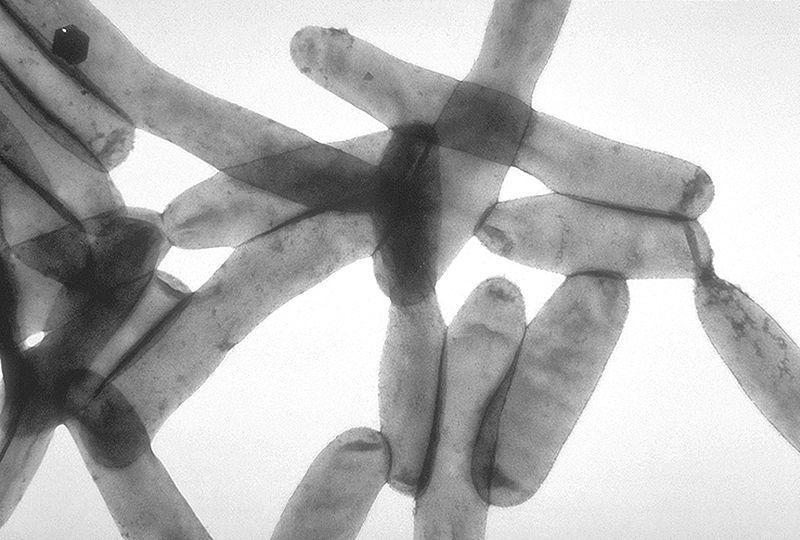
Observação microscópica de Legionella pneumophila
Imagem: “Legionella pneumophila” por CDC. Licença: Domínio Público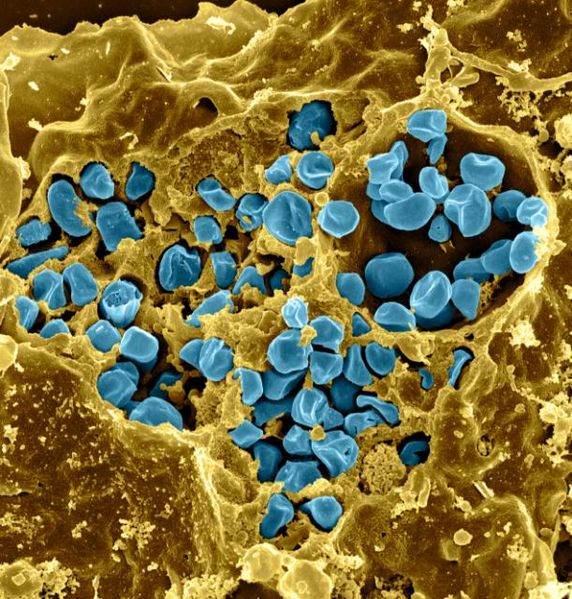
Fratura seca de um macrófago infetado por Francisella tularensis (cor azul)
Imagem: “Macrophage Infected with Francisella tularensis Bacteria” por NIAID. Licença: CC BY 2.0