


Complicações Crónicas da Diabetes

A diabetes Diabetes Diabetes mellitus (DM) is a metabolic disease characterized by hyperglycemia and dysfunction of the regulation of glucose metabolism by insulin. Type 1 DM is diagnosed mostly in children and young adults as the result of autoimmune destruction of β cells in the pancreas and the resulting lack of insulin. Type 2 DM has a significant association with obesity and is characterized by insulin resistance. Diabetes Mellitus mellitus ( DM DM Diabetes mellitus (DM) is a metabolic disease characterized by hyperglycemia and dysfunction of the regulation of glucose metabolism by insulin. Type 1 DM is diagnosed mostly in children and young adults as the result of autoimmune destruction of β cells in the pancreas and the resulting lack of insulin. Type 2 DM has a significant association with obesity and is characterized by insulin resistance. Diabetes Mellitus) é uma doença metabólica crónica caracterizada por hiperglicemia persistente em consequência do défice de secreção de insulina ( DM DM Diabetes mellitus (DM) is a metabolic disease characterized by hyperglycemia and dysfunction of the regulation of glucose metabolism by insulin. Type 1 DM is diagnosed mostly in children and young adults as the result of autoimmune destruction of β cells in the pancreas and the resulting lack of insulin. Type 2 DM has a significant association with obesity and is characterized by insulin resistance. Diabetes Mellitus tipo 1), resistência à insulina ( DM DM Diabetes mellitus (DM) is a metabolic disease characterized by hyperglycemia and dysfunction of the regulation of glucose metabolism by insulin. Type 1 DM is diagnosed mostly in children and young adults as the result of autoimmune destruction of β cells in the pancreas and the resulting lack of insulin. Type 2 DM has a significant association with obesity and is characterized by insulin resistance. Diabetes Mellitus tipo 2) ou ambos (latent autoimmune diabetes Diabetes Diabetes mellitus (DM) is a metabolic disease characterized by hyperglycemia and dysfunction of the regulation of glucose metabolism by insulin. Type 1 DM is diagnosed mostly in children and young adults as the result of autoimmune destruction of β cells in the pancreas and the resulting lack of insulin. Type 2 DM has a significant association with obesity and is characterized by insulin resistance. Diabetes Mellitus in adults ( LADA LADA Autoimmune diabetes in adults with slowly progressive pancreatic beta cell failure and the presence of circulating autoantibodies to pancreatic islets cell antigens. Diabetes Mellitus)). O objetivo do tratamento é prevenir o desenvolvimento de complicações crónicas graves e potencialmente incapacitantes provocadas por danos em vários órgãos. O controlo glicémico adequado a longo prazo é crucial na prevenção de complicações. As complicações macrovasculares incluem doença cardíaca, AVC e doença vascular periférica. A doença microvascular podem causar retinopatia, neuropatia, nefropatia ou doença cardíaca sintomática, que não são observadas durante teste de stress ou angiografia, utilizados para diagnosticar doença de grandes vasos.

Last updated: Dec 15, 2025

Editorial responsibility: Stanley Oiseth, Lindsay Jones, Evelin Maza

Descrição Geral

A diabetes Diabetes Diabetes mellitus (DM) is a metabolic disease characterized by hyperglycemia and dysfunction of the regulation of glucose metabolism by insulin. Type 1 DM is diagnosed mostly in children and young adults as the result of autoimmune destruction of β cells in the pancreas and the resulting lack of insulin. Type 2 DM has a significant association with obesity and is characterized by insulin resistance. Diabetes Mellitus mellitus ( DM DM Diabetes mellitus (DM) is a metabolic disease characterized by hyperglycemia and dysfunction of the regulation of glucose metabolism by insulin. Type 1 DM is diagnosed mostly in children and young adults as the result of autoimmune destruction of β cells in the pancreas and the resulting lack of insulin. Type 2 DM has a significant association with obesity and is characterized by insulin resistance. Diabetes Mellitus) é uma doença comum que pode provocar múltiplas complicações graves. O controlo glicémico a longo prazo é crucial para prevenir o desenvolvimento destas complicações.

  • Doença cardiovascular:
    • 60% de todos os indivíduos com diabetes Diabetes Diabetes mellitus (DM) is a metabolic disease characterized by hyperglycemia and dysfunction of the regulation of glucose metabolism by insulin. Type 1 DM is diagnosed mostly in children and young adults as the result of autoimmune destruction of β cells in the pancreas and the resulting lack of insulin. Type 2 DM has a significant association with obesity and is characterized by insulin resistance. Diabetes Mellitus morrem por doença cardiovascular.
    • Enfarte do miocárdio:
      • Homens: 3,7 vezes maior risco do que indivíduos não diabéticos
      • Mulheres: 5,9 vezes maior risco do que indivíduos não diabéticos
  • Nefropatia diabética/doença renal crónica (DRC):
    • A causa mais MAIS Androgen Insensitivity Syndrome comum de insuficiência renal nos EUA
    • Afeta 20%–30% dos indivíduos com diabetes Diabetes Diabetes mellitus (DM) is a metabolic disease characterized by hyperglycemia and dysfunction of the regulation of glucose metabolism by insulin. Type 1 DM is diagnosed mostly in children and young adults as the result of autoimmune destruction of β cells in the pancreas and the resulting lack of insulin. Type 2 DM has a significant association with obesity and is characterized by insulin resistance. Diabetes Mellitus
  • Retinopatia diabética:
    • Cerca de 90% dos casos de diabetes Diabetes Diabetes mellitus (DM) is a metabolic disease characterized by hyperglycemia and dysfunction of the regulation of glucose metabolism by insulin. Type 1 DM is diagnosed mostly in children and young adults as the result of autoimmune destruction of β cells in the pancreas and the resulting lack of insulin. Type 2 DM has a significant association with obesity and is characterized by insulin resistance. Diabetes Mellitus tipo 1 e 25% dos casos de diabetes Diabetes Diabetes mellitus (DM) is a metabolic disease characterized by hyperglycemia and dysfunction of the regulation of glucose metabolism by insulin. Type 1 DM is diagnosed mostly in children and young adults as the result of autoimmune destruction of β cells in the pancreas and the resulting lack of insulin. Type 2 DM has a significant association with obesity and is characterized by insulin resistance. Diabetes Mellitus tipo 2 desenvolvem retinopatia após 15 anos de doença.
    • A causa mais MAIS Androgen Insensitivity Syndrome comum de défice visual e cegueira em indivíduos com 25 a 74 anos nos EUA
    • Classificada como não proliferativa ou proliferativa conforme os achados da retina Retina The ten-layered nervous tissue membrane of the eye. It is continuous with the optic nerve and receives images of external objects and transmits visual impulses to the brain. Its outer surface is in contact with the choroid and the inner surface with the vitreous body. The outermost layer is pigmented, whereas the inner nine layers are transparent. Eye: Anatomy ao exame
  • Neuropatia:
    • No momento do diagnóstico, cerca de 10%–20% casos já apresentam algum grau de neuropatia periférica.
    • Prevalência após 10 anos do diagnóstico: cerca de 41%
    • Classificação:

Fisiopatologia

As complicações crónicas da diabetes Diabetes Diabetes mellitus (DM) is a metabolic disease characterized by hyperglycemia and dysfunction of the regulation of glucose metabolism by insulin. Type 1 DM is diagnosed mostly in children and young adults as the result of autoimmune destruction of β cells in the pancreas and the resulting lack of insulin. Type 2 DM has a significant association with obesity and is characterized by insulin resistance. Diabetes Mellitus apresentam processos fisiopatológicos únicos e dependem do sistema orgânico atingido.

Cardiovascular

  • Aterosclerose:
    • Disfunção endotelial:
      • A hiperglicemia provoca o aumento da produção de espécies de radicais livres mitocondriais → níveis reduzidos de NO
      • O NO diminuído provoca vasoconstrição e redução do fluxo sanguíneo, conduzindo a danos nos órgãos-alvo.
    • Aumento da inflamação: a diabetes Diabetes Diabetes mellitus (DM) is a metabolic disease characterized by hyperglycemia and dysfunction of the regulation of glucose metabolism by insulin. Type 1 DM is diagnosed mostly in children and young adults as the result of autoimmune destruction of β cells in the pancreas and the resulting lack of insulin. Type 2 DM has a significant association with obesity and is characterized by insulin resistance. Diabetes Mellitus é um estado pró-inflamatório → risco conhecido de aterosclerose
  • Doença arterial periférica: acumulação de lípidos nos vasos sanguíneos → vasoconstrição e redução do fluxo sanguíneo, levando a danos nos órgãos-alvo
  • Doença macrovascular:
    • Coração: enfarte do miocárdio
    • Cérebro: acidente vascular cerebral (AVC), demência vascular
    • Membros inferiores: doença vascular periférica/doença arterial periférica
  • Doença microvascular:
    • Olhos: retinopatia diabética
    • Pés: neuropatia diabética
    • Estômago: gastroparesia
    • Intestino: isquemia mesentérica
    • Rim: nefropatia diabética/DRC
    • Genitais: disfunção erétil

Renal

Existem várias formas de doença renal na diabetes Diabetes Diabetes mellitus (DM) is a metabolic disease characterized by hyperglycemia and dysfunction of the regulation of glucose metabolism by insulin. Type 1 DM is diagnosed mostly in children and young adults as the result of autoimmune destruction of β cells in the pancreas and the resulting lack of insulin. Type 2 DM has a significant association with obesity and is characterized by insulin resistance. Diabetes Mellitus, incluindo lesões glomerulares não clássicas e doença tubulointersticial.
  • “Doença renal diabética” é um diagnóstico clínico baseado na gravidade da albuminúria, TFG ou ambos, em indivíduos com diabetes Diabetes Diabetes mellitus (DM) is a metabolic disease characterized by hyperglycemia and dysfunction of the regulation of glucose metabolism by insulin. Type 1 DM is diagnosed mostly in children and young adults as the result of autoimmune destruction of β cells in the pancreas and the resulting lack of insulin. Type 2 DM has a significant association with obesity and is characterized by insulin resistance. Diabetes Mellitus.
  • Rins: Depósitos na membrana capilar causam arteriosclerose hialina.
  • Nefropatia diabética/DRC:
    • Alterações mesangiais: aumento da permeabilidade e hiperfiltração
    • Lesões vasculares: arteriolosclerose, especialmente nas arteríolas eferentes
    • Lesões glomerulares:
    • Lesões tubulares: deposição tubular de glicogénio

Neurológico

  • A hiperglicemia provoca glicação de proteínas do axónio com subsequente desenvolvimento de neuropatia nos nervos periféricos.
  • Neuropatia:
    • Arteriolosclerose de arteríolas endoneurais resultando em isquemia e dano neuronal
    • Stress oxidativo e dano osmótico

Apresentação Clínica

Doença cardiovascular

  • Em indivíduos com diabetes Diabetes Diabetes mellitus (DM) is a metabolic disease characterized by hyperglycemia and dysfunction of the regulation of glucose metabolism by insulin. Type 1 DM is diagnosed mostly in children and young adults as the result of autoimmune destruction of β cells in the pancreas and the resulting lack of insulin. Type 2 DM has a significant association with obesity and is characterized by insulin resistance. Diabetes Mellitus, o enfarte do miocárdio pode apresentar-se de forma atípica devido à neuropatia diabética concomitante, em vez da apresentação típica com dor torácica.
  • Outras doenças cardíacas:
    • Doença microvascular
    • Cardiomiopatia diabética
  • Estenose carotídea:
    • A arteriosclerose nas grandes artérias do pescoço pode apresentar-se com acidentes isquémicos transitórios (AITs).
    • Exame físico: podem ser auscultados sopros carotídeos
  • AVC/ AIT AIT Type I Hypersensitivity Reaction: a aterosclerose nas artérias cerebrais apresenta-se com défices neurológicos focais.
  • Doença arterial periférica:
    • Apresenta-se com claudicação intermitente devido à doença vascular oclusiva nas pernas
    • Pulsos pediosos diminuídos ao exame objetivo

Nefropatia diabética/DRC

  • Habitualmente assintomática
  • Os indivíduos afetados apresentam “urina espumosa”.
  • Podem apresentar hipertensão ou aumento da creatinina em análises laboratoriais

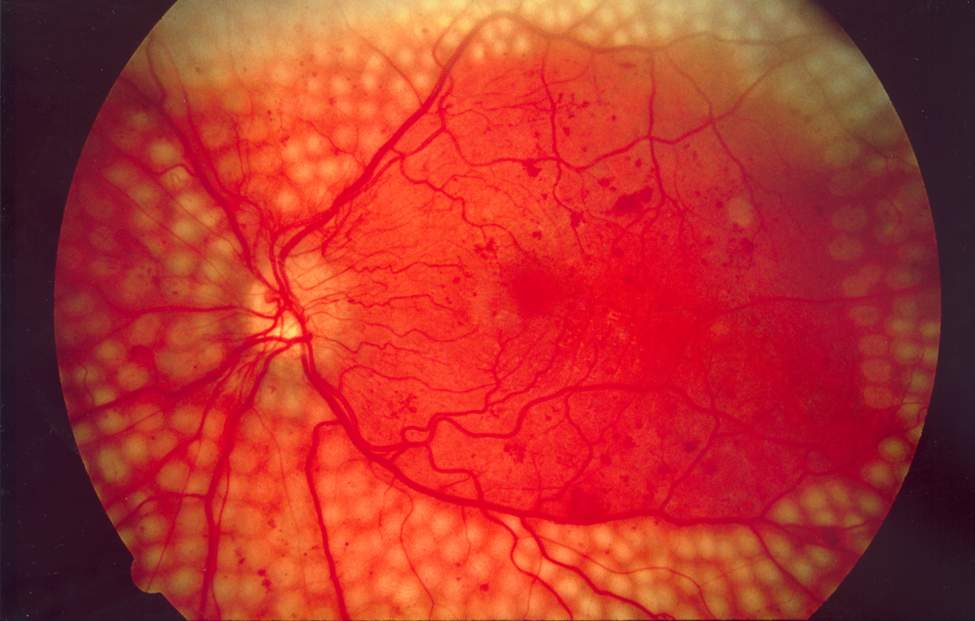
Retinopatia diabética

  • Geralmente assintomática e diagnosticada em rastreios de rotina
  • Os indivíduos afetados podem queixar-se de diminuição da acuidade visual em estadios avançados.
  • Se complicada, os indivíduos podem apresentar:
    • Perda de visão monocular súbita e indolor
    • Moscas volantes
  • Fundoscopia:
    • Edema Edema Edema is a condition in which excess serous fluid accumulates in the body cavity or interstitial space of connective tissues. Edema is a symptom observed in several medical conditions. It can be categorized into 2 types, namely, peripheral (in the extremities) and internal (in an organ or body cavity). Edema macular
    • Manchas algodonosas
    • Manchas e pontos hemorrágicos
  • Complicações oculares adicionais devido à hiperglicemia:
    • Acumulação de sorbitol Sorbitol A polyhydric alcohol with about half the sweetness of sucrose. Sorbitol occurs naturally and is also produced synthetically from glucose. It was formerly used as a diuretic and may still be used as a laxative and in irrigating solutions for some surgical procedures. It is also used in many manufacturing processes, as a pharmaceutical aid, and in several research applications. Laxatives e aumento da pressão osmótica no cristalino
    • Aumento do risco de cataratas
  • Mulheres com diabetes Diabetes Diabetes mellitus (DM) is a metabolic disease characterized by hyperglycemia and dysfunction of the regulation of glucose metabolism by insulin. Type 1 DM is diagnosed mostly in children and young adults as the result of autoimmune destruction of β cells in the pancreas and the resulting lack of insulin. Type 2 DM has a significant association with obesity and is characterized by insulin resistance. Diabetes Mellitus que planeiam engravidar:
    • Devem ser avaliadas e tratadas
    • Orientar de acordo com o risco de progressão

Neuropatia

  • Frequentemente assintomática, diagnosticada em exames de rastreio
  • Pode ser generalizada, focal, multifocal Multifocal Retinoblastoma ou autonómica
  • Polineuropatia simétrica distal crónica:
    • Apresenta-se com parestesias num padrão de perda sensitiva em “luva e meia”
    • Os indivíduos afetados podem apresentar:
      • Parestesias
      • Formigueiros
      • Sensação de queimadura
      • Dor nos pés
      • Agravamento noturno
    • Diminuição da sensibilidade ao toque ligeiro/monofilamento ao exame objetivo
    • Perda da perceção álgica, com potencial para o desenvolvimento de lesões
  • Neuropatia autonómica:
    • Manifestações cardiovasculares:
      • Taquicardia em repouso
      • Hipotensão ortostática
    • Gastroparesia devido ao atingimento do nervo vago:
      • Atraso do esvaziamento gástrico
      • Risco de hipoglicemia pós-prandial
      • Náuseas
      • Distensão abdominal
      • Perda de apetite
      • Pode resultar em perda ponderal excessiva
    • O envolvimento geniturinário pode causar disfunção erétil, embora esta condição seja mais MAIS Androgen Insensitivity Syndrome provável por etiologia vascular.
    • Nervos cranianos:
      • Pode provocar paralisia do nervo oculomotor
      • Ptose
      • Função pupilar poupada
    • Mononeuropatia periférica: paralisia de nervo, como o nervo peroneal comum causando pé pendente
    • Mononeurite múltipla: neuropatia assimétrica que envolve múltiplos nervos periféricos e cranianos
Lesão do pé diabético

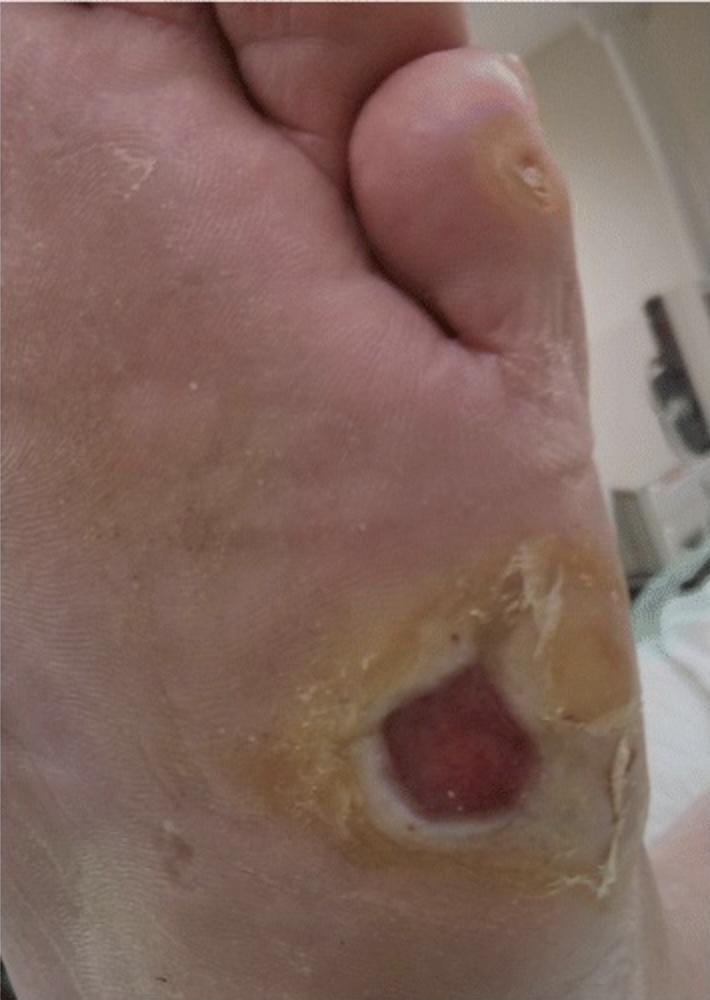
Lesão do pé em indivíduo com neuropatia periférica:
Os indivíduos com neuropatia periférica não conseguem sentir pequenas lesões nas extremidades. Assim, muitas vezes, estas lesões não são tratadas. Em combinação com a redução do fluxo sanguíneo para as extremidades, estas lesões podem condicionar a formação de úlceras crónicas nos pés que podem necessitar de desbridamento cirúrgico em indivíduos com diabetes.
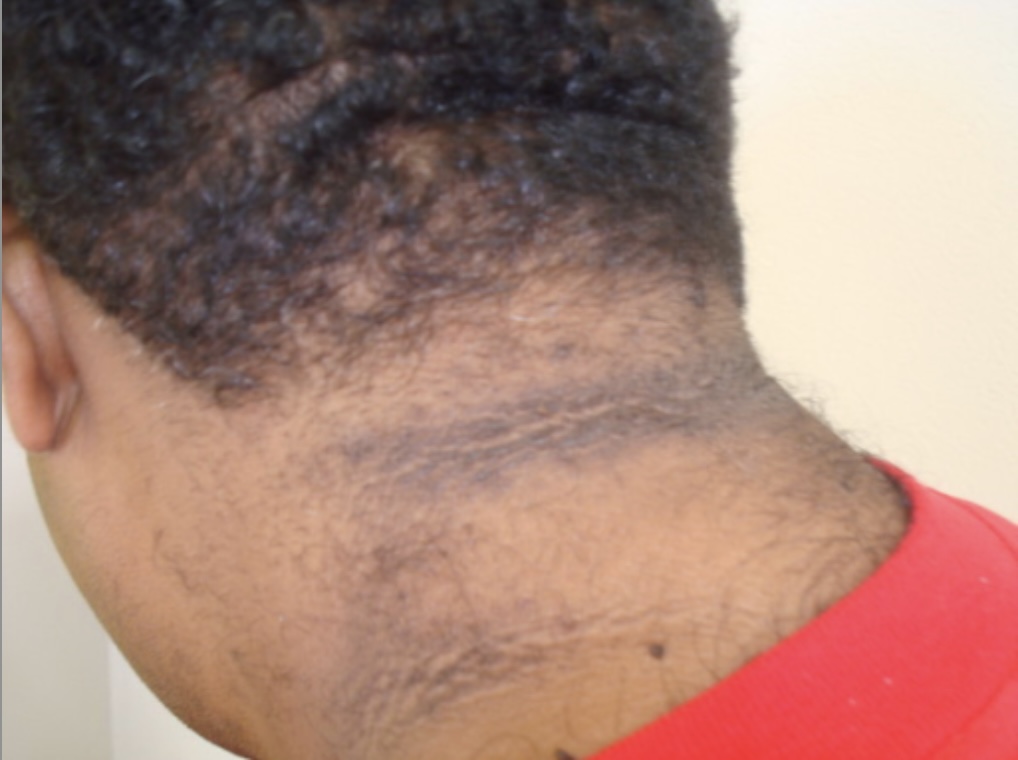
Imagem: Pre-operative view of chronic recurrent ulcer under the fifth MT head” por Department of Orthopaedic Surgery, Assaf HaRofeh Medical Center, Zerrifin, Affiliated to the Sackler School of Medicine, Tel Aviv University, Tel Aviv, Israel. Licença: CC BY 4.0

Manifestações cutâneas

  • Acantose nigricans:
    • Placas escuras e aveludadas nas axilas ou pescoço
    • Observada em indivíduos com resistência à insulina
    • Por vezes, pode ser um sinal de malignidade subjacente
  • Necrobiose lipoídica:
    • Manchas endurecidas, ovais ou irregulares, de atrofia central com pigmentação amarelada e margens castanhas-avermelhadas
    • Frequentemente assintomática, com localização na zona anterior das pernas
Acantose nigricans grau 1

Acantose nigricans: um achado comum em indivíduos com resistência à insulina (como na diabetes). A acantose nigricans caracteriza-se por áreas aveludadas, espessadas e escurecidas da pele, frequentemente observadas na região da posterior do pescoço.

Imagem: “Acanthosis nigricans Grade 1” por Department of Clinical Medical Sciences, The University of West Indies, St Augustine, Trinidad & Tobago, Licença: CC BY 2.0

Diagnóstico

Doença cardiovascular

Doença arterial coronária:

  • História médica: questionar sobre fatores associados a risco cardiovascular:
    • Dor torácica ou sintomas semelhantes aos da angina
    • História pregressa de doença cardíaca ou tratamento
    • Estilo de vida:
      • Nível de atividade física e condicionamento físico geral
      • Escolhas alimentares
      • Tabagismo
      • Ingestão de álcool
      • Uso de drogas ilícitas
      • Stress emocional
  • Testes Testes Gonadal Hormones de rastreio:
    • Análises laboratoriais
    • Eletrocardiograma ( ECG ECG An electrocardiogram (ECG) is a graphic representation of the electrical activity of the heart plotted against time. Adhesive electrodes are affixed to the skin surface allowing measurement of cardiac impulses from many angles. The ECG provides 3-dimensional information about the conduction system of the heart, the myocardium, and other cardiac structures. Electrocardiogram (ECG))
    • Teste de stress
    • Nota: Os testes Testes Gonadal Hormones de rastreio não estão recomendados em indivíduos assintomáticos, com doença cardiovascular ou com fatores de risco estabelecidos.
  • Os testes Testes Gonadal Hormones estão indicados em indivíduos sintomáticos e dependem do indivíduo e das circunstâncias em que foram solicitados.
    • Score de cálcio coronário: pela existência de falsos negativos, não está recomendado em indivíduos de alto risco.
    • Teste de stress: exercício ou farmacológico, com base na capacidade do indivíduo:
      • Com ou sem imagem de medicina nuclear
      • Ecocardiograma de stress
    • Angiografia por TC
    • Angiografia em indivíduos com resultados alterados em teste de stress

Doença arterial periférica:

  • Índice tornozelo-braço
  • Ecografia
  • Angiografia

Estenose carotídea: ecografia para avaliar a extensão da doença oclusiva

Nefropatia diabética

Geralmente a nefropatia diabética é diagnosticada durante uma análise de urina anual para rastreio de microalbuminúria.

  • A microalbuminúria (30-299 mg/24 horas) é o primeiro sinal de nefropatia diabética.
  • A DRC é diagnosticada em análises laboratoriais com creatinina.

Retinopatia diabética

Diagnosticada durante rastreio anual com exames oftalmológicos (oftalmologista ou optometrista)

  • Não proliferativa:
    • Microaneurismas
    • Exsudados moles Moles Primary Skin Lesions (exsudado algodonoso representativo de enfarte)
    • Hemorragia intrarretiniana
    • Oclusão, dilatação e tortuosidade de vasos sanguíneos
  • Proliferativa:
    • Neovascularização do disco e/ou vasos da retina Retina The ten-layered nervous tissue membrane of the eye. It is continuous with the optic nerve and receives images of external objects and transmits visual impulses to the brain. Its outer surface is in contact with the choroid and the inner surface with the vitreous body. The outermost layer is pigmented, whereas the inner nine layers are transparent. Eye: Anatomy
    • Hemorragia perirretiniana e vítrea
    • Fibrose subsequente e descolamento de retina Retina The ten-layered nervous tissue membrane of the eye. It is continuous with the optic nerve and receives images of external objects and transmits visual impulses to the brain. Its outer surface is in contact with the choroid and the inner surface with the vitreous body. The outermost layer is pigmented, whereas the inner nine layers are transparent. Eye: Anatomy tracional
  • Edema Edema Edema is a condition in which excess serous fluid accumulates in the body cavity or interstitial space of connective tissues. Edema is a symptom observed in several medical conditions. It can be categorized into 2 types, namely, peripheral (in the extremities) and internal (in an organ or body cavity). Edema macular:
    • Espessamento da retina Retina The ten-layered nervous tissue membrane of the eye. It is continuous with the optic nerve and receives images of external objects and transmits visual impulses to the brain. Its outer surface is in contact with the choroid and the inner surface with the vitreous body. The outermost layer is pigmented, whereas the inner nine layers are transparent. Eye: Anatomy e edema Edema Edema is a condition in which excess serous fluid accumulates in the body cavity or interstitial space of connective tissues. Edema is a symptom observed in several medical conditions. It can be categorized into 2 types, namely, peripheral (in the extremities) and internal (in an organ or body cavity). Edema a envolver a mácula
    • Pode ocorrer durante a retinopatia proliferativa e não proliferativa

Neuropatia diabética

  • Exame objetivo:
    • Avaliar a sensibilidade tátil com monofilamento.
    • Avaliar a sensibilidade vibratória com um diapasão de 128 Hz.
    • Reflexos tendinosos profundos
    • Verificar a presença de úlceras ou infeções neuropáticas cutâneas.
  • A artropatia neuropática diabética (pé de Charcot) é uma complicação grave:
    • Deformidade das articulações tarsometatársicas
    • As úlceras coexistentes são comuns.
    • Apresenta-se com deformidades ósseas com colapso no mediopé

Tratamento

Todas as complicações

Em todas as complicações associadas à diabetes Diabetes Diabetes mellitus (DM) is a metabolic disease characterized by hyperglycemia and dysfunction of the regulation of glucose metabolism by insulin. Type 1 DM is diagnosed mostly in children and young adults as the result of autoimmune destruction of β cells in the pancreas and the resulting lack of insulin. Type 2 DM has a significant association with obesity and is characterized by insulin resistance. Diabetes Mellitus, a prevenção é fundamental e o controlo glicémico é a principal prioridade.

  • Controlo de comorbilidades (hipertensão e dislipidemia).
  • Alterações no estilo de vida:
    • Cessação tabágica
    • Controlo agressivo da pressão arterial
    • Tratamento da dislipidemia
    • Perda ponderal, se excesso de peso ou obesidade
    • Consumo moderado de álcool:
      • 1 bebida/dia em média para mulheres
      • 2 bebidas/dia em média para homens

Doença arterial coronária

  • Aspirina em baixa dose como prevenção secundária (em indivíduos com diabetes Diabetes Diabetes mellitus (DM) is a metabolic disease characterized by hyperglycemia and dysfunction of the regulation of glucose metabolism by insulin. Type 1 DM is diagnosed mostly in children and young adults as the result of autoimmune destruction of β cells in the pancreas and the resulting lack of insulin. Type 2 DM has a significant association with obesity and is characterized by insulin resistance. Diabetes Mellitus que apresentam complicações macrovasculares conhecidas)
  • Colchicina: nova recomendação para indivíduos com doença coronária crónica a realizar outras estratégias de prevenção secundária

Nefropatia

  • Controlo de comorbilidades:
    • Hipertensão: o alvo da pressão arterial para todos os indivíduos com diabetes Diabetes Diabetes mellitus (DM) is a metabolic disease characterized by hyperglycemia and dysfunction of the regulation of glucose metabolism by insulin. Type 1 DM is diagnosed mostly in children and young adults as the result of autoimmune destruction of β cells in the pancreas and the resulting lack of insulin. Type 2 DM has a significant association with obesity and is characterized by insulin resistance. Diabetes Mellitus deve ser < 130/80 mm Hg.
    • Cessação tabágica
    • Tratamento da dislipidemia
  • Os inibidores da enzima de conversão da angiotensina (ECA) ou antagonistas do recetor da angiotensina (ARA) atuam nas arteríolas eferentes, as mais MAIS Androgen Insensitivity Syndrome afetadas.
  • Fármacos adicionais de proteção renal:
    • Inibidores da proteína de transporte de sódio-glucose 2 (SGLT2)
    • Antagonistas seletivos dos recetores mineralocorticoides não esteroides (ARM)

Retinopatia

  • Tipo não proliferativa:
    • Geralmente sem tratamento, exceto se grave
    • A fotocoagulação a laser panretiniana é o tratamento de escolha.
  • Tipo proliferativa:
    • Fotocoagulação a laser panretiniana
    • Fármaco – bevacizumabe:
      • Anticorpo monoclonal que atua como um inibidor da angiogénese
      • Apresenta como alvo o fator de crescimento endotelial vascular (VEGF, pela sigla em inglês)-A
      • Considerar vitrectomia.
  • Edema Edema Edema is a condition in which excess serous fluid accumulates in the body cavity or interstitial space of connective tissues. Edema is a symptom observed in several medical conditions. It can be categorized into 2 types, namely, peripheral (in the extremities) and internal (in an organ or body cavity). Edema macular:
    • Fotocoagulação a laser focal
    • Bevacizumabe
  • Complicações potenciais graves:
    • Descolamento da retina Retina The ten-layered nervous tissue membrane of the eye. It is continuous with the optic nerve and receives images of external objects and transmits visual impulses to the brain. Its outer surface is in contact with the choroid and the inner surface with the vitreous body. The outermost layer is pigmented, whereas the inner nine layers are transparent. Eye: Anatomy
    • Hemorragia vítrea
    • Perda de visão

Neuropatia

  • Educar os pacientes com neuropatia a realizar vigilância diária dos pés.
  • Fármacos para alívio da dor neuropática:
    • Anticonvulsivantes: gabapentina ou pregabalina
    • Antidepressivos tricíclicos: amitriptilina
    • Inibidores da recaptação de serotonina e noradrenalina: duloxetina
    • Os opióides são o último recurso, mas podem ser necessários para o alívio da dor crónica.
  • Gastroparesia:
    • Refeições pequenas e frequentes
    • Medicação procinética: metoclopramida

Doença arterial periférica

  • Exames periódicos aos pés
  • Cuidado para não provocar lesões nas extremidades, porque existe atraso na cicatrização
  • Revascularização cirúrgica em casos selecionados
  • A amputação pode ser necessária para alguns indivíduos com doença arterial periférica.

Manifestações cutâneas

  • A acantose nigricans não requer tratamento e geralmente resolve com o controlo glicémico.
  • A necrobiose lipoídica é tratada com corticosteróides tópicos.

Referências

  1. Smith, S. C., Jr, Benjamin, E. J., Bonow, R. O., Braun, L. T., Creager, M. A., Franklin, B. A., Gibbons, R. J., Grundy, S. M., Hiratzka, L. F., Jones, D. W., Lloyd-Jones, D. M., Minissian, M., Mosca, L., Peterson, E. D., Sacco, R. L., Spertus, J., Stein, J. H., & Taubert, K. A. (2011). AHA/ACCF secondary prevention and risk reduction therapy for patients with coronary and other atherosclerotic vascular disease: 2011 update: a guideline from the American Heart Association and American College of Cardiology Foundation endorsed by the World Heart Federation and the Preventive Cardiovascular Nurses Association. Journal of the American College of Cardiology58(23), 2432–2446. https://doi.org/10.1016/j.jacc.2011.10.824
  2. Ismail-Beigi, F., et al., ACCORD trial group. (2010). Effect of intensive treatment of hyperglycaemia on microvascular outcomes in type 2 diabetes: an analysis of the ACCORD randomised trial. Lancet 376, 419-30. doi: 10.1016/S0140-6736(10)60576-4. Erratum in: Lancet. (2010). 376, 1466. https://pubmed.ncbi.nlm.nih.gov/20594588/
  3. Matoori S. (2022). Diabetes and its Complications. ACS pharmacology & translational science5(8), 513–515. https://doi.org/10.1021/acsptsci.2c00122
  4. Yang, T., Qi, F., Guo, F., Shao, M., Song, Y., Ren, G., Linlin, Z., Qin, G., & Zhao, Y. (2024). An update on chronic complications of diabetes mellitus: from molecular mechanisms to therapeutic strategies with a focus on metabolic memory. Molecular medicine (Cambridge, Mass.)30(1), 71. https://doi.org/10.1186/s10020-024-00824-9
  5. Andarge, B. D., Hayelom, D. H., Degualem, S. M., Bezie, H. E., Wondmagegn, H., Habtegiorgis, Y., Sorrie, M. B., & Chisha, Y. (2025). Chronic complications among patients with type 2 diabetes in Southern Ethiopia. PloS one20(11), e0336666. https://doi.org/10.1371/journal.pone.0336666

Crie sua conta gratuita ou faça login para continuar lendo!

Cadastre-se agora e tenha acesso grátis ao Lecturio, com páginas de conceitos, vídeos de medicina e questões para sua educação médica.

Aprende mais com a Lecturio:

Multiple devices displaying human anatomy and health education content.

Complementa o teu estudo da faculdade com o companheiro de estudo tudo-em-um da Lecturio, através de métodos de ensino baseados em evidência.

Estuda onde quiseres

Two iPhones display medical education apps, one showing anatomy, the other Bookmatcher.

A Lecturio Medical complementa o teu estudo através de métodos de ensino baseados em evidência, vídeos de palestras, perguntas e muito mais – tudo combinado num só lugar e fácil de usar.

User Reviews

Have a holly, jolly study session 🎁 Save 50% on all plans now >>

Que tengas una sesión de estudio alegre y navideña 🎁 Ahorra 50% en todos los planes >>

Details