
Domina Conceptos Médicos

Estudia para la escuela de medicina y tus examenes con Lecturio.

Trasplante de Órganos

El trasplante de órganos es un procedimiento que implica la extracción de un órgano o tejido vivo y su traslado a una parte diferente del cuerpo o en EN Erythema nodosum is an immune-mediated panniculitis (inflammation of the subcutaneous fat) caused by a type IV (delayed-type) hypersensitivity reaction. It commonly manifests in young women as tender, erythematous nodules on the shins. Erythema Nodosum una persona diferente. Los LOS Neisseria trasplantes de órganos se han convertido en EN Erythema nodosum is an immune-mediated panniculitis (inflammation of the subcutaneous fat) caused by a type IV (delayed-type) hypersensitivity reaction. It commonly manifests in young women as tender, erythematous nodules on the shins. Erythema Nodosum la opción terapéutica de elección para muchas personas con insuficiencia orgánica terminal. El trasplante puede ofrecer al AL Amyloidosis individuo un tratamiento definitivo para una determinada entidad patológica. En EN Erythema nodosum is an immune-mediated panniculitis (inflammation of the subcutaneous fat) caused by a type IV (delayed-type) hypersensitivity reaction. It commonly manifests in young women as tender, erythematous nodules on the shins. Erythema Nodosum los LOS Neisseria últimos 50 años, el trasplante de órganos se ha HA Hemolytic anemia (HA) is the term given to a large group of anemias that are caused by the premature destruction/hemolysis of circulating red blood cells (RBCs). Hemolysis can occur within (intravascular hemolysis) or outside the blood vessels (extravascular hemolysis). Hemolytic Anemia convertido en EN Erythema nodosum is an immune-mediated panniculitis (inflammation of the subcutaneous fat) caused by a type IV (delayed-type) hypersensitivity reaction. It commonly manifests in young women as tender, erythematous nodules on the shins. Erythema Nodosum una práctica exitosa y en EN Erythema nodosum is an immune-mediated panniculitis (inflammation of the subcutaneous fat) caused by a type IV (delayed-type) hypersensitivity reaction. It commonly manifests in young women as tender, erythematous nodules on the shins. Erythema Nodosum evolución que beneficia a más de 100 000 personas al AL Amyloidosis año en EN Erythema nodosum is an immune-mediated panniculitis (inflammation of the subcutaneous fat) caused by a type IV (delayed-type) hypersensitivity reaction. It commonly manifests in young women as tender, erythematous nodules on the shins. Erythema Nodosum todo el mundo. Tanto los LOS Neisseria órganos sólidos como las células hematopoyéticas derivadas de la médula ósea se pueden trasplantar con éxito para varias indicaciones diferentes. La tolerancia del órgano trasplantado por parte del sistema inmunitario del huésped se logra mediante el uso de estrategias inmunosupresoras e inmunomoduladoras. Las principales complicaciones del trasplante son el rechazo de órganos o fallo del injerto; sin embargo, la inmunosupresión crónica también conlleva el riesgo de complicaciones graves, incluidas infecciones potencialmente mortales.

Last updated: Dec 15, 2025

Editorial responsibility: Stanley Oiseth, Lindsay Jones, Evelin Maza

Definiciones

El tejido trasplantado puede ser células (e.g., células madre hematopoyéticas), tejidos (e.g., córnea), partes de un órgano (e.g., injertos de hígado y piel) u órganos completos (e.g., riñón, corazón). Hay muchos términos que son importantes para la medicina de trasplantes.

  • Injerto: una pieza de tejido vivo que se trasplanta quirúrgicamente
  • Autoinjerto:
    • Un injerto del propio tejido de un individuo
    • No hay problemas de compatibilidad de tejidos
    • Alta tasa de éxito
    • Usos clínicos:
      • Injertos de piel de una parte del cuerpo a otra
      • Extracción y reinfusión de médula ósea después de quimioterapia intensiva
  • Isoinjertos:
    • Trasplantes entre 2 individuos genéticamente idénticos (gemelos monocigóticos)
    • Aún existe cierto riesgo de rechazo; la terapia inmunosupresora está indicada
  • Aloinjertos:
    • Trasplantes entre individuos genéticamente no idénticos
    • Tipo más común
    • Estrechamente emparejado para reducir el riesgo de rechazo
    • La terapia inmunosupresora está indicada siempre.
  • Injertos de donante vivo:
    • Órganos de un donante vivo
    • Ejemplo clásico: trasplante renal
  • Injertos cadavéricos:
    • Órganos que se obtienen después del fallecimiento de donantes registrados
    • Constituyen la gran mayoría de los LOS Neisseria trasplantes utilizados actualmente
    • Los LOS Neisseria receptores se eligen de individuos incluidos en EN Erythema nodosum is an immune-mediated panniculitis (inflammation of the subcutaneous fat) caused by a type IV (delayed-type) hypersensitivity reaction. It commonly manifests in young women as tender, erythematous nodules on the shins. Erythema Nodosum la lista de trasplantes en EN Erythema nodosum is an immune-mediated panniculitis (inflammation of the subcutaneous fat) caused by a type IV (delayed-type) hypersensitivity reaction. It commonly manifests in young women as tender, erythematous nodules on the shins. Erythema Nodosum función de la histocompatibilidad.
  • Xenoinjertos:
    • Tejidos u órganos que se derivan de una especie diferente
    • Los LOS Neisseria xenoinjertos se someten a la depleción de todas las células animales para mitigar el rechazo de un huésped humano
    • Usos clínicos:
      • Válvulas de corazón de cerdo en EN Erythema nodosum is an immune-mediated panniculitis (inflammation of the subcutaneous fat) caused by a type IV (delayed-type) hypersensitivity reaction. It commonly manifests in young women as tender, erythematous nodules on the shins. Erythema Nodosum personas que necesitan reemplazo valvular
      • Injertos de piel de cerdo de espesor parcial para tratar a personas que reciben tratamiento de lesiones por quemaduras
  • Heterotópico:
    • Un órgano injertado en EN Erythema nodosum is an immune-mediated panniculitis (inflammation of the subcutaneous fat) caused by a type IV (delayed-type) hypersensitivity reaction. It commonly manifests in young women as tender, erythematous nodules on the shins. Erythema Nodosum un sitio diferente a la ubicación anatómica habitual
    • Ejemplo: un riñón trasplantado en EN Erythema nodosum is an immune-mediated panniculitis (inflammation of the subcutaneous fat) caused by a type IV (delayed-type) hypersensitivity reaction. It commonly manifests in young women as tender, erythematous nodules on the shins. Erythema Nodosum la fosa ilíaca
  • Ortotópico: tejido injertado en EN Erythema nodosum is an immune-mediated panniculitis (inflammation of the subcutaneous fat) caused by a type IV (delayed-type) hypersensitivity reaction. It commonly manifests in young women as tender, erythematous nodules on the shins. Erythema Nodosum el sitio anatómico habitual (trasplantes de corazón, pulmón e hígado)

Compatibilidad Inmunológica

La compatibilidad inmunológica entre un donante de órganos y un receptor Receptor Receptors are proteins located either on the surface of or within a cell that can bind to signaling molecules known as ligands (e.g., hormones) and cause some type of response within the cell. Receptors de órganos es importante para mejorar el éxito de un trasplante y reducir el riesgo de rechazo. La tipificación del antígeno leucocitario humano (HLA, por sus siglas en EN Erythema nodosum is an immune-mediated panniculitis (inflammation of the subcutaneous fat) caused by a type IV (delayed-type) hypersensitivity reaction. It commonly manifests in young women as tender, erythematous nodules on the shins. Erythema Nodosum inglés) del tejido es fundamental para el trasplante de células madre hematopoyéticas y órganos sólidos, incluidos trasplantes de riñón, corazón, hígado, páncreas y pulmón.
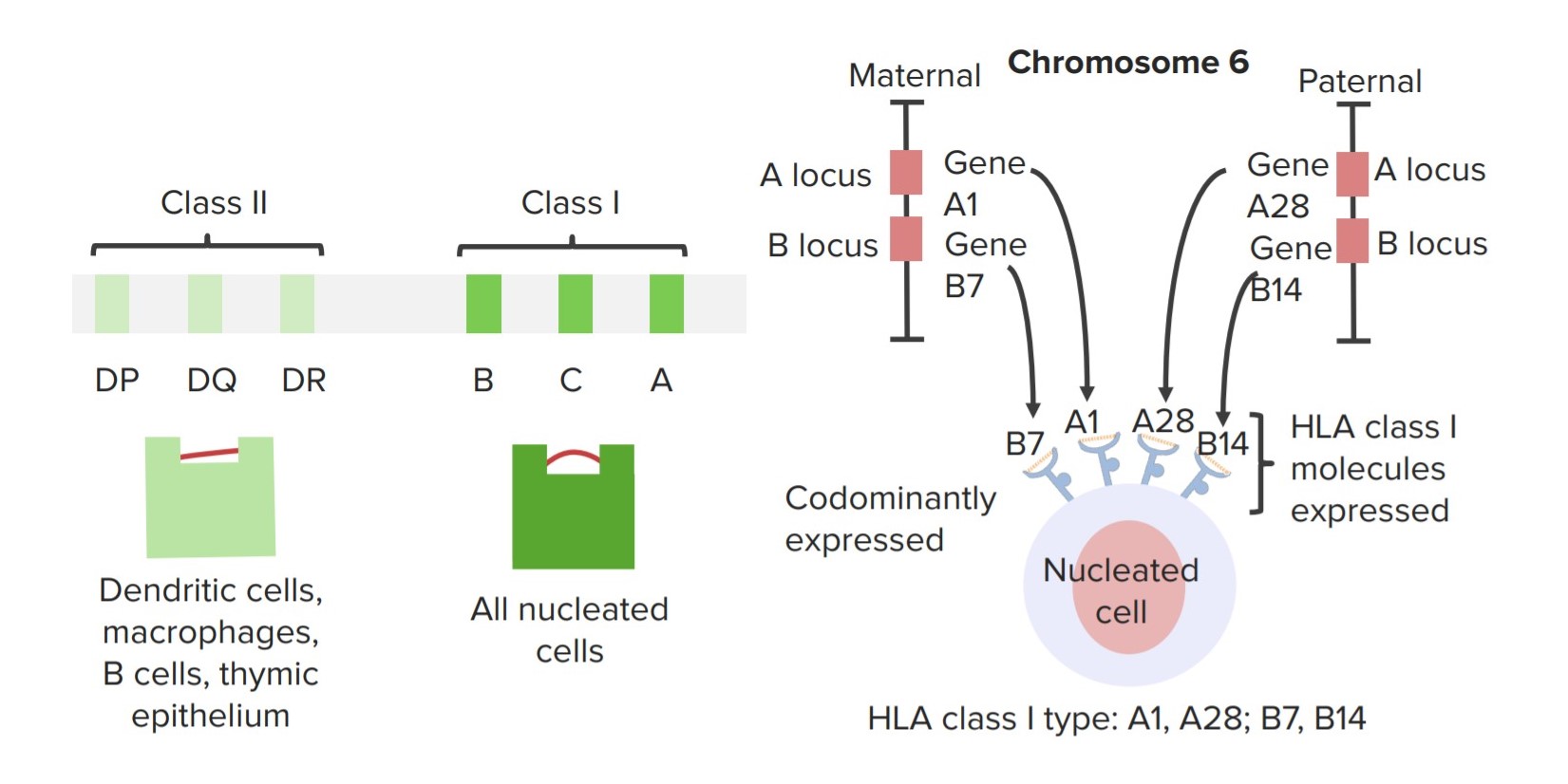
Antígenos del complejo mayor de histocompatibilidad (CMH)

  • Antígenos de superficie de las células tisulares que ayudan a regular Regular Insulin la respuesta inmunitaria
  • Codificado por genes Genes A category of nucleic acid sequences that function as units of heredity and which code for the basic instructions for the development, reproduction, and maintenance of organisms. DNA Types and Structure HLA:
    • Los LOS Neisseria hermanos tienen un 25% de posibilidades de tener genes Genes A category of nucleic acid sequences that function as units of heredity and which code for the basic instructions for the development, reproduction, and maintenance of organisms. DNA Types and Structure HLA idénticos.
    • Los LOS Neisseria gemelos idénticos pueden tener genes Genes A category of nucleic acid sequences that function as units of heredity and which code for the basic instructions for the development, reproduction, and maintenance of organisms. DNA Types and Structure HLA 100% idénticos, pero no en EN Erythema nodosum is an immune-mediated panniculitis (inflammation of the subcutaneous fat) caused by a type IV (delayed-type) hypersensitivity reaction. It commonly manifests in young women as tender, erythematous nodules on the shins. Erythema Nodosum todos los LOS Neisseria casos.
  • Determinan la respuesta inmunitaria a un órgano trasplantado
  • Controlado por genes Genes A category of nucleic acid sequences that function as units of heredity and which code for the basic instructions for the development, reproduction, and maintenance of organisms. DNA Types and Structure en EN Erythema nodosum is an immune-mediated panniculitis (inflammation of the subcutaneous fat) caused by a type IV (delayed-type) hypersensitivity reaction. It commonly manifests in young women as tender, erythematous nodules on the shins. Erythema Nodosum el cromosoma 6:
    • Los LOS Neisseria genes Genes A category of nucleic acid sequences that function as units of heredity and which code for the basic instructions for the development, reproduction, and maintenance of organisms. DNA Types and Structure HLA-A HLA-A Polymorphic class I human histocompatibility (HLA) surface antigens present on almost all nucleated cells. At least 20 antigens have been identified which are encoded by the a locus of multiple alleles on chromosome 6. They serve as targets for t-cell cytolytic responses and are involved with acceptance or rejection of tissue/organ grafts. Organ Transplantation a HLA-D HLA-D Human immune-response or class II antigens found mainly, but not exclusively, on B-lymphocytes and produced from genes of the hla-d locus. They are extremely polymorphic families of glycopeptides, each consisting of two chains, alpha and beta. This group of antigens includes the -dr, -dq and -dp designations, of which hla-dr is most studied; some of these glycoproteins are associated with certain diseases, possibly of immune etiology. Organ Transplantation están muy cerca uno del otro.
    • Heredado como 1 bloque con cruce mínimo
Complejo mayor de histocompatibilidad

Complejo mayor de histocompatibilidad

Imagen por Lecturio.

Clasificación de los LOS Neisseria antígenos del CMH

  • Clase I:
    • Se encuentra en EN Erythema nodosum is an immune-mediated panniculitis (inflammation of the subcutaneous fat) caused by a type IV (delayed-type) hypersensitivity reaction. It commonly manifests in young women as tender, erythematous nodules on the shins. Erythema Nodosum la superficie celular de todas las células nucleadas
    • Codificado por los LOS Neisseria genes Genes A category of nucleic acid sequences that function as units of heredity and which code for the basic instructions for the development, reproduction, and maintenance of organisms. DNA Types and Structure HLA-A HLA-A Polymorphic class I human histocompatibility (HLA) surface antigens present on almost all nucleated cells. At least 20 antigens have been identified which are encoded by the a locus of multiple alleles on chromosome 6. They serve as targets for t-cell cytolytic responses and are involved with acceptance or rejection of tissue/organ grafts. Organ Transplantation, HLA-B HLA-B Class I human histocompatibility (HLA) surface antigens encoded by more than 30 detectable alleles on locus B of the HLA complex, the most polymorphic of all the HLA specificities. Several of these antigens (e.g., hla-b27, -b7, -b8) are strongly associated with predisposition to rheumatoid and other autoimmune disorders. Like other class I HLA determinants, they are involved in the cellular immune reactivity of cytolytic T lymphocytes. Organ Transplantation y HLA-C HLA-C Class I human histocompatibility (HLA) antigens encoded by a small cluster of structural genes at the c locus on chromosome 6. They have significantly lower immunogenicity than the hla-a and -b determinants and are therefore of minor importance in donor/recipient crossmatching. Their primary role is their high-risk association with certain disease manifestations (e.g., spondyloarthritis, psoriasis, multiple myeloma). Organ Transplantation
  • Clase II:
    • Se encuentra en EN Erythema nodosum is an immune-mediated panniculitis (inflammation of the subcutaneous fat) caused by a type IV (delayed-type) hypersensitivity reaction. It commonly manifests in young women as tender, erythematous nodules on the shins. Erythema Nodosum los LOS Neisseria linfocitos T colaboradores activados que expresan CD4
    • Se encuentra en EN Erythema nodosum is an immune-mediated panniculitis (inflammation of the subcutaneous fat) caused by a type IV (delayed-type) hypersensitivity reaction. It commonly manifests in young women as tender, erythematous nodules on the shins. Erythema Nodosum las células presentadoras de antígeno (e.g., linfocitos B, macrófagos)
    • Codificado por genes Genes A category of nucleic acid sequences that function as units of heredity and which code for the basic instructions for the development, reproduction, and maintenance of organisms. DNA Types and Structure HLA-D HLA-D Human immune-response or class II antigens found mainly, but not exclusively, on B-lymphocytes and produced from genes of the hla-d locus. They are extremely polymorphic families of glycopeptides, each consisting of two chains, alpha and beta. This group of antigens includes the -dr, -dq and -dp designations, of which hla-dr is most studied; some of these glycoproteins are associated with certain diseases, possibly of immune etiology. Organ Transplantation
  • Clase III:
    • Determina la estructura de algunos factores del complemento; factor de necrosis Necrosis The death of cells in an organ or tissue due to disease, injury or failure of the blood supply. Ischemic Cell Damage tumoral alfa (TNF-α, por sus siglas en EN Erythema nodosum is an immune-mediated panniculitis (inflammation of the subcutaneous fat) caused by a type IV (delayed-type) hypersensitivity reaction. It commonly manifests in young women as tender, erythematous nodules on the shins. Erythema Nodosum inglés) importante en EN Erythema nodosum is an immune-mediated panniculitis (inflammation of the subcutaneous fat) caused by a type IV (delayed-type) hypersensitivity reaction. It commonly manifests in young women as tender, erythematous nodules on the shins. Erythema Nodosum la inflamación
    • Los LOS Neisseria genes Genes A category of nucleic acid sequences that function as units of heredity and which code for the basic instructions for the development, reproduction, and maintenance of organisms. DNA Types and Structure de clase III se localizan entre los LOS Neisseria loci HLA-B HLA-B Class I human histocompatibility (HLA) surface antigens encoded by more than 30 detectable alleles on locus B of the HLA complex, the most polymorphic of all the HLA specificities. Several of these antigens (e.g., hla-b27, -b7, -b8) are strongly associated with predisposition to rheumatoid and other autoimmune disorders. Like other class I HLA determinants, they are involved in the cellular immune reactivity of cytolytic T lymphocytes. Organ Transplantation y HLA-D HLA-D Human immune-response or class II antigens found mainly, but not exclusively, on B-lymphocytes and produced from genes of the hla-d locus. They are extremely polymorphic families of glycopeptides, each consisting of two chains, alpha and beta. This group of antigens includes the -dr, -dq and -dp designations, of which hla-dr is most studied; some of these glycoproteins are associated with certain diseases, possibly of immune etiology. Organ Transplantation.

Principios de compatibilidad donante-receptor

  • Los LOS Neisseria antígenos ABO generalmente deben ser compatibles.
  • Los LOS Neisseria antígenos HLA propios no activan el sistema inmunitario; la exposición a otro conjunto de antígenos HLA desencadenará una respuesta inmunitaria.
  • El grado de compatibilidad HLA mejora los LOS Neisseria resultados para algunos órganos (especialmente los LOS Neisseria riñones y las células madre hematopoyéticas), pero es menos importante para otros (por ejemplo, el hígado y el corazón).
  • La compatibilidad HLA se realiza mediante tipificación molecular de alta resolución en EN Erythema nodosum is an immune-mediated panniculitis (inflammation of the subcutaneous fat) caused by a type IV (delayed-type) hypersensitivity reaction. It commonly manifests in young women as tender, erythematous nodules on the shins. Erythema Nodosum linfocitos de sangre periférica o ganglios linfáticos.

Mecanismos de Rechazo de Trasplantes

El rechazo puede ser agudo o crónico, y los LOS Neisseria síntomas varían según el sistema.

  • El tejido trasplantado expresa patrones moleculares asociados al AL Amyloidosis daño → reconocido por receptores tipo Toll en EN Erythema nodosum is an immune-mediated panniculitis (inflammation of the subcutaneous fat) caused by a type IV (delayed-type) hypersensitivity reaction. It commonly manifests in young women as tender, erythematous nodules on the shins. Erythema Nodosum las células inmunitarias innatas → el sistema inmunitario innato del huésped se activa → las células inmunitarias liberan rápidamente mediadores inflamatorios
  • El sistema inmunitario innato por sí mismo también puede ( en EN Erythema nodosum is an immune-mediated panniculitis (inflammation of the subcutaneous fat) caused by a type IV (delayed-type) hypersensitivity reaction. It commonly manifests in young women as tender, erythematous nodules on the shins. Erythema Nodosum raras ocasiones) provocar el rechazo del trasplante.
  • Los LOS Neisseria linfocitos T son muy capaces de responder a moléculas del CMH no compatibles.
  • El cebado de los LOS Neisseria linfocitos T del receptor Receptor Receptors are proteins located either on the surface of or within a cell that can bind to signaling molecules known as ligands (e.g., hormones) and cause some type of response within the cell. Receptors con el aloantígeno puede ocurrir por:
    • Alorreconocimiento directo: los LOS Neisseria linfocitos T del receptor Receptor Receptors are proteins located either on the surface of or within a cell that can bind to signaling molecules known as ligands (e.g., hormones) and cause some type of response within the cell. Receptors interactúan con los LOS Neisseria complejos CMH-péptido presentados por las células presentadoras de antígeno derivadas del donante.
    • Alorreconocimiento indirecto: los LOS Neisseria linfocitos T del receptor Receptor Receptors are proteins located either on the surface of or within a cell that can bind to signaling molecules known as ligands (e.g., hormones) and cause some type of response within the cell. Receptors interactúan con los LOS Neisseria complejos CMH-péptido presentados por las células presentadoras de antígeno derivadas del receptor Receptor Receptors are proteins located either on the surface of or within a cell that can bind to signaling molecules known as ligands (e.g., hormones) and cause some type of response within the cell. Receptors.
    • Coestimulación: las señales específicas del antígeno llegan al AL Amyloidosis linfocito T → proliferación de linfocitos T y resistencia a la muerte celular por apoptosis Apoptosis A regulated cell death mechanism characterized by distinctive morphologic changes in the nucleus and cytoplasm, including the endonucleolytic cleavage of genomic DNA, at regularly spaced, internucleosomal sites, I.e., DNA fragmentation. It is genetically-programmed and serves as a balance to mitosis in regulating the size of animal tissues and in mediating pathologic processes associated with tumor growth. Ischemic Cell Damage
  • Rol de los LOS Neisseria linfocitos B:
    • Actúan como células presentadoras de antígeno, ya que expresan CMH y moléculas coestimuladoras, incluyendo CD40 CD40 Members of the tumor necrosis factor receptor superfamily with specificity for CD40 ligand. They are found on mature B-lymphocytes, some epithelial cells; and lymphoid dendritic cells. Evidence suggests that CD40-dependent activation of B-cells is important for generation of memory B-cells within the germinal centers. Mutations in the CD40 antigen gene result in hyper-igm immunodeficiency syndrome, type 3. Signaling of the receptor occurs through its association with tnf receptor-associated factors. Hyper-IgM Syndrome
    • Interactúan con los LOS Neisseria linfocitos T y permiten la producción de citoquinas mediada por linfocitos T
    • Producen aloanticuerpos contra:
      • Moléculas del CMH no compatibles
      • Moléculas menores de histocompatibilidad
      • Células endoteliales del donante
    • Expresan receptores del complemento; interactúan con las células dañadas recubiertas de complemento
    • Interactúan con células asesinas naturales y macrófagos
    • El rechazo mediado por anticuerpos comienza tempranamente después del trasplante, pero también puede contribuir a la pérdida tardía del injerto.
  • Los LOS Neisseria aloanticuerpos preformados al AL Amyloidosis momento del trasplante provocan un rechazo mediado por anticuerpos:
    • Visto con la incompatibilidad de grupo sanguíneo ABO
    • Conduce al AL Amyloidosis rechazo hiperagudo del injerto en EN Erythema nodosum is an immune-mediated panniculitis (inflammation of the subcutaneous fat) caused by a type IV (delayed-type) hypersensitivity reaction. It commonly manifests in young women as tender, erythematous nodules on the shins. Erythema Nodosum cuestión de minutos
    • Es extremadamente raro
  • El rechazo del trasplante resulta en EN Erythema nodosum is an immune-mediated panniculitis (inflammation of the subcutaneous fat) caused by a type IV (delayed-type) hypersensitivity reaction. It commonly manifests in young women as tender, erythematous nodules on the shins. Erythema Nodosum:
    • Infiltración del tejido trasplantado por las células inflamatorias del huésped
    • Microtrombosis vascular
    • Muerte del tejido
Tabla: Respuestas de rechazo al AL Amyloidosis trasplante
Rechazo Tiempo después del trasplante Características del rechazo
Hiperagudo Dentro de 48 horas
  • Causado por anticuerpos preexistentes fijadores de complemento contra antígenos del injerto (presensibilización)
  • Se observan trombosis de pequeños vasos e infarto del injerto
  • Raro (1%) con pretamizaje adecuado
  • El único tratamiento es la extracción del injerto
Acelerado 3–5 días
  • Causado por anticuerpos preexistentes no fijadores del complemento contra los LOS Neisseria antígenos del injerto
  • Histopatología: infiltrados celulares con o sin cambios vasculares
  • Raro
  • Tratamiento: esteroides en EN Erythema nodosum is an immune-mediated panniculitis (inflammation of the subcutaneous fat) caused by a type IV (delayed-type) hypersensitivity reaction. It commonly manifests in young women as tender, erythematous nodules on the shins. Erythema Nodosum dosis altas; plasmaféresis
Agudo > 5 días
  • Reacción de hipersensibilidad retardada mediada por linfocitos T a los LOS Neisseria antígenos del CMH del injerto
  • Histopatología: infiltración celular mononuclear con hemorragia, edema Edema Edema is a condition in which excess serous fluid accumulates in the body cavity or interstitial space of connective tissues. Edema is a symptom observed in several medical conditions. It can be categorized into 2 types, namely, peripheral (in the extremities) and internal (in an organ or body cavity). Edema y necrosis Necrosis The death of cells in an organ or tissue due to disease, injury or failure of the blood supply. Ischemic Cell Damage, pero manteniendo la integridad vascular
  • Alrededor del 50% de rechazos en EN Erythema nodosum is an immune-mediated panniculitis (inflammation of the subcutaneous fat) caused by a type IV (delayed-type) hypersensitivity reaction. It commonly manifests in young women as tender, erythematous nodules on the shins. Erythema Nodosum 10 años
  • Tratamiento: terapia inmunosupresora intensificada
Crónica Meses a años
  • Diversas causas: puede involucrar anticuerpos, inmunocomplejos, linfocitos T
  • Histopatología: proliferación de células de músculo liso en EN Erythema nodosum is an immune-mediated panniculitis (inflammation of the subcutaneous fat) caused by a type IV (delayed-type) hypersensitivity reaction. It commonly manifests in young women as tender, erythematous nodules on the shins. Erythema Nodosum los LOS Neisseria vasos sanguíneos lo que produce isquemia y fibrosis Fibrosis Any pathological condition where fibrous connective tissue invades any organ, usually as a consequence of inflammation or other injury. Bronchiolitis Obliterans en EN Erythema nodosum is an immune-mediated panniculitis (inflammation of the subcutaneous fat) caused by a type IV (delayed-type) hypersensitivity reaction. It commonly manifests in young women as tender, erythematous nodules on the shins. Erythema Nodosum el órgano injertado
  • Representa el otro casi 50% de los LOS Neisseria rechazos
  • Progresa a pesar de la inmunosupresión

Terapia Inmunosupresora

Los LOS Neisseria receptores de trasplantes de órganos sólidos deben tomar medicamentos inmunosupresores para evitar el rechazo del injerto. Los LOS Neisseria medicamentos inmunosupresores actuales tienen como objetivo la activación de los LOS Neisseria linfocitos T y la producción de citoquinas, la expansión clonal de los LOS Neisseria linfocitos T o ambas.

Terapia inmunosupresora de inducción

  • Antes y en EN Erythema nodosum is an immune-mediated panniculitis (inflammation of the subcutaneous fat) caused by a type IV (delayed-type) hypersensitivity reaction. It commonly manifests in young women as tender, erythematous nodules on the shins. Erythema Nodosum el momento del trasplante:
    • Más intensa que la terapia de mantenimiento
    • Objetivo: prevenir el rechazo agudo y evitar medicamentos de mantenimiento más tóxicos
  • Medicamentos inmunosupresores de inducción:
    • Globulina antitimocítica (derivada de conejos)
    • Anticuerpo monoclonal contra el complejo del receptor Receptor Receptors are proteins located either on the surface of or within a cell that can bind to signaling molecules known as ligands (e.g., hormones) and cause some type of response within the cell. Receptors de interleucina-2 expresado en EN Erythema nodosum is an immune-mediated panniculitis (inflammation of the subcutaneous fat) caused by a type IV (delayed-type) hypersensitivity reaction. It commonly manifests in young women as tender, erythematous nodules on the shins. Erythema Nodosum linfocitos T activados (basiliximab, nombre comercial Simulect)
    • Glucocorticoides en EN Erythema nodosum is an immune-mediated panniculitis (inflammation of the subcutaneous fat) caused by a type IV (delayed-type) hypersensitivity reaction. It commonly manifests in young women as tender, erythematous nodules on the shins. Erythema Nodosum dosis altas

Inmunosupresión de mantenimiento

  • Se dirige a múltiples pasos de la activación de los LOS Neisseria linfocitos T
  • Se inicia en EN Erythema nodosum is an immune-mediated panniculitis (inflammation of the subcutaneous fat) caused by a type IV (delayed-type) hypersensitivity reaction. It commonly manifests in young women as tender, erythematous nodules on the shins. Erythema Nodosum el momento del trasplante y es continuada a largo plazo
  • Terapia combinada con 2 o 3 agentes durante 6 meses para prevenir el rechazo de órganos, luego monoterapia:
    • Glucocorticoides (e.g., prednisona):
      • Suprimen el sistema inmunológico y la función suprarrenal
      • Se unen a los LOS Neisseria elementos de respuesta a los LOS Neisseria glucocorticoides en EN Erythema nodosum is an immune-mediated panniculitis (inflammation of the subcutaneous fat) caused by a type IV (delayed-type) hypersensitivity reaction. It commonly manifests in young women as tender, erythematous nodules on the shins. Erythema Nodosum las regiones promotoras de los LOS Neisseria genes Genes A category of nucleic acid sequences that function as units of heredity and which code for the basic instructions for the development, reproduction, and maintenance of organisms. DNA Types and Structure de las citoquinas
      • Efectos secundarios: hipertensión, hiperlipidemia e intolerancia a la glucosa
    • Inhibidores de la calcineurina (e.g., ciclosporina, tacrolimus Tacrolimus A macrolide isolated from the culture broth of a strain of streptomyces tsukubaensis that has strong immunosuppressive activity in vivo and prevents the activation of T-lymphocytes in response to antigenic or mitogenic stimulation in vitro. Immunosuppressants)
      • Inhiben la activación de los LOS Neisseria linfocitos T
      • Efectos secundarios de la ciclosporina: nefrotoxicidad, hipertensión, dislipidemia, hirsutismo
      • Efectos secundarios de tacrolimus Tacrolimus A macrolide isolated from the culture broth of a strain of streptomyces tsukubaensis that has strong immunosuppressive activity in vivo and prevents the activation of T-lymphocytes in response to antigenic or mitogenic stimulation in vitro. Immunosuppressants: diabetes Diabetes Diabetes mellitus (DM) is a metabolic disease characterized by hyperglycemia and dysfunction of the regulation of glucose metabolism by insulin. Type 1 DM is diagnosed mostly in children and young adults as the result of autoimmune destruction of β cells in the pancreas and the resulting lack of insulin. Type 2 DM has a significant association with obesity and is characterized by insulin resistance. Diabetes Mellitus mellitus, hiperpotasemia, hipertensión, neurotoxicidad, nefrotoxicidad
    • Agentes antimetabólicos (e.g., micofenolato de mofetilo):
      • Previenen la expansión de clones de linfocitos T y linfocitos B aloactivados
      • Efectos secundarios: supresión de la médula ósea, infección, gastrointestinales (estreñimiento o diarrea, dolor Dolor Inflammation abdominal, úlcera gástrica o hemorragia)
    • Inhibidores de mTOR mTOR Peutz-Jeghers Syndrome: Agentes ahorradores de inhibidores de calcineurina: ( sirolimus Sirolimus A macrolide compound obtained from streptomyces hygroscopicus that acts by selectively blocking the transcriptional activation of cytokines thereby inhibiting cytokine production. It is bioactive only when bound to immunophilins. Sirolimus is a potent immunosuppressant and possesses both antifungal and antineoplastic properties. Immunosuppressants, everolimus Everolimus A derivative of sirolimus and an inhibitor of tor serine-threonine kinases. It is used to prevent graft rejection in heart and kidney transplant patients by blocking cell proliferation signals. It is also an antineoplastic agent. Immunosuppressants)
      • Inhiben la activación y proliferación de linfocitos T e inhiben la producción de anticuerpos
      • Efectos secundarios: intolerancia a la glucosa, deterioro de la cicatrización de heridas, toxicidad pulmonar
  • Muchos medicamentos interactúan con agentes inmunosupresores
  • Afecciones médicas empeoradas por agentes inmunosupresores:
    • Infecciones
    • Hipertensión
    • Diabetes Diabetes Diabetes mellitus (DM) is a metabolic disease characterized by hyperglycemia and dysfunction of the regulation of glucose metabolism by insulin. Type 1 DM is diagnosed mostly in children and young adults as the result of autoimmune destruction of β cells in the pancreas and the resulting lack of insulin. Type 2 DM has a significant association with obesity and is characterized by insulin resistance. Diabetes Mellitus
    • Obesidad
    • Hiperlipidemia
    • ERC
    • Osteoporosis Osteoporosis Osteoporosis refers to a decrease in bone mass and density leading to an increased number of fractures. There are 2 forms of osteoporosis: primary, which is commonly postmenopausal or senile; and secondary, which is a manifestation of immobilization, underlying medical disorders, or long-term use of certain medications. Osteoporosis

Trasplante Hepático

La escasez de órganos de donantes es un factor importante en EN Erythema nodosum is an immune-mediated panniculitis (inflammation of the subcutaneous fat) caused by a type IV (delayed-type) hypersensitivity reaction. It commonly manifests in young women as tender, erythematous nodules on the shins. Erythema Nodosum el trasplante hepático; muchas personas fallecen mientras esperan un órgano. Ahora se utilizan trasplantes de donantes vivos, en EN Erythema nodosum is an immune-mediated panniculitis (inflammation of the subcutaneous fat) caused by a type IV (delayed-type) hypersensitivity reaction. It commonly manifests in young women as tender, erythematous nodules on the shins. Erythema Nodosum los LOS Neisseria que solo se extrae una parte del hígado de un donante sano.

Epidemiología

  • Se realizan aproximadamente 8 900 trasplantes hepáticos por año en EN Erythema nodosum is an immune-mediated panniculitis (inflammation of the subcutaneous fat) caused by a type IV (delayed-type) hypersensitivity reaction. It commonly manifests in young women as tender, erythematous nodules on the shins. Erythema Nodosum los LOS Neisseria Estados Unidos.
  • Lista de espera (2018) en EN Erythema nodosum is an immune-mediated panniculitis (inflammation of the subcutaneous fat) caused by a type IV (delayed-type) hypersensitivity reaction. It commonly manifests in young women as tender, erythematous nodules on the shins. Erythema Nodosum Estados Unidos: > 14 000 personas
  • Aproximadamente 7 000 candidatos a trasplante hepático esperarán > 1 año.
  • Las tasas de supervivencia de 1 y 5 años después del trasplante hepático son del 90% y 80%.
  • Cirrosis asociada al AL Amyloidosis alcohol: 21% de los LOS Neisseria trasplantes hepáticos (2015)

Vacunas requeridas previas al AL Amyloidosis trasplante (para todos los LOS Neisseria trasplantes de órganos sólidos)

  • Neumococo
  • Influenza Influenza Influenza viruses are members of the Orthomyxoviridae family and the causative organisms of influenza, a highly contagious febrile respiratory disease. There are 3 primary influenza viruses (A, B, and C) and various subtypes, which are classified based on their virulent surface antigens, hemagglutinin (HA) and neuraminidase (NA). Influenza typically presents with a fever, myalgia, headache, and symptoms of an upper respiratory infection. Influenza Viruses/Influenza (dosis alta)
  • Hepatitis A Hepatitis A Hepatitis A is caused by the hepatitis A virus (HAV), a nonenveloped virus of the Picornaviridae family with single-stranded RNA. HAV causes an acute, highly contagious hepatitis with unspecific prodromal symptoms such as fever and malaise followed by jaundice and elevated liver transaminases. Hepatitis A Virus y B
  • Para personas en EN Erythema nodosum is an immune-mediated panniculitis (inflammation of the subcutaneous fat) caused by a type IV (delayed-type) hypersensitivity reaction. It commonly manifests in young women as tender, erythematous nodules on the shins. Erythema Nodosum riesgo que no han sido vacunadas previamente:
    • Meningococo
    • Haemophilus influenzae Haemophilus Influenzae A species of Haemophilus found on the mucous membranes of humans and a variety of animals. The species is further divided into biotypes I through viii. Haemophilus
    • Virus Virus Viruses are infectious, obligate intracellular parasites composed of a nucleic acid core surrounded by a protein capsid. Viruses can be either naked (non-enveloped) or enveloped. The classification of viruses is complex and based on many factors, including type and structure of the nucleoid and capsid, the presence of an envelope, the replication cycle, and the host range. Virology del papiloma humano (VPH)
    • Sarampión, paperas, rubéola (SPR)
  • DTaP DTaP Combined vaccines consisting of diphtheria toxoid; tetanus toxoid; and an acellular form of pertussis vaccine. At least five different purified antigens of b. Pertussis have been used in various combinations in these vaccines. Bordetella
  • Vacuna recombinante contra el herpes zóster para personas > 50 años

Indicaciones clínicas para el trasplante hepático

  • Insuficiencia hepática fulminante aguda potencialmente mortal
  • Cirrosis más complicaciones de hipertensión portal:
    • Hemorragia varicosa
    • Encefalopatía
    • Ascitis
  • Carcinoma hepatocelular: criterios específicos
  • Afecciones metabólicas (con enfermedad hepática en EN Erythema nodosum is an immune-mediated panniculitis (inflammation of the subcutaneous fat) caused by a type IV (delayed-type) hypersensitivity reaction. It commonly manifests in young women as tender, erythematous nodules on the shins. Erythema Nodosum estadio terminal o carcinoma hepatocelular):
    • Fibrosis Fibrosis Any pathological condition where fibrous connective tissue invades any organ, usually as a consequence of inflammation or other injury. Bronchiolitis Obliterans quística
    • Deficiencia de alfa-1 antitripsina
    • Hemocromatosis
    • Enfermedad de Wilson
    • Tirosinemia

Contraindicaciones

  • Enfermedad cardiopulmonar severa
  • SIDA
  • Otra malignidad
  • Sepsis Sepsis Systemic inflammatory response syndrome with a proven or suspected infectious etiology. When sepsis is associated with organ dysfunction distant from the site of infection, it is called severe sepsis. When sepsis is accompanied by hypotension despite adequate fluid infusion, it is called septic shock. Sepsis and Septic Shock
  • Incumplimiento persistente del cuidado médico
  • Falta de apoyo social adecuado
  • Enfermedad hepática asociada al AL Amyloidosis alcohol sin abstinencia durante 6 meses (varía con los LOS Neisseria programas de trasplante) o sin participación en EN Erythema nodosum is an immune-mediated panniculitis (inflammation of the subcutaneous fat) caused by a type IV (delayed-type) hypersensitivity reaction. It commonly manifests in young women as tender, erythematous nodules on the shins. Erythema Nodosum un programa de apoyo estructurado

Tratamiento médico antes del trasplante hepático

  • Se requiere optimizar el tratamiento médico previo al AL Amyloidosis trasplante.
  • El tratamiento médico implica tratar:
    • Encefalopatía
    • Ascitis
    • Peritonitis Peritonitis Inflammation of the peritoneum lining the abdominal cavity as the result of infectious, autoimmune, or chemical processes. Primary peritonitis is due to infection of the peritoneal cavity via hematogenous or lymphatic spread and without intra-abdominal source. Secondary peritonitis arises from the abdominal cavity itself through rupture or abscess of intra-abdominal organs. Penetrating Abdominal Injury bacteriana espontánea
    • Infección
    • Malnutrición
    • Insuficiencia renal o cardíaca concomitante
  • Modelo para la puntuación de enfermedad hepática en EN Erythema nodosum is an immune-mediated panniculitis (inflammation of the subcutaneous fat) caused by a type IV (delayed-type) hypersensitivity reaction. It commonly manifests in young women as tender, erythematous nodules on the shins. Erythema Nodosum estadio terminal:
    • Sistema de puntuación de gravedad utilizado para predecir la supervivencia a los LOS Neisseria 3 meses
    • Utiliza los LOS Neisseria resultados de laboratorio de un individuo:
      • Bilirrubina sérica
      • Creatinina
      • Índice internacional normalizado (INR, por sus siglas en EN Erythema nodosum is an immune-mediated panniculitis (inflammation of the subcutaneous fat) caused by a type IV (delayed-type) hypersensitivity reaction. It commonly manifests in young women as tender, erythematous nodules on the shins. Erythema Nodosum inglés)
    • Una puntuación más alta se asocia con un empeoramiento de la función hepática.
    • Se utiliza para priorizar los LOS Neisseria trasplantes de órganos → las personas más enfermas 1ro

Procedimiento

  • El trasplante hepático ortotópico incluye la escisión de:
    • Hígado nativo
    • Vena porta
    • Arteria hepática
    • Conducto biliar común (colédoco)
    • Partes de la vena cava inferior y superior
  • El hígado de un donante se implanta en EN Erythema nodosum is an immune-mediated panniculitis (inflammation of the subcutaneous fat) caused by a type IV (delayed-type) hypersensitivity reaction. It commonly manifests in young women as tender, erythematous nodules on the shins. Erythema Nodosum el sitio anatómico.
  • Se realizan 4 tipos de anastomosis:
    • Anastomosis arterial
    • Anastomosis de entrada venosa: sistema venoso porta
    • Anastomosis de salida venosa: vena hepática y/o vena cava inferior
    • Anastomosis biliar

Postrasplante

Complicaciones:

  • Rechazo agudo del injerto (más común)
  • Infecciones: bacterianas, virales y fúngicas
    • Primera causa de mortalidad tras trasplante hepático
    • Puede progresar rápidamente a sepsis Sepsis Systemic inflammatory response syndrome with a proven or suspected infectious etiology. When sepsis is associated with organ dysfunction distant from the site of infection, it is called severe sepsis. When sepsis is accompanied by hypotension despite adequate fluid infusion, it is called septic shock. Sepsis and Septic Shock con falla multiorgánica
    • Los LOS Neisseria antibióticos profilácticos se usan comúnmente.
    • Es imperativa una alta vigilancia.
  • La reactivación de la infección del donante o receptor Receptor Receptors are proteins located either on the surface of or within a cell that can bind to signaling molecules known as ligands (e.g., hormones) and cause some type of response within the cell. Receptors de órganos puede ocurrir:
    • Virus Virus Viruses are infectious, obligate intracellular parasites composed of a nucleic acid core surrounded by a protein capsid. Viruses can be either naked (non-enveloped) or enveloped. The classification of viruses is complex and based on many factors, including type and structure of the nucleoid and capsid, the presence of an envelope, the replication cycle, and the host range. Virology herpes simplex Herpes Simplex A group of acute infections caused by herpes simplex virus type 1 or type 2 that is characterized by the development of one or more small fluid-filled vesicles with a raised erythematous base on the skin or mucous membrane. It occurs as a primary infection or recurs due to a reactivation of a latent infection. Congenital TORCH Infections
    • Citomegalovirus (CMV)
    • Micosis sistémicas restringidas geográficamente (e.g., histoplasmosis Histoplasmosis Histoplasmosis is an infection caused by Histoplasma capsulatum, a dimorphic fungus. Transmission is through inhalation, and exposure to soils containing bird or bat droppings increases the risk of infection. Most infections are asymptomatic; however, immunocompromised individuals generally develop acute pulmonary infection, chronic infection, or even disseminated disease. Histoplasma/Histoplasmosis)
    • Mycobacterium tuberculosis Mycobacterium tuberculosis Tuberculosis (TB) is an infectious disease caused by Mycobacterium tuberculosis complex bacteria. The bacteria usually attack the lungs but can also damage other parts of the body. Approximately 30% of people around the world are infected with this pathogen, with the majority harboring a latent infection. Tuberculosis spreads through the air when a person with active pulmonary infection coughs or sneezes. Tuberculosis
  • Infecciones nosocomiales:
    • Período postrasplante temprano con hospitalización prolongada o ventilación mecánica
    • Bacilos gramnegativos (e.g., Pseudomonas Pseudomonas Pseudomonas is a non-lactose-fermenting, gram-negative bacillus that produces pyocyanin, which gives it a characteristic blue-green color. Pseudomonas is found ubiquitously in the environment, as well as in moist reservoirs, such as hospital sinks and respiratory equipment. Pseudomonas)
    • Cocos grampositivos, incluidos los LOS Neisseria enterococos resistentes a la vancomicina y S. aureus S. aureus Potentially pathogenic bacteria found in nasal membranes, skin, hair follicles, and perineum of warm-blooded animals. They may cause a wide range of infections and intoxications. Staphylococcus resistente a la meticilina ( MRSA MRSA A strain of Staphylococcus aureus that is non-susceptible to the action of methicillin. The mechanism of resistance usually involves modification of normal or the presence of acquired penicillin binding proteins. Staphylococcus, por sus siglas en EN Erythema nodosum is an immune-mediated panniculitis (inflammation of the subcutaneous fat) caused by a type IV (delayed-type) hypersensitivity reaction. It commonly manifests in young women as tender, erythematous nodules on the shins. Erythema Nodosum inglés)
    • Hongos, incluidos Aspergillus Aspergillus A genus of mitosporic fungi containing about 100 species and eleven different teleomorphs in the family trichocomaceae. Echinocandins y Candida Candida Candida is a genus of dimorphic, opportunistic fungi. Candida albicans is part of the normal human flora and is the most common cause of candidiasis. The clinical presentation varies and can include localized mucocutaneous infections (e.g., oropharyngeal, esophageal, intertriginous, and vulvovaginal candidiasis) and invasive disease (e.g., candidemia, intraabdominal abscess, pericarditis, and meningitis). Candida/Candidiasis
    • Bacilo anaerobio grampositivo formador de esporas: Clostridioides difficile

Complicaciones de la inmunosupresión:

  • Desarrollo de tumores malignos
  • Aceleración de la enfermedad cardiovascular
  • Infección grave, posiblemente mortal

Inmunización para personas postrasplantadas/inmunosuprimidas:

  • Esquema habitual
  • Las vacunas vivas atenuadas están contraindicadas:
    • Vacuna viva contra el herpes zoster Herpes Zoster Varicella-zoster virus (VZV) is a linear, double-stranded DNA virus in the Herpesviridae family. Shingles (also known as herpes zoster) is more common in adults and occurs due to the reactivation of VZV. Varicella-Zoster Virus/Chickenpox (no recombinante)
    • Vacuna contra la varicela
    • SPR

Trasplante Renal

Epidemiología

  • Trasplante de órgano sólido más frecuente
  • Alrededor del 40% de los LOS Neisseria riñones donados provienen de donantes vivos
  • Tasas de supervivencia a 1 año después del trasplante renal:

Indicaciones clínicas

  • Enfermedad renal en EN Erythema nodosum is an immune-mediated panniculitis (inflammation of the subcutaneous fat) caused by a type IV (delayed-type) hypersensitivity reaction. It commonly manifests in young women as tender, erythematous nodules on the shins. Erythema Nodosum estadio terminal
  • Sin límite de edad establecido: las personas > 70 años pueden ser candidatas si tienen una buena salud general y una esperanza de vida razonablemente larga.

Contraindicaciones

  • Absolutas: cardiopatía grave, cáncer
  • Relativas: diabetes Diabetes Diabetes mellitus (DM) is a metabolic disease characterized by hyperglycemia and dysfunction of the regulation of glucose metabolism by insulin. Type 1 DM is diagnosed mostly in children and young adults as the result of autoimmune destruction of β cells in the pancreas and the resulting lack of insulin. Type 2 DM has a significant association with obesity and is characterized by insulin resistance. Diabetes Mellitus mal controlada

Terapia médica antes del trasplante

  • Es posible que se requiera diálisis para asegurar un estado metabólico relativamente normal.
  • Los LOS Neisseria aloinjertos de donantes vivos funcionan un poco mejor en EN Erythema nodosum is an immune-mediated panniculitis (inflammation of the subcutaneous fat) caused by a type IV (delayed-type) hypersensitivity reaction. It commonly manifests in young women as tender, erythematous nodules on the shins. Erythema Nodosum los LOS Neisseria receptores que aún no han comenzado la diálisis a largo plazo.

Procedimiento

  • Trasplante renal de donante fallecido:
    • El riñón se extirpa quirúrgicamente con los LOS Neisseria vasos sanguíneos renales y el uréter.
    • Se sumerge en EN Erythema nodosum is an immune-mediated panniculitis (inflammation of the subcutaneous fat) caused by a type IV (delayed-type) hypersensitivity reaction. It commonly manifests in young women as tender, erythematous nodules on the shins. Erythema Nodosum solución salina helada por hasta 24 horas
    • Vena y arteria renal disecadas libres, exceso de grasa perirrenal eliminada, exceso de vena cava y aorta Aorta The main trunk of the systemic arteries. Mediastinum and Great Vessels: Anatomy recortadas
  • Donante vivo:
    • La preparación laparoscópica del riñón se realiza in situ antes de extraerlo del donante.
    • El riñón se trasplanta heterotópicamente en EN Erythema nodosum is an immune-mediated panniculitis (inflammation of the subcutaneous fat) caused by a type IV (delayed-type) hypersensitivity reaction. It commonly manifests in young women as tender, erythematous nodules on the shins. Erythema Nodosum la fosa iliaca.
    • El riñón nativo del receptor Receptor Receptors are proteins located either on the surface of or within a cell that can bind to signaling molecules known as ligands (e.g., hormones) and cause some type of response within the cell. Receptors se deja intacto a menos que haya infección.
    • La vena renal y luego la arteria se anastomosan en EN Erythema nodosum is an immune-mediated panniculitis (inflammation of the subcutaneous fat) caused by a type IV (delayed-type) hypersensitivity reaction. It commonly manifests in young women as tender, erythematous nodules on the shins. Erythema Nodosum el receptor Receptor Receptors are proteins located either on the surface of or within a cell that can bind to signaling molecules known as ligands (e.g., hormones) and cause some type of response within the cell. Receptors.
    • El receptor Receptor Receptors are proteins located either on the surface of or within a cell that can bind to signaling molecules known as ligands (e.g., hormones) and cause some type of response within the cell. Receptors es hidratado y se le administra furosemida más manitol.
    • El riñón trasplantado se reperfunde.
    • El uréter se implanta/sutura en EN Erythema nodosum is an immune-mediated panniculitis (inflammation of the subcutaneous fat) caused by a type IV (delayed-type) hypersensitivity reaction. It commonly manifests in young women as tender, erythematous nodules on the shins. Erythema Nodosum la vejiga.

Complicaciones

Rechazo:

  • Aproximadamente el 20% de las personas tienen ≥ 1 episodio en EN Erythema nodosum is an immune-mediated panniculitis (inflammation of the subcutaneous fat) caused by a type IV (delayed-type) hypersensitivity reaction. It commonly manifests in young women as tender, erythematous nodules on the shins. Erythema Nodosum el 1er año → bolo de corticosteroides
  • La mayoría de las personas regresan a la actividad normal después de 3–4 meses; requieren terapia inmunosupresora a largo plazo
  • Los LOS Neisseria episodios de rechazo contribuyen al AL Amyloidosis fracaso del injerto a largo plazo.
  • Síntomas de rechazo:
    • Hiperagudo/acelerado:
      • Fiebre
      • Anuria Anuria Absence of urine formation. It is usually associated with complete bilateral ureteral (ureter) obstruction, complete lower urinary tract obstruction, or unilateral ureteral obstruction when a solitary kidney is present. Acute Kidney Injury u oliguria Oliguria Decreased urine output that is below the normal range. Oliguria can be defined as urine output of less than or equal to 0. 5 or 1 ml/kg/hr depending on the age. Renal Potassium Regulation
    • Agudo:
      • Fiebre
      • Aumento de creatinina
      • Hipertensión
      • Aumento de peso/ edema Edema Edema is a condition in which excess serous fluid accumulates in the body cavity or interstitial space of connective tissues. Edema is a symptom observed in several medical conditions. It can be categorized into 2 types, namely, peripheral (in the extremities) and internal (in an organ or body cavity). Edema
      • Análisis de orina con proteínas, linfocitos y células tubulares renales en EN Erythema nodosum is an immune-mediated panniculitis (inflammation of the subcutaneous fat) caused by a type IV (delayed-type) hypersensitivity reaction. It commonly manifests in young women as tender, erythematous nodules on the shins. Erythema Nodosum el sedimento
    • Crónico:

Otras complicaciones:

  • Nefropatía crónica del injerto: fracaso > 3 meses después del trasplante
    • Puede ser atribuible a efectos nefrotóxicos de medicamentos inhibidores de la calcineurina, nefropatía diabética o hipertensión
    • La biopsia muestra fibrosis Fibrosis Any pathological condition where fibrous connective tissue invades any organ, usually as a consequence of inflammation or other injury. Bronchiolitis Obliterans intersticial crónica y atrofia tubular.
  • Cáncer
    • Los LOS Neisseria receptores de trasplantes renal tienen entre 10–15 veces más probabilidades de desarrollar cáncer.
    • Linfoma: 30 veces más común que en EN Erythema nodosum is an immune-mediated panniculitis (inflammation of the subcutaneous fat) caused by a type IV (delayed-type) hypersensitivity reaction. It commonly manifests in young women as tender, erythematous nodules on the shins. Erythema Nodosum la población general (pero la incidencia general sigue siendo baja)
    • Cáncer de piel: mayor incidencia por inmunosupresión prolongada

Trasplante Cardíaco

Se puede ofrecer un trasplante cardíaco a personas que tienen síntomas intolerables a pesar de la terapia médica óptima y que corren el riesgo de morir debido a una enfermedad cardíaca.

Epidemiología

  • Aumento sustancial en EN Erythema nodosum is an immune-mediated panniculitis (inflammation of the subcutaneous fat) caused by a type IV (delayed-type) hypersensitivity reaction. It commonly manifests in young women as tender, erythematous nodules on the shins. Erythema Nodosum ofertas de donantes de corazón y trasplantes cardíacos desde el 2003
  • Más de 3 000 trasplantes cardíacos por año (2016)
  • Aproximadamente el 20% de los LOS Neisseria candidatos mueren mientras están en EN Erythema nodosum is an immune-mediated panniculitis (inflammation of the subcutaneous fat) caused by a type IV (delayed-type) hypersensitivity reaction. It commonly manifests in young women as tender, erythematous nodules on the shins. Erythema Nodosum la lista de espera o son eliminados por estar “demasiado enfermos”.
  • Tasa de supervivencia a 1 año: 85%–90%
  • > 70% de las personas regresan a un empleo de tiempo completo.
  • La tasa de supervivencia a los LOS Neisseria 10 años es de aproximadamente 53 % (para trasplantes realizados entre 1990 y 2007).

Indicaciones clínicas

  • Shock Shock Shock is a life-threatening condition associated with impaired circulation that results in tissue hypoxia. The different types of shock are based on the underlying cause: distributive (↑ cardiac output (CO), ↓ systemic vascular resistance (SVR)), cardiogenic (↓ CO, ↑ SVR), hypovolemic (↓ CO, ↑ SVR), obstructive (↓ CO), and mixed. Types of Shock cardiogénico que requiere soporte inotrópico intravenoso continuo o bomba de balón intraaórtico/dispositivo de asistencia ventricular izquierda
  • Insuficiencia cardíaca terminal (clase funcional IV de la New York Heart Association)
  • Angina intratable o severa debido a enfermedad arterial coronaria y no susceptible de otros tratamientos
  • Arritmias intratables potencialmente mortales que no responden a otras terapias
  • Miocardiopatías restrictivas e hipertróficas con insuficiencia cardiaca

Contraindicaciones

  • Contraindicaciones absolutas:
    • Esperanza de vida < 2 años a pesar del trasplante
    • Hipertensión pulmonar irreversible
    • Enfermedad cerebrovascular sintomática grave
    • Abuso activo de sustancias, incluido el tabaco, en EN Erythema nodosum is an immune-mediated panniculitis (inflammation of the subcutaneous fat) caused by a type IV (delayed-type) hypersensitivity reaction. It commonly manifests in young women as tender, erythematous nodules on the shins. Erythema Nodosum los LOS Neisseria últimos 6 meses
    • Incumplimiento persistente del cuidado médico
  • Contraindicaciones relativas:
    • Edad > 70 años
    • Obesidad: índice de masa corporal > 35
    • Diabetes Diabetes Diabetes mellitus (DM) is a metabolic disease characterized by hyperglycemia and dysfunction of the regulation of glucose metabolism by insulin. Type 1 DM is diagnosed mostly in children and young adults as the result of autoimmune destruction of β cells in the pancreas and the resulting lack of insulin. Type 2 DM has a significant association with obesity and is characterized by insulin resistance. Diabetes Mellitus mellitus con hemoglobina A1c > 7,5% a pesar del esfuerzo óptimo
    • Disfunción renal irreversible con tasa de filtración glomerular < 30 ml/min/1,73 m2
    • Cáncer
    • Infección
    • Embolia pulmonar en EN Erythema nodosum is an immune-mediated panniculitis (inflammation of the subcutaneous fat) caused by a type IV (delayed-type) hypersensitivity reaction. It commonly manifests in young women as tender, erythematous nodules on the shins. Erythema Nodosum las últimas 6–8 semanas

Complicaciones

  • Rechazo:
    • 50%–80% de los LOS Neisseria individuos tienen 1–3 episodios
    • A menudo asintomático; biopsia de vigilancia se realiza una vez al AL Amyloidosis año
  • Factores de riesgo para el rechazo:
    • Edad más joven
    • Sexo femenino ( receptor Receptor Receptors are proteins located either on the surface of or within a cell that can bind to signaling molecules known as ligands (e.g., hormones) and cause some type of response within the cell. Receptors)
    • Donante mujer o de etnia negra
    • Incompatibilidad HLA
  • Muerte ≤ 1 año:
    • Rechazo agudo
    • Infección
  • Muerte > 1 año:
    • Vasculopatía en EN Erythema nodosum is an immune-mediated panniculitis (inflammation of the subcutaneous fat) caused by a type IV (delayed-type) hypersensitivity reaction. It commonly manifests in young women as tender, erythematous nodules on the shins. Erythema Nodosum el injerto cardíaco
    • Trastorno linfoproliferativo

Trasplante de Otros Órganos y Tejidos

Trasplante de células madre hematopoyéticas (trasplante de médula ósea)

  • Indicaciones:
    • Cánceres hematológicos:
      • Leucemias
      • Linfomas
      • Mieloma múltiple
    • Trastornos hematológicos no malignos:
      • Anemia Anemia Anemia is a condition in which individuals have low Hb levels, which can arise from various causes. Anemia is accompanied by a reduced number of RBCs and may manifest with fatigue, shortness of breath, pallor, and weakness. Subtypes are classified by the size of RBCs, chronicity, and etiology. Anemia: Overview and Types aplásica
      • Síndromes mielodisplásicos
      • Inmunodeficiencia primaria
    • Se puede usar para restaurar la médula ósea después de una quimioterapia de dosis alta
  • Procedimiento:
    • Puede ser autólogo (sin contraindicaciones) o alogénico (contraindicado > 50 años o con comorbilidades significativas)
    • Las células madre se pueden obtener de:
      • Médula ósea: crestas ilíacas posteriores del donante
      • Sangre periférica: el donante es tratado con factores de crecimiento recombinantes y se realiza aféresis 4–6 días después; las células madre se infunden durante 1–2 horas a través de una vía intravenosa central.
      • Sangre de cordón umbilical: procedimiento más nuevo, compatibilidad HLA menos crucial; un mayor porcentaje de linfocitos T vírgenes aumenta el riesgo de reactivar infecciones por CMV o EBV EBV Epstein-barr virus (EBV) is a linear, double-stranded DNA virus belonging to the herpesviridae family. This highly prevalent virus is mostly transmitted through contact with oropharyngeal secretions from an infected individual. The virus can infect epithelial cells and B lymphocytes, where it can undergo lytic replication or latency. Epstein-Barr Virus.
  • Complicaciones:
    • Rechazo
    • Fracaso del trasplante
    • Enfermedad de injerto contra huésped aguda

Trasplante de pulmón

  • Indicaciones:
    • Enfermedad pulmonar obstructiva crónica (EPOC)
    • Fibrosis Fibrosis Any pathological condition where fibrous connective tissue invades any organ, usually as a consequence of inflammation or other injury. Bronchiolitis Obliterans pulmonar idiopática
    • Fibrosis Fibrosis Any pathological condition where fibrous connective tissue invades any organ, usually as a consequence of inflammation or other injury. Bronchiolitis Obliterans quística
    • Deficiencia de alfa-1 antitripsina
    • Hipertensión pulmonar primaria
  • Procedimientos:
    • Trasplante monopulmonar o bipulmonar
    • Trasplante de pulmón y corazón en EN Erythema nodosum is an immune-mediated panniculitis (inflammation of the subcutaneous fat) caused by a type IV (delayed-type) hypersensitivity reaction. It commonly manifests in young women as tender, erythematous nodules on the shins. Erythema Nodosum combinación para trastornos pulmonares con disfunción ventricular grave irreversible
  • Pronóstico:
    • Supervivencia a 1 año: 84%
    • Supervivencia a los LOS Neisseria 5 años: 34%–46% (mayor con hipertensión pulmonar primaria y fibrosis Fibrosis Any pathological condition where fibrous connective tissue invades any organ, usually as a consequence of inflammation or other injury. Bronchiolitis Obliterans pulmonar; menor para EPOC)
    • Mortalidad: trasplante monopulmonar > bipulmonar
    • El trasplante de corazón y pulmón tiene una tasa de supervivencia del 80% a 1 año para individuos e injertos.

Trasplante de páncreas

  • Indicaciones:
    • Diabetes Diabetes Diabetes mellitus (DM) is a metabolic disease characterized by hyperglycemia and dysfunction of the regulation of glucose metabolism by insulin. Type 1 DM is diagnosed mostly in children and young adults as the result of autoimmune destruction of β cells in the pancreas and the resulting lack of insulin. Type 2 DM has a significant association with obesity and is characterized by insulin resistance. Diabetes Mellitus tipo 1 con insuficiencia renal
    • > 90% de los LOS Neisseria trasplantes de páncreas también incluyen un riñón.
  • Contraindicaciones:
    • Edad > 55 años
    • Enfermedad cardiovascular importante
  • Pronóstico:
    • Supervivencia del receptor Receptor Receptors are proteins located either on the surface of or within a cell that can bind to signaling molecules known as ligands (e.g., hormones) and cause some type of response within the cell. Receptors > 95% a 1 año
    • Supervivencia del injerto > 85% a 1 año
    • Los LOS Neisseria receptores ya no necesitan terapia con insulina después del trasplante.

Trasplante de tejidos

  • Trasplantes compuestos:
    • Mano
    • Extremidad
    • Cara
  • Injertos de piel
  • Trasplante de cartílago
  • Trasplante óseo
  • Autoinjerto suprarrenal

Trasplante de córnea

  • Indicaciones:
    • Queratopatía ampollosa
    • Queratocono
    • Distrofias del estroma corneal
    • Queratomicosis por mohos con extensión al AL Amyloidosis humor Humor Defense Mechanisms acuoso
    • Queratitis por herpes simple
  • Más de 48 000 trasplantes al AL Amyloidosis año (2013)
  • La compatibilidad de tejidos no se realiza de forma rutinaria; se puede utilizar tejido de donante cadavérico.
  • Procedimiento:
    • Trasplante de espesor total o parcial; queratoplastia endotelial
    • Realizado bajo anestesia general o anestesia local más sedación intravenosa
  • Complicaciones:
    • Rechazo: tasa del 10%; puede ser tratado
    • Otras complicaciones: infección, glaucoma Glaucoma Glaucoma is an optic neuropathy characterized by typical visual field defects and optic nerve atrophy seen as optic disc cupping on examination. The acute form of glaucoma is a medical emergency. Glaucoma is often, but not always, caused by increased intraocular pressure (IOP). Glaucoma, cataratas, errores de refracción

Referencias

  1. Di Maira, T., Little, E.C., Berenguer, M. (2020). Immunosuppression in liver transplant. Best Practice & Research Clinical Gastroenterology 46–47:101681. 10.1016/j.bpg.2020.101681
  2. Wood, K.J., Goto, R. (2012). Mechanisms of rejection: current perspectives. Transplantation 93:1–10. 10.1097/TP.0b013e31823cab44
  3. Chandraker, A., & Yeung, M. Y. (2025). Overview of care of the adult kidney transplant recipient. UpToDate. Retrieved November 20, 2025, from https://www.uptodate.com/contents/overview-of-care-of-the-adult-kidney-transplant-recipient
  4. Fishman, J.A. (2025). Infection in the solid organ transplant recipient. UpToDate. Retrieved November 20, 2025, from https://www.uptodate.com/contents/infection-in-the-solid-organ-transplant-recipient
  5. Hertl, M. (2022). Overview of transplantation. MSD Manual Professional Version. Retrieved November 20, 2025, from https://www.msdmanuals.com/professional/immunology-allergic-disorders/transplantation/overview-of-transplantation
  6. Dharmavaram, N., et al. (2021). National trend in heart donor usage rates: Are we efficiently transplanting more hearts? Journal of the American Heart Association. https://doi.org/10.1161/JAHA.120.019655
  7. Suarez-Pierre, A., et al. (2021). Long-term survival after heart transplantation: a population-based nested case-control study. Annals of Thoracic Surgery 111:889–898. 10.1016/j.athoracsur.2020.05.163

¡Crea tu cuenta gratis o inicia una sesión para seguir leyendo!

Regístrate ahora y obtén acceso gratuito a Lecturio con páginas de concepto, videos médicos y cuestionarios para tu educación médica.

User Reviews

Que tengas una sesión de estudio alegre y navideña 🎁 Ahorra 50% en todos los planes >>

Details