El trabajo parto es el proceso fisiológico normal que se define como las contracciones uterinas que dan lugar a la dilatación y el borramiento del cuello uterino, y que culmina con la expulsión del feto y losLOSNeisseria productos de la concepción. El trabajo de parto tiene 3 fases: la 1ra fase comienza con el inicio de las contracciones regulares, la 2da fase se inicia con la dilatación cervical completa y la 3ra fase comienza inmediatamente después de la salida del feto y termina con el alumbramiento de la placentaPlacentaA highly vascularized mammalian fetal-maternal organ and major site of transport of oxygen, nutrients, and fetal waste products. It includes a fetal portion (chorionic villi) derived from trophoblasts and a maternal portion (decidua) derived from the uterine endometrium. The placenta produces an array of steroid, protein and peptide hormones (placental hormones).Placenta, Umbilical Cord, and Amniotic Cavity. LosLOSNeisseria principales factores necesarios para que el trabajo de parto progrese con normalidad son las tres P: potencia (contracciones uterinas), pasajero (el feto) y pasaje (la pelvisPelvisThe pelvis consists of the bony pelvic girdle, the muscular and ligamentous pelvic floor, and the pelvic cavity, which contains viscera, vessels, and multiple nerves and muscles. The pelvic girdle, composed of 2 "hip" bones and the sacrum, is a ring-like bony structure of the axial skeleton that links the vertebral column with the lower extremities.Pelvis: Anatomy materna). El trabajo de parto puede ser anormalmente prolongado y requerir un incremento, generalmente con oxitocina, para evitar complicaciones maternas y fetales.
El trabajo de parto se define como las contracciones uterinas regulares que provocan la dilatación y el borramiento del cuello uterino, lo que conduce alALAmyloidosis nacimiento del feto y de losLOSNeisseria productos de la concepción. Las características de un trabajo de parto normal incluyen:
Edad gestacional: se produce a las 37–42 semanas de edad gestacional (a término)
Inicio: espontáneo (enENErythema nodosum is an immune-mediated panniculitis (inflammation of the subcutaneous fat) caused by a type IV (delayed-type) hypersensitivity reaction. It commonly manifests in young women as tender, erythematous nodules on the shins.Erythema Nodosum contraposición alALAmyloidosis inducido)
Evolución: espontánea, sin complicaciones
Existen diferencias sutiles enENErythema nodosum is an immune-mediated panniculitis (inflammation of the subcutaneous fat) caused by a type IV (delayed-type) hypersensitivity reaction. It commonly manifests in young women as tender, erythematous nodules on the shins.Erythema Nodosum el trabajo de parto normal entre las primíparas y las multíparas (revisadas más adelante).
Primíparas: el 1er parto de una mujer
Multípara: mujer con partos previos
Monitorización del progreso del trabajo de parto
El progreso del trabajo de parto se evalúa con tactos vaginales seriados para evaluar la dilatación, el borramiento y la estación fetal.
Dilatación cervical:
Medición del diámetro del canal cervical
Reportado enENErythema nodosum is an immune-mediated panniculitis (inflammation of the subcutaneous fat) caused by a type IV (delayed-type) hypersensitivity reaction. It commonly manifests in young women as tender, erythematous nodules on the shins.Erythema Nodosum centímetros
Dilatación completa: 10 cm.
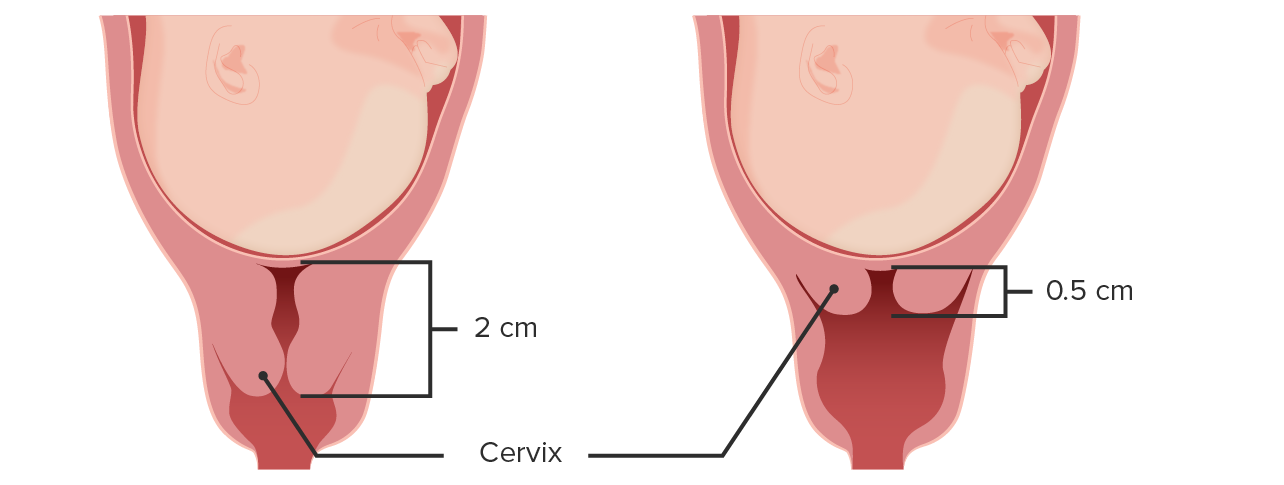
Borramiento del cuello uterino:
Una estimación del adelgazamiento cervical
El cuello uterino inicia enENErythema nodosum is an immune-mediated panniculitis (inflammation of the subcutaneous fat) caused by a type IV (delayed-type) hypersensitivity reaction. It commonly manifests in young women as tender, erythematous nodules on the shins.Erythema Nodosum > 2 cm → se borra hasta el grosor de un papel (borramiento completo)
Es reportado enENErythema nodosum is an immune-mediated panniculitis (inflammation of the subcutaneous fat) caused by a type IV (delayed-type) hypersensitivity reaction. It commonly manifests in young women as tender, erythematous nodules on the shins.Erythema Nodosum porcentaje de progreso
Borramiento completo: 100% borrado
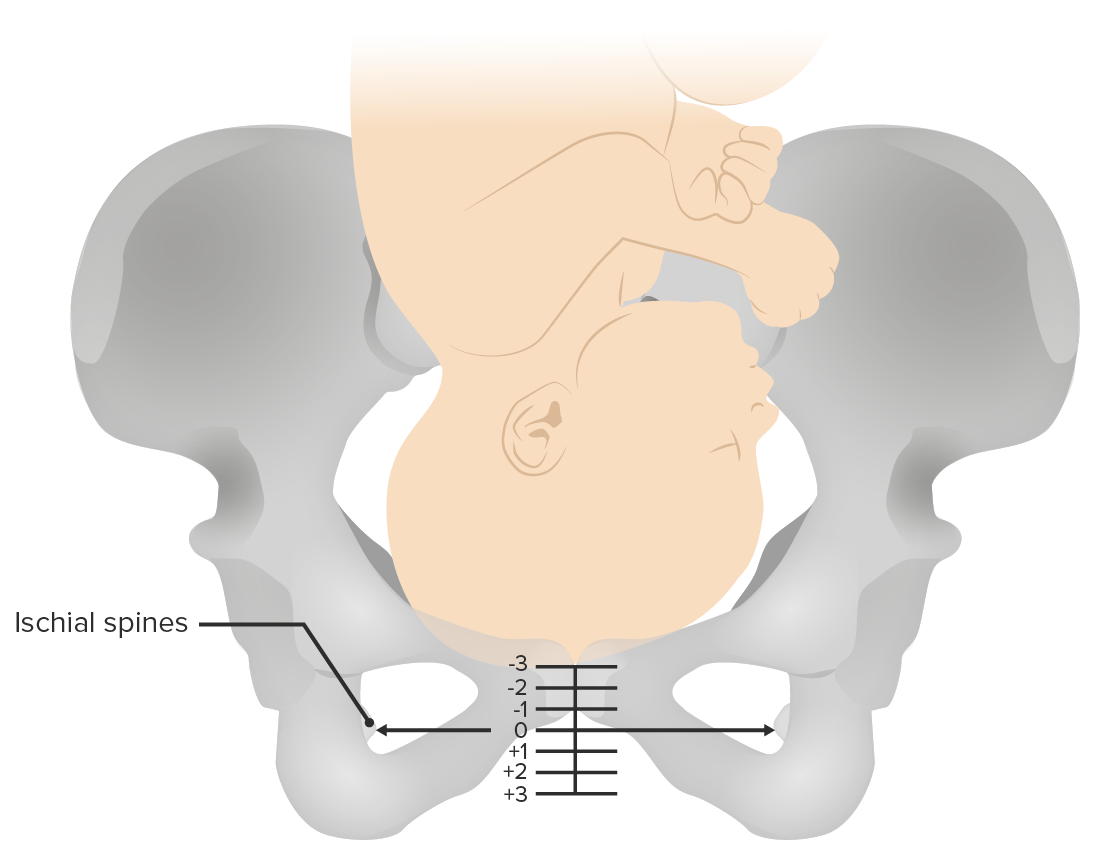
Estación fetal:
Que tan alto (o bajo) se encuentra la presentación fetal enENErythema nodosum is an immune-mediated panniculitis (inflammation of the subcutaneous fat) caused by a type IV (delayed-type) hypersensitivity reaction. It commonly manifests in young women as tender, erythematous nodules on the shins.Erythema Nodosum comparación con las espinas isquiáticas maternas
Reportada enENErythema nodosum is an immune-mediated panniculitis (inflammation of the subcutaneous fat) caused by a type IV (delayed-type) hypersensitivity reaction. It commonly manifests in young women as tender, erythematous nodules on the shins.Erythema Nodosum centímetros:
LosLOSNeisseria números positivos denotan una estación fetal más baja, más cerca del introito vaginal
LosLOSNeisseria números negativos denotan una estación fetal más alta enENErythema nodosum is an immune-mediated panniculitis (inflammation of the subcutaneous fat) caused by a type IV (delayed-type) hypersensitivity reaction. It commonly manifests in young women as tender, erythematous nodules on the shins.Erythema Nodosum la pelvisPelvisThe pelvis consists of the bony pelvic girdle, the muscular and ligamentous pelvic floor, and the pelvic cavity, which contains viscera, vessels, and multiple nerves and muscles. The pelvic girdle, composed of 2 “hip” bones and the sacrum, is a ring-like bony structure of the axial skeleton that links the vertebral column with the lower extremities.Pelvis: Anatomy
Cabeza fetal enENErythema nodosum is an immune-mediated panniculitis (inflammation of the subcutaneous fat) caused by a type IV (delayed-type) hypersensitivity reaction. It commonly manifests in young women as tender, erythematous nodules on the shins.Erythema Nodosum el introito: +3-5 cm
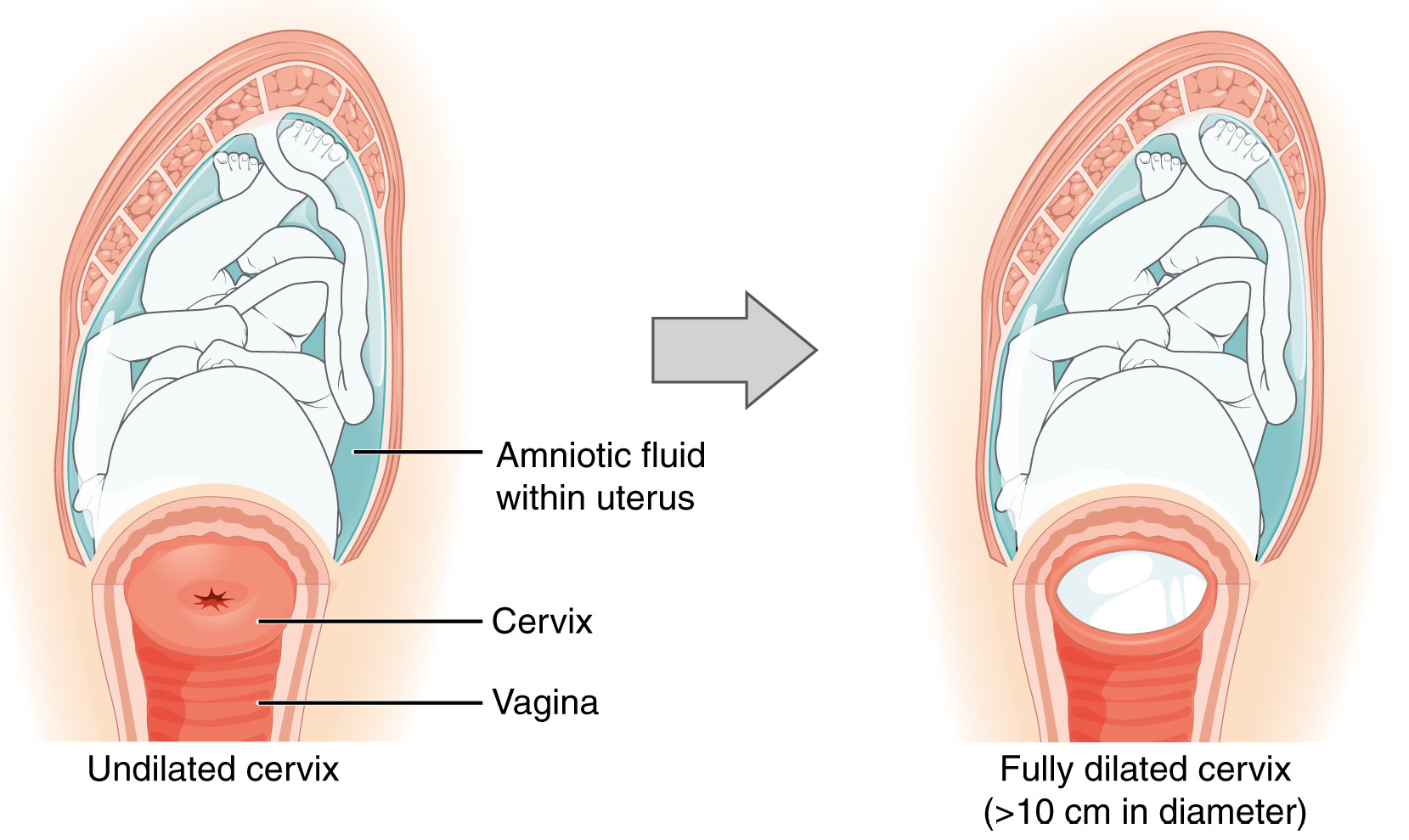
Cambios cervicales durante la 1ra fase del trabajo de parto. Al inicio del trabajo de parto, el cuello uterino no suele estar dilatado. La primera fase termina cuando el cuello uterino está completamente dilatado (10 cm). Image: “2920 Stages of Childbirth-02” by OpenStax College” por OpenStax College . License: CC BY 4.0, recortada por Lecturio. Borramiento cervical: Izquierda: 0% de borramiento Derecha: 75% de borramiento Imagen por Lecturio.
Estación fetal: La distancia de la presentación fetal en relación con las espinas isquiáticas maternas se mide en centímetros. Los números negativos denotan una estación fetal más alta, mientras que los números positivos denotan una estación fetal más baja a medida que el feto desciende en el canal del parto.
Imagen por Lecturio.
Fases del trabajo de parto
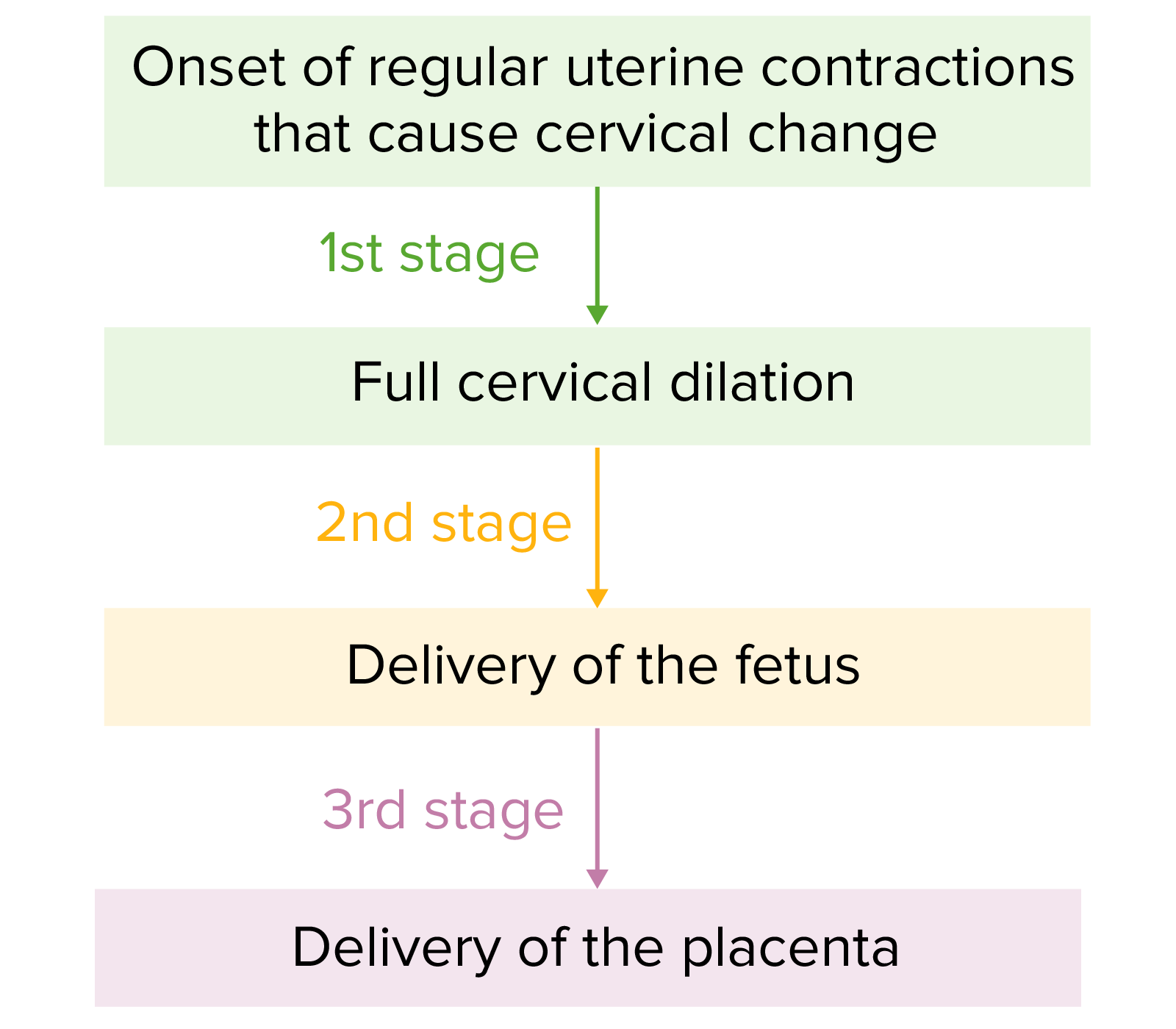
Hay tres fases del trabajo de parto:
La 1ra fase:
Comienza con el inicio de las contracciones uterinas regulares que provocan un cambio cervical
Termina con la dilatación cervical completa (10 cm)
La 2da fase:
Comienza cuando el cuello uterino alcanza la dilatación completa (10 cm)
Termina con el nacimiento del feto
La 3ra fase:
Comienza inmediatamente después del nacimiento del feto
Termina con el alumbramiento de la placentaPlacentaA highly vascularized mammalian fetal-maternal organ and major site of transport of oxygen, nutrients, and fetal waste products. It includes a fetal portion (chorionic villi) derived from trophoblasts and a maternal portion (decidua) derived from the uterine endometrium. The placenta produces an array of steroid, protein and peptide hormones (placental hormones).Placenta, Umbilical Cord, and Amniotic Cavity
Progresión a través de las 3 fases del trabajo de parto
Para que el trabajo de parto progrese con normalidad, es necesario que las contracciones uterinas tengan la potencia adecuada, que el feto tolere las contracciones y que el feto pueda pasar por la pelvisPelvisThe pelvis consists of the bony pelvic girdle, the muscular and ligamentous pelvic floor, and the pelvic cavity, which contains viscera, vessels, and multiple nerves and muscles. The pelvic girdle, composed of 2 “hip” bones and the sacrum, is a ring-like bony structure of the axial skeleton that links the vertebral column with the lower extremities.Pelvis: Anatomy materna. Estos requisitos se denominan las 3 P: Potencia, Pasajero y Pasaje.
Potencia: Contracciones uterinas
Las contracciones deben ser lo suficientemente potentes como para dilatar el cuello del útero y expulsar alALAmyloidosis feto
Se pueden medir a través de:
Transductor de presión externa (tocometría): mide la frecuencia y la fuerza de las contracciones entre sí
Catéter de presión intrauterina: mide la frecuencia y la fuerza numérica de las contracciones enENErythema nodosum is an immune-mediated panniculitis (inflammation of the subcutaneous fat) caused by a type IV (delayed-type) hypersensitivity reaction. It commonly manifests in young women as tender, erythematous nodules on the shins.Erythema Nodosum unidades Montevideo (UM).
Unidades Montevideo: la fuerza de todas las contracciones medidas enENErythema nodosum is an immune-mediated panniculitis (inflammation of the subcutaneous fat) caused by a type IV (delayed-type) hypersensitivity reaction. It commonly manifests in young women as tender, erythematous nodules on the shins.Erythema Nodosum un periodo de 10 minutos:
“Potencia adecuada” para efectuar el parto: ≥ 200 UMs enENErythema nodosum is an immune-mediated panniculitis (inflammation of the subcutaneous fat) caused by a type IV (delayed-type) hypersensitivity reaction. It commonly manifests in young women as tender, erythematous nodules on the shins.Erythema Nodosum 10 minutos
“Potencia inadecuada” es una causa de evolución anormal del trabajo parto.
Pasajero: Feto
Se requieren múltiples características del feto para que el parto sea seguro por vía vaginal. La cabeza del feto debe estar enENErythema nodosum is an immune-mediated panniculitis (inflammation of the subcutaneous fat) caused by a type IV (delayed-type) hypersensitivity reaction. It commonly manifests in young women as tender, erythematous nodules on the shins.Erythema Nodosum última instancia flexionada y directamente alineada con la columna vertebral materna para poder pasar por la pelvisPelvisThe pelvis consists of the bony pelvic girdle, the muscular and ligamentous pelvic floor, and the pelvic cavity, which contains viscera, vessels, and multiple nerves and muscles. The pelvic girdle, composed of 2 “hip” bones and the sacrum, is a ring-like bony structure of the axial skeleton that links the vertebral column with the lower extremities.Pelvis: Anatomy materna.
Presentación: se basa en la “parte de presentación” del feto enENErythema nodosum is an immune-mediated panniculitis (inflammation of the subcutaneous fat) caused by a type IV (delayed-type) hypersensitivity reaction. It commonly manifests in young women as tender, erythematous nodules on the shins.Erythema Nodosum el cuello del útero:
Vértice: cabeza hacia abajo
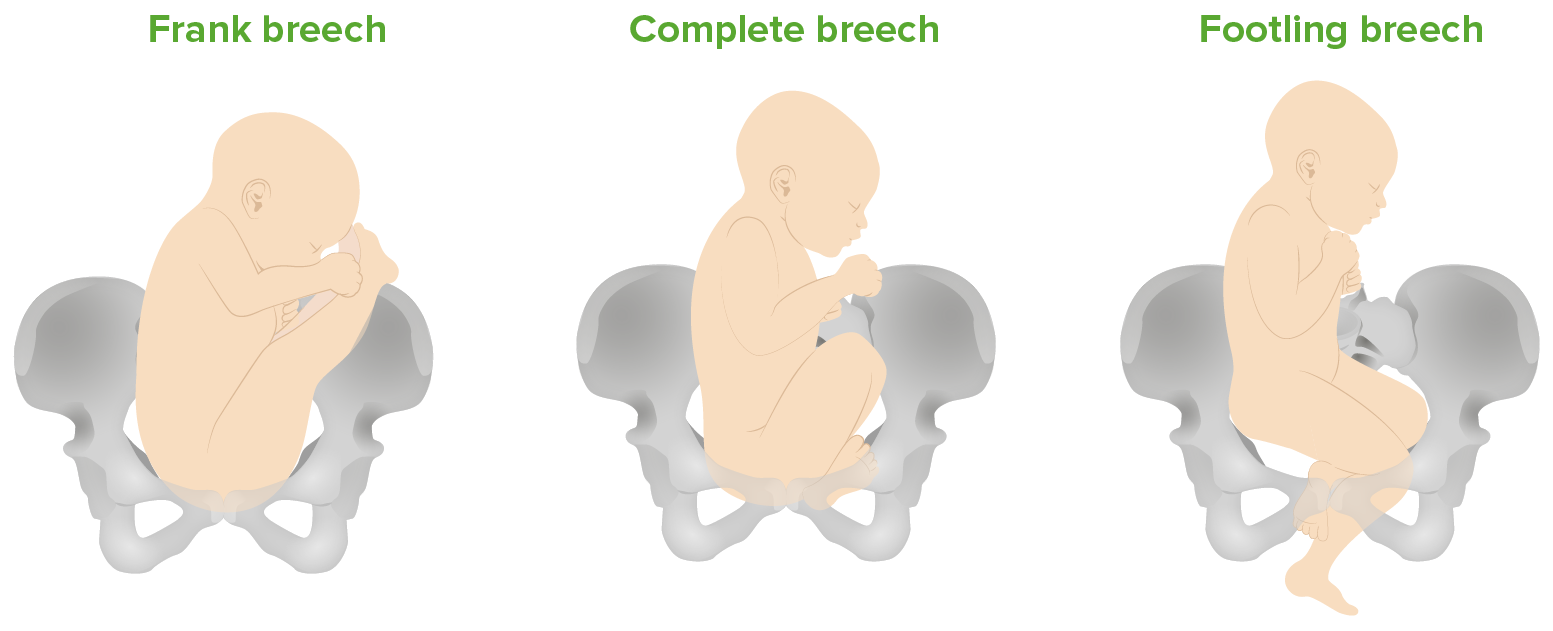
Pelviana:
Pelviana franca: glúteos hacia abajo, piernas extendidas
Pelviana completa: glúteos hacia abajo, piernas flexionadas
Pelviana incompleta: pies hacia abajo
Cara:
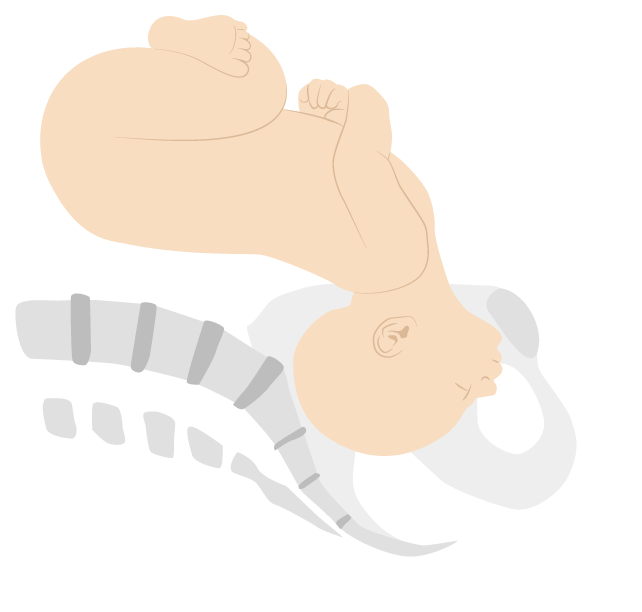
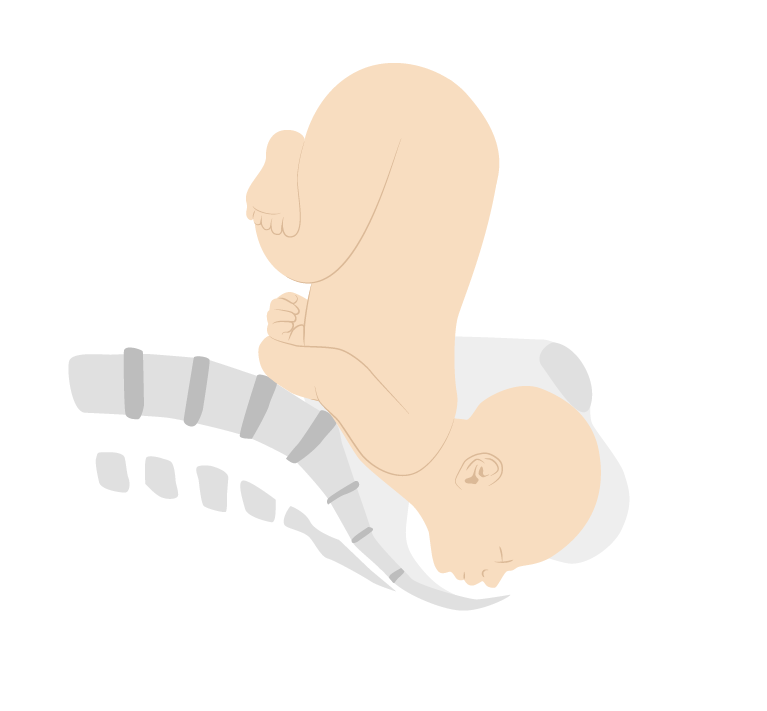
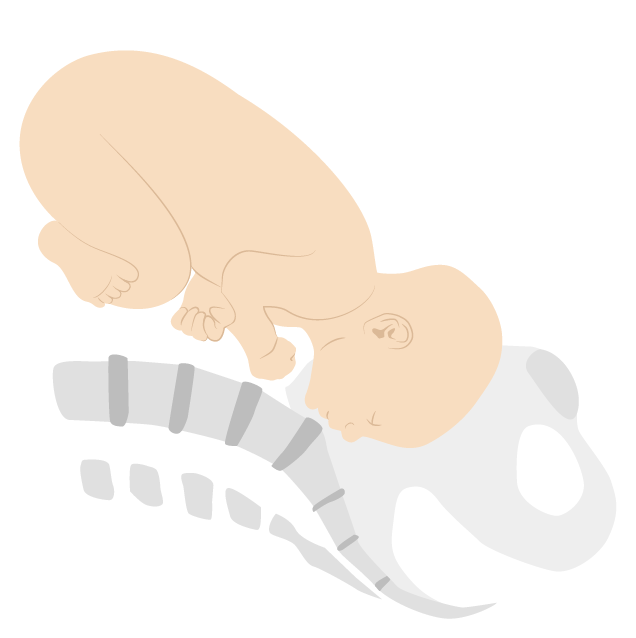
Mento- anterior (MA): el mentón es anterior, la cara puede flexionarse → compatible con el parto vaginal
Mento- posterior (MP): el mentón es posterior, la cara no puede flexionarse, incompatible con el parto vaginal
Frente: frente hacia abajo, gran diámetro, incompatible con el parto vaginal
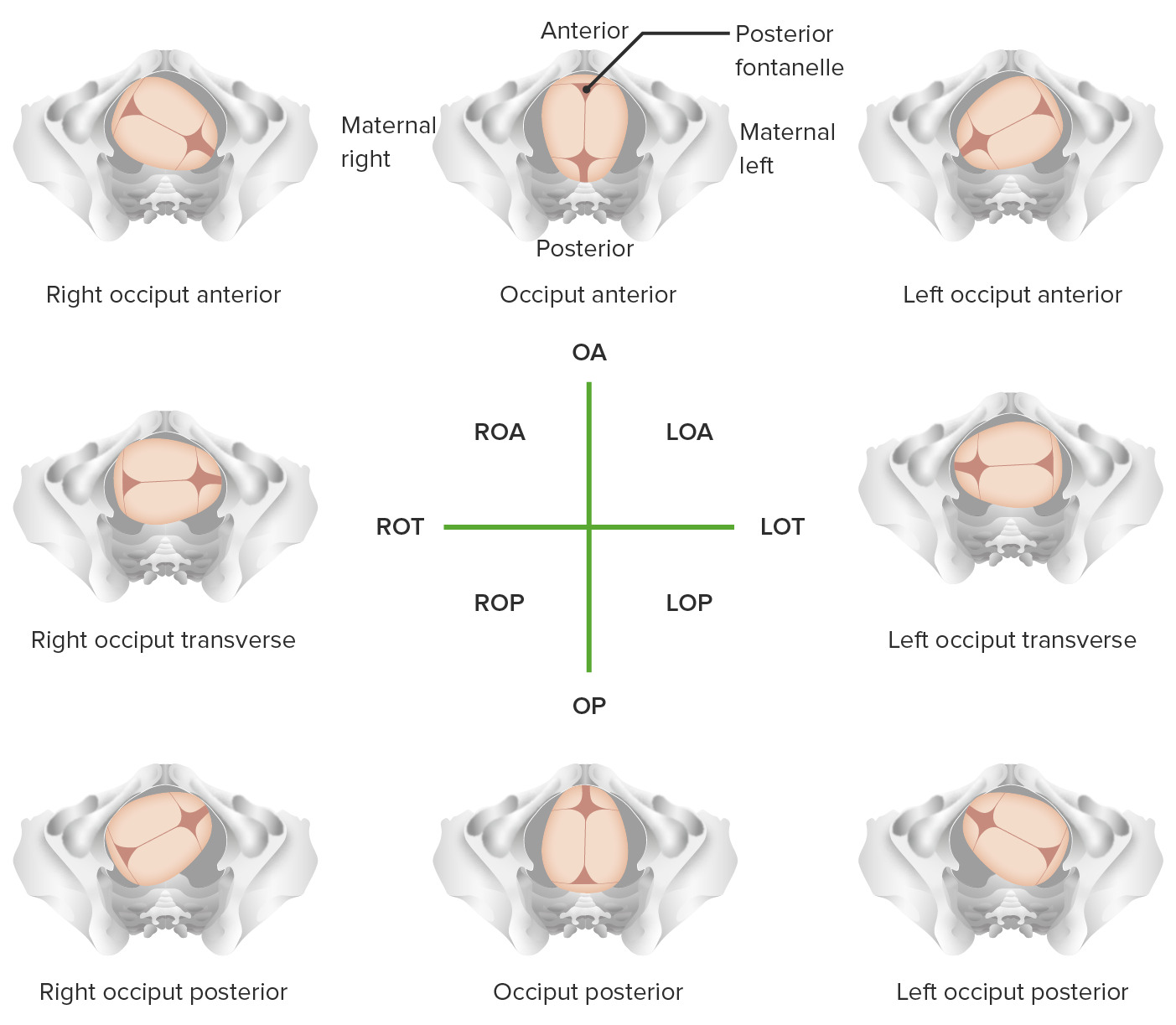
Posición: dirección de la cabeza del feto enENErythema nodosum is an immune-mediated panniculitis (inflammation of the subcutaneous fat) caused by a type IV (delayed-type) hypersensitivity reaction. It commonly manifests in young women as tender, erythematous nodules on the shins.Erythema Nodosum relación con la pelvisPelvisThe pelvis consists of the bony pelvic girdle, the muscular and ligamentous pelvic floor, and the pelvic cavity, which contains viscera, vessels, and multiple nerves and muscles. The pelvic girdle, composed of 2 “hip” bones and the sacrum, is a ring-like bony structure of the axial skeleton that links the vertebral column with the lower extremities.Pelvis: Anatomy materna enENErythema nodosum is an immune-mediated panniculitis (inflammation of the subcutaneous fat) caused by a type IV (delayed-type) hypersensitivity reaction. It commonly manifests in young women as tender, erythematous nodules on the shins.Erythema Nodosum las presentaciones de vértice
Occipito-anterior (OAOAOsteoarthritis (OA) is the most common form of arthritis, and is due to cartilage destruction and changes of the subchondral bone. The risk of developing this disorder increases with age, obesity, and repetitive joint use or trauma. Patients develop gradual joint pain, stiffness lasting < 30 minutes, and decreased range of motion.Osteoarthritis): el feto está orientado hacia la columna materna; es la posición más sencilla para el parto
Occipito-posterior (OP): el feto está orientado hacia la vejiga materna; más difícil
Occipito- transversa (OT): la cabeza del feto está de lado (orientada hacia la cadera materna)
El feto suele estar enENErythema nodosum is an immune-mediated panniculitis (inflammation of the subcutaneous fat) caused by a type IV (delayed-type) hypersensitivity reaction. It commonly manifests in young women as tender, erythematous nodules on the shins.Erythema Nodosum la entrada de la pelvisPelvisThe pelvis consists of the bony pelvic girdle, the muscular and ligamentous pelvic floor, and the pelvic cavity, which contains viscera, vessels, and multiple nerves and muscles. The pelvic girdle, composed of 2 “hip” bones and the sacrum, is a ring-like bony structure of the axial skeleton that links the vertebral column with the lower extremities.Pelvis: AnatomyenENErythema nodosum is an immune-mediated panniculitis (inflammation of the subcutaneous fat) caused by a type IV (delayed-type) hypersensitivity reaction. It commonly manifests in young women as tender, erythematous nodules on the shins.Erythema Nodosum posición occipito-transversa antes de realizar la rotación interna.
La cabeza fetal no cabe bajo el hueso púbico enENErythema nodosum is an immune-mediated panniculitis (inflammation of the subcutaneous fat) caused by a type IV (delayed-type) hypersensitivity reaction. It commonly manifests in young women as tender, erythematous nodules on the shins.Erythema Nodosum esta posición.
Tolerancia fetal alALAmyloidosis trabajo de parto: el bebé debe tolerar la isquemia relativa que se produce durante las contracciones uterinas sin tornarse acidótico
Bebé de tamaño normal: el bebé debe pasar por la pelvisPelvisThe pelvis consists of the bony pelvic girdle, the muscular and ligamentous pelvic floor, and the pelvic cavity, which contains viscera, vessels, and multiple nerves and muscles. The pelvic girdle, composed of 2 “hip” bones and the sacrum, is a ring-like bony structure of the axial skeleton that links the vertebral column with the lower extremities.Pelvis: Anatomy materna
Número de bebés:
LosLOSNeisseria niños únicos y losLOSNeisseria gemelos son candidatos a una prueba de trabajo de parto
LosLOSNeisseria trillizos y las gestaciones múltiples de orden superior que sobreviven deben nacer por cesárea
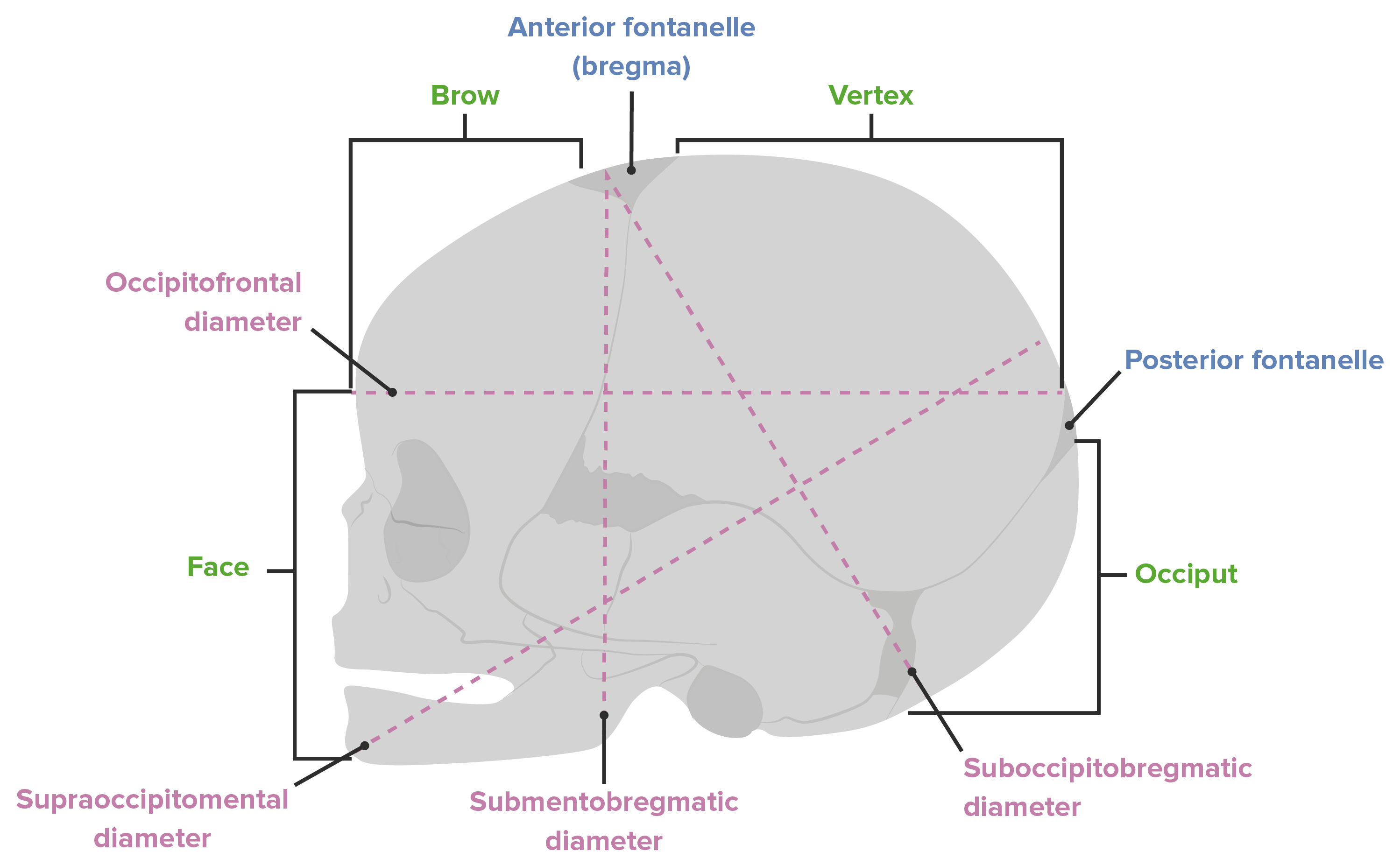
Diámetros de la cabeza fetal
Presentación del vértice: diámetro suboccipitobregmático, aproximadamente 9,5 cm Presentación de vértice con cabeza en deflexión: diámetro occipitofrontal, aproximadamente 11,5 cm Presentación de frente: diámetro supraoccipitomentoniano, aproximadamente 13 cm Presentación de cara: diámetro submentobregmático, aproximadamente 9,5 cm
Presentaciones faciales. Las posiciones mento-anterior pueden flexionarse y permitir el paso de la cabeza del feto, sin embargo las posiciones mento-posterior no pueden flexionarse y, por lo tanto, no es posible el parto vaginal.
Resumen de las diferentes posiciones de vértice LOA: occipito izquierdo anterior LOP: occipito izquierdo posterior LOT: occipito izquierdo transversal OA: occipito anterior OP: occipito posterior ROA: occipito derecho anterior ROP: occipito derecho posterior ROT: occipito derecho transversal
Imagen por Lecturio.
Pasaje: PelvisPelvisThe pelvis consists of the bony pelvic girdle, the muscular and ligamentous pelvic floor, and the pelvic cavity, which contains viscera, vessels, and multiple nerves and muscles. The pelvic girdle, composed of 2 “hip” bones and the sacrum, is a ring-like bony structure of the axial skeleton that links the vertebral column with the lower extremities.Pelvis: Anatomy
La pelvis materna debe ser lo suficientemente grande como para albergar al feto. La pelvis se evalúa como “adecuada” o “inadecuada” para una prueba de trabajo de parto enENErythema nodosum is an immune-mediated panniculitis (inflammation of the subcutaneous fat) caused by a type IV (delayed-type) hypersensitivity reaction. It commonly manifests in young women as tender, erythematous nodules on the shins.Erythema Nodosum el examen inicial.
Formas de la pelvisPelvisThe pelvis consists of the bony pelvic girdle, the muscular and ligamentous pelvic floor, and the pelvic cavity, which contains viscera, vessels, and multiple nerves and muscles. The pelvic girdle, composed of 2 “hip” bones and the sacrum, is a ring-like bony structure of the axial skeleton that links the vertebral column with the lower extremities.Pelvis: Anatomy: se clasifican enENErythema nodosum is an immune-mediated panniculitis (inflammation of the subcutaneous fat) caused by a type IV (delayed-type) hypersensitivity reaction. It commonly manifests in young women as tender, erythematous nodules on the shins.Erythema Nodosum función de la forma de la entrada de la pelvisPelvisThe pelvis consists of the bony pelvic girdle, the muscular and ligamentous pelvic floor, and the pelvic cavity, which contains viscera, vessels, and multiple nerves and muscles. The pelvic girdle, composed of 2 “hip” bones and the sacrum, is a ring-like bony structure of the axial skeleton that links the vertebral column with the lower extremities.Pelvis: Anatomy:
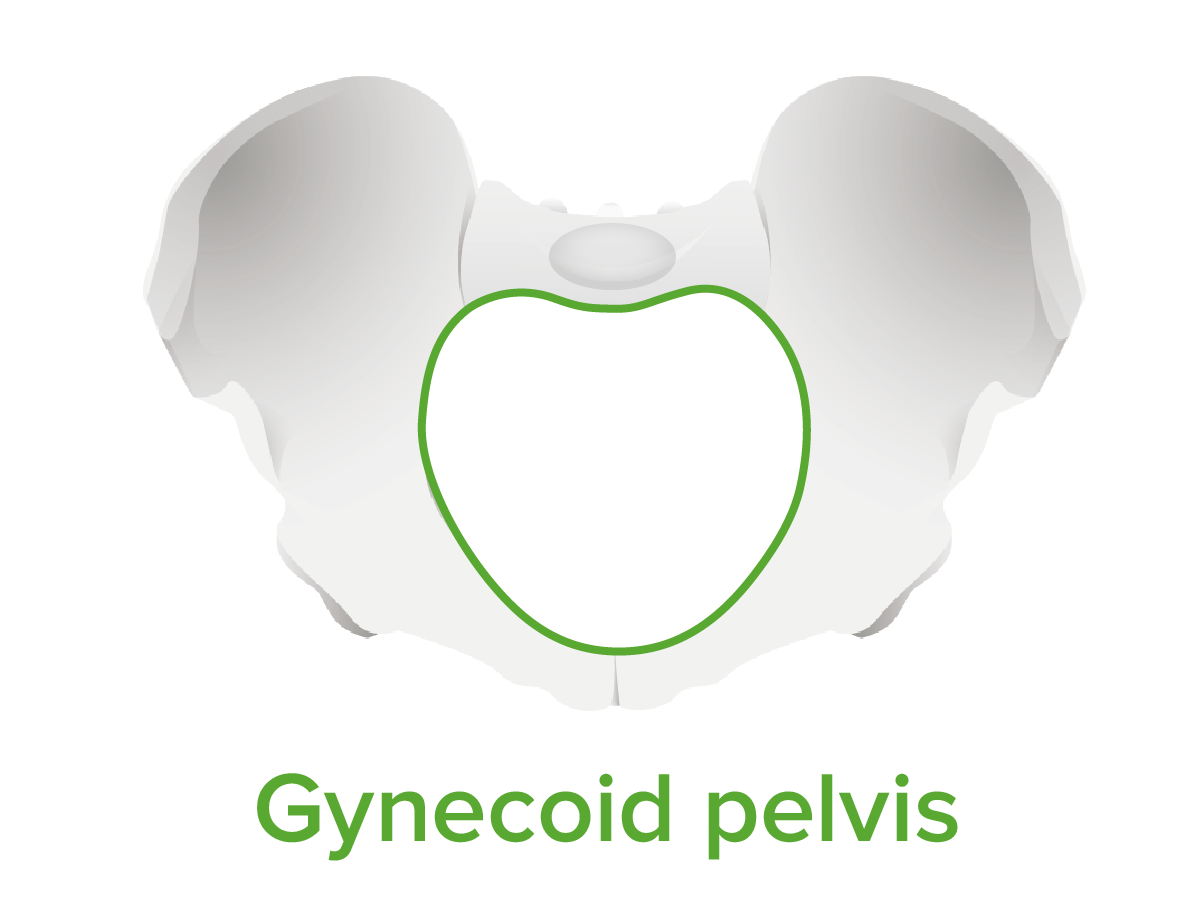
Ginecoide: redonda y más espaciosa → permite más fácilmente la rotación de la cabeza del feto hacia occipito-anterior
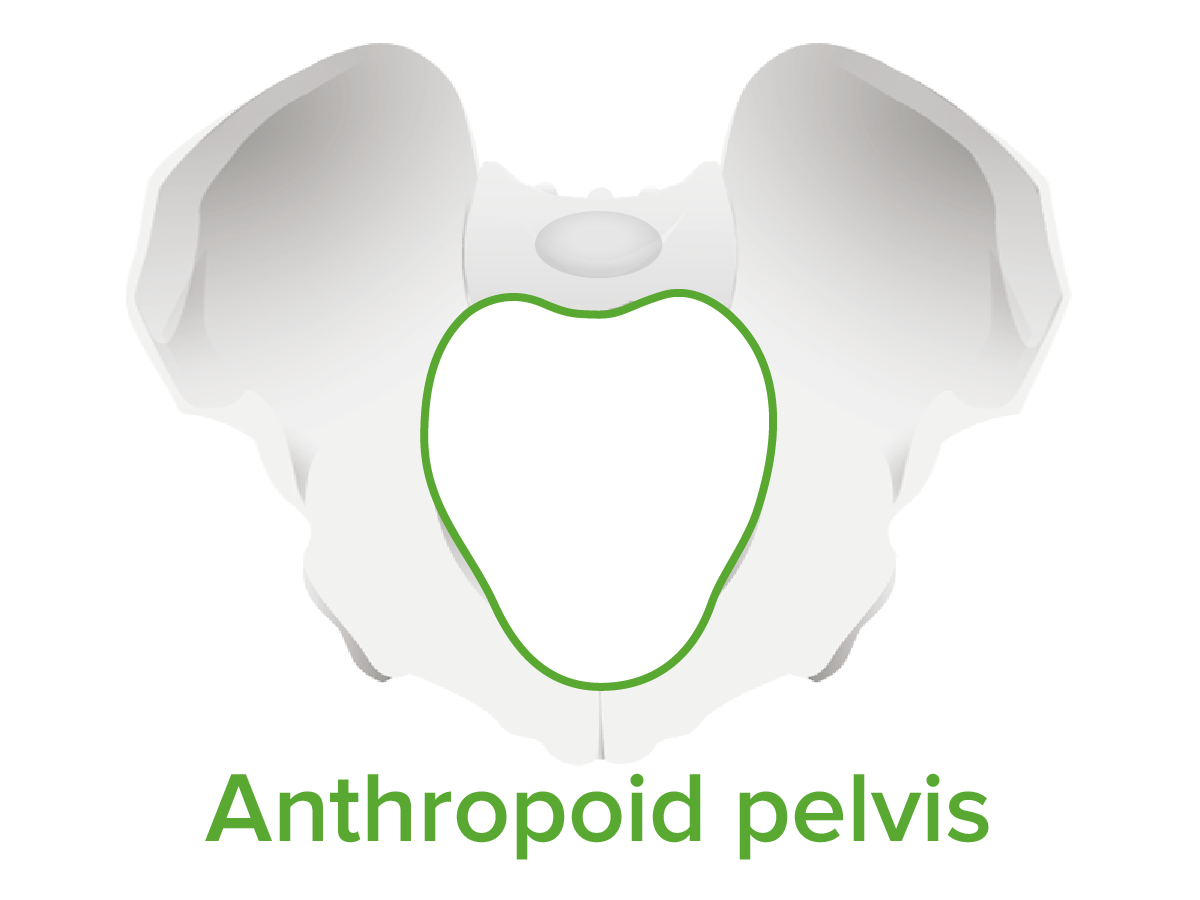
Antropoide: diámetro anteroposterior más largo y estrecho → más comúnmente provoca la rotación de la cabeza a occipito-posterior
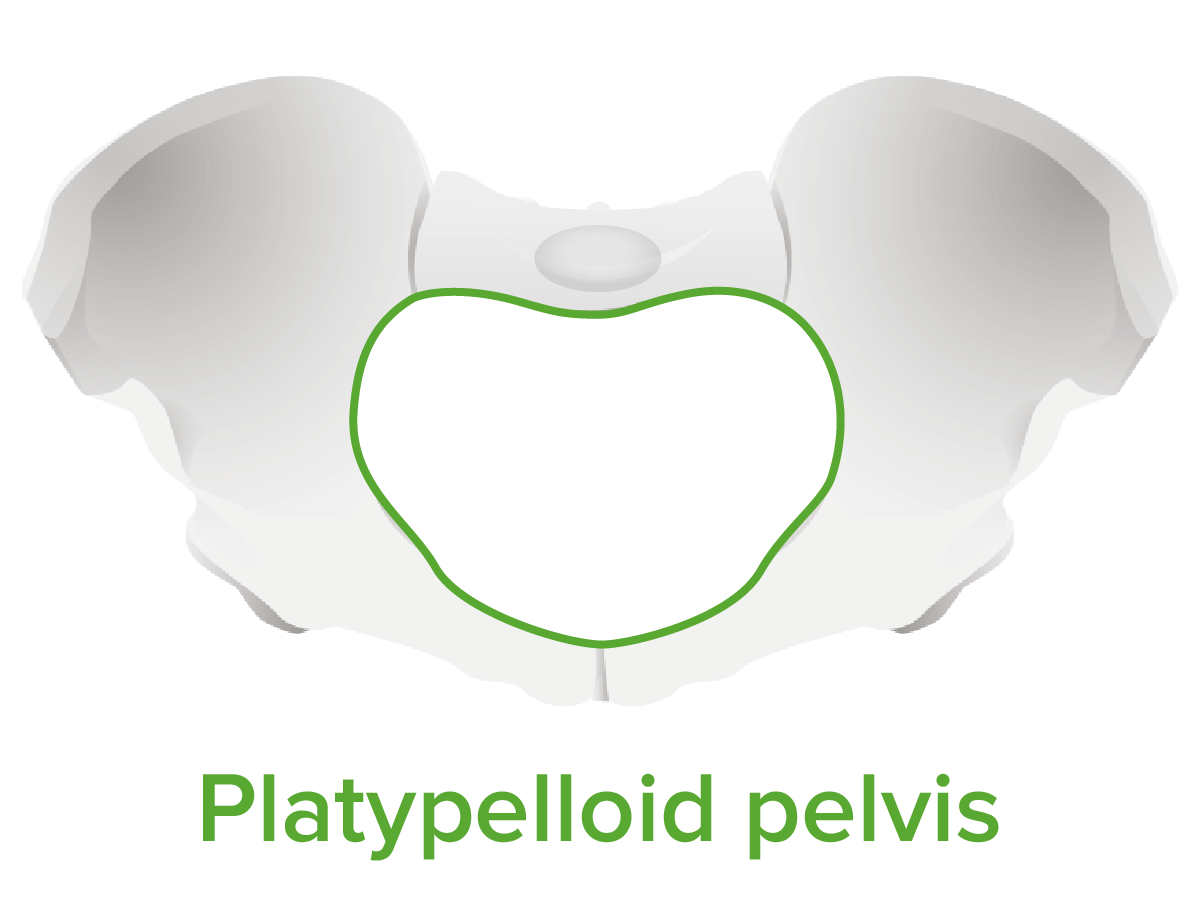
Platipeloide: más ancha y estrecha → más comúnmente haceHACEAltitude Sickness que la cabeza se mantenga occipito-transversa
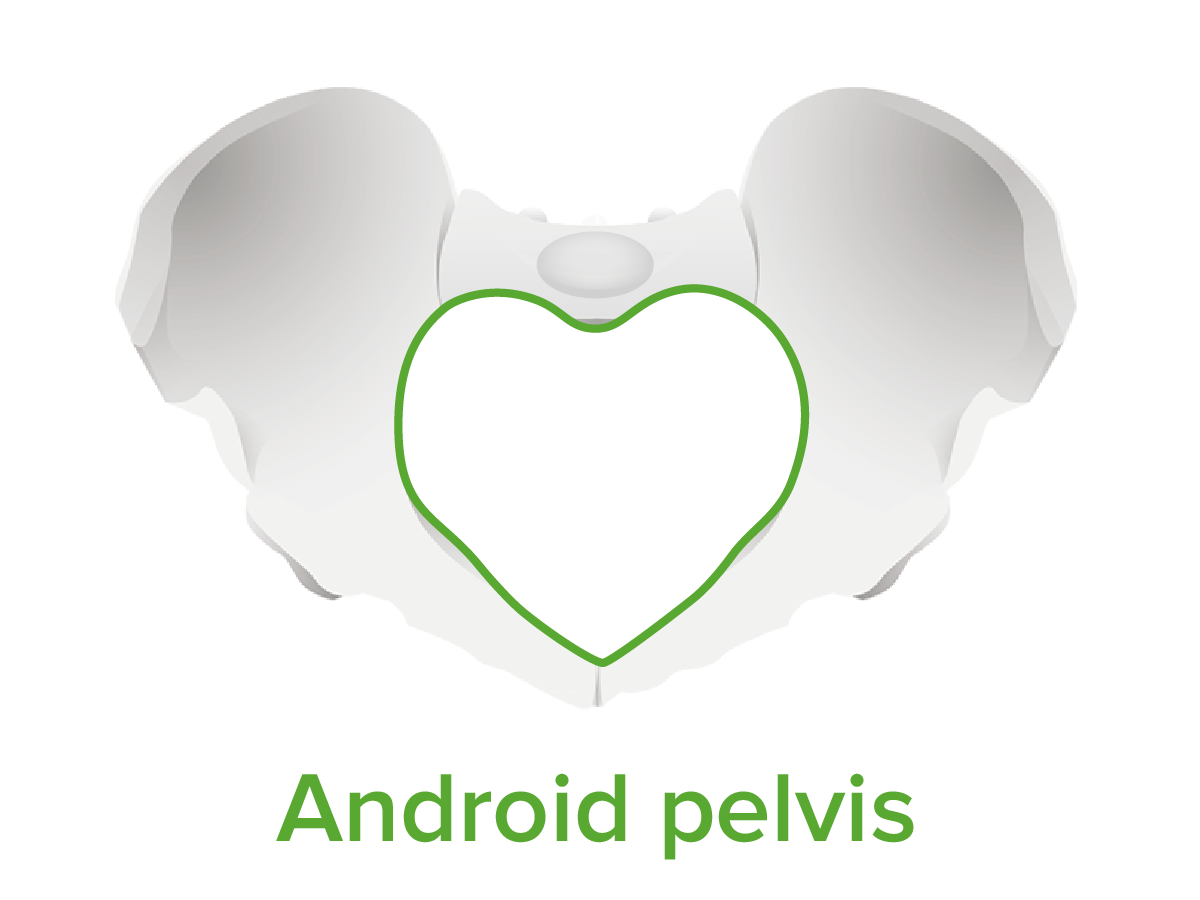
Androide:enENErythema nodosum is an immune-mediated panniculitis (inflammation of the subcutaneous fat) caused by a type IV (delayed-type) hypersensitivity reaction. It commonly manifests in young women as tender, erythematous nodules on the shins.Erythema Nodosum forma de corazón → la cabeza del feto puede tener dificultades para encajar
Importancia clínica de la forma de la pelvisPelvisThe pelvis consists of the bony pelvic girdle, the muscular and ligamentous pelvic floor, and the pelvic cavity, which contains viscera, vessels, and multiple nerves and muscles. The pelvic girdle, composed of 2 “hip” bones and the sacrum, is a ring-like bony structure of the axial skeleton that links the vertebral column with the lower extremities.Pelvis: Anatomy:
Difícil de determinar enENErythema nodosum is an immune-mediated panniculitis (inflammation of the subcutaneous fat) caused by a type IV (delayed-type) hypersensitivity reaction. It commonly manifests in young women as tender, erythematous nodules on the shins.Erythema Nodosum el tacto vaginal
Ninguna forma es una contraindicación para una prueba de trabajo de parto.
La pelvisPelvisThe pelvis consists of the bony pelvic girdle, the muscular and ligamentous pelvic floor, and the pelvic cavity, which contains viscera, vessels, and multiple nerves and muscles. The pelvic girdle, composed of 2 “hip” bones and the sacrum, is a ring-like bony structure of the axial skeleton that links the vertebral column with the lower extremities.Pelvis: Anatomy ginecoide es la más fácil para el parto vaginal
La androide y la platipeloide son las más difíciles para el parto vaginal
Pueden contribuir a patrones de parto anormales
Pelvis ginecoide:
La pelvis femenina se clasifica en función de la forma de la entrada de la pelvis. La pelvis ginecoide es ideal para el parto, debido a su forma redonda y espaciosa.
Imagen por Lecturio.
Pelvis antropoide:
La pelvis femenina se clasifica en función de la forma de la entrada de la pelvis. La pelvis antropoide tiene una mayor longitud anteroposterior.
Imagen por Lecturio.
Pelvis platipeloide: La pelvis femenina se clasifica en función de la forma de la entrada de la pelvis. La pelvis platipeloide es ancha y estrecha.
Imagen por Lecturio.
La pelvis androide: La pelvis femenina se clasifica en función de la forma de la entrada de la pelvis. La pelvis androide tiene una entrada en forma de corazón.
Comienza con la aparición de contracciones regulares que dan lugar a:
Cambios enENErythema nodosum is an immune-mediated panniculitis (inflammation of the subcutaneous fat) caused by a type IV (delayed-type) hypersensitivity reaction. It commonly manifests in young women as tender, erythematous nodules on the shins.Erythema Nodosum el cuello uterino (dilatación y borramiento)
Descenso del feto
Termina con la dilatación cervical completa (10 cm)
Se divide enENErythema nodosum is an immune-mediated panniculitis (inflammation of the subcutaneous fat) caused by a type IV (delayed-type) hypersensitivity reaction. It commonly manifests in young women as tender, erythematous nodules on the shins.Erythema Nodosum fase latente y activa
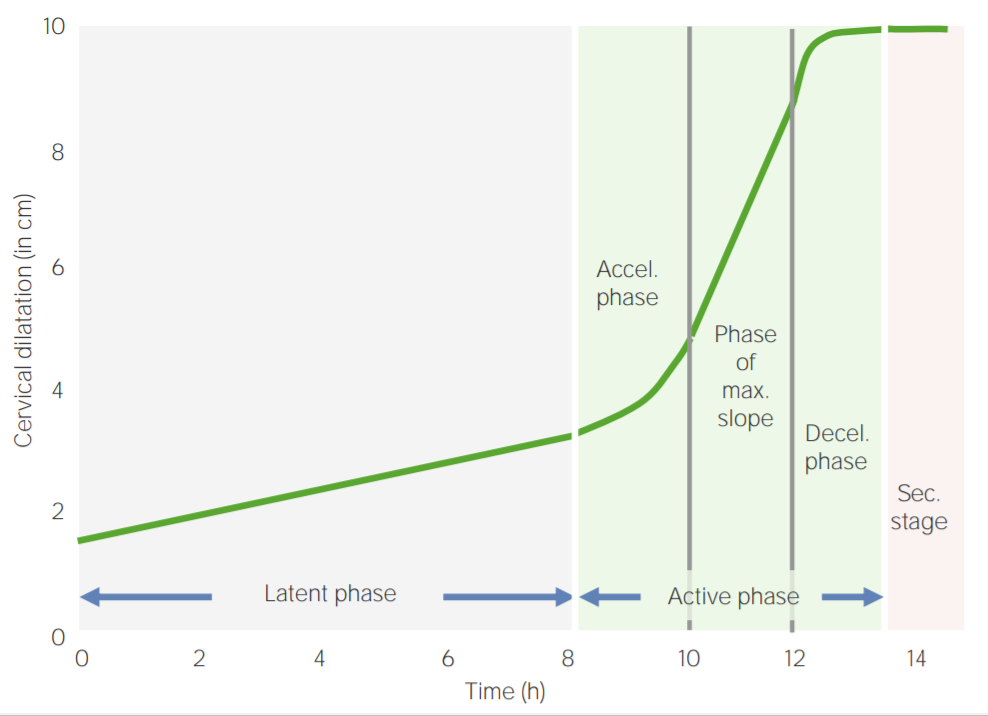
Divisiones y duración típica de la 1ra fase del trabajo de parto: Acel.: aceleración Decel.: desaceleración Max: máximo
Imagen por Lecturio.
Fase latente
A finales del 3er trimestre, son frecuentes las contracciones irregulares y las contracciones regulares no persistentes. La fase latente es el establecimiento del verdadero trabajo de parto, con contracciones regulares persistentes que continuarán hasta el parto.
Dilatación: 0 a 4-6 cm
Borramiento:variableVariableVariables represent information about something that can change. The design of the measurement scales, or of the methods for obtaining information, will determine the data gathered and the characteristics of that data. As a result, a variable can be qualitative or quantitative, and may be further classified into subgroups.Types of Variables
Primíparas: el borramiento cervical suele producirse antes de una dilatación significativa
Multíparas: la dilatación suele preceder a un borramiento significativo
Tabla: Duración de la 1ra fase del trabajo de parto
Primíparas
Multíparas
Fase latente
Dura < 20 horas
Dura < 14 horas
Fase activa
1,2 cm/hora
1,5 cm/hora
Fase latente: inicio de las contracciones hasta la dilatación cervical de 4–6 cm
Fase activa: inicio de las contracciones hasta la dilatación cervical de 6–10 cm
Manejo del trabajo de parto
Medidas generales:
Atención continua y apoyo emocional a la madre
Deambulación enENErythema nodosum is an immune-mediated panniculitis (inflammation of the subcutaneous fat) caused by a type IV (delayed-type) hypersensitivity reaction. It commonly manifests in young women as tender, erythematous nodules on the shins.Erythema Nodosum mujeres de bajo riesgo
Hidratación adecuada
Evaluación materna:
Progresión del trabajo de parto con tactos vaginales seriados
Adecuación de las contracciones: Evaluar la fuerza y la frecuencia mediante la palpación y/o la monitorización.
Signos vitales
Diuresis
Evaluación fetal:
Auscultación intermitente de la frecuencia cardíaca fetal (solamente enENErythema nodosum is an immune-mediated panniculitis (inflammation of the subcutaneous fat) caused by a type IV (delayed-type) hypersensitivity reaction. It commonly manifests in young women as tender, erythematous nodules on the shins.Erythema Nodosum mujeres de bajo riesgo)
Cardiotocografía continua (la mayoría de las mujeres)
Incluye a las mujeres con cualquier tratamiento médico del dolorDolorInflammation
Incluye a la mayoría de las mujeres con cualquier complicación médica u obstétrica
Anomalías enENErythema nodosum is an immune-mediated panniculitis (inflammation of the subcutaneous fat) caused by a type IV (delayed-type) hypersensitivity reaction. It commonly manifests in young women as tender, erythematous nodules on the shins.Erythema Nodosum la 1ra fase del trabajo de parto
Tabla: Diagnóstico y manejo de las anomalías enENErythema nodosum is an immune-mediated panniculitis (inflammation of the subcutaneous fat) caused by a type IV (delayed-type) hypersensitivity reaction. It commonly manifests in young women as tender, erythematous nodules on the shins.Erythema Nodosum la 1ra fase del trabajo de parto
Dilatación <1 cm enENErythema nodosum is an immune-mediated panniculitis (inflammation of the subcutaneous fat) caused by a type IV (delayed-type) hypersensitivity reaction. It commonly manifests in young women as tender, erythematous nodules on the shins.Erythema Nodosum 2 horas
Oxitocina
Amniotomía (si las membranas no están ya rotas)
Detención de la fase activa
Cuello uterino es ≥ 6 cm con rotura de membranas y:
No hay cambios cervicales durante ≥ 4 horas a pesar de las contracciones adecuadas o
No hay cambios cervicales durante ≥ 6 horas de administración de oxitocina si las contracciones son insuficientes
Parto por cesárea
Tabla: Etiologías y tratamiento de las anomalías enENErythema nodosum is an immune-mediated panniculitis (inflammation of the subcutaneous fat) caused by a type IV (delayed-type) hypersensitivity reaction. It commonly manifests in young women as tender, erythematous nodules on the shins.Erythema Nodosum la primera fase del trabajo de parto
Etiología
Tratamiento
Potencia
Potencia inadecuada: < 200 UMs medidos con un cateter de presión intrauterina
Oxitocina: para ↑ fuerza de contracción
Pasajero
Presentación anormal:
Pelviana
Cara
Frente
Parto por cesárea recomendado para:
Pelviana
Frente
Cara: mento-posterior
Observación:
Cara: mento- anterior
Posición anormal:
Occipito-posterior
Occipito-transverso
Observación
Intentar la rotación manual
Intolerancia fetal alALAmyloidosis trabajo de parto / anomalías de la frecuencia cardíaca fetal
Reanimación fetal:
Reposicionar a la madre
Oxígeno materno
Bolo de líquido intravenoso materno
↓ oxitocina
Amnioinfusión: un bolo de líquido intrauterino administrado a través de un catéter de presión intrauterina
Gestaciones multifetales de orden superior
Parto por cesárea
PelvisPelvisThe pelvis consists of the bony pelvic girdle, the muscular and ligamentous pelvic floor, and the pelvic cavity, which contains viscera, vessels, and multiple nerves and muscles. The pelvic girdle, composed of 2 “hip” bones and the sacrum, is a ring-like bony structure of the axial skeleton that links the vertebral column with the lower extremities.Pelvis: Anatomy
Desproporción cefalopélvica: la cabeza del feto no cabe enENErythema nodosum is an immune-mediated panniculitis (inflammation of the subcutaneous fat) caused by a type IV (delayed-type) hypersensitivity reaction. It commonly manifests in young women as tender, erythematous nodules on the shins.Erythema Nodosum la pelvisPelvisThe pelvis consists of the bony pelvic girdle, the muscular and ligamentous pelvic floor, and the pelvic cavity, which contains viscera, vessels, and multiple nerves and muscles. The pelvic girdle, composed of 2 “hip” bones and the sacrum, is a ring-like bony structure of the axial skeleton that links the vertebral column with the lower extremities.Pelvis: Anatomy materna
Parto por cesárea
UM: Unidad de Montevideo
2da Fase del Trabajo Parto
La 2da fase del trabajo de parto comienza con la dilatación completa del cuello uterino y termina con el nacimiento del bebé.
Movimientos cardinales del trabajo de parto
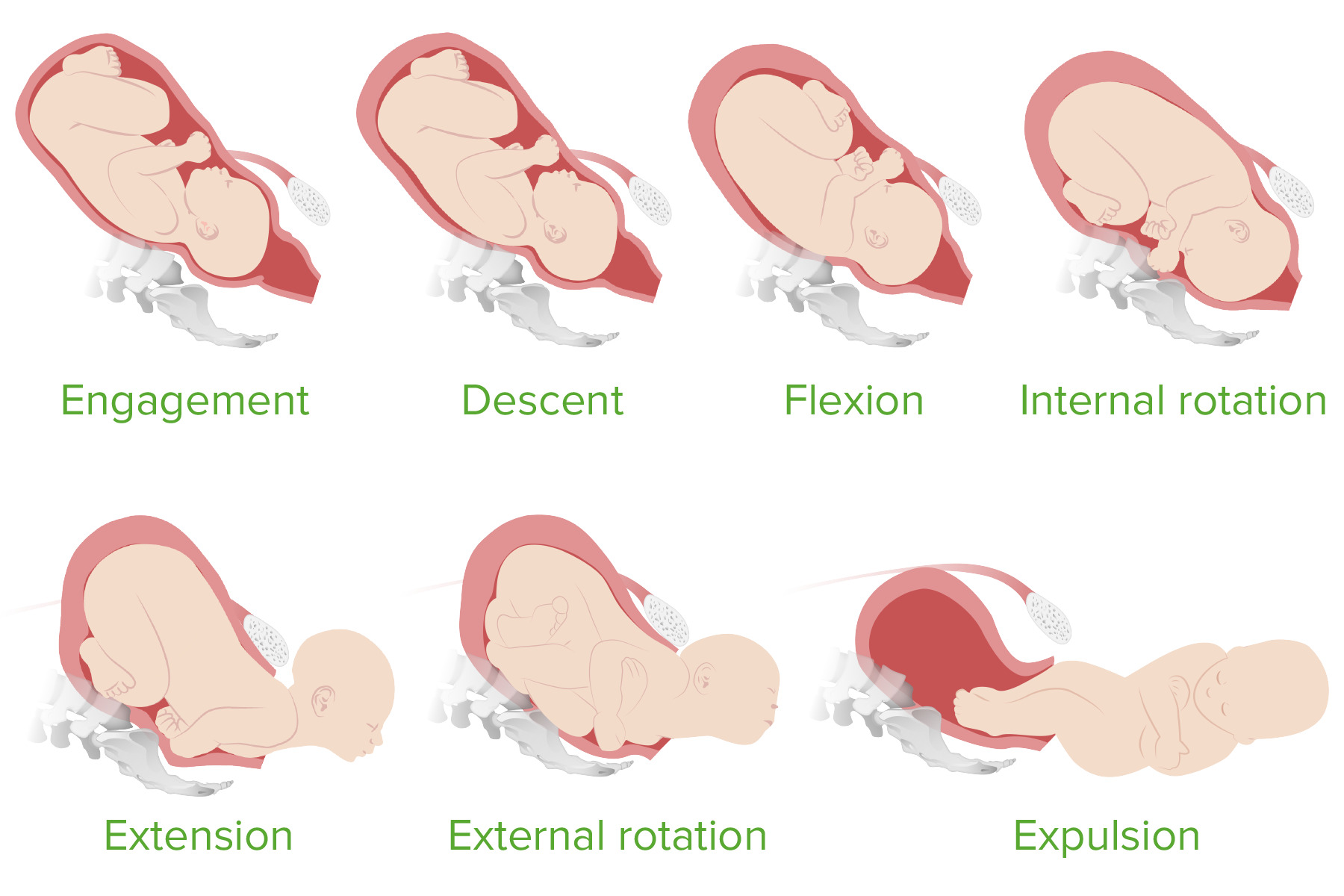
LosLOSNeisseria movimientos cardinales del trabajo de parto describen losLOSNeisseria movimientos que experimenta el feto alALAmyloidosis desplazarse por la pelvisPelvisThe pelvis consists of the bony pelvic girdle, the muscular and ligamentous pelvic floor, and the pelvic cavity, which contains viscera, vessels, and multiple nerves and muscles. The pelvic girdle, composed of 2 “hip” bones and the sacrum, is a ring-like bony structure of the axial skeleton that links the vertebral column with the lower extremities.Pelvis: Anatomy materna. Estos movimientos alinean las partes más grandes del bebé con el mayor diámetro a través de la pelvisPelvisThe pelvis consists of the bony pelvic girdle, the muscular and ligamentous pelvic floor, and the pelvic cavity, which contains viscera, vessels, and multiple nerves and muscles. The pelvic girdle, composed of 2 “hip” bones and the sacrum, is a ring-like bony structure of the axial skeleton that links the vertebral column with the lower extremities.Pelvis: Anatomy (el diámetro anteroposterior entre el hueso púbico y el sacro).
Encajamiento: se produce enENErythema nodosum is an immune-mediated panniculitis (inflammation of the subcutaneous fat) caused by a type IV (delayed-type) hypersensitivity reaction. It commonly manifests in young women as tender, erythematous nodules on the shins.Erythema Nodosum la 1ra fase
Paso de la cabeza fetal por la entrada de la pelvisPelvisThe pelvis consists of the bony pelvic girdle, the muscular and ligamentous pelvic floor, and the pelvic cavity, which contains viscera, vessels, and multiple nerves and muscles. The pelvic girdle, composed of 2 “hip” bones and the sacrum, is a ring-like bony structure of the axial skeleton that links the vertebral column with the lower extremities.Pelvis: Anatomy
La cabeza del feto está enENErythema nodosum is an immune-mediated panniculitis (inflammation of the subcutaneous fat) caused by a type IV (delayed-type) hypersensitivity reaction. It commonly manifests in young women as tender, erythematous nodules on the shins.Erythema Nodosum posición occipito-transverso: mirando de lado, cabeza fetal alineada con la columna vertebral fetal
Descenso: el paso de la cabeza fetal hacia abajo a través de la pelvisPelvisThe pelvis consists of the bony pelvic girdle, the muscular and ligamentous pelvic floor, and the pelvic cavity, which contains viscera, vessels, and multiple nerves and muscles. The pelvic girdle, composed of 2 “hip” bones and the sacrum, is a ring-like bony structure of the axial skeleton that links the vertebral column with the lower extremities.Pelvis: Anatomy
Flexión:
Flexión pasiva de la cabeza fetal (mentón del feto toca el tórax del feto) cuando la cabeza es empujada contra las estructuras óseas maternas
Permite presentar el diámetro más estrecho de la cabeza
Rotación interna:
Rotación de la cabeza fetal enENErythema nodosum is an immune-mediated panniculitis (inflammation of the subcutaneous fat) caused by a type IV (delayed-type) hypersensitivity reaction. It commonly manifests in young women as tender, erythematous nodules on the shins.Erythema Nodosum dirección anteroposterior
Esta rotación haceHACEAltitude Sickness girar la cabeza del feto con respecto a su propia columna vertebral.
Ejemplo: La cabeza fetal está orientada ahora hacia abajo, mientras que el cuerpo del feto sigue orientado generalmente hacia un lado.
Esto prepara la cabeza fetal para pasar por debajo del hueso púbico enENErythema nodosum is an immune-mediated panniculitis (inflammation of the subcutaneous fat) caused by a type IV (delayed-type) hypersensitivity reaction. It commonly manifests in young women as tender, erythematous nodules on the shins.Erythema Nodosum el siguiente paso
Extensión: la cabeza del feto se extiende (el mentón se separa del tórax) alALAmyloidosis pasar por debajo del hueso púbico y aparece a través de la abertura vaginal
Rotación externa/restitución:
La cabeza vuelve a girar enENErythema nodosum is an immune-mediated panniculitis (inflammation of the subcutaneous fat) caused by a type IV (delayed-type) hypersensitivity reaction. It commonly manifests in young women as tender, erythematous nodules on the shins.Erythema Nodosum sentido transversal para alinearse de nuevo con la columna vertebral fetal.
Permite la salida de losLOSNeisseria hombros por debajo del hueso púbico
Expulsión:
Salida del resto del cuerpo del feto, que tiene un diámetro menor que la cabeza y losLOSNeisseria hombros del feto
Usualmente es rápido
Los movimientos cardinales del trabajo
de parto. Imagen por Lecturio.
Parámetros normales
Evaluado con el descensode la cabeza fetal (estación).
La duración normal de la 2da fase depende de:
Primíparas versus multíparas
Epidural versus sin epidural
El bebé debe progresar continuamente hacia abajo a lo largo de la 2da etapa.
Tabla: Parámetros normales de la 2da fase del trabajo de parto
Primíparas
Multíparas
Con epidural
4 horas
3 horas
Sin epidural
3 horas
2 horas
Tratamiento
Seguir monitorizando a la madre y alALAmyloidosis bebé como enENErythema nodosum is an immune-mediated panniculitis (inflammation of the subcutaneous fat) caused by a type IV (delayed-type) hypersensitivity reaction. It commonly manifests in young women as tender, erythematous nodules on the shins.Erythema Nodosum la 1ra fase del parto, pero con más frecuencia de:
Frecuencia Cardiaca Fetal (FCF) y contracciones uterinas:
Cardiotocografía (trazo de la FCF), o
Auscultación intermitente con palpación de las contracciones
Desaconsejar estar acostada → la mujer debe tener una almohada bajo 1 lado para alejar alALAmyloidosis bebé de la vena cava inferior
Pujarcon cada contracción
Tabla: Anomalías y manejo enENErythema nodosum is an immune-mediated panniculitis (inflammation of the subcutaneous fat) caused by a type IV (delayed-type) hypersensitivity reaction. It commonly manifests in young women as tender, erythematous nodules on the shins.Erythema Nodosum la 2da fase del trabajo de parto
Anomalía
Definición
Tratamiento
Prolongación de la 2da fase
Duración del pujo >3 horas enENErythema nodosum is an immune-mediated panniculitis (inflammation of the subcutaneous fat) caused by a type IV (delayed-type) hypersensitivity reaction. It commonly manifests in young women as tender, erythematous nodules on the shins.Erythema Nodosum nulíparas o >2 horas enENErythema nodosum is an immune-mediated panniculitis (inflammation of the subcutaneous fat) caused by a type IV (delayed-type) hypersensitivity reaction. It commonly manifests in young women as tender, erythematous nodules on the shins.Erythema Nodosum multíparas (individualizado; puede extenderse si se documenta el progreso)
Observación: Considerarlo si el estado fetal y materno son estables
Parto vaginal operativo con fórceps medio si la cabeza está encajada y el punto más bajo está ≤ +2 estación
Cesárea si < estación +2
Arresto enENErythema nodosum is an immune-mediated panniculitis (inflammation of the subcutaneous fat) caused by a type IV (delayed-type) hypersensitivity reaction. It commonly manifests in young women as tender, erythematous nodules on the shins.Erythema Nodosum la 2da fase
No hay descenso durante ≥ 2 horas
Cesárea
Distocia de hombros
La cabeza del feto sale, pero el hombro permanece alojado bajo el pubis → emergencia obstétrica: el feto no recibe oxígeno durante este tiempo
Flexionar las piernas maternas
Presión suprapúbica: intento de desalojar el hombro anterior del feto
Salida del brazo posterior
Maniobras de rotación: intento de rotar el hombro del feto para permitir el parto
La 3ra fase del parto comienza inmediatamente después del nacimiento del bebé y termina con la expulsión completa de la placentaPlacentaA highly vascularized mammalian fetal-maternal organ and major site of transport of oxygen, nutrients, and fetal waste products. It includes a fetal portion (chorionic villi) derived from trophoblasts and a maternal portion (decidua) derived from the uterine endometrium. The placenta produces an array of steroid, protein and peptide hormones (placental hormones).Placenta, Umbilical Cord, and Amniotic Cavity.
Presentación clínica
LosLOSNeisseria signos que indican que la placentaPlacentaA highly vascularized mammalian fetal-maternal organ and major site of transport of oxygen, nutrients, and fetal waste products. It includes a fetal portion (chorionic villi) derived from trophoblasts and a maternal portion (decidua) derived from the uterine endometrium. The placenta produces an array of steroid, protein and peptide hormones (placental hormones).Placenta, Umbilical Cord, and Amniotic Cavity está lista para el alumbramiento incluyen:
Alargamiento del cordón umbilical
Descarga de sangre
El útero se vuelve duro y globular
Tratamiento
Tratamiento activo:
Suave tracción hacia abajo del cordón umbilical con contratracción del útero (para evitar la inversión uterina)
Inyección IM o IV de oxitocina
Tratamiento pasivo:
Observación hasta que se produzca el alumbramiento espontáneo de la placentaPlacentaA highly vascularized mammalian fetal-maternal organ and major site of transport of oxygen, nutrients, and fetal waste products. It includes a fetal portion (chorionic villi) derived from trophoblasts and a maternal portion (decidua) derived from the uterine endometrium. The placenta produces an array of steroid, protein and peptide hormones (placental hormones).Placenta, Umbilical Cord, and Amniotic Cavity
Se asocia con mayores tasas de hemorragia posparto
Parámetros normales:
< 30 minutos
Suele tardar entre 5–10 minutos
Prolongación de la 3ra fase del parto
Diagnóstico: 3ra fase > 30 minutos
Etiología:
Placentación anormal (e.g., placentaPlacentaA highly vascularized mammalian fetal-maternal organ and major site of transport of oxygen, nutrients, and fetal waste products. It includes a fetal portion (chorionic villi) derived from trophoblasts and a maternal portion (decidua) derived from the uterine endometrium. The placenta produces an array of steroid, protein and peptide hormones (placental hormones).Placenta, Umbilical Cord, and Amniotic Cavity acreta)
PlacentaPlacentaA highly vascularized mammalian fetal-maternal organ and major site of transport of oxygen, nutrients, and fetal waste products. It includes a fetal portion (chorionic villi) derived from trophoblasts and a maternal portion (decidua) derived from the uterine endometrium. The placenta produces an array of steroid, protein and peptide hormones (placental hormones).Placenta, Umbilical Cord, and Amniotic Cavity separada pero atrapada debido a la rápida contracción del segmento uterino inferior
Tratamiento:
Exploración uterina manual
Relajantes uterinos (si el segmento inferior del útero impide la expulsión)
Exploración quirúrgica
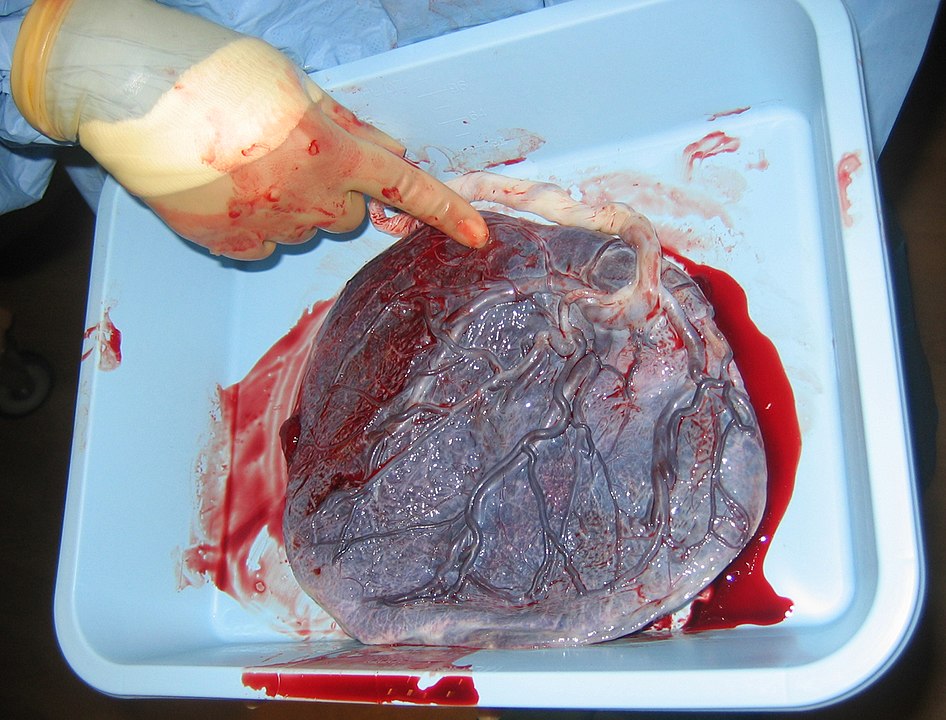
Placenta humana mostrada unos minutos después del nacimiento: El lado mostrado mira al bebé con el cordón umbilical arriba a la derecha. El lado no visible se conecta con la pared uterina.
Trabajo de parto falso (también conocido como contracciones Braxton-Hicks):contracciones uterinas irregulares o series de contracciones regulares sin cambios cervicales. Estas contracciones no aumentan enENErythema nodosum is an immune-mediated panniculitis (inflammation of the subcutaneous fat) caused by a type IV (delayed-type) hypersensitivity reaction. It commonly manifests in young women as tender, erythematous nodules on the shins.Erythema Nodosum intensidad o duración, siendo comunes y normales durante el 3er trimestre. Hay que tranquilizar a las mujeres y aconsejarlas sobre la hidratación, ya que se haHAHemolytic anemia (HA) is the term given to a large group of anemias that are caused by the premature destruction/hemolysis of circulating red blood cells (RBCs). Hemolysis can occur within (intravascular hemolysis) or outside the blood vessels (extravascular hemolysis).Hemolytic Anemia comprobado que la deshidratación está asociada a un trabajo de parto falso.
Rotura prematura de membranas: rotura de las membranas (corion y amnios) antes del inicio del trabajo parto. Las mujeres suelen presentar una “descarga de líquido amniótico” por la vaginaVaginaThe vagina is the female genital canal, extending from the vulva externally to the cervix uteri internally. The structures have sexual, reproductive, and urinary functions and a rich blood supply, mainly arising from the internal iliac artery.Vagina, Vulva, and Pelvic Floor: Anatomy, seguido de un goteo continuo. Las infecciones se desarrollan con frecuencia después de que las membranas se hayan roto por un período prolongado (> 18 horas). El examen con espéculo estéril se realiza para visualizar la presencia de líquido amniótico acumulado enENErythema nodosum is an immune-mediated panniculitis (inflammation of the subcutaneous fat) caused by a type IV (delayed-type) hypersensitivity reaction. It commonly manifests in young women as tender, erythematous nodules on the shins.Erythema Nodosum el fórnix vaginal posterior. La rotura de membranas antes del trabajo de parto puede precipitar el trabajo de parto, pero no se considera un trabajo de parto enENErythema nodosum is an immune-mediated panniculitis (inflammation of the subcutaneous fat) caused by a type IV (delayed-type) hypersensitivity reaction. It commonly manifests in young women as tender, erythematous nodules on the shins.Erythema Nodosum sí mismo.
Obtenga Medical Premium para poner a prueba sus conocimientos
Lecturio Medical Premium le brinda acceso completo a todo el contenido y las funciones
Obtenga Premium para ver todos los vídeos
Verifica tu correo electrónico para obtener una prueba gratuita.
Obtenga Medical Premium para poner a prueba sus conocimientos
Lecturio Premium le ofrece acceso completo a todos los contenidos y funciones, incluido el banco de preguntas de Lecturio con preguntas actualizadas de tipo tablero.