Domina Conceptos Médicos

Estudia para la escuela de medicina y tus examenes con Lecturio.

Síndrome de Alport

El síndrome de Alport, también llamado nefritis hereditaria, es un trastorno genético causado por una mutación en EN Erythema nodosum is an immune-mediated panniculitis (inflammation of the subcutaneous fat) caused by a type IV (delayed-type) hypersensitivity reaction. It commonly manifests in young women as tender, erythematous nodules on the shins. Erythema Nodosum los LOS Neisseria genes Genes A category of nucleic acid sequences that function as units of heredity and which code for the basic instructions for the development, reproduction, and maintenance of organisms. DNA Types and Structure que codifican las cadenas alfa del colágeno tipo IV, lo que resulta en EN Erythema nodosum is an immune-mediated panniculitis (inflammation of the subcutaneous fat) caused by a type IV (delayed-type) hypersensitivity reaction. It commonly manifests in young women as tender, erythematous nodules on the shins. Erythema Nodosum la producción de hebras de colágeno tipo IV anormales. Los LOS Neisseria pacientes presentan glomerulonefritis, hipertensión, edema Edema Edema is a condition in which excess serous fluid accumulates in the body cavity or interstitial space of connective tissues. Edema is a symptom observed in several medical conditions. It can be categorized into 2 types, namely, peripheral (in the extremities) and internal (in an organ or body cavity). Edema, hematuria Hematuria Presence of blood in the urine. Renal Cell Carcinoma y proteinuria Proteinuria The presence of proteins in the urine, an indicator of kidney diseases. Nephrotic Syndrome in Children, así como hallazgos oculares (cataratas, retinopatía) y auditivos (hipoacusia neurosensorial). El diagnóstico se establece con análisis de orina, microscopía de orina y un panel de función renal. Se puede utilizar una biopsia renal que muestre la división característica de la membrana basal glomerular para confirmar el diagnóstico. El tratamiento para el síndrome de Alport se centra en EN Erythema nodosum is an immune-mediated panniculitis (inflammation of the subcutaneous fat) caused by a type IV (delayed-type) hypersensitivity reaction. It commonly manifests in young women as tender, erythematous nodules on the shins. Erythema Nodosum limitar la progresión de la enfermedad con bloqueadores de los LOS Neisseria receptores de angiotensina II e inhibidores de la enzima convertidora de angiotensina. Los LOS Neisseria audífonos se utilizan para la pérdida auditiva asociada con el síndrome de Alport.

Last updated: Dec 15, 2025

Editorial responsibility: Stanley Oiseth, Lindsay Jones, Evelin Maza

Epidemiología y Etiología

Epidemiología

  • Tipo más común de nefritis hereditaria
  • Afecta a 1 de cada 50 000 recién nacidos
  • Los LOS Neisseria hombres son más sintomáticos que las mujeres (herencia ligada al AL Amyloidosis cromosoma X)
  • El 80% de los LOS Neisseria hombres afectados por el síndrome de Alport ligado al AL Amyloidosis cromosoma X desarrollarán algún grado de pérdida auditiva en EN Erythema nodosum is an immune-mediated panniculitis (inflammation of the subcutaneous fat) caused by a type IV (delayed-type) hypersensitivity reaction. It commonly manifests in young women as tender, erythematous nodules on the shins. Erythema Nodosum la adolescencia.

Etiología

  • Causado por mutación en EN Erythema nodosum is an immune-mediated panniculitis (inflammation of the subcutaneous fat) caused by a type IV (delayed-type) hypersensitivity reaction. It commonly manifests in young women as tender, erythematous nodules on the shins. Erythema Nodosum:
    • COL4A3
    • COL4A4
    • COL4A5
  • Ligado al AL Amyloidosis cromosoma X en EN Erythema nodosum is an immune-mediated panniculitis (inflammation of the subcutaneous fat) caused by a type IV (delayed-type) hypersensitivity reaction. It commonly manifests in young women as tender, erythematous nodules on the shins. Erythema Nodosum el 80% de los LOS Neisseria casos
  • Puede ser autosómico recesivo o autosómico dominante:
    • Autosómico recesivo: una mutación tanto en EN Erythema nodosum is an immune-mediated panniculitis (inflammation of the subcutaneous fat) caused by a type IV (delayed-type) hypersensitivity reaction. It commonly manifests in young women as tender, erythematous nodules on the shins. Erythema Nodosum COL4A3 como en EN Erythema nodosum is an immune-mediated panniculitis (inflammation of the subcutaneous fat) caused by a type IV (delayed-type) hypersensitivity reaction. It commonly manifests in young women as tender, erythematous nodules on the shins. Erythema Nodosum COL4A4
    • Autosómico dominante:
      • Mutación heterocigota
      • En EN Erythema nodosum is an immune-mediated panniculitis (inflammation of the subcutaneous fat) caused by a type IV (delayed-type) hypersensitivity reaction. It commonly manifests in young women as tender, erythematous nodules on the shins. Erythema Nodosum comparación con la herencia ligada al AL Amyloidosis cromosoma X, progresión más lenta a enfermedad renal en EN Erythema nodosum is an immune-mediated panniculitis (inflammation of the subcutaneous fat) caused by a type IV (delayed-type) hypersensitivity reaction. It commonly manifests in young women as tender, erythematous nodules on the shins. Erythema Nodosum etapa terminal
      • En EN Erythema nodosum is an immune-mediated panniculitis (inflammation of the subcutaneous fat) caused by a type IV (delayed-type) hypersensitivity reaction. It commonly manifests in young women as tender, erythematous nodules on the shins. Erythema Nodosum comparación con la herencia ligada al AL Amyloidosis cromosoma X, es menos probable que tenga manifestaciones extrarrenales

Related videos

Fisiopatología

El síndrome de Alport es un trastorno genético que surge de una mutación en EN Erythema nodosum is an immune-mediated panniculitis (inflammation of the subcutaneous fat) caused by a type IV (delayed-type) hypersensitivity reaction. It commonly manifests in young women as tender, erythematous nodules on the shins. Erythema Nodosum los LOS Neisseria genes Genes A category of nucleic acid sequences that function as units of heredity and which code for the basic instructions for the development, reproduction, and maintenance of organisms. DNA Types and Structure que codifican las cadenas alfa del colágeno tipo IV, que se localiza principalmente en EN Erythema nodosum is an immune-mediated panniculitis (inflammation of the subcutaneous fat) caused by a type IV (delayed-type) hypersensitivity reaction. It commonly manifests in young women as tender, erythematous nodules on the shins. Erythema Nodosum el cristalino, la cóclea y los LOS Neisseria riñones (glomérulo).
  • Síndrome de Alport = producción de hebras dañadas + depósito de colágeno tipo IV en EN Erythema nodosum is an immune-mediated panniculitis (inflammation of the subcutaneous fat) caused by a type IV (delayed-type) hypersensitivity reaction. It commonly manifests in young women as tender, erythematous nodules on the shins. Erythema Nodosum la membrana basal
  • La membrana basal glomerular en EN Erythema nodosum is an immune-mediated panniculitis (inflammation of the subcutaneous fat) caused by a type IV (delayed-type) hypersensitivity reaction. It commonly manifests in young women as tender, erythematous nodules on the shins. Erythema Nodosum el síndrome de Alport está propensa a daño proteolítico → activación de la quinasa de adhesión en EN Erythema nodosum is an immune-mediated panniculitis (inflammation of the subcutaneous fat) caused by a type IV (delayed-type) hypersensitivity reaction. It commonly manifests in young women as tender, erythematous nodules on the shins. Erythema Nodosum podocitos y receptores de endotelina
    • Lleva a:
      • Inflamación glomerular
      • Fibrosis Fibrosis Any pathological condition where fibrous connective tissue invades any organ, usually as a consequence of inflammation or other injury. Bronchiolitis Obliterans tubulointersticial
      • Enfermedad renal en EN Erythema nodosum is an immune-mediated panniculitis (inflammation of the subcutaneous fat) caused by a type IV (delayed-type) hypersensitivity reaction. It commonly manifests in young women as tender, erythematous nodules on the shins. Erythema Nodosum etapa terminal
  • Resultados patológicos de la biopsia renal:
    • Microscopía óptica:
      • Normal en EN Erythema nodosum is an immune-mediated panniculitis (inflammation of the subcutaneous fat) caused by a type IV (delayed-type) hypersensitivity reaction. It commonly manifests in young women as tender, erythematous nodules on the shins. Erythema Nodosum microscopía óptica temprana
      • Con progresión, hallazgos inespecíficos: glomeruloesclerosis focal y segmentaria, fibrosis Fibrosis Any pathological condition where fibrous connective tissue invades any organ, usually as a consequence of inflammation or other injury. Bronchiolitis Obliterans intersticial, atrofia tubular y presencia de linfocitos y células plasmáticas
    • Inmunofluorescencia: negativa
    • Microscopio de electrones:
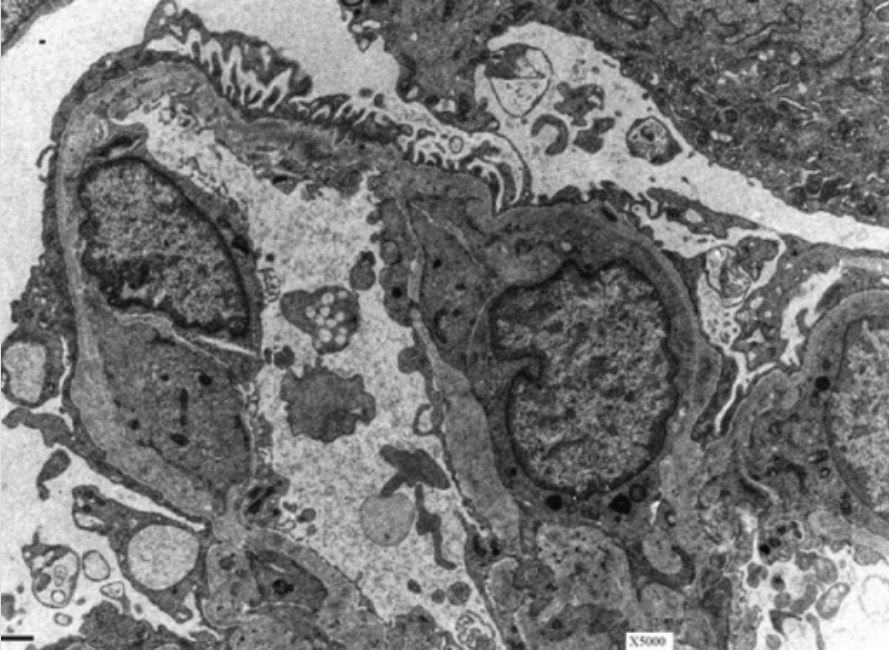
      • División longitudinal de la lámina densa de la membrana basal glomerular (permite hematuria Hematuria Presence of blood in the urine. Renal Cell Carcinoma)
      • Apariencia de tejido de cesta
Biopsia de riñón con síndrome de Alport

Membrana basal glomerular en un paciente con síndrome de Alport:
La microscopía electrónica de un riñón muestra el aspecto característico de tejido de cesta de la membrana basal glomerular en un paciente con síndrome de Alport.

Imagen: “Electron micrograph from kidney biopsy” por University of North Carolina School of Medicine, Chapel Hill, NC. Licencia: CC BY 2.5

Presentación Clínica

El síndrome de Alport se presenta con mayor frecuencia con hallazgos renales, oculares y auditivos.

Presentación renal (glomerulonefritis)

  • Síntomas:
    • Hematuria Hematuria Presence of blood in the urine. Renal Cell Carcinoma macroscópica después de una infección (comúnmente infecciones de las vías respiratorias superiores)
    • Edema Edema Edema is a condition in which excess serous fluid accumulates in the body cavity or interstitial space of connective tissues. Edema is a symptom observed in several medical conditions. It can be categorized into 2 types, namely, peripheral (in the extremities) and internal (in an organ or body cavity). Edema
    • Hipertensión
  • Hallazgos de laboratorio:
    • Proteinuria Proteinuria The presence of proteins in the urine, an indicator of kidney diseases. Nephrotic Syndrome in Children
    • Disminución progresiva de la función renal → enfermedad renal en EN Erythema nodosum is an immune-mediated panniculitis (inflammation of the subcutaneous fat) caused by a type IV (delayed-type) hypersensitivity reaction. It commonly manifests in young women as tender, erythematous nodules on the shins. Erythema Nodosum etapa terminal eventual (generalmente se presenta entre los LOS Neisseria 16–35 años de edad)

Hallazgos oculares

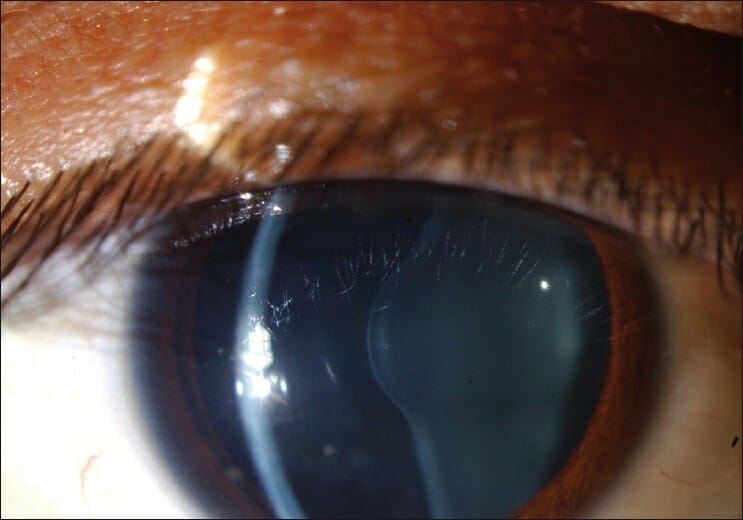
  • El cristalino en EN Erythema nodosum is an immune-mediated panniculitis (inflammation of the subcutaneous fat) caused by a type IV (delayed-type) hypersensitivity reaction. It commonly manifests in young women as tender, erythematous nodules on the shins. Erythema Nodosum forma de cono (lenticono anterior) conduce a:
    • Disminución de la agudeza visual
    • Refracción anormal
  • Catarata subcapsular
  • Retinopatía: cambios pigmentarios en EN Erythema nodosum is an immune-mediated panniculitis (inflammation of the subcutaneous fat) caused by a type IV (delayed-type) hypersensitivity reaction. It commonly manifests in young women as tender, erythematous nodules on the shins. Erythema Nodosum la retina Retina The ten-layered nervous tissue membrane of the eye. It is continuous with the optic nerve and receives images of external objects and transmits visual impulses to the brain. Its outer surface is in contact with the choroid and the inner surface with the vitreous body. The outermost layer is pigmented, whereas the inner nine layers are transparent. Eye: Anatomy, con motas amarillas o blancas (e.g., retinopatía de puntos y motas)
  • Erosión corneal

Hallazgos auditivos

Hipoacusia neurosensorial:

  • Comienza con pérdida de sonidos de alta frecuencia
  • Aparece en EN Erythema nodosum is an immune-mediated panniculitis (inflammation of the subcutaneous fat) caused by a type IV (delayed-type) hypersensitivity reaction. It commonly manifests in young women as tender, erythematous nodules on the shins. Erythema Nodosum la infancia tardía o en EN Erythema nodosum is an immune-mediated panniculitis (inflammation of the subcutaneous fat) caused by a type IV (delayed-type) hypersensitivity reaction. It commonly manifests in young women as tender, erythematous nodules on the shins. Erythema Nodosum la pubertad temprana, antes del inicio de la enfermedad renal en EN Erythema nodosum is an immune-mediated panniculitis (inflammation of the subcutaneous fat) caused by a type IV (delayed-type) hypersensitivity reaction. It commonly manifests in young women as tender, erythematous nodules on the shins. Erythema Nodosum etapa terminal
  • Secundario a anomalías del colágeno tipo IV en EN Erythema nodosum is an immune-mediated panniculitis (inflammation of the subcutaneous fat) caused by a type IV (delayed-type) hypersensitivity reaction. It commonly manifests in young women as tender, erythematous nodules on the shins. Erythema Nodosum el oído interno
Anterior lenticonus in the eye of an individual with Alport syndrome

Lenticonus anterior en el ojo de un individuo con síndrome de Alport

Imagen: “Figure 1 Anterior lenticonus in the right eye in a patient with Alport syndrome” por Ammar M Al-Mahmood, Samar A Al-Swailem, Abdulrahman Al-Khalaf, Ghada Y Al-Binali. Licencia: CC BY 2.0

Diagnóstico

Se requiere una toma de antecedentes completa, incluida los LOS Neisseria antecedentes familiares, y un examen físico para hacer un diagnóstico.

  • Análisis de orina:
    • Hematuria Hematuria Presence of blood in the urine. Renal Cell Carcinoma microscópica persistente en EN Erythema nodosum is an immune-mediated panniculitis (inflammation of the subcutaneous fat) caused by a type IV (delayed-type) hypersensitivity reaction. It commonly manifests in young women as tender, erythematous nodules on the shins. Erythema Nodosum pacientes < 10 años
    • Hematuria Hematuria Presence of blood in the urine. Renal Cell Carcinoma macroscópica
    • Proteinuria Proteinuria The presence of proteins in the urine, an indicator of kidney diseases. Nephrotic Syndrome in Children
    • Oliguria Oliguria Decreased urine output that is below the normal range. Oliguria can be defined as urine output of less than or equal to 0. 5 or 1 ml/kg/hr depending on the age. Renal Potassium Regulation
  • Microscopía de orina:
    • Presencia de acantocitos
    • Moldes de eritrocitos
  • Panel de función renal: para evaluar la presencia y el grado de insuficiencia renal
  • Biopsia renal:
    • Indicada en EN Erythema nodosum is an immune-mediated panniculitis (inflammation of the subcutaneous fat) caused by a type IV (delayed-type) hypersensitivity reaction. It commonly manifests in young women as tender, erythematous nodules on the shins. Erythema Nodosum pacientes con:
      • Análisis de orina anormal
      • Acantocitos en EN Erythema nodosum is an immune-mediated panniculitis (inflammation of the subcutaneous fat) caused by a type IV (delayed-type) hypersensitivity reaction. It commonly manifests in young women as tender, erythematous nodules on the shins. Erythema Nodosum microscopía de orina
      • Panel de función renal anormal
    • Microscopía óptica:
      • División de la membrana basal glomerular
      • Glomérulos hipercelulares e inflamados
      • Si la microscopía óptica es normal, realice una inmunotinción para el colágeno tipo IV de las cadenas alfa-3, -4 y -5.
  • Biopsia de piel:
    • Menos invasiva que la biopsia renal
    • También se puede utilizar para establecer un diagnóstico
    • Generalmente, se usa en EN Erythema nodosum is an immune-mediated panniculitis (inflammation of the subcutaneous fat) caused by a type IV (delayed-type) hypersensitivity reaction. It commonly manifests in young women as tender, erythematous nodules on the shins. Erythema Nodosum niños con sospecha de síndrome de Alport ligado al AL Amyloidosis cromosoma X
    • Anticuerpo monoclonal contra la cadena alfa-5 del colágeno tipo IV, generalmente expresado en EN Erythema nodosum is an immune-mediated panniculitis (inflammation of the subcutaneous fat) caused by a type IV (delayed-type) hypersensitivity reaction. It commonly manifests in young women as tender, erythematous nodules on the shins. Erythema Nodosum la epidermis Epidermis The external, nonvascular layer of the skin. It is made up, from within outward, of five layers of epithelium: (1) basal layer (stratum basale epidermidis); (2) spinous layer (stratum spinosum epidermidis); (3) granular layer (stratum granulosum epidermidis); (4) clear layer (stratum lucidum epidermidis); and (5) horny layer (stratum corneum epidermidis). Skin: Structure and Functions
  • Pruebas genéticas:
    • Se usa para confirmar el diagnóstico
    • Se utiliza para identificar el patrón de herencia

Tratamiento y Pronóstico

Tratamiento

El tratamiento se centra en EN Erythema nodosum is an immune-mediated panniculitis (inflammation of the subcutaneous fat) caused by a type IV (delayed-type) hypersensitivity reaction. It commonly manifests in young women as tender, erythematous nodules on the shins. Erythema Nodosum limitar la progresión de la enfermedad renal y la proteinuria Proteinuria The presence of proteins in the urine, an indicator of kidney diseases. Nephrotic Syndrome in Children. Actualmente no se dispone de un tratamiento definitivo.

  • Tratamiento de la glomerulonefritis:
    • Inhibidores de la enzima convertidora de angiotensina (IECA)
    • Bloqueadores de los LOS Neisseria receptores de angiotensina II:
      • Reducen la presión intraglomerular
      • Reducen la proteinuria Proteinuria The presence of proteins in the urine, an indicator of kidney diseases. Nephrotic Syndrome in Children
      • Han probado retardar el desarrollo de enfermedad renal en EN Erythema nodosum is an immune-mediated panniculitis (inflammation of the subcutaneous fat) caused by a type IV (delayed-type) hypersensitivity reaction. It commonly manifests in young women as tender, erythematous nodules on the shins. Erythema Nodosum etapa terminal
    • Se pueden utilizar diuréticos, según el grado de proteinuria Proteinuria The presence of proteins in the urine, an indicator of kidney diseases. Nephrotic Syndrome in Children.
  • Diálisis y trasplante de riñón (una vez que se desarrolló la enfermedad renal en EN Erythema nodosum is an immune-mediated panniculitis (inflammation of the subcutaneous fat) caused by a type IV (delayed-type) hypersensitivity reaction. It commonly manifests in young women as tender, erythematous nodules on the shins. Erythema Nodosum etapa terminal):
    • El trasplante cura los LOS Neisseria síntomas renales.
    • 3% de riesgo de que se desarrolle de novo nefritis postrasplante de Alport o enfermedad por anticuerpos anti-membrana basal glomerular en EN Erythema nodosum is an immune-mediated panniculitis (inflammation of the subcutaneous fat) caused by a type IV (delayed-type) hypersensitivity reaction. It commonly manifests in young women as tender, erythematous nodules on the shins. Erythema Nodosum el 1er año después del trasplante; alta tasa de retrasplantes
  • Tratamiento ocular:
    • Lenticono anterior: se puede considerar la facoemulsificación de lentes transparentes con implante de lentes intraoculares.
  • Tratamiento auditivo:
    • Uso de audífonos es beneficioso
    • Hipoacusia no afectada por el trasplante de riñón

Pronóstico

  • Forma masculina ligada al AL Amyloidosis cromosoma X:
    • El 50% requiere diálisis o trasplante de riñón antes de los LOS Neisseria 30 años.
    • El 90% desarrolla enfermedad renal en EN Erythema nodosum is an immune-mediated panniculitis (inflammation of the subcutaneous fat) caused by a type IV (delayed-type) hypersensitivity reaction. It commonly manifests in young women as tender, erythematous nodules on the shins. Erythema Nodosum etapa terminal a los LOS Neisseria 40 años.
  • Forma femenina ligada al AL Amyloidosis cromosoma X:
    • El 12% desarrolla enfermedad renal en EN Erythema nodosum is an immune-mediated panniculitis (inflammation of the subcutaneous fat) caused by a type IV (delayed-type) hypersensitivity reaction. It commonly manifests in young women as tender, erythematous nodules on the shins. Erythema Nodosum etapa terminal a los LOS Neisseria 40 años.
    • 30%–40% desarrollan enfermedad renal en EN Erythema nodosum is an immune-mediated panniculitis (inflammation of the subcutaneous fat) caused by a type IV (delayed-type) hypersensitivity reaction. It commonly manifests in young women as tender, erythematous nodules on the shins. Erythema Nodosum etapa terminal a los LOS Neisseria 60 años.
  • Forma autosómica recesiva: insuficiencia renal a los LOS Neisseria 20 años
  • Forma autosómica dominante: retraso de la enfermedad renal en EN Erythema nodosum is an immune-mediated panniculitis (inflammation of the subcutaneous fat) caused by a type IV (delayed-type) hypersensitivity reaction. It commonly manifests in young women as tender, erythematous nodules on the shins. Erythema Nodosum etapa terminal hasta la mediana edad

Diagnóstico Diferencial

  • Nefropatía por IgA IgA Represents 15-20% of the human serum immunoglobulins, mostly as the 4-chain polymer in humans or dimer in other mammals. Secretory iga is the main immunoglobulin in secretions. Immunoglobulins: Types and Functions (enfermedad de Berger): ocurre cuando la IgA IgA Represents 15-20% of the human serum immunoglobulins, mostly as the 4-chain polymer in humans or dimer in other mammals. Secretory iga is the main immunoglobulin in secretions. Immunoglobulins: Types and Functions se acumula en EN Erythema nodosum is an immune-mediated panniculitis (inflammation of the subcutaneous fat) caused by a type IV (delayed-type) hypersensitivity reaction. It commonly manifests in young women as tender, erythematous nodules on the shins. Erythema Nodosum los LOS Neisseria riñones: en EN Erythema nodosum is an immune-mediated panniculitis (inflammation of the subcutaneous fat) caused by a type IV (delayed-type) hypersensitivity reaction. It commonly manifests in young women as tender, erythematous nodules on the shins. Erythema Nodosum la mayoría de los LOS Neisseria países desarrollados, la nefropatía por IgA IgA Represents 15-20% of the human serum immunoglobulins, mostly as the 4-chain polymer in humans or dimer in other mammals. Secretory iga is the main immunoglobulin in secretions. Immunoglobulins: Types and Functions es la causa más común de glomerulonefritis primaria. La enfermedad autoinmune a menudo se desencadena por una infección de las vías respiratorias superiores, pero también puede desencadenarse por una infección gastrointestinal o el ejercicio. La enfermedad se presenta con mayor frecuencia en EN Erythema nodosum is an immune-mediated panniculitis (inflammation of the subcutaneous fat) caused by a type IV (delayed-type) hypersensitivity reaction. It commonly manifests in young women as tender, erythematous nodules on the shins. Erythema Nodosum la 2da–3ra década de la vida.
  • Enfermedad de la membrana basal glomerular delgada: caracterizada por adelgazamiento de membrana basal glomerular; causa de hematuria Hematuria Presence of blood in the urine. Renal Cell Carcinoma microscópica aislada: en EN Erythema nodosum is an immune-mediated panniculitis (inflammation of the subcutaneous fat) caused by a type IV (delayed-type) hypersensitivity reaction. It commonly manifests in young women as tender, erythematous nodules on the shins. Erythema Nodosum pacientes con esta enfermedad, la presión arterial y la excreción de proteínas son normales. La manifestación característica es la hematuria Hematuria Presence of blood in the urine. Renal Cell Carcinoma microscópica asintomática persistente o intermitente.
  • Glomerulonefritis postestreptocócica aguda: respuesta inmunitaria observada 2–4 semanas después de la infección por estreptococo del grupo A de la faringe o la piel: la glomerulonefritis postestreptocócica aguda se caracteriza por la aparición repentina de edema Edema Edema is a condition in which excess serous fluid accumulates in the body cavity or interstitial space of connective tissues. Edema is a symptom observed in several medical conditions. It can be categorized into 2 types, namely, peripheral (in the extremities) and internal (in an organ or body cavity). Edema, hematuria Hematuria Presence of blood in the urine. Renal Cell Carcinoma, hipertensión y proteinuria Proteinuria The presence of proteins in the urine, an indicator of kidney diseases. Nephrotic Syndrome in Children.
  • Enfermedad quística medular: también conocida como enfermedad renal tubulointersticial autosómica dominante: la enfermedad quística medular es un trastorno hereditario en EN Erythema nodosum is an immune-mediated panniculitis (inflammation of the subcutaneous fat) caused by a type IV (delayed-type) hypersensitivity reaction. It commonly manifests in young women as tender, erythematous nodules on the shins. Erythema Nodosum el que múltiples sacos pequeños llenos de líquido (quistes) llenan la médula del riñón. También se producen cicatrices o fibrosis Fibrosis Any pathological condition where fibrous connective tissue invades any organ, usually as a consequence of inflammation or other injury. Bronchiolitis Obliterans tubulointersticial en EN Erythema nodosum is an immune-mediated panniculitis (inflammation of the subcutaneous fat) caused by a type IV (delayed-type) hypersensitivity reaction. It commonly manifests in young women as tender, erythematous nodules on the shins. Erythema Nodosum los LOS Neisseria túbulos del riñón.
  • Displasia renal multiquística: enfermedad renal quística congénita: la displasia renal multiquística a menudo se presenta como una masa abdominal en EN Erythema nodosum is an immune-mediated panniculitis (inflammation of the subcutaneous fat) caused by a type IV (delayed-type) hypersensitivity reaction. It commonly manifests in young women as tender, erythematous nodules on the shins. Erythema Nodosum los LOS Neisseria lactantes. Los LOS Neisseria pacientes se presentan con 1 o 2 riñones grandes no funcionales que están dilatados con sacos o quistes llenos de líquido.
  • Enfermedad poliquística renal: trastorno multisistémico y progresivo que puede heredarse en EN Erythema nodosum is an immune-mediated panniculitis (inflammation of the subcutaneous fat) caused by a type IV (delayed-type) hypersensitivity reaction. It commonly manifests in young women as tender, erythematous nodules on the shins. Erythema Nodosum forma autosómica dominante o recesiva: la poliquistosis renal autosómica dominante es más común y se presenta con riñones grandes multiquísticos con compromiso del páncreas, el bazo y el hígado.

Referencias

  1. Crockett, D. K., Pont-Kingdon, G., Gedge, F., Sumner, K., Seamons, R., & Lyon, E. (2010). The Alport syndrome COL4A5 variant database. Human Mutation, 31(8), E1652–E1657. https://doi.org/10.1002/humu.21312
  2. Delimont, D., Dufek, B. M., Meehan, D. T., Zallocchi, M., Gratton, M. A., Phillips, G., & Cosgrove, D. (2014). Laminin α2-mediated focal adhesion kinase activation triggers Alport glomerular pathogenesis. PLoS One, 9(6), e99083. https://doi.org/10.1371/journal.pone.0099083
  3. Dufek, B., Meehan, D. T., Delimont, D., Cheung, L., Gratton, M. A., Phillips, G., Song, W., Liu, S., & Cosgrove, D. (2016). Endothelin A receptor activation on mesangial cells initiates Alport glomerular disease. Kidney International, 90(2), 300-310. https://doi.org/10.1016/j.kint.2016.02.018
  4. Fallerini, C., Dosa, L., Tita, R., Del Prete, D., Feriuzzi, S., Gai, G., Clementi, M., La Manna, A., Miglietti, N., Mancini, R., Mandrile, G., Ghiggeri, G. M., Piaggio, G., Brancati, F., Diano, L., Frate, E., Pinciaroli, A. R., Giani, M., Castorina, P., … Ariani, F. (2014). Unbiased next generation sequencing analysis confirms the existence of autosomal dominant Alport syndrome in a relevant fraction of cases. Clinical Genetics, 86(3), 252-257. https://doi.org/10.1111/cge.12258
  5. Watson, S., Padala, S. A., Hashmi, M. F., & Bush, J. S. (2023). Alport syndrome. In StatPearls [Internet]. StatPearls Publishing. Retrieved from https://www.ncbi.nlm.nih.gov/books/NBK470419/

¡Crea tu cuenta gratis o inicia una sesión para seguir leyendo!

Regístrate ahora y obtén acceso gratuito a Lecturio con páginas de concepto, videos médicos y cuestionarios para tu educación médica.

User Reviews

Que tengas una sesión de estudio alegre y navideña 🎁 Ahorra 50% en todos los planes >>

Details