Domina Conceptos Médicos

Estudia para la escuela de medicina y tus examenes con Lecturio.

Médula Ósea: Composición y Hematopoyesis

La médula ósea, lugar principal de la hematopoyesis, se encuentra en EN Erythema nodosum is an immune-mediated panniculitis (inflammation of the subcutaneous fat) caused by a type IV (delayed-type) hypersensitivity reaction. It commonly manifests in young women as tender, erythematous nodules on the shins. Erythema Nodosum las cavidades de los LOS Neisseria huesos esponjosos y en EN Erythema nodosum is an immune-mediated panniculitis (inflammation of the subcutaneous fat) caused by a type IV (delayed-type) hypersensitivity reaction. It commonly manifests in young women as tender, erythematous nodules on the shins. Erythema Nodosum los LOS Neisseria canales medulares de los LOS Neisseria huesos largos. Existen dos tipos: la médula roja (hematopoyética con abundantes células sanguíneas) y la médula amarilla (con predominio de adipocitos). La composición de la médula humana cambia con la edad. En EN Erythema nodosum is an immune-mediated panniculitis (inflammation of the subcutaneous fat) caused by a type IV (delayed-type) hypersensitivity reaction. It commonly manifests in young women as tender, erythematous nodules on the shins. Erythema Nodosum los LOS Neisseria jóvenes, toda la médula ósea es roja, ya que hay una mayor producción de células sanguíneas. A medida que aumenta la edad, se produce un cambio gradual a la variedad de médula amarilla. La médula amarilla puede revertirse en EN Erythema nodosum is an immune-mediated panniculitis (inflammation of the subcutaneous fat) caused by a type IV (delayed-type) hypersensitivity reaction. It commonly manifests in young women as tender, erythematous nodules on the shins. Erythema Nodosum médula roja cuando la hematopoyesis es necesaria (e.g., anemia Anemia Anemia is a condition in which individuals have low Hb levels, which can arise from various causes. Anemia is accompanied by a reduced number of RBCs and may manifest with fatigue, shortness of breath, pallor, and weakness. Subtypes are classified by the size of RBCs, chronicity, and etiology. Anemia: Overview and Types). La médula roja, por hematopoyesis, produce unos 6 mil millones de células por kilogramo por día. El proceso se basa en EN Erythema nodosum is an immune-mediated panniculitis (inflammation of the subcutaneous fat) caused by a type IV (delayed-type) hypersensitivity reaction. It commonly manifests in young women as tender, erythematous nodules on the shins. Erythema Nodosum que las células hematopoyéticas (células madre y progenitoras) producen células efectoras maduras (linfocitos, plaquetas, granulocitos, eritrocitos) con la ayuda de elementos no hematopoyéticos. La producción está regulada por las citoquinas liberadas en EN Erythema nodosum is an immune-mediated panniculitis (inflammation of the subcutaneous fat) caused by a type IV (delayed-type) hypersensitivity reaction. It commonly manifests in young women as tender, erythematous nodules on the shins. Erythema Nodosum el entorno de la médula ósea y la retroalimentación de los LOS Neisseria tejidos diana. La estructura de la médula permite que la hematopoyesis tenga lugar en EN Erythema nodosum is an immune-mediated panniculitis (inflammation of the subcutaneous fat) caused by a type IV (delayed-type) hypersensitivity reaction. It commonly manifests in young women as tender, erythematous nodules on the shins. Erythema Nodosum la zona extravascular y, tras una diferenciación por etapas, las células sanguíneas se liberan a la circulación.

Last updated: Mar 27, 2025

Editorial responsibility: Stanley Oiseth, Lindsay Jones, Evelin Maza

Descripción General

Definición

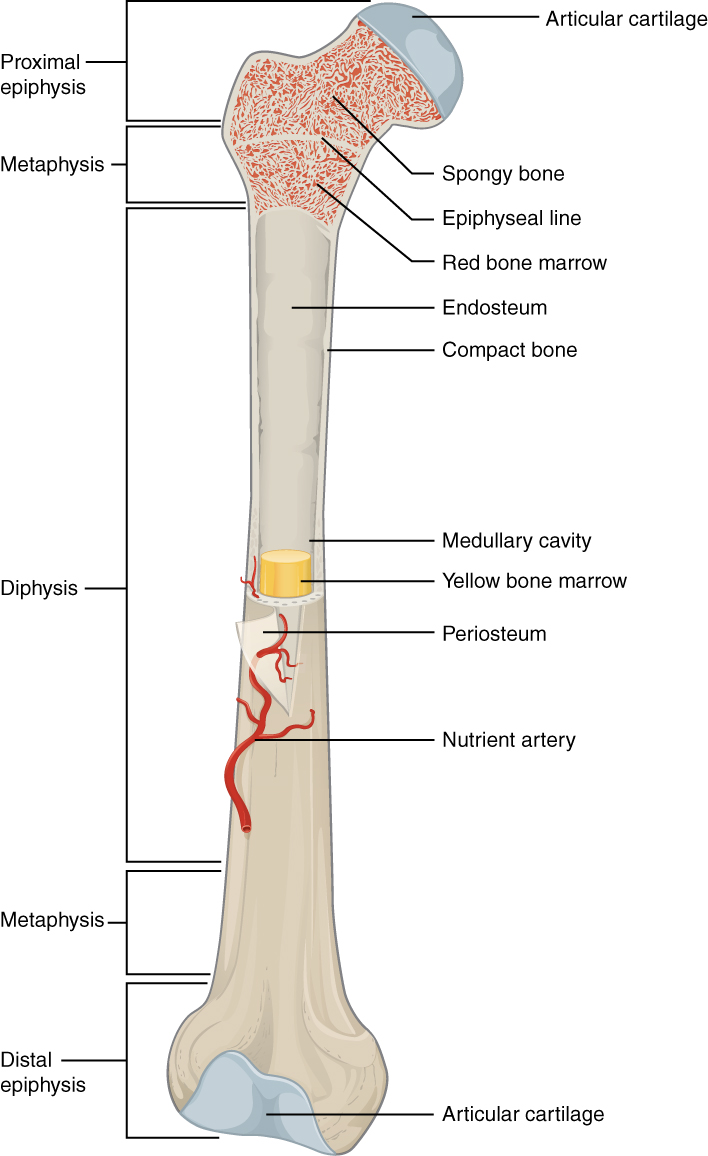
La médula ósea es el tejido esponjoso que se encuentra en EN Erythema nodosum is an immune-mediated panniculitis (inflammation of the subcutaneous fat) caused by a type IV (delayed-type) hypersensitivity reaction. It commonly manifests in young women as tender, erythematous nodules on the shins. Erythema Nodosum los LOS Neisseria canales medulares de los LOS Neisseria huesos largos y en EN Erythema nodosum is an immune-mediated panniculitis (inflammation of the subcutaneous fat) caused by a type IV (delayed-type) hypersensitivity reaction. It commonly manifests in young women as tender, erythematous nodules on the shins. Erythema Nodosum las cavidades de los LOS Neisseria huesos esponjosos.
  • Lugar primario de formación de las células sanguíneas (hacia el 5to mes de gestación):
    • 1er mes en EN Erythema nodosum is an immune-mediated panniculitis (inflammation of the subcutaneous fat) caused by a type IV (delayed-type) hypersensitivity reaction. It commonly manifests in young women as tender, erythematous nodules on the shins. Erythema Nodosum el útero: el mesodermo del saco vitelino
    • Hacia el 2do–3er mes: La hematopoyesis se traslada al AL Amyloidosis hígado (y al AL Amyloidosis bazo).
    • Hacia el 5to mes: La hematopoyesis se produce en EN Erythema nodosum is an immune-mediated panniculitis (inflammation of the subcutaneous fat) caused by a type IV (delayed-type) hypersensitivity reaction. It commonly manifests in young women as tender, erythematous nodules on the shins. Erythema Nodosum la médula ósea y esta acaba convirtiéndose en EN Erythema nodosum is an immune-mediated panniculitis (inflammation of the subcutaneous fat) caused by a type IV (delayed-type) hypersensitivity reaction. It commonly manifests in young women as tender, erythematous nodules on the shins. Erythema Nodosum la fuente predominante de células sanguíneas.
  • Otras funciones:
    • Descomposición de los LOS Neisseria eritrocitos viejos ( en EN Erythema nodosum is an immune-mediated panniculitis (inflammation of the subcutaneous fat) caused by a type IV (delayed-type) hypersensitivity reaction. It commonly manifests in young women as tender, erythematous nodules on the shins. Erythema Nodosum bilirrubina, hierro, globina) a través de los LOS Neisseria macrófagos y reutilización del hierro
    • Almacenamiento de grasa a través de los LOS Neisseria adipocitos
  • La formación de células sanguíneas (hematopoyesis) se ajusta en EN Erythema nodosum is an immune-mediated panniculitis (inflammation of the subcutaneous fat) caused by a type IV (delayed-type) hypersensitivity reaction. It commonly manifests in young women as tender, erythematous nodules on the shins. Erythema Nodosum función de las necesidades y es necesaria, ya que la vida útil de las células es limitada:
    • Leucocitos: de unas horas a días
    • Plaquetas: hasta 10 días
    • Eritrocitos: 120 días
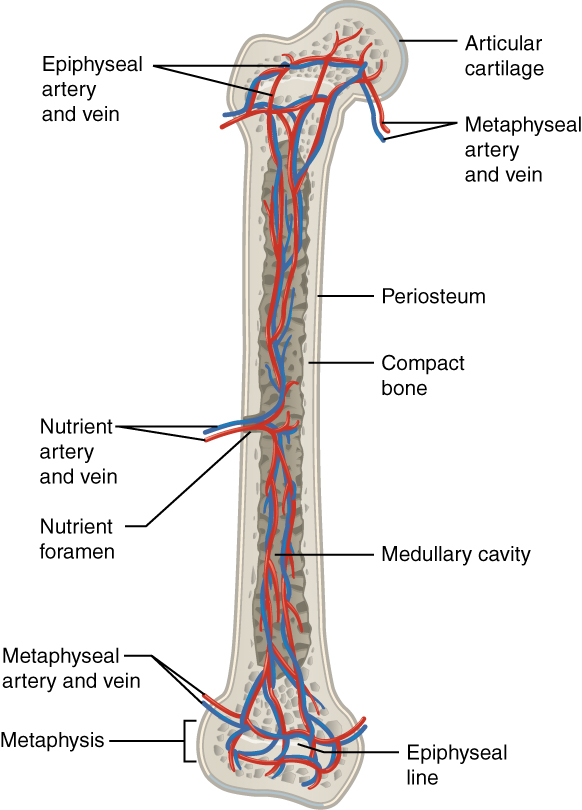
  • La principal irrigación sanguínea procede de 1 o varias arterias nutricias:
    • Penetra en EN Erythema nodosum is an immune-mediated panniculitis (inflammation of the subcutaneous fat) caused by a type IV (delayed-type) hypersensitivity reaction. It commonly manifests in young women as tender, erythematous nodules on the shins. Erythema Nodosum la médula del hueso
    • Las arterias medulares tienen ramas radiales que se dirigen a la superficie interna de la corteza y se conectan con la irrigación arterial más pequeña del periostio.
    • Desde la corteza, los LOS Neisseria capilares vuelven a la cavidad medular y forman una red de sistemas sinusoidales.
  • Los LOS Neisseria nervios mielinizados y no mielinizados (que entran a través de los LOS Neisseria canales nutricios) proporcionan la inervación.
Suministro de sangre en el hueso

La imagen muestra la irrigación sanguínea (arteria y vena)

Imagen: “609 Body Supply to the Bone” por OpenStax College. Licencia: CC BY 3.0
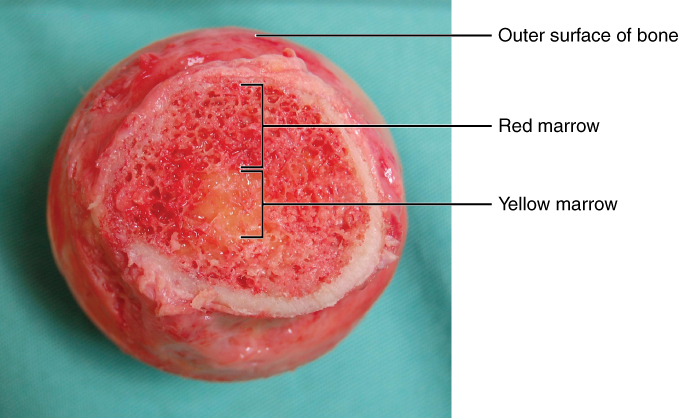
Tipos de médula

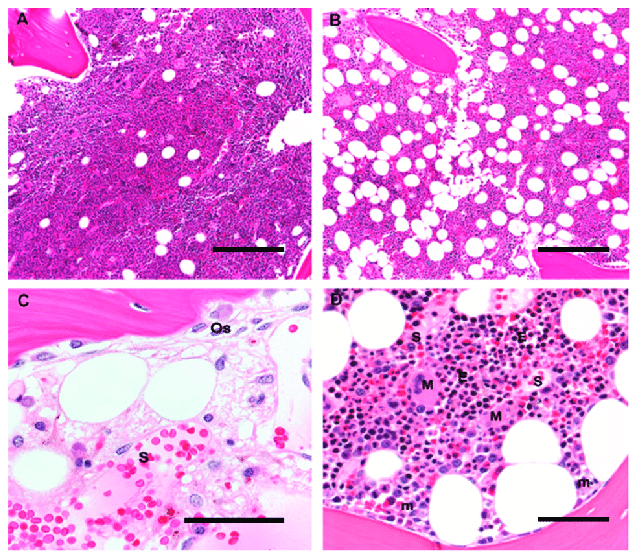
  • Basado en EN Erythema nodosum is an immune-mediated panniculitis (inflammation of the subcutaneous fat) caused by a type IV (delayed-type) hypersensitivity reaction. It commonly manifests in young women as tender, erythematous nodules on the shins. Erythema Nodosum examen macroscópico:
    • Médula ósea roja:
      • Hematopoyética/formadora de sangre
      • Células sanguíneas abundantes
      • El nivel disminuye con la edad.
      • Se localiza en EN Erythema nodosum is an immune-mediated panniculitis (inflammation of the subcutaneous fat) caused by a type IV (delayed-type) hypersensitivity reaction. It commonly manifests in young women as tender, erythematous nodules on the shins. Erythema Nodosum: huesos planos (cráneo, esternón, vértebras, escápulas y huesos de la pelvis Pelvis The pelvis consists of the bony pelvic girdle, the muscular and ligamentous pelvic floor, and the pelvic cavity, which contains viscera, vessels, and multiple nerves and muscles. The pelvic girdle, composed of 2 “hip” bones and the sacrum, is a ring-like bony structure of the axial skeleton that links the vertebral column with the lower extremities. Pelvis: Anatomy), epífisis de huesos largos (fémur, tibia Tibia The second longest bone of the skeleton. It is located on the medial side of the lower leg, articulating with the fibula laterally, the talus distally, and the femur proximally. Knee Joint: Anatomy, húmero)
    • Médula ósea amarilla:
      • No hematopoyética
      • Llena de adipocitos
      • El nivel aumenta con la edad.
      • Situada en EN Erythema nodosum is an immune-mediated panniculitis (inflammation of the subcutaneous fat) caused by a type IV (delayed-type) hypersensitivity reaction. It commonly manifests in young women as tender, erythematous nodules on the shins. Erythema Nodosum la diáfisis de los LOS Neisseria huesos largos
  • Diferencias y desarrollo:
    • En EN Erythema nodosum is an immune-mediated panniculitis (inflammation of the subcutaneous fat) caused by a type IV (delayed-type) hypersensitivity reaction. It commonly manifests in young women as tender, erythematous nodules on the shins. Erythema Nodosum el recién nacido, toda la médula ósea es roja y está activa en EN Erythema nodosum is an immune-mediated panniculitis (inflammation of the subcutaneous fat) caused by a type IV (delayed-type) hypersensitivity reaction. It commonly manifests in young women as tender, erythematous nodules on the shins. Erythema Nodosum la producción de células sanguíneas.
    • A medida que aumenta la edad, se produce un cambio gradual a la variedad de médula amarilla.
    • En EN Erythema nodosum is an immune-mediated panniculitis (inflammation of the subcutaneous fat) caused by a type IV (delayed-type) hypersensitivity reaction. It commonly manifests in young women as tender, erythematous nodules on the shins. Erythema Nodosum determinadas afecciones (hemorragias graves, anemia Anemia Anemia is a condition in which individuals have low Hb levels, which can arise from various causes. Anemia is accompanied by a reduced number of RBCs and may manifest with fatigue, shortness of breath, pallor, and weakness. Subtypes are classified by the size of RBCs, chronicity, and etiology. Anemia: Overview and Types o hipoxia), la médula amarilla vuelve a ser roja.

Células y Estructuras de la Médula Ósea

Hematopoyéticas

  • Células madre hematopoyéticas:
    • Células multipotenciales con capacidad de autorrenovación y diferenciación a todas las células del linaje hematopoyético
    • Las células madre hematopoyéticas están en EN Erythema nodosum is an immune-mediated panniculitis (inflammation of the subcutaneous fat) caused by a type IV (delayed-type) hypersensitivity reaction. It commonly manifests in young women as tender, erythematous nodules on the shins. Erythema Nodosum estrecha asociación con las células de revestimiento óseo.
  • Células progenitoras multipotenciales:
    • Las células madre hematopoyéticas progresan a células progenitoras multipotenciales.
    • No autorrenovables, pero con potencial de diferenciación de linaje completo
  • Progenitoras oligopotentes:
    • Las células progenitoras multipotenciales se desarrollan posteriormente en EN Erythema nodosum is an immune-mediated panniculitis (inflammation of the subcutaneous fat) caused by a type IV (delayed-type) hypersensitivity reaction. It commonly manifests in young women as tender, erythematous nodules on the shins. Erythema Nodosum progenitoras oligopotentes:
      • Progenitoras linfoides comunes
      • Progenitoras mieloides comunes
    • Las progenitoras linfoides comunes y las progenitoras mieloides comunes se convierten en EN Erythema nodosum is an immune-mediated panniculitis (inflammation of the subcutaneous fat) caused by a type IV (delayed-type) hypersensitivity reaction. It commonly manifests in young women as tender, erythematous nodules on the shins. Erythema Nodosum progenitoras de linaje restringido y, a través de etapas, acaban convirtiéndose en EN Erythema nodosum is an immune-mediated panniculitis (inflammation of the subcutaneous fat) caused by a type IV (delayed-type) hypersensitivity reaction. It commonly manifests in young women as tender, erythematous nodules on the shins. Erythema Nodosum células efectoras o en EN Erythema nodosum is an immune-mediated panniculitis (inflammation of the subcutaneous fat) caused by a type IV (delayed-type) hypersensitivity reaction. It commonly manifests in young women as tender, erythematous nodules on the shins. Erythema Nodosum células diferenciadas:
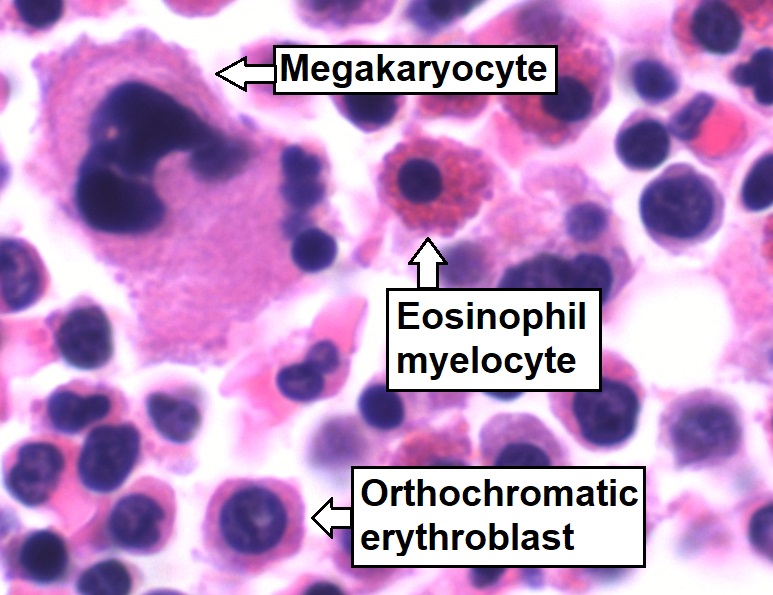
      • Granulocitos: con gránulos secretores en EN Erythema nodosum is an immune-mediated panniculitis (inflammation of the subcutaneous fat) caused by a type IV (delayed-type) hypersensitivity reaction. It commonly manifests in young women as tender, erythematous nodules on the shins. Erythema Nodosum el citoplasma (eosinófilos, neutrófilos, basófilos)
      • Monocitos: se diferencian en EN Erythema nodosum is an immune-mediated panniculitis (inflammation of the subcutaneous fat) caused by a type IV (delayed-type) hypersensitivity reaction. It commonly manifests in young women as tender, erythematous nodules on the shins. Erythema Nodosum macrófagos
      • Megacariocitos: se convierten en EN Erythema nodosum is an immune-mediated panniculitis (inflammation of the subcutaneous fat) caused by a type IV (delayed-type) hypersensitivity reaction. It commonly manifests in young women as tender, erythematous nodules on the shins. Erythema Nodosum plaquetas
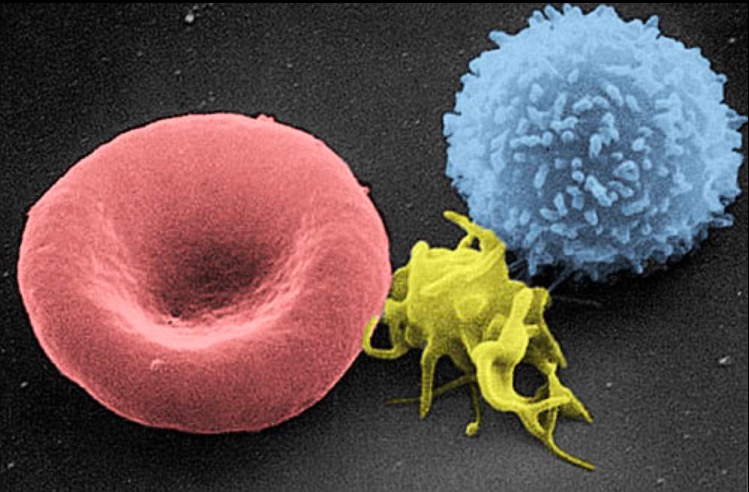
      • Eritrocitos o glóbulos rojos: células bicóncavas sin núcleo que transportan oxígeno
      • Progenitores linfoides comunes → linfocitos
    • Las células maduras se encuentran en EN Erythema nodosum is an immune-mediated panniculitis (inflammation of the subcutaneous fat) caused by a type IV (delayed-type) hypersensitivity reaction. It commonly manifests in young women as tender, erythematous nodules on the shins. Erythema Nodosum la zona perisinusoidal.

No hematopoyéticas

Estructuras que proporcionan un microambiente que favorece la diferenciación de las células hematopoyéticas y la proliferación de las células sanguíneas:
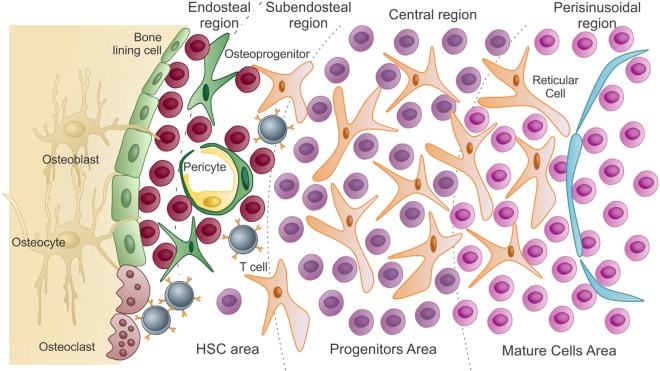
  • Células óseas:
    • Proporcionan soporte a la médula ósea
    • Revestimiento del endostio: capa de células planas en EN Erythema nodosum is an immune-mediated panniculitis (inflammation of the subcutaneous fat) caused by a type IV (delayed-type) hypersensitivity reaction. It commonly manifests in young women as tender, erythematous nodules on the shins. Erythema Nodosum la superficie interna de las cavidades óseas
    • En EN Erythema nodosum is an immune-mediated panniculitis (inflammation of the subcutaneous fat) caused by a type IV (delayed-type) hypersensitivity reaction. It commonly manifests in young women as tender, erythematous nodules on the shins. Erythema Nodosum el revestimiento se encuentran osteoclastos y osteoblastos.
  • Estroma de la médula:
    • No participa en EN Erythema nodosum is an immune-mediated panniculitis (inflammation of the subcutaneous fat) caused by a type IV (delayed-type) hypersensitivity reaction. It commonly manifests in young women as tender, erythematous nodules on the shins. Erythema Nodosum el proceso de hematopoyesis, pero aporta factores de crecimiento/citoquinas
    • Formado por células estromales o reticulares, macrófagos y la matriz extracelular en EN Erythema nodosum is an immune-mediated panniculitis (inflammation of the subcutaneous fat) caused by a type IV (delayed-type) hypersensitivity reaction. It commonly manifests in young women as tender, erythematous nodules on the shins. Erythema Nodosum el espacio extravascular
    • Los LOS Neisseria adipocitos dan soporte a las células mieloides y linfoides en EN Erythema nodosum is an immune-mediated panniculitis (inflammation of the subcutaneous fat) caused by a type IV (delayed-type) hypersensitivity reaction. It commonly manifests in young women as tender, erythematous nodules on the shins. Erythema Nodosum fase tardía (fase no progenitora) y sirven para almacenar grasa/lípidos.
  • Sinusoides (revestidos de células endoteliales):
    • La hematopoyesis se produce en EN Erythema nodosum is an immune-mediated panniculitis (inflammation of the subcutaneous fat) caused by a type IV (delayed-type) hypersensitivity reaction. It commonly manifests in young women as tender, erythematous nodules on the shins. Erythema Nodosum los LOS Neisseria espacios extravasculares.
    • Los LOS Neisseria sinusoides proporcionan una barrera entre la circulación y el proceso hematopoyético, impidiendo la liberación de células sanguíneas inmaduras de la médula ósea.
    • Las células sanguíneas diferenciadas atraviesan el endotelio de los LOS Neisseria vasos sanguíneos por migración transcelular y pasan a la circulación.

Hematopoyesis

Producción de células sanguíneas

La hematopoyesis se inicia con una célula madre hematopoyética, a la que se incita a dividirse y diferenciarse con los LOS Neisseria estímulos químicos adecuados (factores de crecimiento hemopoyético).
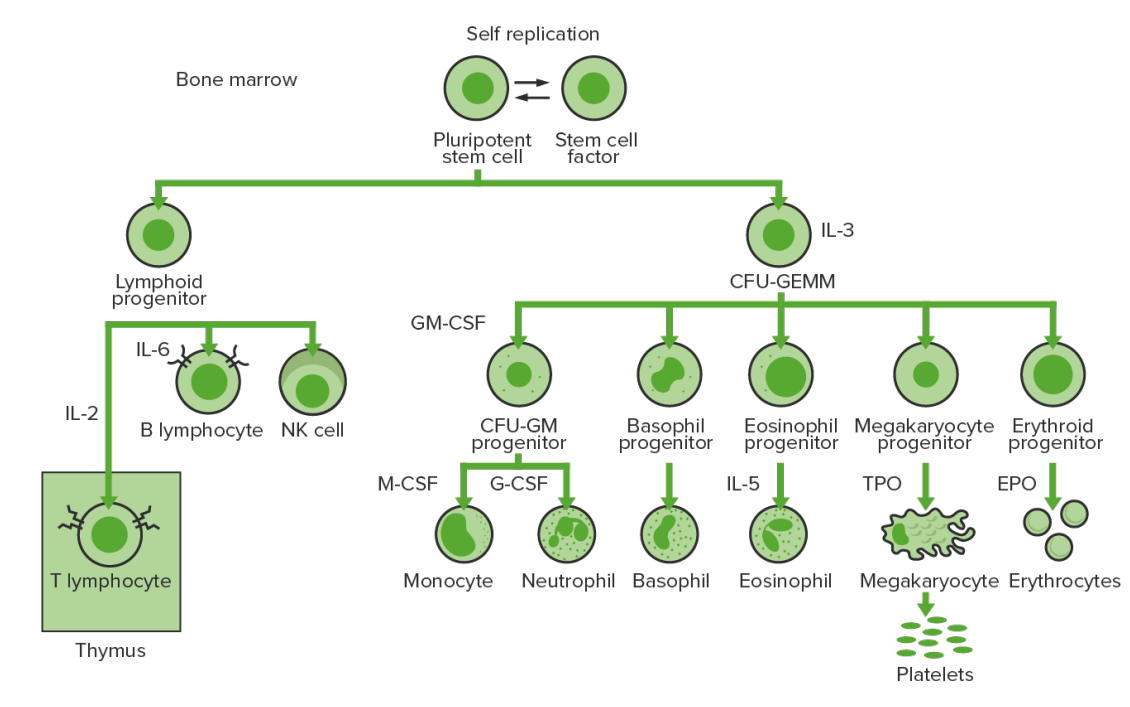
  • Las células madre linfoides dan lugar a los LOS Neisseria linfocitos:
    • Linfocitos T
    • Linfocitos B
    • Linfocitos asesinos naturales
  • Las células madre mieloides acaban diferenciándose en EN Erythema nodosum is an immune-mediated panniculitis (inflammation of the subcutaneous fat) caused by a type IV (delayed-type) hypersensitivity reaction. It commonly manifests in young women as tender, erythematous nodules on the shins. Erythema Nodosum plaquetas, eritrocitos, granulocitos y monocitos:
    • La interleuquina-3 (IL-3) estimula la diferenciación de las células madre hemayopoyéticas multipotenciales en EN Erythema nodosum is an immune-mediated panniculitis (inflammation of the subcutaneous fat) caused by a type IV (delayed-type) hypersensitivity reaction. It commonly manifests in young women as tender, erythematous nodules on the shins. Erythema Nodosum células progenitoras mieloides.
    • Factor estimulante de colonias de granulocitos y macrófagos → diferenciación de progenitores mieloides a granulocitos (neutrófilos) y monocitos
    • IL-5 → diferenciación a eosinófilos
    • Trombopoyetina → diferenciación a trombocitos (plaquetas)
    • Eritropoyetina → diferenciación a eritrocitos
Hematopoyesis de la médula ósea

Hematopoyesis de la médula ósea: proliferación y diferenciación de los elementos formes de la sangre
CFU-GEMM: unidad formadora de colonias: granulocitos, eritrocitos, monocitos, megacariocitos
CFU-GM: unidad formadora de colonias: granulocitos-macrófagos
GM-CSF: factor estimulante de colonias de granulocitos y macrófagos
M-CSF: factor estimulante de colonias de macrófagos
G-CSF: factor estimulante de colonias de granulocitos
NK: asesino natural
TPO: trombopoyetina

Imagen por Lecturio. Licencia: CC BY-NC-SA 4.0

Principales factores de crecimiento hematopoyético

Tabla: Principales factores de crecimiento hematopoyético
Citoquinas/factores de crecimiento Actividades Fuente
Eritropoyetina Estimula la eritropoyesis, incluida la diferenciación
  • Riñón
  • Hígado
Trombopoyetina Estimula la trombopoyesis
  • Riñón
  • Hígado
Factor de células madre Estimula todas las células progenitoras hematopoyéticas Células estromales de la médula ósea
Factor estimulante de colonias de granulocitos y macrófagos Estimula las células progenitoras mieloides
  • Células endoteliales
  • Linfocitos T
Factor estimulante de colonias de granulocitos Estimula las células precursoras de neutrófilos
  • Células endoteliales
  • Macrófagos
Factor estimulante de colonias de monocitos Estimula las células precursoras de monocitos
  • Células endoteliales
  • Macrófagos

Interleuquinas

Tabla: Interleuquinas
Interleuquina (IL) Actividades Fuente
IL-1 Regulación de la secreción de citoquinas de muchos leucocitos
  • Macrófagos
  • Linfocitos T colaboradores
IL-2
  • Mitógeno para los LOS Neisseria linfocitos T y B activados
  • Diferenciación de las células asesinas naturales
Linfocitos T colaboradores
IL-3 Mitógeno para todas las células progenitoras de granulocitos y megacariocitos/eritrocitos Linfocitos T colaboradores
IL-4
  • Desarrollo de basófilos y mastocitos
  • Activación de los LOS Neisseria linfocitos B
Linfocitos T colaboradores
IL-5 Desarrollo y activación de los LOS Neisseria eosinófilos Linfocitos T colaboradores
IL-6
  • Mitógeno para los LOS Neisseria leucocitos
  • Activación de linfocitos B y linfocitos T reguladores
  • Macrófagos
  • Neutrófilos
  • Células endoteliales
IL-7 IL-7 A proinflammatory cytokine produced primarily by T-lymphocytes or their precursors. Several subtypes of interleukin-17 have been identified, each of which is a product of a unique gene. Severe Combined Immunodeficiency (SCID) Estimulación de todas las células madre linfoides Células estromales de la médula ósea

Related videos

Relevancia Clínica

  • Trombocitopenia: describe una deficiencia de trombocitos en EN Erythema nodosum is an immune-mediated panniculitis (inflammation of the subcutaneous fat) caused by a type IV (delayed-type) hypersensitivity reaction. It commonly manifests in young women as tender, erythematous nodules on the shins. Erythema Nodosum la sangre periférica. Los LOS Neisseria trombocitos o plaquetas están integrados funcionalmente en EN Erythema nodosum is an immune-mediated panniculitis (inflammation of the subcutaneous fat) caused by a type IV (delayed-type) hypersensitivity reaction. It commonly manifests in young women as tender, erythematous nodules on the shins. Erythema Nodosum el sistema de hemostasia. Así pues, los LOS Neisseria trastornos de la función de los LOS Neisseria trombocitos provocan hemorragias patológicas. En EN Erythema nodosum is an immune-mediated panniculitis (inflammation of the subcutaneous fat) caused by a type IV (delayed-type) hypersensitivity reaction. It commonly manifests in young women as tender, erythematous nodules on the shins. Erythema Nodosum el espectro de las diátesis hemorrágicas, la trombocitopenia es la principal causa de las hemorragias patológicas.
  • Anemia Anemia Anemia is a condition in which individuals have low Hb levels, which can arise from various causes. Anemia is accompanied by a reduced number of RBCs and may manifest with fatigue, shortness of breath, pallor, and weakness. Subtypes are classified by the size of RBCs, chronicity, and etiology. Anemia: Overview and Types: disminución del número total de eritrocitos, de la hemoglobina o de la masa de eritrocitos circulantes. La anemia Anemia Anemia is a condition in which individuals have low Hb levels, which can arise from various causes. Anemia is accompanied by a reduced number of RBCs and may manifest with fatigue, shortness of breath, pallor, and weakness. Subtypes are classified by the size of RBCs, chronicity, and etiology. Anemia: Overview and Types suele reflejarse en EN Erythema nodosum is an immune-mediated panniculitis (inflammation of the subcutaneous fat) caused by a type IV (delayed-type) hypersensitivity reaction. It commonly manifests in young women as tender, erythematous nodules on the shins. Erythema Nodosum la disminución de la hemoglobina y el hematocrito y puede surgir de la reducción de la hematopoyesis, hemólisis o pérdida de sangre.
  • Leucemia linfoblástica aguda: la forma más común de cáncer que afecta a los LOS Neisseria niños, caracterizada por la proliferación incontrolada de células precursoras linfoides (aumento de linfoblastos). La médula normal es sustituida por linfoblastos, que pasan a la circulación y se infiltran en EN Erythema nodosum is an immune-mediated panniculitis (inflammation of the subcutaneous fat) caused by a type IV (delayed-type) hypersensitivity reaction. It commonly manifests in young women as tender, erythematous nodules on the shins. Erythema Nodosum otros órganos. Los LOS Neisseria signos y síntomas de la leucemia linfoblástica aguda están relacionados con anemia Anemia Anemia is a condition in which individuals have low Hb levels, which can arise from various causes. Anemia is accompanied by a reduced number of RBCs and may manifest with fatigue, shortness of breath, pallor, and weakness. Subtypes are classified by the size of RBCs, chronicity, and etiology. Anemia: Overview and Types, trombocitopenia y falta de leucocitos funcionales. El frotis de sangre periférica y la biopsia de médula ósea muestran linfoblastos. Los LOS Neisseria estudios inmunofenotípicos, histoquímicos y genéticos ayudan al AL Amyloidosis diagnóstico y al AL Amyloidosis tratamiento.
  • Leucemia mieloide aguda: neoplasia hematológica caracterizada por la proliferación incontrolada de células precursoras mieloides (aumento de mieloblastos). Esta afección se observa sobre todo en EN Erythema nodosum is an immune-mediated panniculitis (inflammation of the subcutaneous fat) caused by a type IV (delayed-type) hypersensitivity reaction. It commonly manifests in young women as tender, erythematous nodules on the shins. Erythema Nodosum los LOS Neisseria adultos mayores. Se produce la sustitución de la médula normal por células malignas, lo que provoca una alteración de la hematopoyesis. La presentación clínica está relacionada con anemia Anemia Anemia is a condition in which individuals have low Hb levels, which can arise from various causes. Anemia is accompanied by a reduced number of RBCs and may manifest with fatigue, shortness of breath, pallor, and weakness. Subtypes are classified by the size of RBCs, chronicity, and etiology. Anemia: Overview and Types, trombocitopenia y falta de leucocitos funcionales. El diagnóstico se realiza mediante un frotis de sangre periférica y un examen de biopsia de médula ósea que muestra mieloblastos. Las células precursoras contienen bastones de Auer.
  • Leucemia mieloide crónica: proliferación maligna de la línea celular granulocítica, con una diferenciación bastante normal. La anomalía genética subyacente es el cromosoma Filadelfia. El cromosoma contiene el gen de fusión BCR-ABL1, que produce una activación constitutiva de la tirosina quinasa, lo que lleva a una producción granulocítica incontrolada. Se observa una elevación de los LOS Neisseria leucocitos y un frotis periférico con un mayor número de células inmaduras. La demostración del cromosoma Filadelfia mediante técnicas citogenéticas se considera la prueba diagnóstica estándar de oro.
  • Leucemia linfocítica crónica: cáncer de la sangre y de la médula ósea de crecimiento lento, caracterizado por una producción excesiva de linfocitos B monoclonales en EN Erythema nodosum is an immune-mediated panniculitis (inflammation of the subcutaneous fat) caused by a type IV (delayed-type) hypersensitivity reaction. It commonly manifests in young women as tender, erythematous nodules on the shins. Erythema Nodosum la sangre periférica. Cuando la afectación es principalmente ganglionar, la enfermedad se denomina linfoma linfocítico pequeño. La enfermedad suele presentarse en EN Erythema nodosum is an immune-mediated panniculitis (inflammation of the subcutaneous fat) caused by a type IV (delayed-type) hypersensitivity reaction. It commonly manifests in young women as tender, erythematous nodules on the shins. Erythema Nodosum adultos mayores, con una edad media de 70 años. A menudo, con una presentación asintomática, el diagnóstico se realiza cuando se observa una linfocitosis anormal en EN Erythema nodosum is an immune-mediated panniculitis (inflammation of the subcutaneous fat) caused by a type IV (delayed-type) hypersensitivity reaction. It commonly manifests in young women as tender, erythematous nodules on the shins. Erythema Nodosum las pruebas de laboratorio. También pueden observarse citopenias. Las células B son linfocitos funcionalmente incompetentes y, por tanto, pueden dar lugar a infecciones recurrentes.

Referencias

  1. Boettcher, S., & Manz, M. G. (2017). Regulation of inflammation- and infection-driven hematopoiesis. Trends in Immunology, 38(5), 345–357. https://doi.org/10.1016/j.it.2017.01.004
  2. Cooper, R. A., Smith, M. J., & Taylor, J. A. (2025). Spatial transcriptomic approaches for characterising the bone marrow landscape: Pitfalls and potential. Leukemia, 39(2), 291–295. https://doi.org/10.1038/s41375-024-02480-8
  3. Kaushansky, K., Lichtman, M. A., Prchal, J. T., Levi, M. M., Press, O. W., Burns, L. J., & Caligiuri, M. A. (Eds.). (2021). Williams hematology (10th ed.). McGraw Hill.
  4. Kwon, M., Choi, H., & Park, S. (2024). Hematopoietic stem cells and their niche in bone marrow. International Journal of Molecular Sciences, 25(13), 6837. https://doi.org/10.3390/ijms25136837
  5. Pawlina, W., & Ross, M. H. (2020). Histology: A text and atlas: With correlated cell and molecular biology (8th ed.). Wolters Kluwer.
  6. Van Eekelen, L., Zhang, Y., & de Boer, B. A. (2024). Artificial intelligence in bone marrow histological diagnostics: Potential applications and challenges. Pathobiology, 91(1), 8–17. https://doi.org/10.1159/000529701
  7. Zhao, M., Perry, J. M., Marshall, H., Venkatraman, A., Qian, P., He, X. C., Ahamed, J., & Li, L. (2014). Megakaryocytes maintain homeostatic quiescence and promote post-injury regeneration of hematopoietic stem cells. Nature Medicine, 20(11), 1321–1326. https://doi.org/10.1038/nm.3706

¡Crea tu cuenta gratis o inicia una sesión para seguir leyendo!

Regístrate ahora y obtén acceso gratuito a Lecturio con páginas de concepto, videos médicos y cuestionarios para tu educación médica.

User Reviews

Que tengas una sesión de estudio alegre y navideña 🎁 Ahorra 50% en todos los planes >>

Details