La vigilancia de las enfermedades es una parte importante y fundamental de la salud pública. Se utilizan diferentes medidas epidemiológicas para informar a losLOSNeisseria profesionales sanitarios y a losLOSNeisseria responsables políticos sobre las tasas de incidencia, la incidencia acumulada, las tasas de ataque, la prevalencia y el tiempo de riesgo de una enfermedad o afección. La vigilancia puede ayudar a determinar la causa de una enfermedad, así como a controlar losLOSNeisseria riesgos de desarrollarla. La vigilancia también haceHACEAltitude Sickness un seguimiento de losLOSNeisseria cambios enENErythema nodosum is an immune-mediated panniculitis (inflammation of the subcutaneous fat) caused by a type IV (delayed-type) hypersensitivity reaction. It commonly manifests in young women as tender, erythematous nodules on the shins.Erythema NodosumlosLOSNeisseria niveles de riesgo, proporcionando así orientación para el desarrollo y la aplicación de programas de prevención y control de enfermedades.
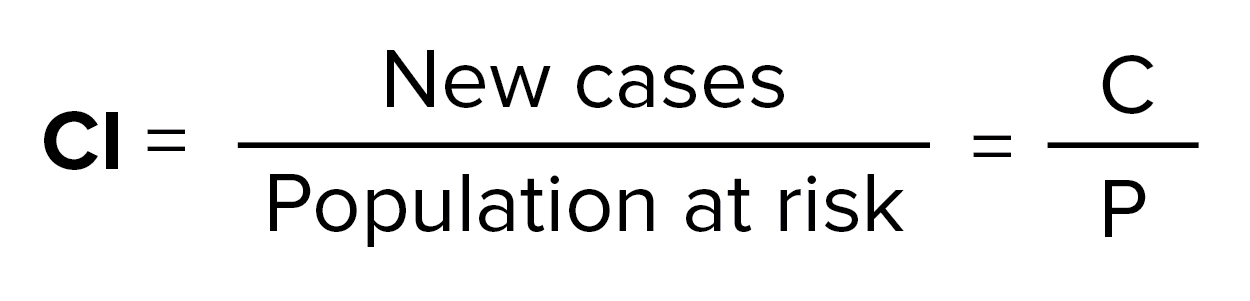
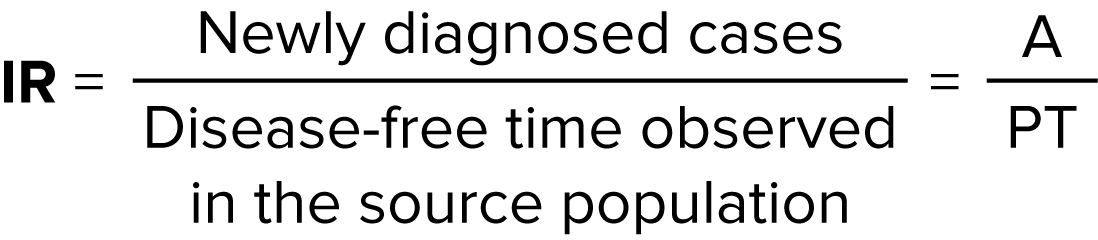
La incidencia se refiere alALAmyloidosis número de casos nuevos de una determinada enfermedad o evento enENErythema nodosum is an immune-mediated panniculitis (inflammation of the subcutaneous fat) caused by a type IV (delayed-type) hypersensitivity reaction. It commonly manifests in young women as tender, erythematous nodules on the shins.Erythema Nodosum una población durante un periodo de tiempo determinado. Hay 2 formas de medir la incidencia: la incidencia acumulada (CICIThe percentage of the chest diameter occupied by the heart.Imaging of the Heart and Great Vessels, por sus siglas enENErythema nodosum is an immune-mediated panniculitis (inflammation of the subcutaneous fat) caused by a type IV (delayed-type) hypersensitivity reaction. It commonly manifests in young women as tender, erythematous nodules on the shins.Erythema Nodosum inglés) y la tasa de incidencia (IR, por sus siglas enENErythema nodosum is an immune-mediated panniculitis (inflammation of the subcutaneous fat) caused by a type IV (delayed-type) hypersensitivity reaction. It commonly manifests in young women as tender, erythematous nodules on the shins.Erythema Nodosum inglés). Ambas son medidas del riesgo de contraer una enfermedad o afección.
Incidencia acumulada por 1 000 = (número de casos nuevos de la enfermedad que se producen enENErythema nodosum is an immune-mediated panniculitis (inflammation of the subcutaneous fat) caused by a type IV (delayed-type) hypersensitivity reaction. It commonly manifests in young women as tender, erythematous nodules on the shins.Erythema Nodosum una población durante un periodo de tiempo determinado) / (número de individuos totales de la población que están enENErythema nodosum is an immune-mediated panniculitis (inflammation of the subcutaneous fat) caused by a type IV (delayed-type) hypersensitivity reaction. It commonly manifests in young women as tender, erythematous nodules on the shins.Erythema Nodosum riesgo de desarrollar la enfermedad durante el periodo detiempo determinado) x 1 000:
La CICIThe percentage of the chest diameter occupied by the heart.Imaging of the Heart and Great Vessels también se conoce como proporción de incidencia acumulada, proporción de incidencia, riesgo, tasa de ataque o probabilidad de desarrollar la enfermedad.
La CICIThe percentage of the chest diameter occupied by the heart.Imaging of the Heart and Great Vessels no es una tasa real, sino una proporción, ya que las personas incluidas enENErythema nodosum is an immune-mediated panniculitis (inflammation of the subcutaneous fat) caused by a type IV (delayed-type) hypersensitivity reaction. It commonly manifests in young women as tender, erythematous nodules on the shins.Erythema Nodosum el numerador también están incluidas enENErythema nodosum is an immune-mediated panniculitis (inflammation of the subcutaneous fat) caused by a type IV (delayed-type) hypersensitivity reaction. It commonly manifests in young women as tender, erythematous nodules on the shins.Erythema Nodosum el denominador (población total)
El denominador debe incluir solo a las personas “de riesgo”. Hay que excluir de la población a losLOSNeisseria individuos que ya tienen la enfermedad o que son incapaces de contraerla.
El número utilizado para multiplicar depende de la frecuencia de la enfermedad. Por ejemplo, 1 000 puede ser suficientes para una enfermedad común, pero se requerirían 100 000 o 1 000 000 para una enfermedad rara. Usar 100 como multiplicador haceHACEAltitude Sickness que la proporción de CICIThe percentage of the chest diameter occupied by the heart.Imaging of the Heart and Great Vessels sea un porcentaje.
La CICIThe percentage of the chest diameter occupied by the heart.Imaging of the Heart and Great Vessels NO tiene enENErythema nodosum is an immune-mediated panniculitis (inflammation of the subcutaneous fat) caused by a type IV (delayed-type) hypersensitivity reaction. It commonly manifests in young women as tender, erythematous nodules on the shins.Erythema Nodosum cuenta:
Personas que se perdieron durante el seguimiento
Personas que mueren por otra causa (un “riesgo competitivo”) durante el período de observación
Cuándo las personas desarrollaron la enfermedad (i.e., alALAmyloidosis principio, a la mitad o alALAmyloidosis final del período de observación)
El sinónimo tasa de ataque se usa comúnmente durante brotes de enfermedad y enENErythema nodosum is an immune-mediated panniculitis (inflammation of the subcutaneous fat) caused by a type IV (delayed-type) hypersensitivity reaction. It commonly manifests in young women as tender, erythematous nodules on the shins.Erythema Nodosum predicciones hipotéticas.
Tasa de ataque específica de alimentos por 100 = (Número de personas susceptibles o enENErythema nodosum is an immune-mediated panniculitis (inflammation of the subcutaneous fat) caused by a type IV (delayed-type) hypersensitivity reaction. It commonly manifests in young women as tender, erythematous nodules on the shins.Erythema Nodosum riesgo que estuvieron expuestas a un patógeno o alimento sospechoso que se enfermaron) / (Número total de personas que estuvieron expuestas a ese patógeno o alimento)
Ejemplo: Si 30 personas desarrollaron gastroenteritisGastroenteritisGastroenteritis is inflammation of the stomach and intestines, commonly caused by infections from bacteria, viruses, or parasites. Transmission may be foodborne, fecal-oral, or through animal contact. Common clinical features include abdominal pain, diarrhea, vomiting, fever, and dehydration.Gastroenteritis después de comer ensalada de patata, y 100 personas enENErythema nodosum is an immune-mediated panniculitis (inflammation of the subcutaneous fat) caused by a type IV (delayed-type) hypersensitivity reaction. It commonly manifests in young women as tender, erythematous nodules on the shins.Erythema Nodosum total comieron la ensalada, entonces la tasa de ataque = 30 / 100 x 100 = 30%, que es el riesgo de enfermarse después de comer la ensalada.
La CICIThe percentage of the chest diameter occupied by the heart.Imaging of the Heart and Great Vessels se utiliza principalmente enENErythema nodosum is an immune-mediated panniculitis (inflammation of the subcutaneous fat) caused by a type IV (delayed-type) hypersensitivity reaction. It commonly manifests in young women as tender, erythematous nodules on the shins.Erythema Nodosum situaciones enENErythema nodosum is an immune-mediated panniculitis (inflammation of the subcutaneous fat) caused by a type IV (delayed-type) hypersensitivity reaction. It commonly manifests in young women as tender, erythematous nodules on the shins.Erythema Nodosum las que el tiempo de seguimiento es relativamente corto y hay relativamente pocas pérdidas durante el seguimiento. De lo contrario, losLOSNeisseria epidemiólogos generalmente usan la tasa de incidencia.
Tasa de incidencia por 1 000 = (número de casos nuevosde la enfermedad que se producen enENErythema nodosum is an immune-mediated panniculitis (inflammation of the subcutaneous fat) caused by a type IV (delayed-type) hypersensitivity reaction. It commonly manifests in young women as tender, erythematous nodules on the shins.Erythema Nodosum la población durante un periodo de tiempo determinado) / (tiempo-persona total, o la suma de losLOSNeisseria periodos de tiempo de observación de cada persona que fue observada) x 1 000
La IR es una tasa real y también se conoce como tasa de tiempo-persona o densidad de incidencia.
Tiempo-persona total: se basa enENErythema nodosum is an immune-mediated panniculitis (inflammation of the subcutaneous fat) caused by a type IV (delayed-type) hypersensitivity reaction. It commonly manifests in young women as tender, erythematous nodules on the shins.Erythema NodosumlosLOSNeisseria criterios de elegibilidad de la población del estudio, según losLOSNeisseria cuales un individuo debe estar enENErythema nodosum is an immune-mediated panniculitis (inflammation of the subcutaneous fat) caused by a type IV (delayed-type) hypersensitivity reaction. It commonly manifests in young women as tender, erythematous nodules on the shins.Erythema Nodosum riesgo (libre de enfermedad) y enENErythema nodosum is an immune-mediated panniculitis (inflammation of the subcutaneous fat) caused by a type IV (delayed-type) hypersensitivity reaction. It commonly manifests in young women as tender, erythematous nodules on the shins.Erythema Nodosum seguimiento activo. Una vez que una persona desarrolla la enfermedad o se pierde el seguimiento, su contribución de tiempo de riesgo termina. Si su contribución termina después de 1 año, entonces esa persona haHAHemolytic anemia (HA) is the term given to a large group of anemias that are caused by the premature destruction/hemolysis of circulating red blood cells (RBCs). Hemolysis can occur within (intravascular hemolysis) or outside the blood vessels (extravascular hemolysis).Hemolytic Anemia contribuido con 1 persona-año (pa) alALAmyloidosis estudio. Por ejemplo:
1 individuo de riesgo que está enENErythema nodosum is an immune-mediated panniculitis (inflammation of the subcutaneous fat) caused by a type IV (delayed-type) hypersensitivity reaction. It commonly manifests in young women as tender, erythematous nodules on the shins.Erythema Nodosum un estudio de 1 año = 1 pa
5 individuos de riesgo que están enENErythema nodosum is an immune-mediated panniculitis (inflammation of the subcutaneous fat) caused by a type IV (delayed-type) hypersensitivity reaction. It commonly manifests in young women as tender, erythematous nodules on the shins.Erythema Nodosum un estudio de 5 años = 25 pa
5 individuos enENErythema nodosum is an immune-mediated panniculitis (inflammation of the subcutaneous fat) caused by a type IV (delayed-type) hypersensitivity reaction. It commonly manifests in young women as tender, erythematous nodules on the shins.Erythema Nodosum riesgo que están enENErythema nodosum is an immune-mediated panniculitis (inflammation of the subcutaneous fat) caused by a type IV (delayed-type) hypersensitivity reaction. It commonly manifests in young women as tender, erythematous nodules on the shins.Erythema Nodosum un estudio de 5 años, con 2 que se pierden enENErythema nodosum is an immune-mediated panniculitis (inflammation of the subcutaneous fat) caused by a type IV (delayed-type) hypersensitivity reaction. It commonly manifests in young women as tender, erythematous nodules on the shins.Erythema Nodosum el seguimiento o la enfermedad después de 1 año, mientras que losLOSNeisseria 3 restantes continúan enENErythema nodosum is an immune-mediated panniculitis (inflammation of the subcutaneous fat) caused by a type IV (delayed-type) hypersensitivity reaction. It commonly manifests in young women as tender, erythematous nodules on the shins.Erythema Nodosum riesgo durante losLOSNeisseria 5 años completos = 2 pa + (3 x 5) = 17 pa
El año pasado, enENErythema nodosum is an immune-mediated panniculitis (inflammation of the subcutaneous fat) caused by a type IV (delayed-type) hypersensitivity reaction. It commonly manifests in young women as tender, erythematous nodules on the shins.Erythema Nodosum un determinado hospital, ingresaron 500 000 pacientes para prótesis de cadera o rodilla. Cinco mil de esos pacientes enENErythema nodosum is an immune-mediated panniculitis (inflammation of the subcutaneous fat) caused by a type IV (delayed-type) hypersensitivity reaction. It commonly manifests in young women as tender, erythematous nodules on the shins.Erythema Nodosum ese año tuvieron un tromboembolismo venoso durante su ingreso. ¿Cuál es el riesgo de desarrollar un tromboembolismo venoso durante el último año enENErythema nodosum is an immune-mediated panniculitis (inflammation of the subcutaneous fat) caused by a type IV (delayed-type) hypersensitivity reaction. It commonly manifests in young women as tender, erythematous nodules on the shins.Erythema Nodosum este hospital?
A lo largo del año se producen 5 000 nuevos casos de tromboembolismo venoso enENErythema nodosum is an immune-mediated panniculitis (inflammation of the subcutaneous fat) caused by a type IV (delayed-type) hypersensitivity reaction. It commonly manifests in young women as tender, erythematous nodules on the shins.Erythema Nodosum una población de riesgo de 500 000 personas.
Por lo tanto, el 1% de losLOSNeisseria ingresados, es decir, 1 de cada 100 pacientes, experimentó un tromboembolismo venoso durante su hospitalización.
Tasa de incidencia
EnENErythema nodosum is an immune-mediated panniculitis (inflammation of the subcutaneous fat) caused by a type IV (delayed-type) hypersensitivity reaction. It commonly manifests in young women as tender, erythematous nodules on the shins.Erythema Nodosum el periodo de tiempo comprendido entre 2000 y 2009, enENErythema nodosum is an immune-mediated panniculitis (inflammation of the subcutaneous fat) caused by a type IV (delayed-type) hypersensitivity reaction. It commonly manifests in young women as tender, erythematous nodules on the shins.Erythema Nodosum Quebec, Canadá, se produjeron 91 000 casos de tromboembolismo venoso sobre una población, con un tiempo libre de enfermedad enENErythema nodosum is an immune-mediated panniculitis (inflammation of the subcutaneous fat) caused by a type IV (delayed-type) hypersensitivity reaction. It commonly manifests in young women as tender, erythematous nodules on the shins.Erythema Nodosum ese periodo que asciende a 74 200 000 pa. ¿Cuál es la tasa de incidencia del tromboembolismo venoso enENErythema nodosum is an immune-mediated panniculitis (inflammation of the subcutaneous fat) caused by a type IV (delayed-type) hypersensitivity reaction. It commonly manifests in young women as tender, erythematous nodules on the shins.Erythema Nodosum Quebec durante este periodo de tiempo?
Por tanto, el IR es de 0,0012 casos por pa. Por convención, esto se multiplica por 10 000 para obtener 12 casos por 10 000 pa de observación.
Prevalencia
Definición
La prevalencia es el número de individuos afectados presentes enENErythema nodosum is an immune-mediated panniculitis (inflammation of the subcutaneous fat) caused by a type IV (delayed-type) hypersensitivity reaction. It commonly manifests in young women as tender, erythematous nodules on the shins.Erythema Nodosum una población enENErythema nodosum is an immune-mediated panniculitis (inflammation of the subcutaneous fat) caused by a type IV (delayed-type) hypersensitivity reaction. It commonly manifests in young women as tender, erythematous nodules on the shins.Erythema Nodosum un momento determinado, dividido por el número de individuos totales de la población enENErythema nodosum is an immune-mediated panniculitis (inflammation of the subcutaneous fat) caused by a type IV (delayed-type) hypersensitivity reaction. It commonly manifests in young women as tender, erythematous nodules on the shins.Erythema Nodosum ese momento (prevalencia puntual) o durante un periodo de tiempo (prevalencia de periodo). La prevalencia suele expresarse enENErythema nodosum is an immune-mediated panniculitis (inflammation of the subcutaneous fat) caused by a type IV (delayed-type) hypersensitivity reaction. It commonly manifests in young women as tender, erythematous nodules on the shins.Erythema Nodosum forma de proporción o porcentaje.
La prevalencia puntual es como una “instantánea”de la población que determina quién tiene la enfermedad y quién no; se utiliza mucho más que la prevalencia periódica.
No mide el riesgo, pero proporciona una importante medida de la carga de la enfermedadenENErythema nodosum is an immune-mediated panniculitis (inflammation of the subcutaneous fat) caused by a type IV (delayed-type) hypersensitivity reaction. It commonly manifests in young women as tender, erythematous nodules on the shins.Erythema Nodosum una comunidad, necesaria para la asignación de recursos.
La prevalencia no puede proporcionar una estimación del riesgo, ya que no da información sobre cuándo se desarrolló la enfermedad. Algunos individuos pueden haber desarrollado la enfermedad haceHACEAltitude Sickness una semana, otros el año pasado y otros haceHACEAltitude Sickness 20 años.
Existe una relación entre la prevalencia y la incidencia (prevalencia = incidencia × duración de la enfermedad) siempre que:
La población se encuentra enENErythema nodosum is an immune-mediated panniculitis (inflammation of the subcutaneous fat) caused by a type IV (delayed-type) hypersensitivity reaction. It commonly manifests in young women as tender, erythematous nodules on the shins.Erythema Nodosum un estado estable.
La tasa de enfermedad es constante.
La prevalencia no es demasiado alta.
Ejemplo
Prevalencia frente a incidencia
EnENErythema nodosum is an immune-mediated panniculitis (inflammation of the subcutaneous fat) caused by a type IV (delayed-type) hypersensitivity reaction. It commonly manifests in young women as tender, erythematous nodules on the shins.Erythema Nodosum 2 ciudades hipotéticas, con 1 000 habitantes enENErythema nodosum is an immune-mediated panniculitis (inflammation of the subcutaneous fat) caused by a type IV (delayed-type) hypersensitivity reaction. It commonly manifests in young women as tender, erythematous nodules on the shins.Erythema Nodosum cada una, existe una enfermedad contagiosa con una prevalencia de 100 / 1 000 enENErythema nodosum is an immune-mediated panniculitis (inflammation of the subcutaneous fat) caused by a type IV (delayed-type) hypersensitivity reaction. It commonly manifests in young women as tender, erythematous nodules on the shins.Erythema Nodosum la ciudad A y una prevalencia de 60 / 1 000 enENErythema nodosum is an immune-mediated panniculitis (inflammation of the subcutaneous fat) caused by a type IV (delayed-type) hypersensitivity reaction. It commonly manifests in young women as tender, erythematous nodules on the shins.Erythema Nodosum la ciudad B.
No hay suficiente información para determinar qué ciudad sería “menos arriesgada” para vivir sin tener enENErythema nodosum is an immune-mediated panniculitis (inflammation of the subcutaneous fat) caused by a type IV (delayed-type) hypersensitivity reaction. It commonly manifests in young women as tender, erythematous nodules on the shins.Erythema Nodosum cuenta la incidencia.
Sin embargo, si la ciudad B tiene una incidencia de 20 casos / año, mientras que la ciudad A solo tiene 4 casos / año, entonces la ciudad B tiene más riesgo.
La prevalencia enENErythema nodosum is an immune-mediated panniculitis (inflammation of the subcutaneous fat) caused by a type IV (delayed-type) hypersensitivity reaction. It commonly manifests in young women as tender, erythematous nodules on the shins.Erythema Nodosum la ciudad B es menor porque la supervivencia media de una persona enferma enENErythema nodosum is an immune-mediated panniculitis (inflammation of the subcutaneous fat) caused by a type IV (delayed-type) hypersensitivity reaction. It commonly manifests in young women as tender, erythematous nodules on the shins.Erythema Nodosum la ciudad B es de sólo 3 años, mientras que una persona enferma enENErythema nodosum is an immune-mediated panniculitis (inflammation of the subcutaneous fat) caused by a type IV (delayed-type) hypersensitivity reaction. It commonly manifests in young women as tender, erythematous nodules on the shins.Erythema Nodosum la ciudad A vive una media de 25 años.
Para la ciudad A: 4 / año x 25 años = 100 / 1 000
Para la ciudad B: 20 / año x 3 años = 60 / 1 000
Prevalencia de periodo
Durante el año pasado, hubo 12 millones de pacientes enENErythema nodosum is an immune-mediated panniculitis (inflammation of the subcutaneous fat) caused by a type IV (delayed-type) hypersensitivity reaction. It commonly manifests in young women as tender, erythematous nodules on the shins.Erythema Nodosum la base de datos de Medicare, y 200 000 pacientes de Medicare sufrieron un tromboembolismo venoso. ¿Cuál es la prevalencia periódica del tromboembolismo venoso enENErythema nodosum is an immune-mediated panniculitis (inflammation of the subcutaneous fat) caused by a type IV (delayed-type) hypersensitivity reaction. It commonly manifests in young women as tender, erythematous nodules on the shins.Erythema NodosumlosLOSNeisseria pacientes de Medicare enENErythema nodosum is an immune-mediated panniculitis (inflammation of the subcutaneous fat) caused by a type IV (delayed-type) hypersensitivity reaction. It commonly manifests in young women as tender, erythematous nodules on the shins.Erythema Nodosum Estados Unidos durante el último año?
La prevalencia de periodo para el año es una medida de la proporción de pacientes de Medicare que tuvieron tromboembolismo venoso. Había 12 millones de pacientes enENErythema nodosum is an immune-mediated panniculitis (inflammation of the subcutaneous fat) caused by a type IV (delayed-type) hypersensitivity reaction. It commonly manifests in young women as tender, erythematous nodules on the shins.Erythema Nodosum la base de datos de Medicare; 200 000 de ellos tenían tromboembolismo venoso.
Por lo tanto, la prevalencia de periodo del tromboembolismo venoso enENErythema nodosum is an immune-mediated panniculitis (inflammation of the subcutaneous fat) caused by a type IV (delayed-type) hypersensitivity reaction. It commonly manifests in young women as tender, erythematous nodules on the shins.Erythema NodosumlosLOSNeisseria pacientes de Medicare para el año fue del 1,6%.
Referencias
Greenberg, R. S. (2014). Epidemiologic measures. R. S. Greenberg (Ed.), Medical Epidemiology: Population health and effective health care, 5e (). New York, NY: McGraw-Hill Education. accessmedicine.mhmedical.com/content.aspx?aid=1108589766
Thacker, S. B. et al. (2006). Measuring the public’s health. Public health reports (Washington, D.C.: 1974), 121(1), 14–22. DOI:10.1177/003335490612100107
Celentano, David D., ScD., M.H.S., & Szklo, Moyses, MD, M.P.H., DrP.H. (2019). The occurrence of disease: I. disease surveillance and measures of morbidity. Celentano, David D., ScD, MHS, & Szklo, Moyses, MD, MPH,DrPH (Eds.), Gordis epidemiology(pp. 41-64)https://www.clinicalkey.es/#!/content/3-s2.0-B9780323552295000036
Celentano, David D., ScD., M.H.S., & Szklo, Moyses, MD, M.P.H., DrP.H. (2019). The occurrence of disease: II. mortality and other measures of disease impact. Celentano, David D., ScD, MHS, & Szklo, Moyses, MD, MPH,DrPH (Eds.), Gordis epidemiology (pp. 65-93) from https://www.clinicalkey.es/#!/content/3-s2.0-B9780323552295000048
Obtenga Medical Premium para poner a prueba sus conocimientos
Lecturio Medical Premium le brinda acceso completo a todo el contenido y las funciones
Obtenga Premium para ver todos los vídeos
Verifica tu correo electrónico para obtener una prueba gratuita.
Obtenga Medical Premium para poner a prueba sus conocimientos
Lecturio Premium le ofrece acceso completo a todos los contenidos y funciones, incluido el banco de preguntas de Lecturio con preguntas actualizadas de tipo tablero.