
Domina Conceptos Médicos

Estudia para la escuela de medicina y tus examenes con Lecturio.

Leucemia de Células Pilosas

La leucemia de células pilosas es una leucemia crónica y rara de las células B  caracterizada por la acumulación de pequeños linfocitos B maduros que tienen “proyecciones similares a pelos” visibles en EN Erythema nodosum is an immune-mediated panniculitis (inflammation of the subcutaneous fat) caused by a type IV (delayed-type) hypersensitivity reaction. It commonly manifests in young women as tender, erythematous nodules on the shins. Erythema Nodosum el microscopio. Las células anormales se acumulan en EN Erythema nodosum is an immune-mediated panniculitis (inflammation of the subcutaneous fat) caused by a type IV (delayed-type) hypersensitivity reaction. It commonly manifests in young women as tender, erythematous nodules on the shins. Erythema Nodosum la sangre periférica, médula ósea (causando fibrosis Fibrosis Any pathological condition where fibrous connective tissue invades any organ, usually as a consequence of inflammation or other injury. Bronchiolitis Obliterans) y en EN Erythema nodosum is an immune-mediated panniculitis (inflammation of the subcutaneous fat) caused by a type IV (delayed-type) hypersensitivity reaction. It commonly manifests in young women as tender, erythematous nodules on the shins. Erythema Nodosum la pulpa roja del bazo, lo que provoca citopenias, como anemia Anemia Anemia is a condition in which individuals have low Hb levels, which can arise from various causes. Anemia is accompanied by a reduced number of RBCs and may manifest with fatigue, shortness of breath, pallor, and weakness. Subtypes are classified by the size of RBCs, chronicity, and etiology. Anemia: Overview and Types, trombocitopenia, neutropenia Neutropenia Neutrophils are an important component of the immune system and play a significant role in the eradication of infections. Low numbers of circulating neutrophils, referred to as neutropenia, predispose the body to recurrent infections or sepsis, though patients can also be asymptomatic. Neutropenia y monocitopenia. La leucemia de células pilosas generalmente afecta a hombres de mediana edad y se presenta con debilidad, fatiga, infecciones oportunistas y esplenomegalia (que a menudo es severa). La leucemia de células pilosas se diagnostica mediante la identificación de células pilosas en EN Erythema nodosum is an immune-mediated panniculitis (inflammation of the subcutaneous fat) caused by a type IV (delayed-type) hypersensitivity reaction. It commonly manifests in young women as tender, erythematous nodules on the shins. Erythema Nodosum un frotis de sangre periférica, citopenias características en EN Erythema nodosum is an immune-mediated panniculitis (inflammation of the subcutaneous fat) caused by a type IV (delayed-type) hypersensitivity reaction. It commonly manifests in young women as tender, erythematous nodules on the shins. Erythema Nodosum el hemograma con diferencial, biopsia de médula ósea e inmunofenotipicación. El tratamiento consiste en EN Erythema nodosum is an immune-mediated panniculitis (inflammation of the subcutaneous fat) caused by a type IV (delayed-type) hypersensitivity reaction. It commonly manifests in young women as tender, erythematous nodules on the shins. Erythema Nodosum observación para pacientes asintomáticos y análogos de purina para pacientes sintomáticos. Tanto la enfermedad en EN Erythema nodosum is an immune-mediated panniculitis (inflammation of the subcutaneous fat) caused by a type IV (delayed-type) hypersensitivity reaction. It commonly manifests in young women as tender, erythematous nodules on the shins. Erythema Nodosum sí como sus tratamientos pueden causar inmunosupresión, por lo que también es importante la prevención y el tratamiento oportuno de las infecciones.

Last updated: Dec 15, 2025

Editorial responsibility: Stanley Oiseth, Lindsay Jones, Evelin Maza

Descripción General

Definición

La leucemia de células pilosas es una leucemia crónica de células B rara caracterizada por la acumulación de pequeños linfocitos B maduros que tienen proyecciones similares a pelos visibles en EN Erythema nodosum is an immune-mediated panniculitis (inflammation of the subcutaneous fat) caused by a type IV (delayed-type) hypersensitivity reaction. It commonly manifests in young women as tender, erythematous nodules on the shins. Erythema Nodosum el microscopio.

Epidemiología

  • Incidencia:
    • 3 por 1 millón de personas por año en EN Erythema nodosum is an immune-mediated panniculitis (inflammation of the subcutaneous fat) caused by a type IV (delayed-type) hypersensitivity reaction. It commonly manifests in young women as tender, erythematous nodules on the shins. Erythema Nodosum los LOS Neisseria Estados Unidos
    • Rara: aproximadamente el 2% de todos los LOS Neisseria casos de leucemia
  • Edad media al AL Amyloidosis diagnóstico: aproximadamente 50 años
  • Sexo: masculino > femenino (4:1)
  • Raza/etnia:
    • Más común en EN Erythema nodosum is an immune-mediated panniculitis (inflammation of the subcutaneous fat) caused by a type IV (delayed-type) hypersensitivity reaction. It commonly manifests in young women as tender, erythematous nodules on the shins. Erythema Nodosum caucásicos (la incidencia es 3 veces mayor que en EN Erythema nodosum is an immune-mediated panniculitis (inflammation of the subcutaneous fat) caused by a type IV (delayed-type) hypersensitivity reaction. It commonly manifests in young women as tender, erythematous nodules on the shins. Erythema Nodosum afroamericanos)
    • Rara en EN Erythema nodosum is an immune-mediated panniculitis (inflammation of the subcutaneous fat) caused by a type IV (delayed-type) hypersensitivity reaction. It commonly manifests in young women as tender, erythematous nodules on the shins. Erythema Nodosum personas de ascendencia africana y japonesa
  • Los LOS Neisseria familiares de primer grado tienen un riesgo 8 veces mayor que la población general.

Etiología

La leucemia de células pilosas es una neoplasia maligna clonal de células B. Se desconoce la etiología exacta, pero varias exposiciones ambientales parecen aumentar el riesgo de desarrollar leucemia de células pilosas.

  • Exposiciones como posibles causas:
    • Radiación ionizante
    • Plaguicidas organofosforados
    • Agricultura y productos químicos agrícolas
    • Polvo de madera
    • Antecedentes de mononucleosis Mononucleosis Infectious mononucleosis (IM), also known as “the kissing disease,” is a highly contagious viral infection caused by the Epstein-Barr virus. Its common name is derived from its main method of transmission: the spread of infected saliva via kissing. Clinical manifestations of IM include fever, tonsillar pharyngitis, and lymphadenopathy. Mononucleosis infecciosa
  • Relaciones familiares: por compartir un haplotipo de antígenos leucocitarios humano

Fisiopatología

El problema subyacente en EN Erythema nodosum is an immune-mediated panniculitis (inflammation of the subcutaneous fat) caused by a type IV (delayed-type) hypersensitivity reaction. It commonly manifests in young women as tender, erythematous nodules on the shins. Erythema Nodosum la leucemia de células pilosas es que la médula ósea produce demasiados linfocitos B, que desplazan a los LOS Neisseria otros tipos de células sanguíneas. Estas células B anormales no pueden proteger al AL Amyloidosis cuerpo de los LOS Neisseria invasores infecciosos de la misma manera que lo hacen las células B normales.

Fisiopatología

  • Los LOS Neisseria linfocitos de células B con proyecciones similares a pelos (células pilosas) experimentan proliferación clonal
  • Las células pilosas se acumulan en EN Erythema nodosum is an immune-mediated panniculitis (inflammation of the subcutaneous fat) caused by a type IV (delayed-type) hypersensitivity reaction. It commonly manifests in young women as tender, erythematous nodules on the shins. Erythema Nodosum:
    • Sangre periférica
    • Médula ósea
    • Bazo
    • Hígado (menos común)
    • Ganglios linfáticos (poco común)
  • Infiltración del sistema reticuloendotelial:
    • Interfiere con la función de la médula ósea
    • Resulta en EN Erythema nodosum is an immune-mediated panniculitis (inflammation of the subcutaneous fat) caused by a type IV (delayed-type) hypersensitivity reaction. It commonly manifests in young women as tender, erythematous nodules on the shins. Erythema Nodosum insuficiencia de la médula ósea y/o pancitopenia
  • Infiltración del hígado y el bazo: produce organomegalia
  • Infecciones debidas a la inmunosupresión relacionada con la enfermedad y el tratamiento:
    • Principal causa de muerte
    • Las infecciones pueden ser bacterianas, virales, fúngicas o micobacterianas no tuberculosas.

Patogénesis

La patogenia no se conoce por completo, pero la mayoría de los LOS Neisseria casos parecen surgir de células B de memoria activadas tardíamente, que adquieren una mutación activadora del gen BRAF V600E.

  • Mutación activadora BRAF V600E (causa fundamental de las características biológicas de la leucemia de células pilosas):
    • Da como resultado la activación constitutiva de la vía de señalización RAF-MEK-ERK → conduce a la inhibición de la apoptosis Apoptosis A regulated cell death mechanism characterized by distinctive morphologic changes in the nucleus and cytoplasm, including the endonucleolytic cleavage of genomic DNA, at regularly spaced, internucleosomal sites, I.e., DNA fragmentation. It is genetically-programmed and serves as a balance to mitosis in regulating the size of animal tissues and in mediating pathologic processes associated with tumor growth. Ischemic Cell Damage/mejora de la supervivencia celular
    • Actúa como gatillo y marcador molecular
    • Presente en EN Erythema nodosum is an immune-mediated panniculitis (inflammation of the subcutaneous fat) caused by a type IV (delayed-type) hypersensitivity reaction. It commonly manifests in young women as tender, erythematous nodules on the shins. Erythema Nodosum casi el 100% de los LOS Neisseria casos
  • Las células pilosas tienen las siguientes características:
    • Expresión de antígenos de superficie de células pan-B: CD19, CD20 y CD22
    • Ausencia de la expresión de marcadores celulares de células B inmaduras CD10 y CD21 CD21 Molecular sites on or in B-lymphocytes, follicular dendritic cells, lymphoid cells, and epithelial cells that recognize and combine with complement C3D. Human complement receptor 2 (CR2) serves as a receptor for both C3dg and the gp350/220 glycoprotein of Human Herpesvirus 4 and binds the monoclonal antibody OKB7, which blocks binding of both ligands to the receptor. Epstein-Barr Virus
    • Expresión de antígenos de superficie que no son comunes en EN Erythema nodosum is an immune-mediated panniculitis (inflammation of the subcutaneous fat) caused by a type IV (delayed-type) hypersensitivity reaction. It commonly manifests in young women as tender, erythematous nodules on the shins. Erythema Nodosum las células B, como:
      • ≥ 1 cadenas pesadas de inmunoglobulina y cadenas ligeras monotípicas
      • CD11c (típicamente encontrado en EN Erythema nodosum is an immune-mediated panniculitis (inflammation of the subcutaneous fat) caused by a type IV (delayed-type) hypersensitivity reaction. It commonly manifests in young women as tender, erythematous nodules on the shins. Erythema Nodosum monocitos y neutrófilos)
      • CD25 (típicamente encontrado en EN Erythema nodosum is an immune-mediated panniculitis (inflammation of the subcutaneous fat) caused by a type IV (delayed-type) hypersensitivity reaction. It commonly manifests in young women as tender, erythematous nodules on the shins. Erythema Nodosum células T activadas)
      • CD103 (típicamente encontrado en EN Erythema nodosum is an immune-mediated panniculitis (inflammation of the subcutaneous fat) caused by a type IV (delayed-type) hypersensitivity reaction. It commonly manifests in young women as tender, erythematous nodules on the shins. Erythema Nodosum células T intraepiteliales)
  • Otras mutaciones que pueden jugar un papel importante en EN Erythema nodosum is an immune-mediated panniculitis (inflammation of the subcutaneous fat) caused by a type IV (delayed-type) hypersensitivity reaction. It commonly manifests in young women as tender, erythematous nodules on the shins. Erythema Nodosum la patogénesis molecular:
    • Sobreexpresión de la proteína ciclina D1 (un importante regulador del ciclo celular)
    • Mutaciones en EN Erythema nodosum is an immune-mediated panniculitis (inflammation of the subcutaneous fat) caused by a type IV (delayed-type) hypersensitivity reaction. It commonly manifests in young women as tender, erythematous nodules on the shins. Erythema Nodosum CDKN1B/p27 (un inhibidor del ciclo celular)
    • Mutaciones en EN Erythema nodosum is an immune-mediated panniculitis (inflammation of the subcutaneous fat) caused by a type IV (delayed-type) hypersensitivity reaction. It commonly manifests in young women as tender, erythematous nodules on the shins. Erythema Nodosum KLF2 (un factor de transcripción)
  • Asociada con otros trastornos inmunológicos sistémicos:
    • Esclerodermia
    • Polimiositis
    • Poliarteritis nodosa
    • Maculopápulas eritematosas
    • Pioderma gangrenoso

Presentación Clínica

Síntomas relacionados con las citopenias

  • Anemia Anemia Anemia is a condition in which individuals have low Hb levels, which can arise from various causes. Anemia is accompanied by a reduced number of RBCs and may manifest with fatigue, shortness of breath, pallor, and weakness. Subtypes are classified by the size of RBCs, chronicity, and etiology. Anemia: Overview and Types (síntomas de presentación más comunes):
    • Debilidad
    • Fatiga
  • Trombocitopenia → síntomas hemorrágicos (⅓ de los LOS Neisseria pacientes):
  • Neutropenia Neutropenia Neutrophils are an important component of the immune system and play a significant role in the eradication of infections. Low numbers of circulating neutrophils, referred to as neutropenia, predispose the body to recurrent infections or sepsis, though patients can also be asymptomatic. Neutropenia (⅓ de los LOS Neisseria pacientes):
    • Fiebre (debido a una infección)
    • Infecciones

Síntomas relacionados con la infiltración en EN Erythema nodosum is an immune-mediated panniculitis (inflammation of the subcutaneous fat) caused by a type IV (delayed-type) hypersensitivity reaction. It commonly manifests in young women as tender, erythematous nodules on the shins. Erythema Nodosum el bazo y el hígado

  • Esplenomegalia que causa malestar abdominal (característica clásica de la leucemia de células pilosas, observada en EN Erythema nodosum is an immune-mediated panniculitis (inflammation of the subcutaneous fat) caused by a type IV (delayed-type) hypersensitivity reaction. It commonly manifests in young women as tender, erythematous nodules on the shins. Erythema Nodosum 80%–90% de los LOS Neisseria pacientes):
    • El bazo puede ser masivo: el borde esplénico se extiende > 8 cm más allá del margen costal izquierdo en EN Erythema nodosum is an immune-mediated panniculitis (inflammation of the subcutaneous fat) caused by a type IV (delayed-type) hypersensitivity reaction. It commonly manifests in young women as tender, erythematous nodules on the shins. Erythema Nodosum el 25% de los LOS Neisseria pacientes
    • La incidencia y la gravedad de la esplenomegalia puede disminuir a medida que los LOS Neisseria pacientes reciben un diagnóstico más temprano.
    • Puede ocurrir ruptura esplénica espontánea → una emergencia médica
  • La hepatomegalia y la linfadenopatía no son características principales de la leucemia de células pilosas:
    • Hepatomegalia presente en EN Erythema nodosum is an immune-mediated panniculitis (inflammation of the subcutaneous fat) caused by a type IV (delayed-type) hypersensitivity reaction. It commonly manifests in young women as tender, erythematous nodules on the shins. Erythema Nodosum el 20% de los LOS Neisseria pacientes con leucemia de células pilosas
    • Linfadenopatía presente en EN Erythema nodosum is an immune-mediated panniculitis (inflammation of the subcutaneous fat) caused by a type IV (delayed-type) hypersensitivity reaction. It commonly manifests in young women as tender, erythematous nodules on the shins. Erythema Nodosum el 10% de los LOS Neisseria pacientes con leucemia de células pilosas

Asintomático

  • Hallazgo incidental durante el estudio por causa no relacionada
  • ¼ de los LOS Neisseria pacientes

Diagnóstico

El diagnóstico se basa en EN Erythema nodosum is an immune-mediated panniculitis (inflammation of the subcutaneous fat) caused by a type IV (delayed-type) hypersensitivity reaction. It commonly manifests in young women as tender, erythematous nodules on the shins. Erythema Nodosum la identificación de células pilosas en EN Erythema nodosum is an immune-mediated panniculitis (inflammation of the subcutaneous fat) caused by a type IV (delayed-type) hypersensitivity reaction. It commonly manifests in young women as tender, erythematous nodules on the shins. Erythema Nodosum un frotis de sangre periférica, inmunohistoquímica y/o citometría de flujo y, potencialmente, en EN Erythema nodosum is an immune-mediated panniculitis (inflammation of the subcutaneous fat) caused by a type IV (delayed-type) hypersensitivity reaction. It commonly manifests in young women as tender, erythematous nodules on the shins. Erythema Nodosum una biopsia de médula ósea.

Estudios de laboratorio

Los LOS Neisseria hallazgos de laboratorio pueden incluir:
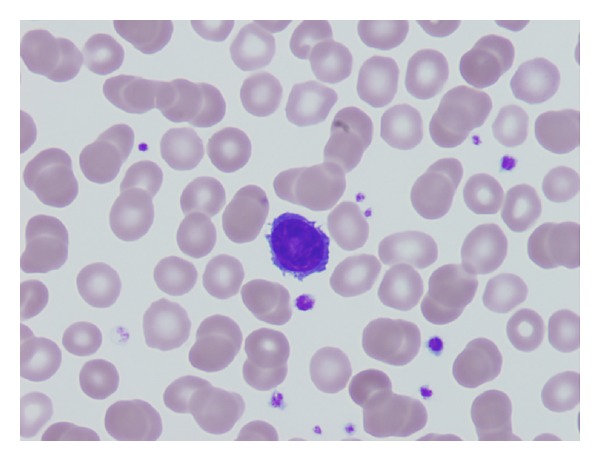
  • Frotis de sangre periférica: identificación de células pilosas
    • Proyecciones citoplasmáticas finas, parecidas a pelos
    • Células mononucleares grandes
    • Los LOS Neisseria núcleos son más comúnmente ovoides y están localizados excéntricamente.
    • Se puede identificar con una tinción de Romanowsky
  • Hemograma/Diferencial:
    • Anemia Anemia Anemia is a condition in which individuals have low Hb levels, which can arise from various causes. Anemia is accompanied by a reduced number of RBCs and may manifest with fatigue, shortness of breath, pallor, and weakness. Subtypes are classified by the size of RBCs, chronicity, and etiology. Anemia: Overview and Types (normocrómica–normocítica): 85% de los LOS Neisseria pacientes
    • Trombocitopenia: 80%
    • Neutropenia Neutropenia Neutrophils are an important component of the immune system and play a significant role in the eradication of infections. Low numbers of circulating neutrophils, referred to as neutropenia, predispose the body to recurrent infections or sepsis, though patients can also be asymptomatic. Neutropenia: 80%
    • Monocitopenia: 80%
    • Leucocitosis (> 10 000 células/µL): 10%–20% de pacientes
  • Otras pruebas serológicas:
    • Nitrógeno de urea Urea A compound formed in the liver from ammonia produced by the deamination of amino acids. It is the principal end product of protein catabolism and constitutes about one half of the total urinary solids. Urea Cycle (BUN) elevado: 30%
    • Pruebas de función hepática anormales: 20%
    • Serologías de hepatitis B Hepatitis B Hepatitis B virus (HBV) is a partially double-stranded DNA virus, which belongs to the Orthohepadnavirus genus and the Hepadnaviridae family. Most individuals with acute HBV infection are asymptomatic or have mild, self-limiting symptoms. Chronic infection can be asymptomatic or create hepatic inflammation, leading to liver cirrhosis and hepatocellular carcinoma (HCC). Hepatitis B Virus y C para pacientes cuyo tratamiento previsto es con rituximab Rituximab A murine-derived monoclonal antibody and antineoplastic agent that binds specifically to the cd20 antigen and is used in the treatment of leukemia; lymphoma and rheumatoid arthritis. Immunosuppressants
  • Citometría de flujo de sangre periférica: puede confirmar el inmunofenotipo de las células B circulantes
Frotis de sangre periférica que muestra una célula pilosa

Frotis de sangre periférica que muestra una célula pilosa

Imagen: “Primary hairy cell leukemia/lymphoma of the breast: a case report and review of the literature” por Pilichowska M, Shariftabrizi A, Mukand-Cerro I, Miller K. Licencia: CC BY 3.0
Biopsia

  • Difícil o imposible de aspirar (“punción seca”) debido a la fibrosis Fibrosis Any pathological condition where fibrous connective tissue invades any organ, usually as a consequence of inflammation or other injury. Bronchiolitis Obliterans de la médula inducida por la leucemia de células pilosas
  • Requiere una biopsia de médula ósea con trépano
  • Tinción inmunohistoquímica:
    • El mejor método para determinar el diagnóstico y el grado de afectación
    • Para distinguir la leucemia de células pilosas clásica de otras neoplasias de células B pequeñas periféricas
    • Valorar la mutación somática BRAF V600E: muy sensible pero no específica de leucemia de células pilosas (también detectada en EN Erythema nodosum is an immune-mediated panniculitis (inflammation of the subcutaneous fat) caused by a type IV (delayed-type) hypersensitivity reaction. It commonly manifests in young women as tender, erythematous nodules on the shins. Erythema Nodosum otras entidades)
    • Permite la evaluación de antígenos típicos de la leucemia de células pilosas: CD19, CD20, CD22, CD11c, CD25 y CD103
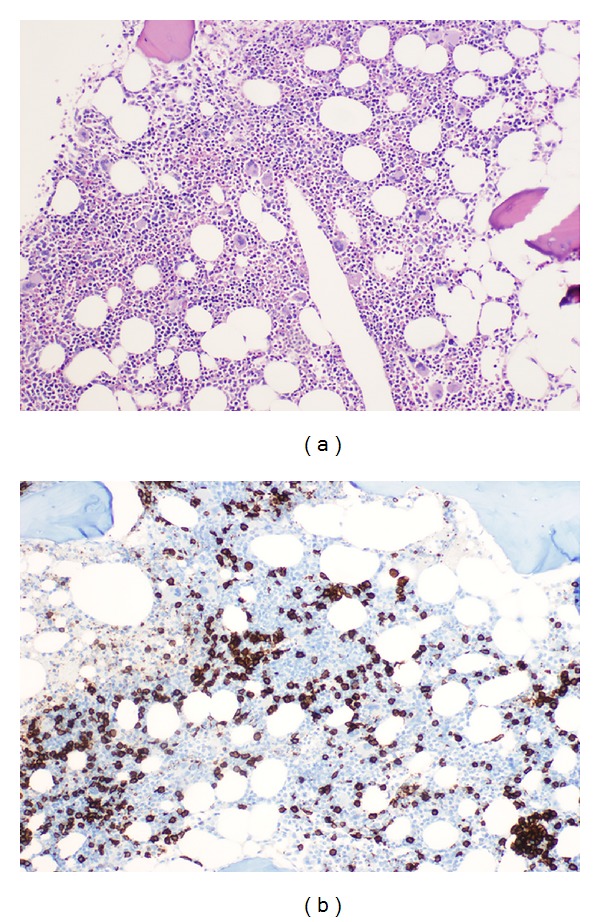
Biopsia de médula ósea leucemia de células peludas

Biopsia de médula ósea:
(a): Infiltrado difuso bastante discreto de linfocitos maduros pequeños (hematoxilina y eosina, ×200).
(b): Tinción de inmunohistoquímica para CD20 que revela la naturaleza de células B del infiltrado (inmunoperoxidasa, ×200).

Imagen: “Bone marrow biopsy” por Pilichowska M, Shariftabrizi A, Mukand-Cerro I, Miller K. Licencia: CC BY 3.0

Tratamiento

Objetivos del tratamiento

  • Mejorar los LOS Neisseria síntomas.
  • Revertir las citopenias.
  • Prolongar la supervivencia a una esperanza de vida casi normal (aunque la enfermedad técnicamente no es curable)

Pacientes asintomáticos: observación

Los LOS Neisseria pacientes asintomáticos deben ser observados en EN Erythema nodosum is an immune-mediated panniculitis (inflammation of the subcutaneous fat) caused by a type IV (delayed-type) hypersensitivity reaction. It commonly manifests in young women as tender, erythematous nodules on the shins. Erythema Nodosum lugar de tratados.

  • Se pueden observar durante meses o años
  • Aproximadamente el 10% de los LOS Neisseria pacientes nunca requieren terapia.
  • Ninguna ventaja clara del tratamiento temprano (el riesgo de la terapia puede ser mayor que el beneficio)
  • Los LOS Neisseria pacientes pueden llevar un seguimiento cercano de los LOS Neisseria antecedentes, estudios de laboratorio y hemograma con diferencial con intervalos de aproximadamente 3 meses.

Pacientes sintomáticos: tratamiento

El tratamiento está indicado en EN Erythema nodosum is an immune-mediated panniculitis (inflammation of the subcutaneous fat) caused by a type IV (delayed-type) hypersensitivity reaction. It commonly manifests in young women as tender, erythematous nodules on the shins. Erythema Nodosum las siguientes situaciones clínicas:

  • Citopenias significativas:
    • Recuento absoluto de neutrófilos: < 1 000/µL
    • Hemoglobina: < 11 g/dL
    • Recuento de plaquetas: < 100 000/µL
  • Citopenias menos severas con lo siguiente:
    • Infecciones a repetición
    • Sangrado clínico
    • Linfocitosis progresiva
  • Esplenomegalia sintomática (común)
  • Adenopatía sintomática (poco común)
  • Síntomas constitucionales: fiebre y/o sudores nocturnos (signos de infección), pérdida de peso

Opciones de tratamiento

  • Análogos de la purina: cladribina, pentostatina
    • Efectos citotóxicos sobre los LOS Neisseria linfocitos B y T
    • Tratamiento de 1ra línea para pacientes con función renal normal
    • La remisión completa se logra en EN Erythema nodosum is an immune-mediated panniculitis (inflammation of the subcutaneous fat) caused by a type IV (delayed-type) hypersensitivity reaction. It commonly manifests in young women as tender, erythematous nodules on the shins. Erythema Nodosum > 90% de los LOS Neisseria pacientes con supervivencia libre de progresión de 9‒11 años.
    • Induce una neutropenia Neutropenia Neutrophils are an important component of the immune system and play a significant role in the eradication of infections. Low numbers of circulating neutrophils, referred to as neutropenia, predispose the body to recurrent infections or sepsis, though patients can also be asymptomatic. Neutropenia profunda → riesgo de infección debido al AL Amyloidosis tratamiento
  • Interferón alfa:
    • Inhibe el crecimiento celular, interfiere con la expresión de oncogenes Oncogenes Genes whose gain-of-function alterations lead to neoplastic cell transformation. They include, for example, genes for activators or stimulators of cell proliferation such as growth factors, growth factor receptors, protein kinases, signal transducers, nuclear phosphoproteins, and transcription factors. A prefix of ‘v-‘ before oncogene symbols indicates oncogenes captured and transmitted by retroviruses; the prefix ‘c-‘ before the gene symbol of an oncogene indicates it is the cellular homolog (proto-oncogenes) of a v-oncogene. Carcinogenesis y antígenos de superficie
    • Puede utilizarse como agente alternativo en EN Erythema nodosum is an immune-mediated panniculitis (inflammation of the subcutaneous fat) caused by a type IV (delayed-type) hypersensitivity reaction. It commonly manifests in young women as tender, erythematous nodules on the shins. Erythema Nodosum pacientes que se beneficiarían del ↑ de los LOS Neisseria recuentos celulares antes de comenzar la terapia con análogos de purina.
    • Indicaciones:
      • Pancitopenia severa
      • Infecciones activas
      • Embarazo (aunque la mayoría de los LOS Neisseria casos solo se puede estar bajo vigilancia hasta después del parto)
  • Rituximab Rituximab A murine-derived monoclonal antibody and antineoplastic agent that binds specifically to the cd20 antigen and is used in the treatment of leukemia; lymphoma and rheumatoid arthritis. Immunosuppressants:
    • Un anticuerpo monoclonal contra CD20 (que se encuentra en EN Erythema nodosum is an immune-mediated panniculitis (inflammation of the subcutaneous fat) caused by a type IV (delayed-type) hypersensitivity reaction. It commonly manifests in young women as tender, erythematous nodules on the shins. Erythema Nodosum los LOS Neisseria linfocitos B)
    • Puede agregarse a las terapias con análogos de purina para mejorar la respuesta
    • Asociado con inmunosupresión
    • Los LOS Neisseria pacientes con hepatitis B Hepatitis B Hepatitis B virus (HBV) is a partially double-stranded DNA virus, which belongs to the Orthohepadnavirus genus and the Hepadnaviridae family. Most individuals with acute HBV infection are asymptomatic or have mild, self-limiting symptoms. Chronic infection can be asymptomatic or create hepatic inflammation, leading to liver cirrhosis and hepatocellular carcinoma (HCC). Hepatitis B Virus y C tienen riesgo de reactivación y hepatitis grave.
  • Esplenectomía:
    • Puede mejorar temporalmente los LOS Neisseria recuentos sanguíneos
    • No se realiza de forma rutinaria, pero las indicaciones incluyen:
      • Terapia paliativa para la esplenomegalia sintomática (e.g., dolor Dolor Inflammation, agrandamiento severo)
      • Tratamiento de emergencia para la ruptura esplénica
      • Pancitopenia por secuestro esplénico
      • Embarazo
  • Otras terapias:
    • Antibióticos para tratar infecciones
    • Vacunas para prevenir infecciones
    • Transfusiones para tratar citopenias graves/sintomáticas ( los LOS Neisseria pacientes requieren hemoderivados irradiados)

Pronóstico

  • Con tratamiento, los LOS Neisseria pacientes pueden lograr una remisión a largo plazo.
  • Tasa de supervivencia a 5 años: 84%–94%
  • Largos períodos sin tratamiento
  • Los LOS Neisseria pacientes con recaídas sintomáticas deben recibir tratamiento adicional.

Diagnóstico Diferencial

  • Mielofibrosis primaria: neoplasia mieloproliferativa debida a mutaciones en EN Erythema nodosum is an immune-mediated panniculitis (inflammation of the subcutaneous fat) caused by a type IV (delayed-type) hypersensitivity reaction. It commonly manifests in young women as tender, erythematous nodules on the shins. Erythema Nodosum las células madre hematopoyéticas que se caracteriza por mieloproliferación crónica con depósito fibroblástico, lo que resulta en EN Erythema nodosum is an immune-mediated panniculitis (inflammation of the subcutaneous fat) caused by a type IV (delayed-type) hypersensitivity reaction. It commonly manifests in young women as tender, erythematous nodules on the shins. Erythema Nodosum fibrosis Fibrosis Any pathological condition where fibrous connective tissue invades any organ, usually as a consequence of inflammation or other injury. Bronchiolitis Obliterans de la médula ósea. Los LOS Neisseria síntomas se relacionan principalmente con la anemia Anemia Anemia is a condition in which individuals have low Hb levels, which can arise from various causes. Anemia is accompanied by a reduced number of RBCs and may manifest with fatigue, shortness of breath, pallor, and weakness. Subtypes are classified by the size of RBCs, chronicity, and etiology. Anemia: Overview and Types y la hematopoyesis extramedular e incluyen fatiga intensa, pérdida de peso y hepatoesplenomegalia. Los LOS Neisseria estudios de laboratorio muestran anemia Anemia Anemia is a condition in which individuals have low Hb levels, which can arise from various causes. Anemia is accompanied by a reduced number of RBCs and may manifest with fatigue, shortness of breath, pallor, and weakness. Subtypes are classified by the size of RBCs, chronicity, and etiology. Anemia: Overview and Types (y otras citopenias) y la biopsia de médula ósea revela fibrosis Fibrosis Any pathological condition where fibrous connective tissue invades any organ, usually as a consequence of inflammation or other injury. Bronchiolitis Obliterans extensa. El tratamiento es con trasplante de células hematopoyéticas e intervenciones dirigidas a los LOS Neisseria síntomas.
  • Leucemia linfocítica crónica: neoplasia de células B maduras caracterizada por una acumulación progresiva de linfocitos B monoclonales funcionalmente incompetentes. La mayoría de los LOS Neisseria casos de leucemia linfocítica crónica son asintomáticos, con hallazgos en EN Erythema nodosum is an immune-mediated panniculitis (inflammation of the subcutaneous fat) caused by a type IV (delayed-type) hypersensitivity reaction. It commonly manifests in young women as tender, erythematous nodules on the shins. Erythema Nodosum el examen físico de linfadenopatía indolora y esplenomegalia. La leucemia linfocítica crónica se puede diferenciar de la leucemia de células pilosas sobre la base de las diferencias en EN Erythema nodosum is an immune-mediated panniculitis (inflammation of the subcutaneous fat) caused by a type IV (delayed-type) hypersensitivity reaction. It commonly manifests in young women as tender, erythematous nodules on the shins. Erythema Nodosum el frotis de sangre periférica, biopsia de médula ósea y el inmunofenotipo de los LOS Neisseria linfocitos circulantes en EN Erythema nodosum is an immune-mediated panniculitis (inflammation of the subcutaneous fat) caused by a type IV (delayed-type) hypersensitivity reaction. It commonly manifests in young women as tender, erythematous nodules on the shins. Erythema Nodosum la citometría de flujo. El tratamiento es observación para pacientes asintomáticos y quimioterapia en EN Erythema nodosum is an immune-mediated panniculitis (inflammation of the subcutaneous fat) caused by a type IV (delayed-type) hypersensitivity reaction. It commonly manifests in young women as tender, erythematous nodules on the shins. Erythema Nodosum etapas posteriores.
  • Anemia Anemia Anemia is a condition in which individuals have low Hb levels, which can arise from various causes. Anemia is accompanied by a reduced number of RBCs and may manifest with fatigue, shortness of breath, pallor, and weakness. Subtypes are classified by the size of RBCs, chronicity, and etiology. Anemia: Overview and Types aplásica: afección rara potencialmente mortal caracterizada por pancitopenia e hipocelularidad de la médula ósea, en EN Erythema nodosum is an immune-mediated panniculitis (inflammation of the subcutaneous fat) caused by a type IV (delayed-type) hypersensitivity reaction. It commonly manifests in young women as tender, erythematous nodules on the shins. Erythema Nodosum ausencia de células anormales, lo que refleja daño a las células madre hematopoyéticas. La anemia Anemia Anemia is a condition in which individuals have low Hb levels, which can arise from various causes. Anemia is accompanied by a reduced number of RBCs and may manifest with fatigue, shortness of breath, pallor, and weakness. Subtypes are classified by the size of RBCs, chronicity, and etiology. Anemia: Overview and Types aplásica puede ser adquirida o heredada. Se conocen múltiples causas, incluido el daño autoinmune a las células madre hematopoyéticas, medicamentos, productos químicos, radiación en EN Erythema nodosum is an immune-mediated panniculitis (inflammation of the subcutaneous fat) caused by a type IV (delayed-type) hypersensitivity reaction. It commonly manifests in young women as tender, erythematous nodules on the shins. Erythema Nodosum todo el cuerpo, infecciones virales, enfermedades inmunitarias, embarazo, anemia Anemia Anemia is a condition in which individuals have low Hb levels, which can arise from various causes. Anemia is accompanied by a reduced number of RBCs and may manifest with fatigue, shortness of breath, pallor, and weakness. Subtypes are classified by the size of RBCs, chronicity, and etiology. Anemia: Overview and Types de Fanconi y síndrome de Down.
  • Linfoma de células del manto: forma rara y agresiva del linfoma no Hodgkin que afecta a las células B maduras. El linfoma de células del manto es causado por la sobreexpresión de ciclina D2 y tiende a ocurrir en EN Erythema nodosum is an immune-mediated panniculitis (inflammation of the subcutaneous fat) caused by a type IV (delayed-type) hypersensitivity reaction. It commonly manifests in young women as tender, erythematous nodules on the shins. Erythema Nodosum hombres mayores. Los LOS Neisseria pacientes tienden a presentar una enfermedad avanzada y pueden tener síntomas que incluyen fiebre, sudores nocturnos y pérdida de peso involuntaria (síntomas de células B). El diagnóstico se realiza mediante biopsia tisular e inmunohistoquímica. El tratamiento puede incluir quimioterapia, inmunoterapia y, posiblemente, trasplante de células madre hematopoyéticas.

Referencias

  1. Tallman, M. (2021). Treatment of hairy cell leukemia. In Larson, R. (Ed.), UpToDate. Retrieved April 25, 2021, from https://www.uptodate.com/contents/treatment-of-hairy-cell-leukemia 
  2. Tallman, M., Aster, J. (2021). Clinical features and diagnosis of hairy cell leukemia. In Larson, R. (Ed.), UpToDate. Retrieved April 25, 2021, from https://www.uptodate.com/contents/clinical-features-and-diagnosis-of-hairy-cell-leukemia 
  3. Besa, E. (2020). Hairy cell leukemia. In Krishnan, K. (Ed.), Medscape. Retrieved April 25, 2021, from https://reference.medscape.com/article/200580-overview
  4. Monnereau, A., Slager, S.L., Hughes, A.M., et al. (2014). Medical history, lifestyle, and occupational risk factors for hairy cell leukemia: the InterLymph Non-Hodgkin Lymphoma Subtypes Project. J Natl Cancer Inst Monogr. 2014(48), 115‒124. https://pubmed.ncbi.nlm.nih.gov/25174032/
  5. Orsi, L., Delabre, L., Monnereau, A., et al. (2009). Occupational exposure to pesticides and lymphoid neoplasms among men: results of a French case-control study. Occup Environ Med 66:291–298. https://pubmed.ncbi.nlm.nih.gov/19017688/
  6. Grever, M.R., Abdel-Wahab, O., Andritsos, L.A., et al. (2017). Consensus guidelines for the diagnosis and management of patients with classic hairy cell leukemia. Blood 129:553–560. https://pubmed.ncbi.nlm.nih.gov/27903528/
  7. Kraut, E. (2011). Infectious complications in hairy cell leukemia. Leuk Lymphoma. 52 (Suppl 2), 50‒52. https://pubmed.ncbi.nlm.nih.gov/21504285/
  8. Grever, M.R. (2010). How I treat hairy cell leukemia. Blood 115(1):21‒28. https://pubmed.ncbi.nlm.nih.gov/19843881/

¡Crea tu cuenta gratis o inicia una sesión para seguir leyendo!

Regístrate ahora y obtén acceso gratuito a Lecturio con páginas de concepto, videos médicos y cuestionarios para tu educación médica.

User Reviews

Que tengas una sesión de estudio alegre y navideña 🎁 Ahorra 50% en todos los planes >>

Details