Domina Conceptos Médicos

Estudia para la escuela de medicina y tus examenes con Lecturio.

Glucagonoma

Un glucagonoma Glucagonoma A glucagonoma is a glucagon-secreting neuroendocrine tumor that originates from the β-cells in the pancreatic islets. Most glucagonomas are malignant, and many of them are part of the autosomal dominant condition known as multiple endocrine neoplasia syndrome type 1 (MEN 1). Elevated levels of glucagon lead to increased gluconeogenesis and glycogenolysis. Glucagonoma es un tumor Tumor Inflammation neuroendocrino secretor de glucagón que se origina en EN Erythema nodosum is an immune-mediated panniculitis (inflammation of the subcutaneous fat) caused by a type IV (delayed-type) hypersensitivity reaction. It commonly manifests in young women as tender, erythematous nodules on the shins. Erythema Nodosum las células α de los LOS Neisseria islotes pancreáticos. La mayoría de los LOS Neisseria glucagonomas son malignos, y muchos de ellos forman parte de una condición autosómica dominante conocida como síndrome de neoplasia endocrina múltiple tipo 1. Los LOS Neisseria niveles elevados de glucagón conducen a un aumento de la gluconeogénesis y la glucogenólisis, lo que provoca un aumento de la glucosa libre en EN Erythema nodosum is an immune-mediated panniculitis (inflammation of the subcutaneous fat) caused by a type IV (delayed-type) hypersensitivity reaction. It commonly manifests in young women as tender, erythematous nodules on the shins. Erythema Nodosum el torrente sanguíneo y el agotamiento de las reservas de grasa y aminoácidos. Los LOS Neisseria pacientes suelen presentar diabetes Diabetes Diabetes mellitus (DM) is a metabolic disease characterized by hyperglycemia and dysfunction of the regulation of glucose metabolism by insulin. Type 1 DM is diagnosed mostly in children and young adults as the result of autoimmune destruction of β cells in the pancreas and the resulting lack of insulin. Type 2 DM has a significant association with obesity and is characterized by insulin resistance. Diabetes Mellitus, una erupción característica llamada eritema migratorio necrolítico, pérdida de peso, anemia Anemia Anemia is a condition in which individuals have low Hb levels, which can arise from various causes. Anemia is accompanied by a reduced number of RBCs and may manifest with fatigue, shortness of breath, pallor, and weakness. Subtypes are classified by the size of RBCs, chronicity, and etiology. Anemia: Overview and Types, trombosis venosa profunda y síntomas neuropsiquiátricos. Los LOS Neisseria estudios de laboratorio demuestran un nivel elevado de glucagón, y las imágenes muestran una masa pancreática. El tratamiento suele ser de soporte e incluye la inhibición del glucagón con octreotida (un análogo de la somatostatina). Se intenta la resección quirúrgica si la enfermedad está localizada, aunque con frecuencia es paliativa. La quimioterapia y los LOS Neisseria agentes moleculares dirigidos también se utilizan en EN Erythema nodosum is an immune-mediated panniculitis (inflammation of the subcutaneous fat) caused by a type IV (delayed-type) hypersensitivity reaction. It commonly manifests in young women as tender, erythematous nodules on the shins. Erythema Nodosum la enfermedad avanzada.

Last updated: Dec 15, 2025

Editorial responsibility: Stanley Oiseth, Lindsay Jones, Evelin Maza

Definición y Epidemiología

Definición

Un glucagonoma Glucagonoma A glucagonoma is a glucagon-secreting neuroendocrine tumor that originates from the β-cells in the pancreatic islets. Most glucagonomas are malignant, and many of them are part of the autosomal dominant condition known as multiple endocrine neoplasia syndrome type 1 (MEN 1). Elevated levels of glucagon lead to increased gluconeogenesis and glycogenolysis. Glucagonoma es un tumor Tumor Inflammation secretor de glucagón que surge de las células α de los LOS Neisseria islotes pancreáticos y que a veces se observa en EN Erythema nodosum is an immune-mediated panniculitis (inflammation of the subcutaneous fat) caused by a type IV (delayed-type) hypersensitivity reaction. It commonly manifests in young women as tender, erythematous nodules on the shins. Erythema Nodosum la neoplasia endocrina múltiple 1.

Epidemiología

  • Incidencia:
    • 0,1 a 1 caso por cada 10 millones
    • Proporción hombre:mujer = 1:1
  • Edad máxima de diagnóstico: 45–70 años
  • 50%–80% es metastásico en EN Erythema nodosum is an immune-mediated panniculitis (inflammation of the subcutaneous fat) caused by a type IV (delayed-type) hypersensitivity reaction. It commonly manifests in young women as tender, erythematous nodules on the shins. Erythema Nodosum el momento del diagnóstico
  • Tamaño y ubicación:
    • 50%–80% se produce en EN Erythema nodosum is an immune-mediated panniculitis (inflammation of the subcutaneous fat) caused by a type IV (delayed-type) hypersensitivity reaction. It commonly manifests in young women as tender, erythematous nodules on the shins. Erythema Nodosum la cola del páncreas (↑ número de células α).
    • Generalmente > 3 cm
  • Asociación con neoplasia endocrina múltiple 1:
    • 10%–20% de los LOS Neisseria glucagonomas están asociados a neoplasia endocrina múltiple 1
    • Los LOS Neisseria glucagonomas se producen solo en EN Erythema nodosum is an immune-mediated panniculitis (inflammation of the subcutaneous fat) caused by a type IV (delayed-type) hypersensitivity reaction. It commonly manifests in young women as tender, erythematous nodules on the shins. Erythema Nodosum el 3% de los LOS Neisseria pacientes con neoplasia endocrina múltiple 1.
  • Casos esporádicos: 80%–90%

Fisiopatología

Fisiología normal del glucagón

Secretado por las células α de los LOS Neisseria islotes pancreáticos, la función del glucagón es facilitar la disponibilidad de energía produciendo glucosa y deteniendo su almacenamiento.

  • Estimula:
    • Glucogenólisis: descomposición del glucógeno → glucosa
    • Gluconeogénesis: producción de glucosa a partir de aminoácidos y grasas
    • Lipólisis: descomposición de lípidos → ácidos grasos + glicerol → producción de energía
      • Ácidos grasos → cetogénesis
      • Glicerol → ácido pirúvico → ciclo del ácido cítrico
    • Efecto final: ↑ glucosa
  • Inhibe:
    • Glucogénesis: producción de glucógeno
    • Síntesis de ácidos grasos
    • Síntesis del colesterol
  • Otros efectos del glucagón:
    • Relajación del músculo liso gastrointestinal → utilizado para algunas imágenes radiológicas gastrointestinales
    • Efectos inotrópicos positivos → se utiliza para tratar la toxicidad de los LOS Neisseria betabloqueadores y de los LOS Neisseria antagonistas del calcio
  • Normalmente, se segrega en EN Erythema nodosum is an immune-mediated panniculitis (inflammation of the subcutaneous fat) caused by a type IV (delayed-type) hypersensitivity reaction. It commonly manifests in young women as tender, erythematous nodules on the shins. Erythema Nodosum respuesta a:
    • Hipoglucemia y ayuno
    • Péptido inhibidor gástrico
    • Grelina
  • Su secreción es inhibida por:
    • Hiperglucemia
    • Insulina
    • Somatostatina

Fisiopatología de los LOS Neisseria glucagonomas

  • Glucagón no regulado:
    • Hiperglucemia
    • ↓ Aminoácidos (utilizados para producir glucosa)
    • ↓ Reservas de grasa (utilizadas para producir glucosa)
  • Función de las células β pancreáticas preservada:
    • La secreción de insulina permanece bajo control normal.
    • ↑ Glucosa → ↑ insulina → diabetes Diabetes Diabetes mellitus (DM) is a metabolic disease characterized by hyperglycemia and dysfunction of the regulation of glucose metabolism by insulin. Type 1 DM is diagnosed mostly in children and young adults as the result of autoimmune destruction of β cells in the pancreas and the resulting lack of insulin. Type 2 DM has a significant association with obesity and is characterized by insulin resistance. Diabetes Mellitus mellitus
  • Expresan abundantes receptores de somatostatina (inhibidores)
  • Las metástasis son comunes en EN Erythema nodosum is an immune-mediated panniculitis (inflammation of the subcutaneous fat) caused by a type IV (delayed-type) hypersensitivity reaction. It commonly manifests in young women as tender, erythematous nodules on the shins. Erythema Nodosum:
    • Hígado (1ra)
    • Ganglios linfáticos regionales
    • Hueso
    • Glándulas suprarrenales
    • Riñones
    • Pulmones

Fisiopatología de la neoplasia endocrina múltiple 1

Los LOS Neisseria glucagonomas son infrecuentes, pero en EN Erythema nodosum is an immune-mediated panniculitis (inflammation of the subcutaneous fat) caused by a type IV (delayed-type) hypersensitivity reaction. It commonly manifests in young women as tender, erythematous nodules on the shins. Erythema Nodosum el 10%–20% de los LOS Neisseria que se encuentran están asociados a neoplasia endocrina múltiple 1.

  • Defecto autosómico dominante en EN Erythema nodosum is an immune-mediated panniculitis (inflammation of the subcutaneous fat) caused by a type IV (delayed-type) hypersensitivity reaction. It commonly manifests in young women as tender, erythematous nodules on the shins. Erythema Nodosum el gen NEM1 (supresor de tumores)
  • Predispone a los LOS Neisseria pacientes a los LOS Neisseria tumores en EN Erythema nodosum is an immune-mediated panniculitis (inflammation of the subcutaneous fat) caused by a type IV (delayed-type) hypersensitivity reaction. It commonly manifests in young women as tender, erythematous nodules on the shins. Erythema Nodosum:
    • Glándulas paratiroides
    • Células de los LOS Neisseria islotes pancreáticos
    • Hipófisis
  • Tumores paratiroideos:
    • Hiperparatiroidismo primario → ↑ calcio
    • Casi universal en EN Erythema nodosum is an immune-mediated panniculitis (inflammation of the subcutaneous fat) caused by a type IV (delayed-type) hypersensitivity reaction. It commonly manifests in young women as tender, erythematous nodules on the shins. Erythema Nodosum neoplasia endocrina múltiple 1
    • Síntomas de hipercalcemia:
      • ↓ Densidad mineral ósea
      • Cálculos renales
      • Poliuria y polidipsia
      • Estreñimiento
  • Tumores de páncreas:
    • Gastrinoma Gastrinoma A gastrinoma is a tumor that secretes excessive levels of the hormone gastrin and is responsible for Zollinger-Ellison syndrome (ZES). Gastrinomas are frequently associated with multiple endocrine neoplasia 1 (MEN 1) and can arise from the pancreas, stomach, duodenum, jejunum, and/or even from the lymph nodes. Gastrinoma/síndrome de Zollinger-Ellison (más común): ↑ gastrina → úlceras pépticas múltiples.
    • Insulinoma Insulinoma A benign tumor of the pancreatic beta cells. Insulinoma secretes excess insulin resulting in hypoglycemia. Pancreatic Neuroendocrine Tumors (PanNETs) (común): ↑ insulina → ↓ glucosa
    • Glucagonoma Glucagonoma A glucagonoma is a glucagon-secreting neuroendocrine tumor that originates from the β-cells in the pancreatic islets. Most glucagonomas are malignant, and many of them are part of the autosomal dominant condition known as multiple endocrine neoplasia syndrome type 1 (MEN 1). Elevated levels of glucagon lead to increased gluconeogenesis and glycogenolysis. Glucagonoma: ↑ glucagón → ↑ glucosa
    • Somatostatinoma Somatostatinoma A somatostatin-secreting tumor derived from the pancreatic delta cells (somatostatin-secreting cells). It is also found in the intestine. Somatostatinomas are associated with diabetes mellitus; cholelithiasis; steatorrhea; and hypochlorhydria. The majority of somatostatinomas have the potential for metastasis. Pancreatic Neuroendocrine Tumors (PanNETs): inhibe una variedad de procesos gastrointestinal
    • VIPoma VIPoma A VIPoma is a rare neuroendocrine tumor arising primarily in the pancreas that releases large amounts of vasoactive intestinal polypeptide (VIP). This process leads to chronic watery diarrhea with concomitant hypokalemia and dehydration, as well as wheezing and flushing (known as Verner-Morrison or WDHA syndrome). VIPoma: ↑ péptido intestinal vasoactivo → regula la actividad del músculo liso y el flujo sanguíneo en EN Erythema nodosum is an immune-mediated panniculitis (inflammation of the subcutaneous fat) caused by a type IV (delayed-type) hypersensitivity reaction. It commonly manifests in young women as tender, erythematous nodules on the shins. Erythema Nodosum el tracto gastrointestinal
    • Tumores no funcionales
  • Adenomas hipofisarios (hipófisis anterior):
    • Prolactinoma Prolactinoma A pituitary adenoma which secretes prolactin, leading to hyperprolactinemia. Clinical manifestations include amenorrhea; galactorrhea; impotence; headache; visual disturbances; and cerebrospinal fluid rhinorrhea. Hyperprolactinemia (más común) → ↑ prolactina
    • Otros pueden segregar:
      • Hormona del crecimiento (GH)
      • Hormona adrenocorticotrópica (ACTH)
      • Hormona estimulante de la tiroides (TSH)

Presentación Clínica

La presentación de los LOS Neisseria glucagonomas puede confundirse con la de muchas otras afecciones, y el diagnóstico definitivo de la mayoría de los LOS Neisseria casos no se confirma hasta que se ha HA Hemolytic anemia (HA) is the term given to a large group of anemias that are caused by the premature destruction/hemolysis of circulating red blood cells (RBCs). Hemolysis can occur within (intravascular hemolysis) or outside the blood vessels (extravascular hemolysis). Hemolytic Anemia producido una diseminación metastásica de la enfermedad.
Diabetes Diabetes Diabetes mellitus (DM) is a metabolic disease characterized by hyperglycemia and dysfunction of the regulation of glucose metabolism by insulin. Type 1 DM is diagnosed mostly in children and young adults as the result of autoimmune destruction of β cells in the pancreas and the resulting lack of insulin. Type 2 DM has a significant association with obesity and is characterized by insulin resistance. Diabetes Mellitus mellitus

  • 75%–95% de los LOS Neisseria casos
  • Por lo general, no hay cetoacidosis diabética (la función de las células β y la secreción de insulina se conservan)
  • Síntomas:
    • Poliuria
    • Polidipsia
    • Visión borrosa
    • Pérdida de peso

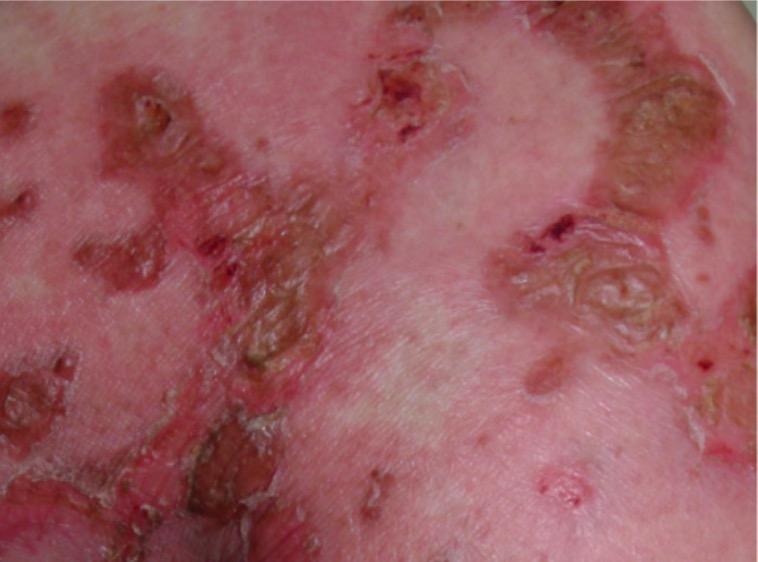
Eritema migratorio necrolítico

  • 70% de los LOS Neisseria casos
  • No es específico de los LOS Neisseria glucagonomas
  • Erupción dolorosa y pruriginosa
  • Las lesiones crecen y disminuyen
  • Ubicación:
    • Comienza en EN Erythema nodosum is an immune-mediated panniculitis (inflammation of the subcutaneous fat) caused by a type IV (delayed-type) hypersensitivity reaction. It commonly manifests in young women as tender, erythematous nodules on the shins. Erythema Nodosum las zonas intertriginosas (zonas de contacto de la piel) y periorificiales
    • En EN Erythema nodosum is an immune-mediated panniculitis (inflammation of the subcutaneous fat) caused by a type IV (delayed-type) hypersensitivity reaction. It commonly manifests in young women as tender, erythematous nodules on the shins. Erythema Nodosum última instancia, generalizada: ingle, perineo, región glútea, abdomen inferior, extremidades y cara
  • Progresión de la apariencia:
    • Placas y pápulas eritematosas
    • Las lesiones se agrandan y coalescen
    • Centro claro y con erosiones
    • Induración central con ampollas, costras y bordes escamosos (puede parecerse al AL Amyloidosis impétigo)
  • Manifestaciones en EN Erythema nodosum is an immune-mediated panniculitis (inflammation of the subcutaneous fat) caused by a type IV (delayed-type) hypersensitivity reaction. It commonly manifests in young women as tender, erythematous nodules on the shins. Erythema Nodosum las mucosas:
    • Estomatitis (inflamación de la boca)
    • Queilitis (inflamación de los LOS Neisseria labios)
    • Glositis (inflamación de la lengua)
  • Se cree que es causado por:
    • ↓ Aminoácidos
    • Mala nutrición
Eritema migratorio necrolítico

El eritema migratorio necrolítico es una manifestación cutánea que se observa con frecuencia (pero no exclusivamente) en los glucagonomas. El eritema migratorio necrolítico se describe como áreas de placas eritematosas bien delimitadas, con ampollas frágiles y erosiones.

Imagen: “Necrolytic Migratory Erythema” por Department of Hepatobiliary Surgery, the First Affiliated Hospital of Xi’an Jiaotong University School of Medicine, No, 277, Yanta West Road, 710061 Xi’an, Shaanxi, P,R, China. Licencia: CC BY 4.0

Otros hallazgos comunes

  • Pérdida de peso:
    • Característica de presentación más común (80% de los LOS Neisseria casos)
    • Debido a la ↑ lipólisis y gluconeogénesis de las grasas
  • Diarrea crónica
  • Anemia Anemia Anemia is a condition in which individuals have low Hb levels, which can arise from various causes. Anemia is accompanied by a reduced number of RBCs and may manifest with fatigue, shortness of breath, pallor, and weakness. Subtypes are classified by the size of RBCs, chronicity, and etiology. Anemia: Overview and Types
  • Trombosis venosa profunda (TVP)/ eventos tromboembólicos
  • Manifestaciones neuropsiquiátricas:
    • Depresión
    • Demencia
    • Psicosis

Mnemotecnia

Para recordar las manifestaciones clínicas de un glucagonoma Glucagonoma A glucagonoma is a glucagon-secreting neuroendocrine tumor that originates from the β-cells in the pancreatic islets. Most glucagonomas are malignant, and many of them are part of the autosomal dominant condition known as multiple endocrine neoplasia syndrome type 1 (MEN 1). Elevated levels of glucagon lead to increased gluconeogenesis and glycogenolysis. Glucagonoma, recuerde las “6 D” ( en EN Erythema nodosum is an immune-mediated panniculitis (inflammation of the subcutaneous fat) caused by a type IV (delayed-type) hypersensitivity reaction. It commonly manifests in young women as tender, erythematous nodules on the shins. Erythema Nodosum inglés):

  • Diabetes ( Diabetes Diabetes Diabetes mellitus (DM) is a metabolic disease characterized by hyperglycemia and dysfunction of the regulation of glucose metabolism by insulin. Type 1 DM is diagnosed mostly in children and young adults as the result of autoimmune destruction of β cells in the pancreas and the resulting lack of insulin. Type 2 DM has a significant association with obesity and is characterized by insulin resistance. Diabetes Mellitus) (o resistencia a la insulina por hiperglucemia)
  • Dermatitis ( Dermatitis Dermatitis Any inflammation of the skin. Atopic Dermatitis (Eczema)) (eritema migratorio necrolítico)
  • Declining weight (Disminución de peso)
  • Diarrgea (Diarrea)
  • Deep vein thrombosis Thrombosis Formation and development of a thrombus or blood clot in the blood vessel. Epidemic Typhus (Trombosis venosa profunda)
  • Depression (Depresión)

Diagnóstico

El diagnóstico de glucagonoma Glucagonoma A glucagonoma is a glucagon-secreting neuroendocrine tumor that originates from the β-cells in the pancreatic islets. Most glucagonomas are malignant, and many of them are part of the autosomal dominant condition known as multiple endocrine neoplasia syndrome type 1 (MEN 1). Elevated levels of glucagon lead to increased gluconeogenesis and glycogenolysis. Glucagonoma se hace HACE Altitude Sickness sobre la base de una combinación de los LOS Neisseria antecedentes, examen físico, niveles elevados de glucagón e imagenología que muestran una masa pancreática. La estadificación de la enfermedad maligna es también una parte importante del proceso de diagnóstico, ya que las metástasis suelen estar presentes al AL Amyloidosis momento del diagnóstico.
Laboratorios

  • ↑ Niveles de glucagón: normalmente > 500 pg/ml
  • ↑ Glucosa
  • Hemograma: anemia Anemia Anemia is a condition in which individuals have low Hb levels, which can arise from various causes. Anemia is accompanied by a reduced number of RBCs and may manifest with fatigue, shortness of breath, pallor, and weakness. Subtypes are classified by the size of RBCs, chronicity, and etiology. Anemia: Overview and Types normocítica
  • Panel metabólico completo:
    • Diarrea crónica → anomalías electrolíticas
    • Hiperparatiroidismo en EN Erythema nodosum is an immune-mediated panniculitis (inflammation of the subcutaneous fat) caused by a type IV (delayed-type) hypersensitivity reaction. It commonly manifests in young women as tender, erythematous nodules on the shins. Erythema Nodosum neoplasia endocrina múltiple 1 → ↑ calcio
  • Biopsia de piel:
    • Células epidérmicas acantolíticas
    • Infiltrado linfocítico y neutrofílico

Imagenología

  • Propósito:
    • Localizar con precisión el tumor Tumor Inflammation
    • Determinar la extensión de la enfermedad
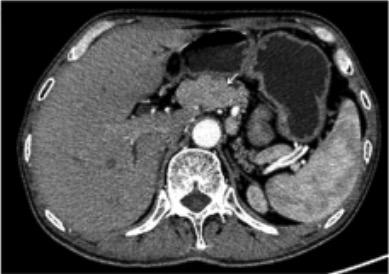
  • TC con contraste intravenoso:
    • Mejor método para el diagnóstico inicial
    • Alta sensibilidad y especificidad
    • Hallazgos:
      • Masa pancreática, a menudo en EN Erythema nodosum is an immune-mediated panniculitis (inflammation of the subcutaneous fat) caused by a type IV (delayed-type) hypersensitivity reaction. It commonly manifests in young women as tender, erythematous nodules on the shins. Erythema Nodosum la cola
      • Típicamente > 3 cm de tamaño
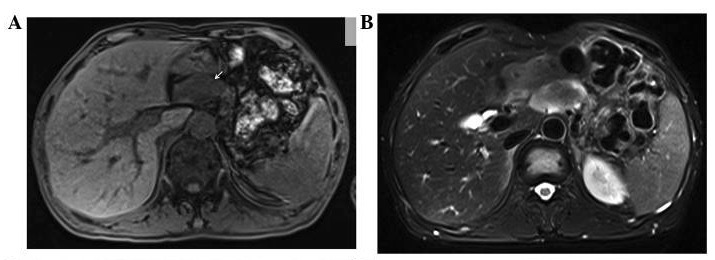
  • RM:
    • Puede tener mayor sensibilidad para las metástasis hepáticas que la TC
    • Hallazgos:
      • ↓ Intensidad en EN Erythema nodosum is an immune-mediated panniculitis (inflammation of the subcutaneous fat) caused by a type IV (delayed-type) hypersensitivity reaction. It commonly manifests in young women as tender, erythematous nodules on the shins. Erythema Nodosum las imágenes ponderadas en EN Erythema nodosum is an immune-mediated panniculitis (inflammation of the subcutaneous fat) caused by a type IV (delayed-type) hypersensitivity reaction. It commonly manifests in young women as tender, erythematous nodules on the shins. Erythema Nodosum T1
      • ↑ Intensidad en EN Erythema nodosum is an immune-mediated panniculitis (inflammation of the subcutaneous fat) caused by a type IV (delayed-type) hypersensitivity reaction. It commonly manifests in young women as tender, erythematous nodules on the shins. Erythema Nodosum las imágenes ponderadas en EN Erythema nodosum is an immune-mediated panniculitis (inflammation of the subcutaneous fat) caused by a type IV (delayed-type) hypersensitivity reaction. It commonly manifests in young women as tender, erythematous nodules on the shins. Erythema Nodosum T2
  • Gammagrafía de receptores de somatostatina:
    • Exploración de la captación radiomarcada del análogo de la somatostatina octreotida
    • Los LOS Neisseria glucagonomas tienen receptores de somatostatina ↑ y se unen fácilmente a la octreotida.
    • Permite la localización del tumor Tumor Inflammation y la detección de las metástasis
    • Se sustituye por la tomografía por emisión de positrones ( PET PET An imaging technique that combines a positron-emission tomography (PET) scanner and a ct X ray scanner. This establishes a precise anatomic localization in the same session. Nuclear Imaging, por sus siglas en EN Erythema nodosum is an immune-mediated panniculitis (inflammation of the subcutaneous fat) caused by a type IV (delayed-type) hypersensitivity reaction. It commonly manifests in young women as tender, erythematous nodules on the shins. Erythema Nodosum inglés) funcional
  • PET PET An imaging technique that combines a positron-emission tomography (PET) scanner and a ct X ray scanner. This establishes a precise anatomic localization in the same session. Nuclear Imaging funcional:
    • Se utiliza para la localización de los LOS Neisseria tumores y la detección de las metástasis
    • Mejor resolución, cuantificación, especificidad y sensibilidad que la gammagrafía de receptores de somatostatina

Estadificación y pronóstico

  • Se clasifica mediante el sistema TNM:
    • Tamaño del tumor Tumor Inflammation
    • Alcance de la invasión local
    • Afectación de los LOS Neisseria ganglios linfáticos
    • Presencia y localización de metástasis
  • El pronóstico se determina según el estadio.
  • La curación rara vez es posible una vez que se produce la metástasis.
  • Tasas de supervivencia a 5 años:
    • Estadio I: 61%.
    • Estadio: 52%.
    • Estadio: 41%.
    • Estadio: 15%.

Tratamiento

Tratamiento inicial

  • Control de la diabetes Diabetes Diabetes mellitus (DM) is a metabolic disease characterized by hyperglycemia and dysfunction of the regulation of glucose metabolism by insulin. Type 1 DM is diagnosed mostly in children and young adults as the result of autoimmune destruction of β cells in the pancreas and the resulting lack of insulin. Type 2 DM has a significant association with obesity and is characterized by insulin resistance. Diabetes Mellitus.
  • Apoyo nutricional (puede requerir nutrición parenteral total)
  • Análogos de la somatostatina:
    • Octreotida
    • Inhibir la secreción de glucagón.
    • Mejorar el eritema migratorio necrolítico, la diabetes Diabetes Diabetes mellitus (DM) is a metabolic disease characterized by hyperglycemia and dysfunction of the regulation of glucose metabolism by insulin. Type 1 DM is diagnosed mostly in children and young adults as the result of autoimmune destruction of β cells in the pancreas and the resulting lack of insulin. Type 2 DM has a significant association with obesity and is characterized by insulin resistance. Diabetes Mellitus, la diarrea y los LOS Neisseria síntomas neurológicos
  • Profilaxis de la TVP:
    • Lovenox Lovenox Low-molecular-weight fragment of heparin, having a 4-enopyranosuronate sodium structure at the non-reducing end of the chain. It is prepared by depolymerization of the benzylic ester of porcine mucosal heparin. Therapeutically, it is used as an antithrombotic agent. Anticoagulants
    • Heparina

Tratamiento avanzado

  • Resección pancreática (si está localizada en EN Erythema nodosum is an immune-mediated panniculitis (inflammation of the subcutaneous fat) caused by a type IV (delayed-type) hypersensitivity reaction. It commonly manifests in young women as tender, erythematous nodules on the shins. Erythema Nodosum el páncreas)
  • Resección hepática (afectación limitada del hígado)
  • Embolización de la arteria hepática (metástasis más extensas):
    • Técnica paliativa
    • Puede infundir medicamentos quimioterapéuticos en EN Erythema nodosum is an immune-mediated panniculitis (inflammation of the subcutaneous fat) caused by a type IV (delayed-type) hypersensitivity reaction. It commonly manifests in young women as tender, erythematous nodules on the shins. Erythema Nodosum la arteria hepática durante el procedimiento
  • Ablación por radiofrecuencia de pequeñas lesiones hepáticas
  • Quimioterapia
  • Agentes moleculares dirigidos para enfermedades avanzadas:
    • Sunitinib (inhibidor de la tirosina quinasa)
    • Everolimus Everolimus A derivative of sirolimus and an inhibitor of tor serine-threonine kinases. It is used to prevent graft rejection in heart and kidney transplant patients by blocking cell proliferation signals. It is also an antineoplastic agent. Immunosuppressants (inhibidor de la diana de rapamicina en EN Erythema nodosum is an immune-mediated panniculitis (inflammation of the subcutaneous fat) caused by a type IV (delayed-type) hypersensitivity reaction. It commonly manifests in young women as tender, erythematous nodules on the shins. Erythema Nodosum mamíferos)

Diagnóstico Diferencial

  • Diabetes Diabetes Diabetes mellitus (DM) is a metabolic disease characterized by hyperglycemia and dysfunction of the regulation of glucose metabolism by insulin. Type 1 DM is diagnosed mostly in children and young adults as the result of autoimmune destruction of β cells in the pancreas and the resulting lack of insulin. Type 2 DM has a significant association with obesity and is characterized by insulin resistance. Diabetes Mellitus mellitus: enfermedad causada por una alteración de la secreción y/o la función de la insulina que conduce a la hiperglucemia: los LOS Neisseria pacientes suelen presentar los LOS Neisseria síntomas clásicos de la hiperglucemia, como poliuria, polidipsia, visión borrosa y pérdida de peso. Tanto la diabetes Diabetes Diabetes mellitus (DM) is a metabolic disease characterized by hyperglycemia and dysfunction of the regulation of glucose metabolism by insulin. Type 1 DM is diagnosed mostly in children and young adults as the result of autoimmune destruction of β cells in the pancreas and the resulting lack of insulin. Type 2 DM has a significant association with obesity and is characterized by insulin resistance. Diabetes Mellitus mellitus como los LOS Neisseria glucagonomas muestran una hiperglucemia persistente, pero debe sospecharse de un glucagonoma Glucagonoma A glucagonoma is a glucagon-secreting neuroendocrine tumor that originates from the β-cells in the pancreatic islets. Most glucagonomas are malignant, and many of them are part of the autosomal dominant condition known as multiple endocrine neoplasia syndrome type 1 (MEN 1). Elevated levels of glucagon lead to increased gluconeogenesis and glycogenolysis. Glucagonoma si hay hallazgos dermatológicos o diarrea crónica o si también está presente una TVP. El glucagonoma Glucagonoma A glucagonoma is a glucagon-secreting neuroendocrine tumor that originates from the β-cells in the pancreatic islets. Most glucagonomas are malignant, and many of them are part of the autosomal dominant condition known as multiple endocrine neoplasia syndrome type 1 (MEN 1). Elevated levels of glucagon lead to increased gluconeogenesis and glycogenolysis. Glucagonoma se puede confirmar con un nivel de glucagón y con imagenología.
  • Cirrosis: fibrosis Fibrosis Any pathological condition where fibrous connective tissue invades any organ, usually as a consequence of inflammation or other injury. Bronchiolitis Obliterans crónica y progresiva del hígado, que en EN Erythema nodosum is an immune-mediated panniculitis (inflammation of the subcutaneous fat) caused by a type IV (delayed-type) hypersensitivity reaction. It commonly manifests in young women as tender, erythematous nodules on the shins. Erythema Nodosum última instancia conduce a la insuficiencia hepática: la cirrosis suele estar causada por la hepatitis vírica crónica, la hepatopatía alcohólica y la hepatopatía grasa no alcohólica. La enfermedad se presenta con ictericia, prurito, hemorragia digestiva alta, ascitis y/o pérdida de peso. Aunque es poco frecuente, el eritema migratorio necrolítico puede aparecer con la cirrosis, pero las telangiectasias Telangiectasias Ataxia-telangiectasia en EN Erythema nodosum is an immune-mediated panniculitis (inflammation of the subcutaneous fat) caused by a type IV (delayed-type) hypersensitivity reaction. It commonly manifests in young women as tender, erythematous nodules on the shins. Erythema Nodosum forma de araña son manifestaciones cutáneas mucho más comunes. La cirrosis también puede causar niveles elevados de glucagón, aunque en EN Erythema nodosum is an immune-mediated panniculitis (inflammation of the subcutaneous fat) caused by a type IV (delayed-type) hypersensitivity reaction. It commonly manifests in young women as tender, erythematous nodules on the shins. Erythema Nodosum la cirrosis estos niveles suelen ser < 500 pg/ml, en EN Erythema nodosum is an immune-mediated panniculitis (inflammation of the subcutaneous fat) caused by a type IV (delayed-type) hypersensitivity reaction. It commonly manifests in young women as tender, erythematous nodules on the shins. Erythema Nodosum comparación con los LOS Neisseria glucagonomas, en EN Erythema nodosum is an immune-mediated panniculitis (inflammation of the subcutaneous fat) caused by a type IV (delayed-type) hypersensitivity reaction. It commonly manifests in young women as tender, erythematous nodules on the shins. Erythema Nodosum los LOS Neisseria que los LOS Neisseria niveles suelen ser > 500 pg/ml. La cirrosis se diagnostica con un ultrasonido.
  • Pancreatitis Pancreatitis Inflammation of the pancreas. Pancreatitis is classified as acute unless there are computed tomographic or endoscopic retrograde cholangiopancreatographic findings of chronic pancreatitis. The two most common forms of acute pancreatitis are alcoholic pancreatitis and gallstone pancreatitis. Acute Pancreatitis aguda: inflamación aguda del páncreas, que suele presentarse con dolor Dolor Inflammation epigástrico intenso y elevación de la lipasa o la amilasa séricas (2–3 veces el límite superior de la normalidad): el glucagón puede estar aumentado en EN Erythema nodosum is an immune-mediated panniculitis (inflammation of the subcutaneous fat) caused by a type IV (delayed-type) hypersensitivity reaction. It commonly manifests in young women as tender, erythematous nodules on the shins. Erythema Nodosum la pancreatitis Pancreatitis Inflammation of the pancreas. Pancreatitis is classified as acute unless there are computed tomographic or endoscopic retrograde cholangiopancreatographic findings of chronic pancreatitis. The two most common forms of acute pancreatitis are alcoholic pancreatitis and gallstone pancreatitis. Acute Pancreatitis aguda, y la imagenología con TC o RM muestran un agrandamiento focal o difuso del páncreas. Sin embargo, a diferencia de la pancreatitis Pancreatitis Inflammation of the pancreas. Pancreatitis is classified as acute unless there are computed tomographic or endoscopic retrograde cholangiopancreatographic findings of chronic pancreatitis. The two most common forms of acute pancreatitis are alcoholic pancreatitis and gallstone pancreatitis. Acute Pancreatitis aguda, los LOS Neisseria glucagonomas no suelen ser dolorosos.
  • Desnutrición o deficiencias nutricionales: La deficiencia de zinc Zinc A metallic element of atomic number 30 and atomic weight 65. 38. It is a necessary trace element in the diet, forming an essential part of many enzymes, and playing an important role in protein synthesis and in cell division. Zinc deficiency is associated with anemia, short stature, hypogonadism, impaired wound healing, and geophagia. It is known by the symbol zn. Trace Elements, la pelagra y el kwashiorkor Kwashiorkor A syndrome produced by severe protein deficiency, characterized by retarded growth, changes in skin and hair pigment, edema, and pathologic changes in the liver, including fatty infiltration, necrosis, and fibrosis. The word is a local name in gold coast, africa, meaning ‘displaced child’. Although first reported from africa, kwashiorkor is now known throughout the world, but mainly in the tropics and subtropics. It is considered to be related to marasmus. Malnutrition in children in resource-limited countries pueden presentarse con una erupción similar a la del eritema migratorio necrolítico. La gestión primaria consiste en EN Erythema nodosum is an immune-mediated panniculitis (inflammation of the subcutaneous fat) caused by a type IV (delayed-type) hypersensitivity reaction. It commonly manifests in young women as tender, erythematous nodules on the shins. Erythema Nodosum corregir las deficiencias subyacentes. Sin embargo, ninguna de las afecciones enumeradas se asocia comúnmente con la hiperglucemia y los LOS Neisseria niveles elevados de glucagón, que es la forma en EN Erythema nodosum is an immune-mediated panniculitis (inflammation of the subcutaneous fat) caused by a type IV (delayed-type) hypersensitivity reaction. It commonly manifests in young women as tender, erythematous nodules on the shins. Erythema Nodosum que se pueden distinguir de los LOS Neisseria glucagonomas (además de las diferencias en EN Erythema nodosum is an immune-mediated panniculitis (inflammation of the subcutaneous fat) caused by a type IV (delayed-type) hypersensitivity reaction. It commonly manifests in young women as tender, erythematous nodules on the shins. Erythema Nodosum la historia).
    • La carencia de zinc Zinc A metallic element of atomic number 30 and atomic weight 65. 38. It is a necessary trace element in the diet, forming an essential part of many enzymes, and playing an important role in protein synthesis and in cell division. Zinc deficiency is associated with anemia, short stature, hypogonadism, impaired wound healing, and geophagia. It is known by the symbol zn. Trace Elements está asociada a enfermedades de mala absorción (e.g., enfermedad inflamatoria intestinal) y puede causar hipogonadismo, disfunción inmunitaria, deterioro de la cicatrización de las heridas, alopecia Alopecia Alopecia is the loss of hair in areas anywhere on the body where hair normally grows. Alopecia may be defined as scarring or non-scarring, localized or diffuse, congenital or acquired, reversible or permanent, or confined to the scalp or universal; however, alopecia is usually classified using the 1st 3 factors. Alopecia, pérdida del gusto y diversas lesiones cutáneas, incluida una erupción similar a la del eritema migratorio necrolítico.
    • La pelagra está causada por la deficiencia de niacina y puede presentarse con una erupción similar a la del eritema migratorio necrolítico, diarrea y demencia.
    • Kwashiorkor Kwashiorkor A syndrome produced by severe protein deficiency, characterized by retarded growth, changes in skin and hair pigment, edema, and pathologic changes in the liver, including fatty infiltration, necrosis, and fibrosis. The word is a local name in gold coast, africa, meaning ‘displaced child’. Although first reported from africa, kwashiorkor is now known throughout the world, but mainly in the tropics and subtropics. It is considered to be related to marasmus. Malnutrition in children in resource-limited countries es una enfermedad de desnutrición aguda. Esta enfermedad se observa típicamente en EN Erythema nodosum is an immune-mediated panniculitis (inflammation of the subcutaneous fat) caused by a type IV (delayed-type) hypersensitivity reaction. It commonly manifests in young women as tender, erythematous nodules on the shins. Erythema Nodosum niños y da lugar a un edema Edema Edema is a condition in which excess serous fluid accumulates in the body cavity or interstitial space of connective tissues. Edema is a symptom observed in several medical conditions. It can be categorized into 2 types, namely, peripheral (in the extremities) and internal (in an organ or body cavity). Edema periférico simétrico, que comienza en EN Erythema nodosum is an immune-mediated panniculitis (inflammation of the subcutaneous fat) caused by a type IV (delayed-type) hypersensitivity reaction. It commonly manifests in young women as tender, erythematous nodules on the shins. Erythema Nodosum las regiones más dependientes.

Referencias

  1. Bergsland, E. (2025). Glucagonoma and the glucagonoma syndrome. In Grover, S. (Ed.), UpToDate. Retrieved May 11, 2025, from https://www.uptodate.com/contents/glucagonoma-and-the-glucagonoma-syndrome
  2. Sandhu, S. (2025) Glucagonoma syndrome. In Jialal, I. (Ed.), StatPearls. Retrieved May 11, 2025, from https://www.statpearls.com/articlelibrary/viewarticle/22304/
  3. Arnold, A. (2025). Multiple endocrine neoplasia type 1: Clinical manifestations and diagnosis. In Mulder, J. E. (Ed.), UpToDate. Retrieved May 11, 2025, from https://www.uptodate.com/contents/multiple-endocrine-neoplasia-type-1-clinical-manifestations-and-diagnosis
  4. Maitra, A., Abbas, A. K. (2005). The Endocrine System. In Kumar, V., Abbas, A. K., Fausto, N. (Eds). Robbins and Cotran Pathologic Basis of Disease (7th ed., p. 1207).
  5. Jensen, R. T. (2008). Endocrine tumors of the gastrointestinal tract and pancreas. In Fauci, A. S., Braunwald, E., Kasper, D. L., et al. (Eds.) Harrisons Internal Medicine (17th Ed., p. 2355).

¡Crea tu cuenta gratis o inicia una sesión para seguir leyendo!

Regístrate ahora y obtén acceso gratuito a Lecturio con páginas de concepto, videos médicos y cuestionarios para tu educación médica.

User Reviews

Que tengas una sesión de estudio alegre y navideña 🎁 Ahorra 50% en todos los planes >>

Details