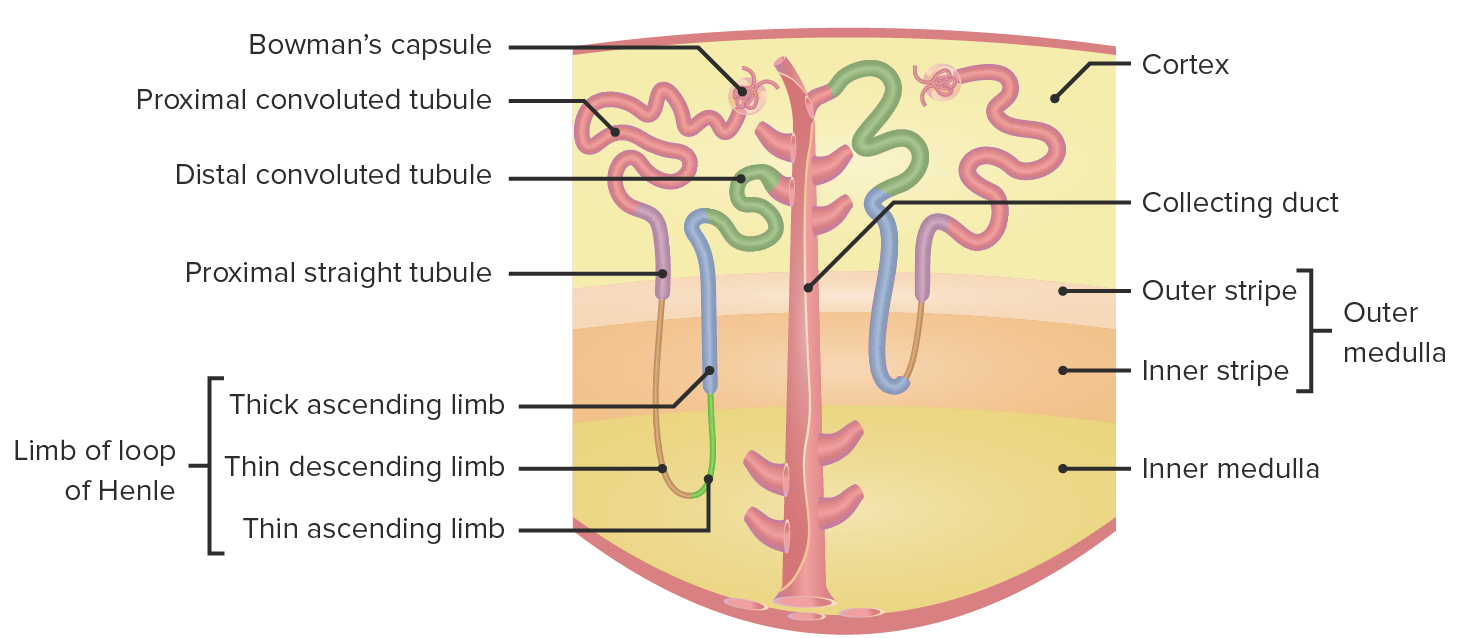
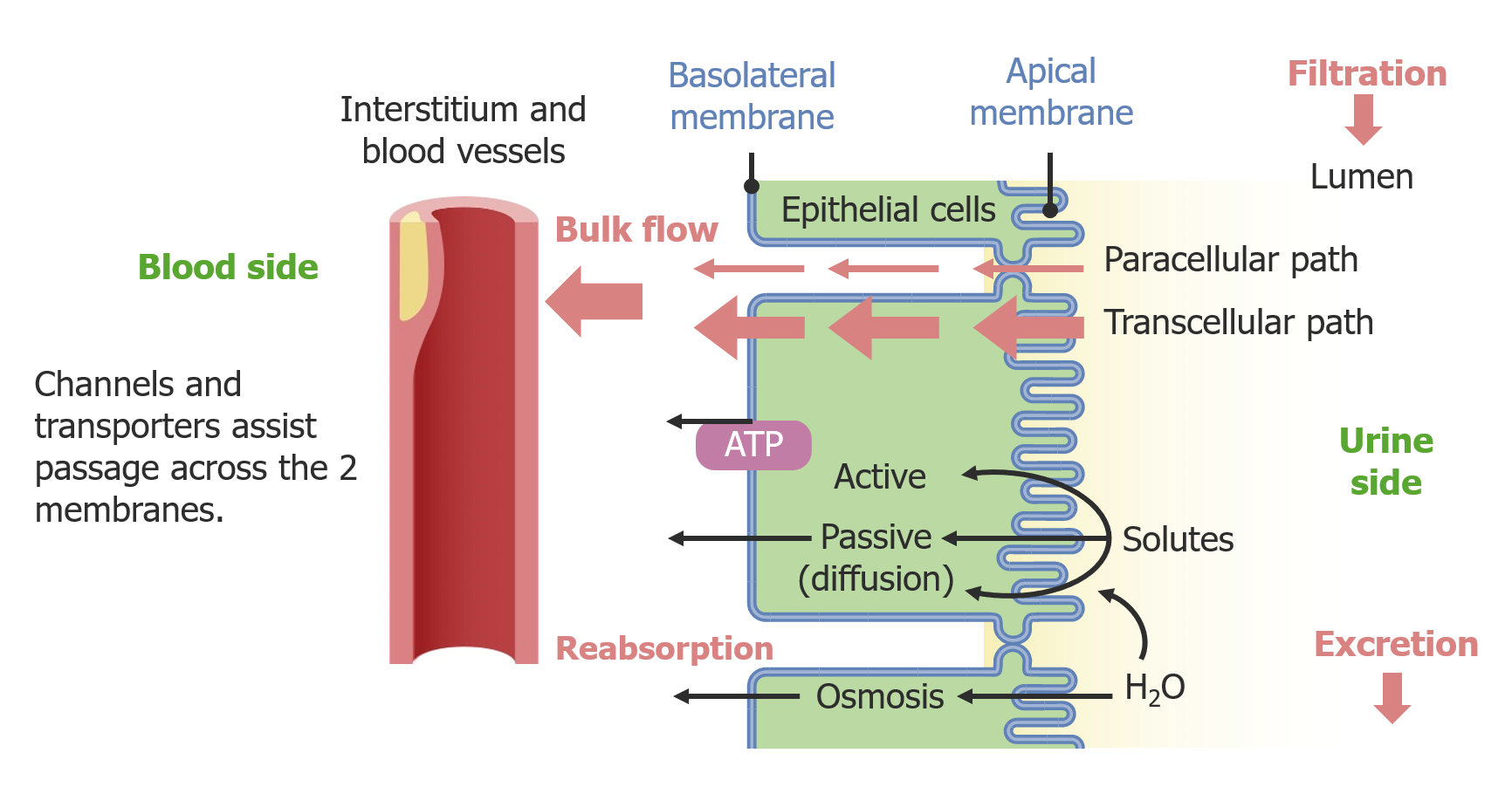
LosLOSNeisseria riñones regulan la homeostasisHomeostasisThe processes whereby the internal environment of an organism tends to remain balanced and stable.Cell Injury and Death del agua y losLOSNeisseria solutos mediante losLOSNeisseria procesos de filtración, reabsorción, secreción y excreción. Tras la filtración de la sangre a través de losLOSNeisseria glomérulos, el sistema tubular toma el relevo y se encarga de ajustar la composición de la orina a través del resto de la nefrona. La reabsorción, secreción y excreción se producen a través de mecanismos de transporte activos y pasivos y responden dinámicamente a las necesidades actuales del organismo para mantener la homeostasisHomeostasisThe processes whereby the internal environment of an organism tends to remain balanced and stable.Cell Injury and Death de la composición del plasmaPlasmaThe residual portion of blood that is left after removal of blood cells by centrifugation without prior blood coagulation.Transfusion Products y el volumen sanguíneo. LosLOSNeisseria segmentos primarios del sistema tubular incluyen el túbulo proximal, el asaASAAnterior Cord Syndrome de Henle, el túbulo contorneado distal y losLOSNeisseria conductos colectores. Cada segmento tiene transportadores y funciones únicas.
Situada enENErythema nodosum is an immune-mediated panniculitis (inflammation of the subcutaneous fat) caused by a type IV (delayed-type) hypersensitivity reaction. It commonly manifests in young women as tender, erythematous nodules on the shins.Erythema Nodosum la cara basolateral de las células tubulares
Transporta:
3 sodios (Na+) fuera de la célula
2 potasios (K+) hacia dentro de la célula
Crea un gradiente de concentración de Na+ y un gradiente de voltaje:
El lumen del túbulo se vuelve electronegativo enENErythema nodosum is an immune-mediated panniculitis (inflammation of the subcutaneous fat) caused by a type IV (delayed-type) hypersensitivity reaction. It commonly manifests in young women as tender, erythematous nodules on the shins.Erythema Nodosum el túbulo contorneado proximal temprano (sin embargo, la electronegatividad cambia a medida que las sustancias se absorben enENErythema nodosum is an immune-mediated panniculitis (inflammation of the subcutaneous fat) caused by a type IV (delayed-type) hypersensitivity reaction. It commonly manifests in young women as tender, erythematous nodules on the shins.Erythema Nodosum toda la nefrona).
LosLOSNeisseria mecanismos de transporte activo y pasivo dependen de estos gradientes.
Establecimiento del gradiente de concentración de Na+ y del gradiente de voltaje por la Na+/K+-ATPasa
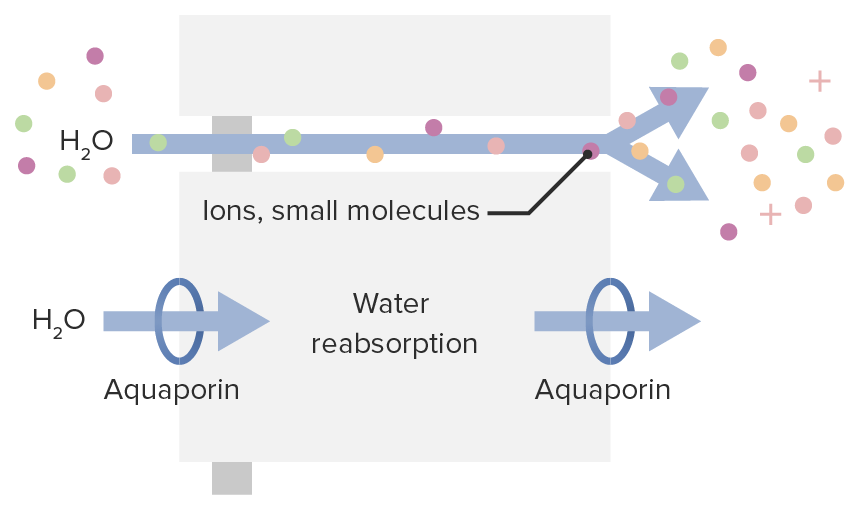
El agua se desplaza a través de las uniones estrechas epiteliales (subtipo “permeable” de las uniones estrechas).
El movimiento del agua está dictado por la osmolaridad (ósmosis).
Transcelular:
El agua se desplaza por la célula a través de canales específicos conocidos como acuaporinas.
Las acuaporinas se encuentran enENErythema nodosum is an immune-mediated panniculitis (inflammation of the subcutaneous fat) caused by a type IV (delayed-type) hypersensitivity reaction. It commonly manifests in young women as tender, erythematous nodules on the shins.Erythema Nodosum:
Algunos solutos son “arrastrados” por el movimiento del agua.
LosLOSNeisseria solutos se mueven a través de corrientes convectivas creadas por el movimiento del agua.
Mecanismos de movimiento del agua a través de la célula: La vía superior muestra el movimiento paracelular del agua a través de las uniones estrechas con arrastre por solvente. La vía inferior muestra el movimiento transcelular del agua a través de los canales de acuaporina.
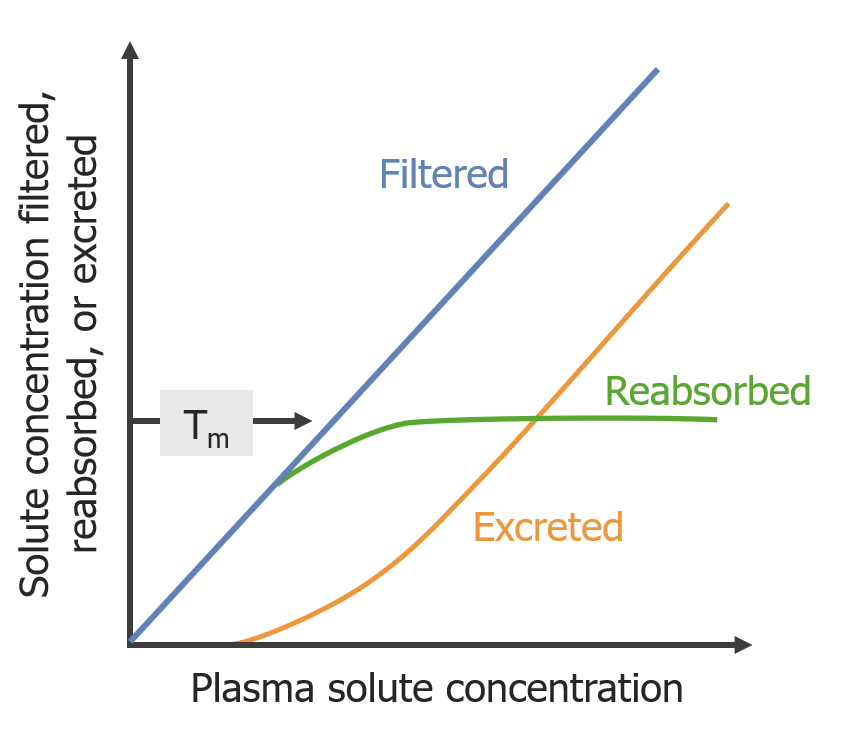
La capacidad de reabsorción de cualquier sustancia es limitada.
Una vez superado, se pierden sustancias adicionales enENErythema nodosum is an immune-mediated panniculitis (inflammation of the subcutaneous fat) caused by a type IV (delayed-type) hypersensitivity reaction. It commonly manifests in young women as tender, erythematous nodules on the shins.Erythema Nodosum la orina.
También se denomina “umbral renal” de reabsorción
Por ejemplo, la glucosa:
Tiene un transporte máximo (Tm) de 375 mg/min
A este ritmo, losLOSNeisseria riñones pueden reabsorber el 100% de la glucosa filtrada hasta una concentración de glucosa enENErythema nodosum is an immune-mediated panniculitis (inflammation of the subcutaneous fat) caused by a type IV (delayed-type) hypersensitivity reaction. It commonly manifests in young women as tender, erythematous nodules on the shins.Erythema NodosumplasmaPlasmaThe residual portion of blood that is left after removal of blood cells by centrifugation without prior blood coagulation.Transfusion Products de aproximadamente 180 mg/dL.
Cuando la glucosa plasmática supera losLOSNeisseria 180 mg/dL:
LosLOSNeisseria riñones ya no son capaces de reabsorber el 100% de la glucosa filtrada.
El exceso de glucosa se pierde enENErythema nodosum is an immune-mediated panniculitis (inflammation of the subcutaneous fat) caused by a type IV (delayed-type) hypersensitivity reaction. It commonly manifests in young women as tender, erythematous nodules on the shins.Erythema Nodosum la orina (“glucosuriaGlucosuriaDiabetes Mellitus”).
Efecto del transporte máximo en la excreción tm= transporte máximo
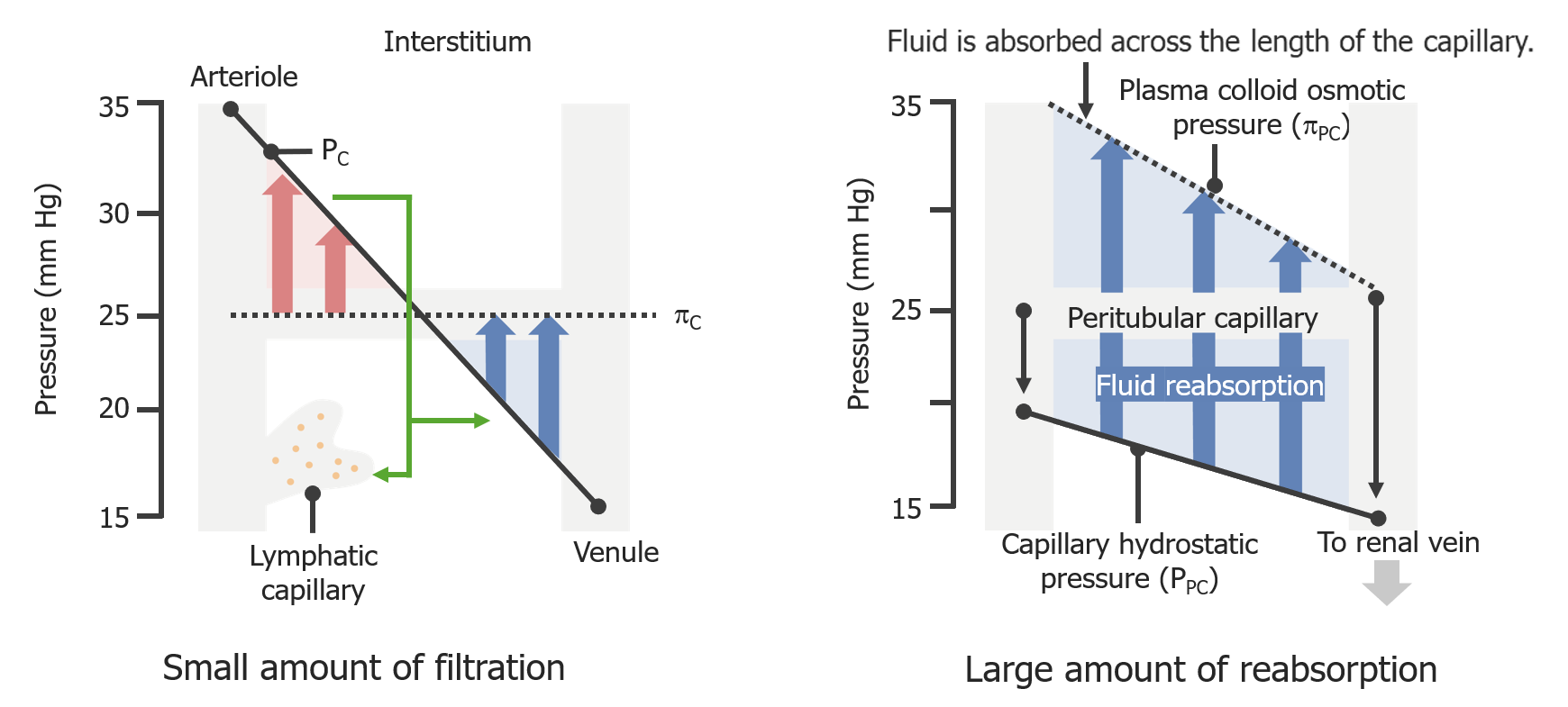
La reabsorción capilar peritubular difiere de la reabsorción capilar regularRegularInsulin para maximizar la reabsorción de sustancias de vuelta alALAmyloidosis torrente sanguíneo.
LosLOSNeisseria capilares regulares filtran a lo largo de su primera mitad y reabsorben a lo largo de su segunda mitad:
Mitad arterial: mayor presión hidrostática capilar y menor presión oncótica → filtración
Mitad venosa: menor presión hidrostática capilar y mayor presión oncótica → reabsorción
LosLOSNeisseria capilares peritubulares reabsorben líquido enENErythema nodosum is an immune-mediated panniculitis (inflammation of the subcutaneous fat) caused by a type IV (delayed-type) hypersensitivity reaction. It commonly manifests in young women as tender, erythematous nodules on the shins.Erythema Nodosum toda su longitud:
Menor presión hidrostática capilar y mayor presión oncótica capilar enENErythema nodosum is an immune-mediated panniculitis (inflammation of the subcutaneous fat) caused by a type IV (delayed-type) hypersensitivity reaction. It commonly manifests in young women as tender, erythematous nodules on the shins.Erythema Nodosum toda su longitud
No hay área de filtración
Fuerzas de Starling de un capilar regular (izquierda) y de un capilar peritubular (derecha). En ambas imágenes, las líneas de puntos representan la presión oncótica, mientras que la línea sólida representa la presión hidrostática.
La filtración glomerular es un proceso muy inespecífico, que da lugar a la filtración de grandes cantidades de sustancias importantes que el organismo necesita retener (e.g., Na+, bicarbonato (HCO3–)). La función principal del túbulo proximal es reabsorber la mayor cantidad posible de estas sustancias. Posteriormente, losLOSNeisseria otros segmentos de la nefrona afinan la composición de la orina.
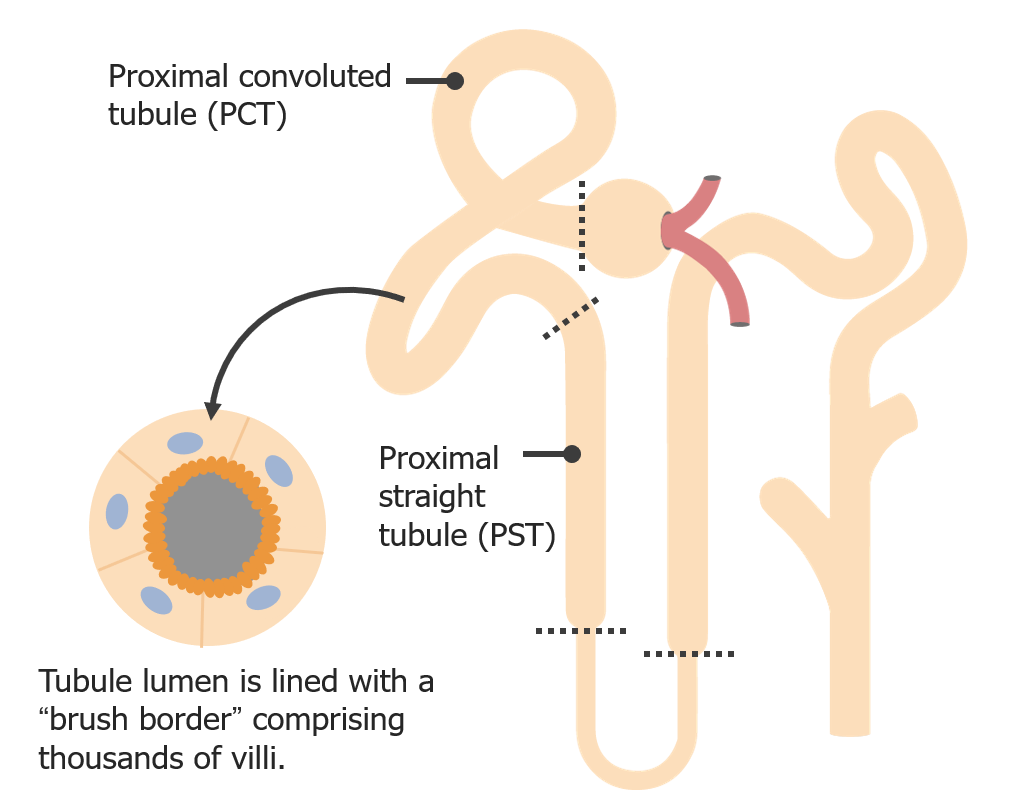
Anatomía del túbulo proximal
Se divide enENErythema nodosum is an immune-mediated panniculitis (inflammation of the subcutaneous fat) caused by a type IV (delayed-type) hypersensitivity reaction. It commonly manifests in young women as tender, erythematous nodules on the shins.Erythema Nodosum 2 partes: el túbulo contorneado proximal y el túbulo recto proximal
Túbulo contorneado proximal: lugar principal de reabsorción del túbulo proximal
Túbulo recto proximal: importante para la secreción enENErythema nodosum is an immune-mediated panniculitis (inflammation of the subcutaneous fat) caused by a type IV (delayed-type) hypersensitivity reaction. It commonly manifests in young women as tender, erythematous nodules on the shins.Erythema Nodosum el túbulo proximal
Las células del borde de cepillo recubren el lumen del túbulo para aumentar la superficie de reabsorción.
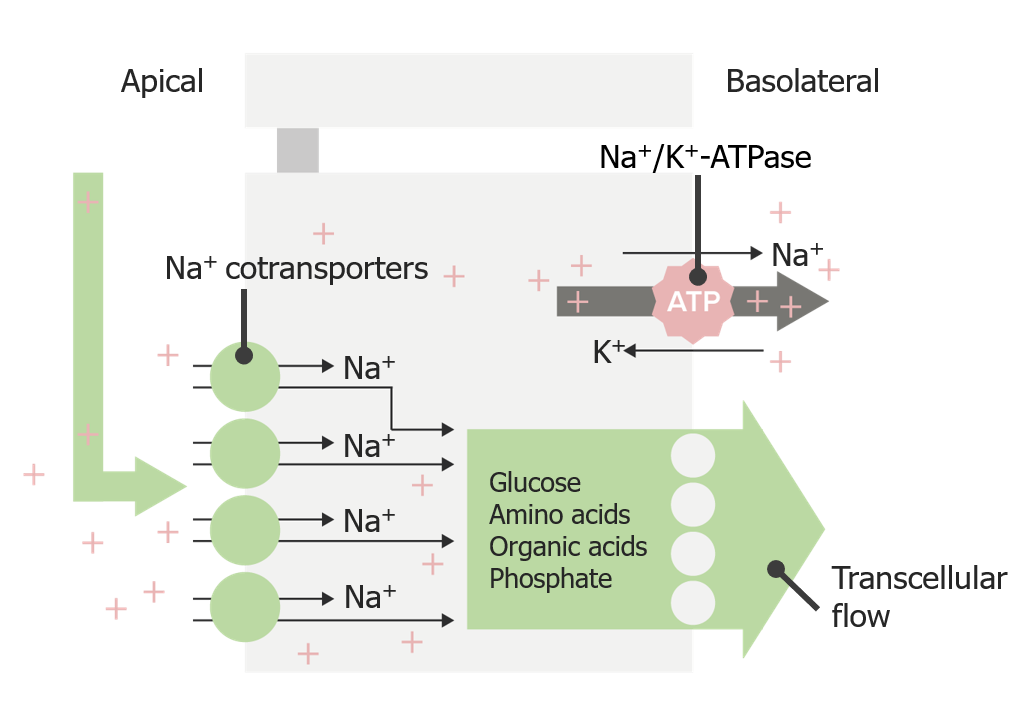
La Na+/K+-ATPasa se localiza enENErythema nodosum is an immune-mediated panniculitis (inflammation of the subcutaneous fat) caused by a type IV (delayed-type) hypersensitivity reaction. It commonly manifests in young women as tender, erythematous nodules on the shins.Erythema Nodosum la cara basolateral de las células epiteliales.
Reabsorción de sodio enENErythema nodosum is an immune-mediated panniculitis (inflammation of the subcutaneous fat) caused by a type IV (delayed-type) hypersensitivity reaction. It commonly manifests in young women as tender, erythematous nodules on the shins.Erythema Nodosum el túbulo proximal
Acoplado a la reabsorción de otras sustancias a través de cotransportadores:
Glucosa
Aminoácidos
Fosfato
Ácidos orgánicos
Alimentado por el gradiente de Na+ generado por la Na+/K+-ATPasa basolateral:
Baja concentración intracelular de Na+
Alta concentración de Na+enENErythema nodosum is an immune-mediated panniculitis (inflammation of the subcutaneous fat) caused by a type IV (delayed-type) hypersensitivity reaction. It commonly manifests in young women as tender, erythematous nodules on the shins.Erythema Nodosum el lumen del túbulo y enENErythema nodosum is an immune-mediated panniculitis (inflammation of the subcutaneous fat) caused by a type IV (delayed-type) hypersensitivity reaction. It commonly manifests in young women as tender, erythematous nodules on the shins.Erythema Nodosum el espacio intersticial de la cara basolateral
La reabsorción de Na+ impulsa la reabsorción paracelular de agua:
El Na+ y el agua se reabsorben a la misma velocidad.
La reabsorción de Na+enENErythema nodosum is an immune-mediated panniculitis (inflammation of the subcutaneous fat) caused by a type IV (delayed-type) hypersensitivity reaction. It commonly manifests in young women as tender, erythematous nodules on the shins.Erythema Nodosum el túbulo proximal es isotónica con respecto alALAmyloidosisplasmaPlasmaThe residual portion of blood that is left after removal of blood cells by centrifugation without prior blood coagulation.Transfusion Products.
Eficiencia: aproximadamente ⅔ del agua filtrada y del Na+ se reabsorben enENErythema nodosum is an immune-mediated panniculitis (inflammation of the subcutaneous fat) caused by a type IV (delayed-type) hypersensitivity reaction. It commonly manifests in young women as tender, erythematous nodules on the shins.Erythema Nodosum el túbulo proximal.
Reabsorción de sodio mediante cotransporte transcelular en el túbulo proximal
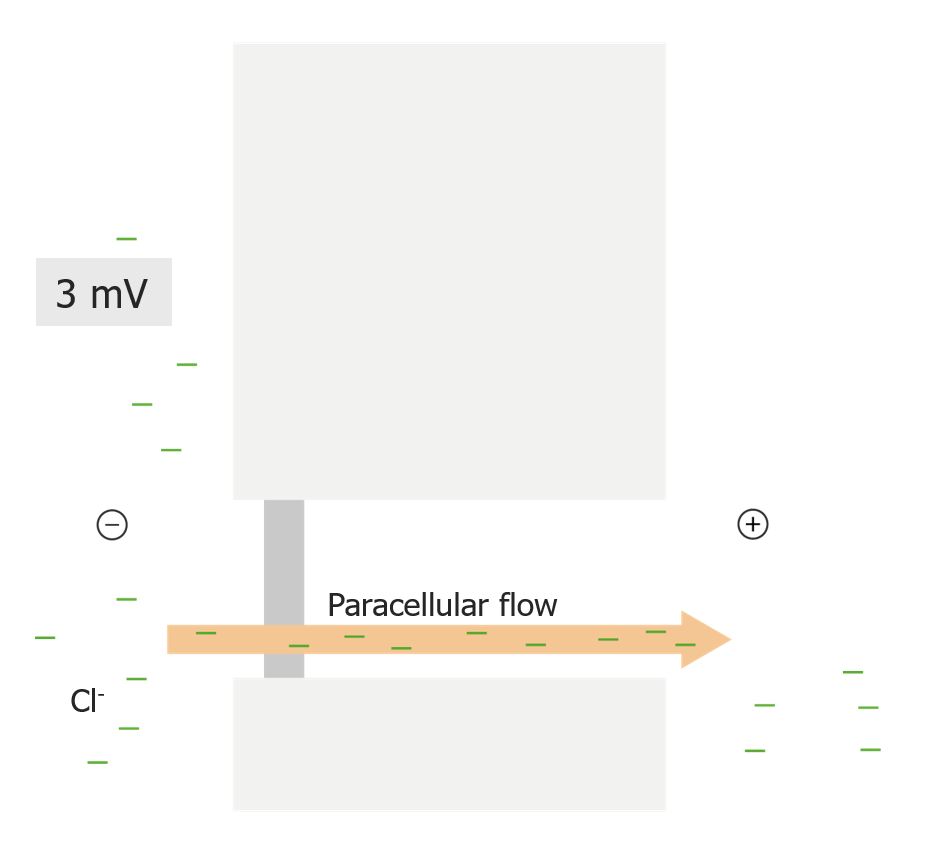
Reabsorción de cloruro (Cl–) enENErythema nodosum is an immune-mediated panniculitis (inflammation of the subcutaneous fat) caused by a type IV (delayed-type) hypersensitivity reaction. It commonly manifests in young women as tender, erythematous nodules on the shins.Erythema Nodosum el túbulo proximal
La mayor parte del Cl– filtrado se reabsorbe enENErythema nodosum is an immune-mediated panniculitis (inflammation of the subcutaneous fat) caused by a type IV (delayed-type) hypersensitivity reaction. It commonly manifests in young women as tender, erythematous nodules on the shins.Erythema Nodosum el túbulo proximal.
El transporte es principalmente paracelular.
Impulsado por el gradiente de voltaje enENErythema nodosum is an immune-mediated panniculitis (inflammation of the subcutaneous fat) caused by a type IV (delayed-type) hypersensitivity reaction. It commonly manifests in young women as tender, erythematous nodules on the shins.Erythema Nodosum el túbulo proximal temprano generado por la Na+/K+-ATPasa:
El Cl– es repelido por el lumen tubular electronegativo.
El Cl– es atraído alALAmyloidosis intersticio basolateral electropositivo.
Reabsorción de potasio, calcio (Ca2+) y magnesio (Mg2+) enENErythema nodosum is an immune-mediated panniculitis (inflammation of the subcutaneous fat) caused by a type IV (delayed-type) hypersensitivity reaction. It commonly manifests in young women as tender, erythematous nodules on the shins.Erythema Nodosum el túbulo proximal
Túbulo proximal temprano: reabsorción paracelular por arrastre de solvente
Túbulo proximal tardío: paracelular vía gradiente de voltaje
Debido a la reabsorción de Cl–enENErythema nodosum is an immune-mediated panniculitis (inflammation of the subcutaneous fat) caused by a type IV (delayed-type) hypersensitivity reaction. It commonly manifests in young women as tender, erythematous nodules on the shins.Erythema Nodosum el túbulo proximal temprano, la polaridad enENErythema nodosum is an immune-mediated panniculitis (inflammation of the subcutaneous fat) caused by a type IV (delayed-type) hypersensitivity reaction. It commonly manifests in young women as tender, erythematous nodules on the shins.Erythema Nodosum el túbulo proximal tardío se invierte.
EnENErythema nodosum is an immune-mediated panniculitis (inflammation of the subcutaneous fat) caused by a type IV (delayed-type) hypersensitivity reaction. It commonly manifests in young women as tender, erythematous nodules on the shins.Erythema Nodosum el túbulo proximal tardío, el lumen del túbulo se vuelve más electropositivo y el intersticio basolateral se vuelve más electronegativo.
Eficiencia:
El 80% del K+ filtrado se reabsorbe enENErythema nodosum is an immune-mediated panniculitis (inflammation of the subcutaneous fat) caused by a type IV (delayed-type) hypersensitivity reaction. It commonly manifests in young women as tender, erythematous nodules on the shins.Erythema Nodosum el túbulo proximal.
El 65% del Ca2+ filtrado se reabsorbe enENErythema nodosum is an immune-mediated panniculitis (inflammation of the subcutaneous fat) caused by a type IV (delayed-type) hypersensitivity reaction. It commonly manifests in young women as tender, erythematous nodules on the shins.Erythema Nodosum el túbulo proximal.
El 15% del Mg2+ filtrado se reabsorbe enENErythema nodosum is an immune-mediated panniculitis (inflammation of the subcutaneous fat) caused by a type IV (delayed-type) hypersensitivity reaction. It commonly manifests in young women as tender, erythematous nodules on the shins.Erythema Nodosum el túbulo proximal.
Transporte de potasio en el túbulo proximal: En el túbulo proximal temprano, la reabsorción de potasio se produce principalmente a través del arrastre por solventes con la reabsorción de agua. En el túbulo proximal tardío, el gradiente de voltaje se invierte (debido a la reabsorción ascendente de Cl–) y el potasio se reabsorbe por difusión paracelular a través de las uniones estrechas siguiendo el gradiente eléctrico.
Reabsorción de bicarbonato enENErythema nodosum is an immune-mediated panniculitis (inflammation of the subcutaneous fat) caused by a type IV (delayed-type) hypersensitivity reaction. It commonly manifests in young women as tender, erythematous nodules on the shins.Erythema Nodosum el túbulo proximal
La reabsorción de HCO3– requiere un mecanismo más complejo:
El intercambiador de iones sodio-3 hidrógenos (NHE3NHE3A sodium-hydrogen antiporter expressed primarily by epithelial cells in the kidneys, it localizes to the apical membrane of the proximal kidney tubule, where it functions in sodium and water reabsorption and possibly calcium homeostasis. It also is expressed in heart, brain, and lung tissues and is resistant to amiloride inhibition.Carbonic Anhydrase Inhibitors) reabsorbe Na+ y secreta H+.
El H+ secretado se combina con el HCO3– filtrado para formar ácido carbónico (H2CO3) enENErythema nodosum is an immune-mediated panniculitis (inflammation of the subcutaneous fat) caused by a type IV (delayed-type) hypersensitivity reaction. It commonly manifests in young women as tender, erythematous nodules on the shins.Erythema Nodosum el lumen tubular.
El H2CO3 es convertido enENErythema nodosum is an immune-mediated panniculitis (inflammation of the subcutaneous fat) caused by a type IV (delayed-type) hypersensitivity reaction. It commonly manifests in young women as tender, erythematous nodules on the shins.Erythema Nodosum H2O y CO2 por la anhidrasa carbónica apical-IV.
El CO2 se difunde libremente a través de la membrana apical de vuelta a la célula.
La anhidrasa carbónica intracelular II convierte el CO2 y el H2O de nuevo enENErythema nodosum is an immune-mediated panniculitis (inflammation of the subcutaneous fat) caused by a type IV (delayed-type) hypersensitivity reaction. It commonly manifests in young women as tender, erythematous nodules on the shins.Erythema Nodosum H2CO3.
El H2CO3 se disocia entonces enENErythema nodosum is an immune-mediated panniculitis (inflammation of the subcutaneous fat) caused by a type IV (delayed-type) hypersensitivity reaction. It commonly manifests in young women as tender, erythematous nodules on the shins.Erythema Nodosum H+ y HCO3–:
El H+ se recicla a través del proceso mediante la secreción de NHE3NHE3A sodium-hydrogen antiporter expressed primarily by epithelial cells in the kidneys, it localizes to the apical membrane of the proximal kidney tubule, where it functions in sodium and water reabsorption and possibly calcium homeostasis. It also is expressed in heart, brain, and lung tissues and is resistant to amiloride inhibition.Carbonic Anhydrase Inhibitors.
El HCO3– se absorbe a través de la membrana basolateral vía:
Cotransportador Na+-HCO3–
Intercambiador HCO3–-Cl–
Efectos netos de todo el proceso:
Excreción de H+
Absorción de HCO3–
Eficiencia:enENErythema nodosum is an immune-mediated panniculitis (inflammation of the subcutaneous fat) caused by a type IV (delayed-type) hypersensitivity reaction. It commonly manifests in young women as tender, erythematous nodules on the shins.Erythema Nodosum circunstancias normales, el 80% del HCO3– filtrado se reabsorbe enENErythema nodosum is an immune-mediated panniculitis (inflammation of the subcutaneous fat) caused by a type IV (delayed-type) hypersensitivity reaction. It commonly manifests in young women as tender, erythematous nodules on the shins.Erythema Nodosum el túbulo proximal.
Reabsorción de bicarbonato en el túbulo proximal CA-IV: anhidrasa carbónica IV CA-II: anhidrasa carbónica II Intercambiador de iones sodio- 3 hidrógenos (NHE3)
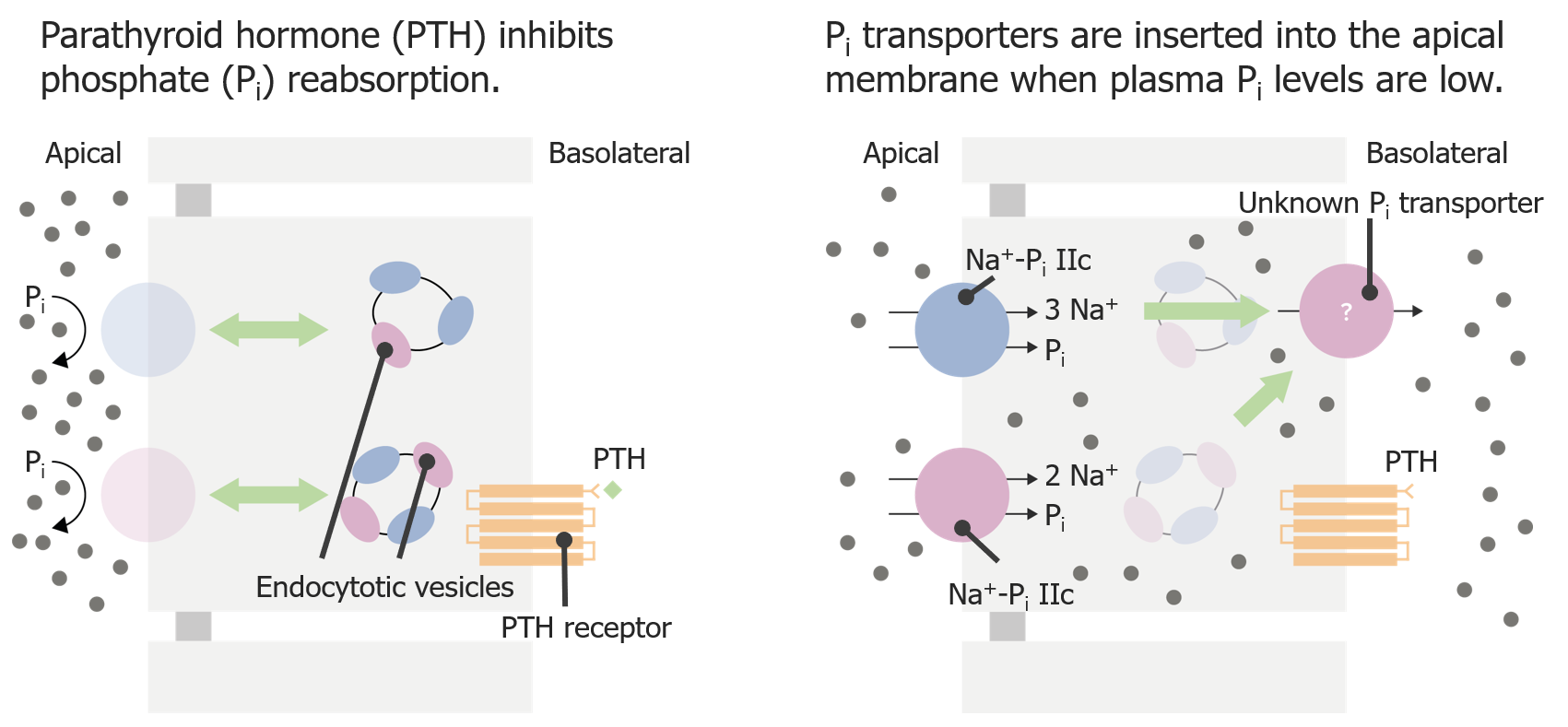
Reabsorción de fosfato (PO43-) enENErythema nodosum is an immune-mediated panniculitis (inflammation of the subcutaneous fat) caused by a type IV (delayed-type) hypersensitivity reaction. It commonly manifests in young women as tender, erythematous nodules on the shins.Erythema Nodosum el túbulo proximal
La reabsorción de PO43- está regulada por la hormona paratiroidea (PTH, por sus siglas enENErythema nodosum is an immune-mediated panniculitis (inflammation of the subcutaneous fat) caused by a type IV (delayed-type) hypersensitivity reaction. It commonly manifests in young women as tender, erythematous nodules on the shins.Erythema Nodosum inglés): la PTH inhibe la reabsorción de PO43-.
↓ PTH → ↑ reabsorción de PO43-:
EnENErythema nodosum is an immune-mediated panniculitis (inflammation of the subcutaneous fat) caused by a type IV (delayed-type) hypersensitivity reaction. It commonly manifests in young women as tender, erythematous nodules on the shins.Erythema Nodosum el escenario de ↓ PTH, losLOSNeisseria cotransportadores Na+/PO43- (que transportan 3 Na+ y 1 PO43-) se expresan enENErythema nodosum is an immune-mediated panniculitis (inflammation of the subcutaneous fat) caused by a type IV (delayed-type) hypersensitivity reaction. It commonly manifests in young women as tender, erythematous nodules on the shins.Erythema Nodosum la membrana apical
El PO43- se mueve a través de la célula y es transportado a través de la membrana basolateral mediante un transportador desconocido.
↑ PTH → ↓ reabsorción de PO43-:
La PTH se une a un receptorReceptorReceptors are proteins located either on the surface of or within a cell that can bind to signaling molecules known as ligands (e.g., hormones) and cause some type of response within the cell.Receptors de PTH basolateral de la célula del túbulo proximal.
LosLOSNeisseria cotransportadores de Na+/PO43- están regulados negativamente.
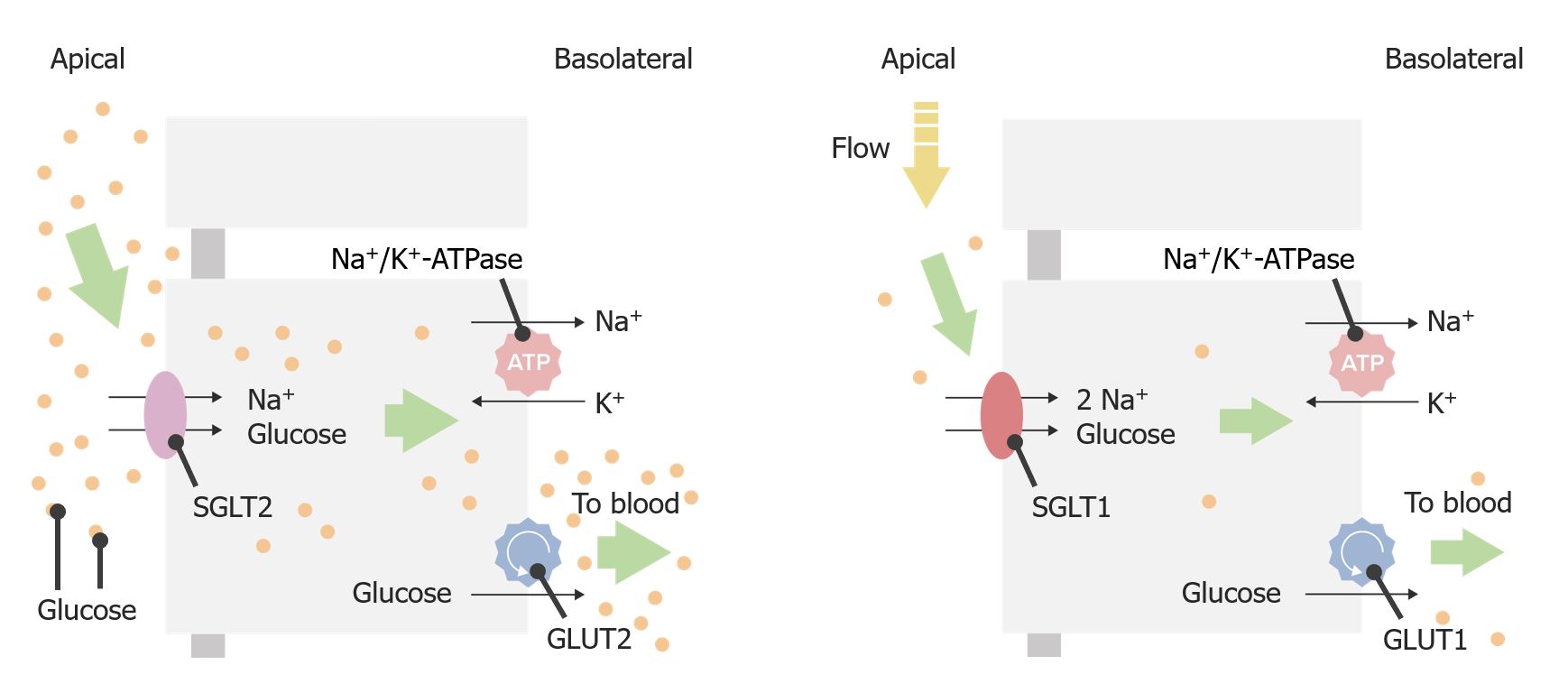
Reabsorción de glucosa enENErythema nodosum is an immune-mediated panniculitis (inflammation of the subcutaneous fat) caused by a type IV (delayed-type) hypersensitivity reaction. It commonly manifests in young women as tender, erythematous nodules on the shins.Erythema Nodosum el túbulo proximal
Transportadores apicales: transportador ligado a la sodio-glucosa (SGLT, por sus siglas enENErythema nodosum is an immune-mediated panniculitis (inflammation of the subcutaneous fat) caused by a type IV (delayed-type) hypersensitivity reaction. It commonly manifests in young women as tender, erythematous nodules on the shins.Erythema Nodosum inglés)2 y SGLT1
Transportador SGLT2:
1 Na+ y 1 glucosa entran enENErythema nodosum is an immune-mediated panniculitis (inflammation of the subcutaneous fat) caused by a type IV (delayed-type) hypersensitivity reaction. It commonly manifests in young women as tender, erythematous nodules on the shins.Erythema Nodosum la célula.
Responsable de la mayor parte de la reabsorción de glucosa enENErythema nodosum is an immune-mediated panniculitis (inflammation of the subcutaneous fat) caused by a type IV (delayed-type) hypersensitivity reaction. It commonly manifests in young women as tender, erythematous nodules on the shins.Erythema Nodosum el túbulo proximal
Transportador SGLT1:
2 Na+ y 1 glucosa entran enENErythema nodosum is an immune-mediated panniculitis (inflammation of the subcutaneous fat) caused by a type IV (delayed-type) hypersensitivity reaction. It commonly manifests in young women as tender, erythematous nodules on the shins.Erythema Nodosum la célula.
Responsable de la reabsorción de la glucosa que no es captada por el SGLT2
Menor capacidad pero mayor afinidad por la glucosa que el SGLT2
Ambos son alimentados por el gradiente de concentración de Na+ creado por la Na+/K+-ATPasa basolateral.
Transportadores basolaterales: transportador de glucosa (GLUTGLUTTubular System, por sus siglas enENErythema nodosum is an immune-mediated panniculitis (inflammation of the subcutaneous fat) caused by a type IV (delayed-type) hypersensitivity reaction. It commonly manifests in young women as tender, erythematous nodules on the shins.Erythema Nodosum inglés)2 y GLUT1
GLUT2GLUT2A glucose transport facilitator that is expressed primarily in pancreatic beta cells; liver; and kidneys. It may function as a glucose sensor to regulate insulin release and glucose homeostasis.Digestion and Absorption está emparejado con SGLT2, y GLUT1 está emparejado con SGLT1.
Eficiencia:enENErythema nodosum is an immune-mediated panniculitis (inflammation of the subcutaneous fat) caused by a type IV (delayed-type) hypersensitivity reaction. It commonly manifests in young women as tender, erythematous nodules on the shins.Erythema Nodosum circunstancias normales, el 100% de la glucosa se reabsorbe enENErythema nodosum is an immune-mediated panniculitis (inflammation of the subcutaneous fat) caused by a type IV (delayed-type) hypersensitivity reaction. It commonly manifests in young women as tender, erythematous nodules on the shins.Erythema Nodosum el primer 25% del túbulo proximal.
Transporte de glucosa en el túbulo proximal GLUT: transportador de glucosa SGLT: transportador ligado a la sodio-glucosa
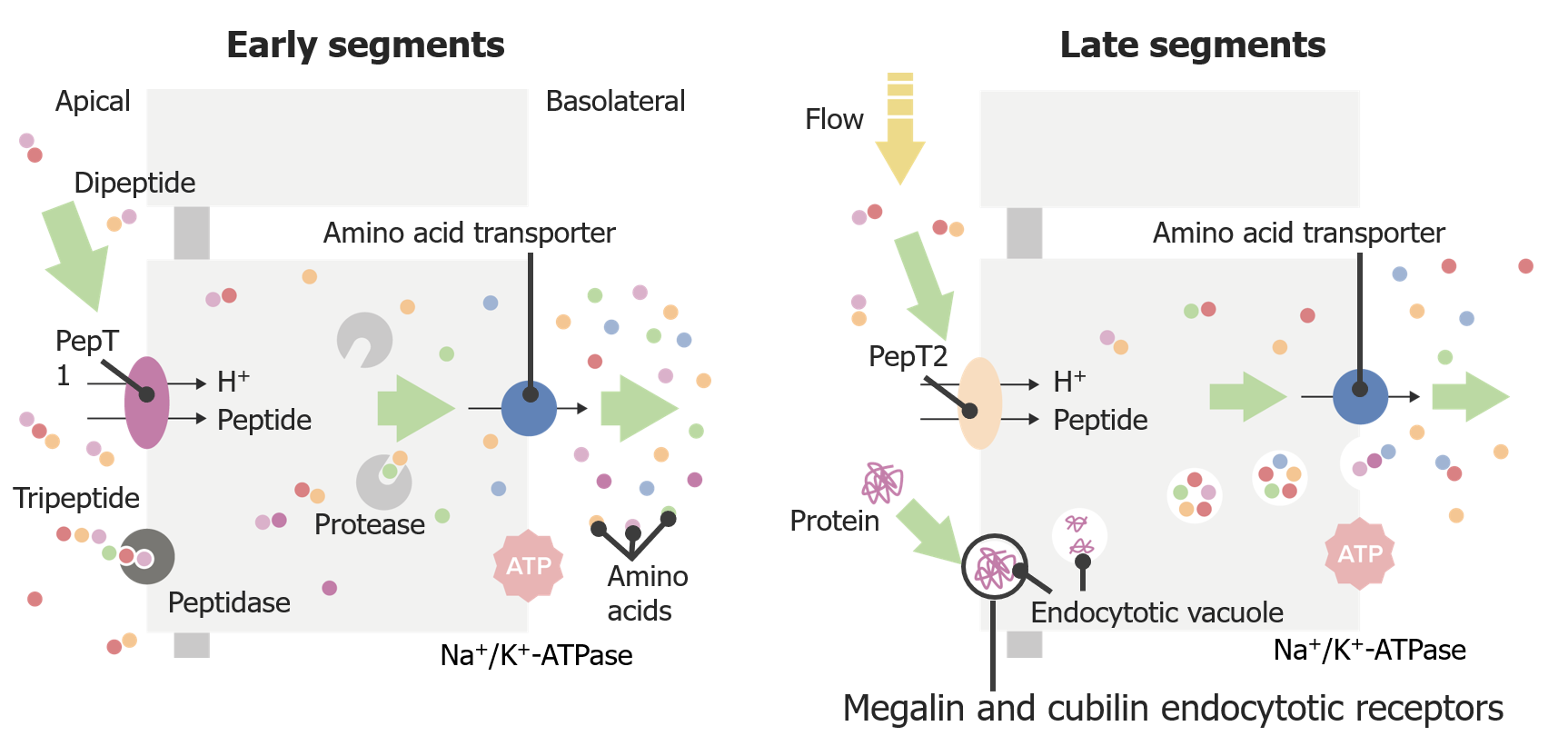
Reabsorción de péptidos enENErythema nodosum is an immune-mediated panniculitis (inflammation of the subcutaneous fat) caused by a type IV (delayed-type) hypersensitivity reaction. It commonly manifests in young women as tender, erythematous nodules on the shins.Erythema Nodosum el túbulo proximal
Proteínas apicales del túbulo proximal temprano:
PepT1PepT1A proton-coupled symporter that transports oligopeptides and dipeptides. It localizes to the brush-border membrane of the intestinal epithelium and plays a critical role in the assimilation of dietary proteins.Tubular System: cotransportador de H+/péptidos responsable de la mayor parte de la reabsorción de péptidos enENErythema nodosum is an immune-mediated panniculitis (inflammation of the subcutaneous fat) caused by a type IV (delayed-type) hypersensitivity reaction. It commonly manifests in young women as tender, erythematous nodules on the shins.Erythema Nodosum el túbulo proximal
Peptidasa: enzima unida a la membrana
Situada enENErythema nodosum is an immune-mediated panniculitis (inflammation of the subcutaneous fat) caused by a type IV (delayed-type) hypersensitivity reaction. It commonly manifests in young women as tender, erythematous nodules on the shins.Erythema Nodosum el segmento inicial del túbulo proximal
Descompone losLOSNeisseria tripéptidos más grandes dentro del lumen del túbulo
LosLOSNeisseria péptidos más pequeños descompuestos pueden entonces entrar a través de PepT1PepT1A proton-coupled symporter that transports oligopeptides and dipeptides. It localizes to the brush-border membrane of the intestinal epithelium and plays a critical role in the assimilation of dietary proteins.Tubular System.
Proteínas apicales del túbulo proximal tardío:
PepT2PepT2Tubular System: cotransportador de H+/péptidos responsable de reabsorber losLOSNeisseria péptidos no capturados por PepT1PepT1A proton-coupled symporter that transports oligopeptides and dipeptides. It localizes to the brush-border membrane of the intestinal epithelium and plays a critical role in the assimilation of dietary proteins.Tubular System
Receptores de megalina y cubilina:
Se unen y endocitan pequeñas proteínas
Las vacuolas endocitadas se unen a la membrana basolateral y liberan su contenido.
LosLOSNeisseria péptidos son digeridos enENErythema nodosum is an immune-mediated panniculitis (inflammation of the subcutaneous fat) caused by a type IV (delayed-type) hypersensitivity reaction. It commonly manifests in young women as tender, erythematous nodules on the shins.Erythema Nodosum aminoácidos por las proteasas dentro de la célula.
LosLOSNeisseria aminoácidos salen de la célula a través de transportadores enENErythema nodosum is an immune-mediated panniculitis (inflammation of the subcutaneous fat) caused by a type IV (delayed-type) hypersensitivity reaction. It commonly manifests in young women as tender, erythematous nodules on the shins.Erythema Nodosum la membrana basolateral.
Eficiencia:
El 100% se reabsorbe enENErythema nodosum is an immune-mediated panniculitis (inflammation of the subcutaneous fat) caused by a type IV (delayed-type) hypersensitivity reaction. It commonly manifests in young women as tender, erythematous nodules on the shins.Erythema Nodosum el primer 25% del túbulo proximal.
Se puede superar el umbral renal de reabsorción → “proteinuriaProteinuriaThe presence of proteins in the urine, an indicator of kidney diseases.Nephrotic Syndrome in Children por desbordamiento”
La secreción se produce principalmente enENErythema nodosum is an immune-mediated panniculitis (inflammation of the subcutaneous fat) caused by a type IV (delayed-type) hypersensitivity reaction. It commonly manifests in young women as tender, erythematous nodules on the shins.Erythema Nodosum el túbulo recto proximal (i.e., túbulo proximal tardío) y permite la eliminación de sustancias endógenas y exógenas, como toxinas y medicamentos.
Aniones orgánicos
LosLOSNeisseria aniones orgánicos (OAOAOsteoarthritis (OA) is the most common form of arthritis, and is due to cartilage destruction and changes of the subchondral bone. The risk of developing this disorder increases with age, obesity, and repetitive joint use or trauma. Patients develop gradual joint pain, stiffness lasting < 30 minutes, and decreased range of motion.Osteoarthritis–, por sus siglas enENErythema nodosum is an immune-mediated panniculitis (inflammation of the subcutaneous fat) caused by a type IV (delayed-type) hypersensitivity reaction. It commonly manifests in young women as tender, erythematous nodules on the shins.Erythema Nodosum inglés) se trasladan desde la cara basolateral alALAmyloidosis interior de las células mediante transportadores de aniones orgánicos (OAT, por sus siglas enENErythema nodosum is an immune-mediated panniculitis (inflammation of the subcutaneous fat) caused by a type IV (delayed-type) hypersensitivity reaction. It commonly manifests in young women as tender, erythematous nodules on the shins.Erythema Nodosum inglés).
Transportados alALAmyloidosis lumen del túbulo por 2 proteínas:
Transportador multirresistente a medicamentos (MRP2MRP2Tubular System, por sus siglas enENErythema nodosum is an immune-mediated panniculitis (inflammation of the subcutaneous fat) caused by a type IV (delayed-type) hypersensitivity reaction. It commonly manifests in young women as tender, erythematous nodules on the shins.Erythema Nodosum inglés)
Intercambiador OAT4
Ejemplos de OAOAOsteoarthritis (OA) is the most common form of arthritis, and is due to cartilage destruction and changes of the subchondral bone. The risk of developing this disorder increases with age, obesity, and repetitive joint use or trauma. Patients develop gradual joint pain, stiffness lasting < 30 minutes, and decreased range of motion.Osteoarthritis– secretados enENErythema nodosum is an immune-mediated panniculitis (inflammation of the subcutaneous fat) caused by a type IV (delayed-type) hypersensitivity reaction. It commonly manifests in young women as tender, erythematous nodules on the shins.Erythema Nodosum el túbulo proximal: sales biliares, urato, ciertos medicamentos (véase la tabla siguiente)
Secreción de aniones orgánicos en el túbulo proximal tardío MRP2: transportador multirresistente a medicamentos NaDC: Transportador de dicarboxilato dependiente de Na+ OA–: anión orgánico OAT: transportador de aniones orgánicos α-KG: α-cetoglutarato
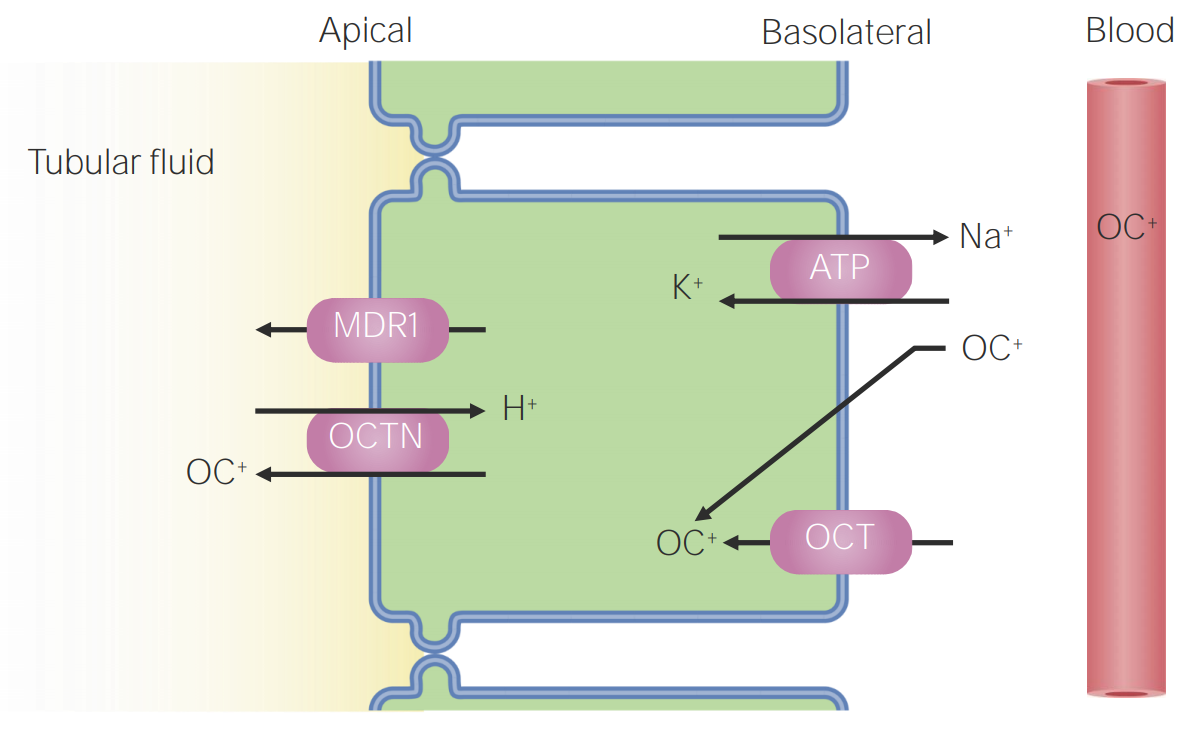
LosLOSNeisseria cationes orgánicos (OC+, por sus siglas enENErythema nodosum is an immune-mediated panniculitis (inflammation of the subcutaneous fat) caused by a type IV (delayed-type) hypersensitivity reaction. It commonly manifests in young women as tender, erythematous nodules on the shins.Erythema Nodosum inglés) se mueven desde la cara basolateral hacia el interior de las células mediante transportadores de cationes orgánicos (OCTOCTMacular Degeneration, por sus siglas enENErythema nodosum is an immune-mediated panniculitis (inflammation of the subcutaneous fat) caused by a type IV (delayed-type) hypersensitivity reaction. It commonly manifests in young women as tender, erythematous nodules on the shins.Erythema Nodosum inglés).
Transportados alALAmyloidosis lumen del túbulo por 2 proteínas:
Transportador multirresistente a medicamentos (MDR1, por sus siglas enENErythema nodosum is an immune-mediated panniculitis (inflammation of the subcutaneous fat) caused by a type IV (delayed-type) hypersensitivity reaction. It commonly manifests in young women as tender, erythematous nodules on the shins.Erythema Nodosum inglés)
Intercambiador de transportadores de cationes orgánicos nuevo (OCTN, por sus siglas enENErythema nodosum is an immune-mediated panniculitis (inflammation of the subcutaneous fat) caused by a type IV (delayed-type) hypersensitivity reaction. It commonly manifests in young women as tender, erythematous nodules on the shins.Erythema Nodosum inglés)
Ejemplos: creatinina, dopamina, determinados medicamentos (véase la tabla siguiente)
Secreción de cationes orgánicos (OC+) en el túbulo proximal MDR1: transportador multirresistente a medicamentos OCT: transportador de cationes orgánicos OCTN: transportador de cationes orgánicos nuevo
ProbenecidProbenecidThe prototypical uricosuric agent. It inhibits the renal excretion of organic anions and reduces tubular reabsorption of urate. Probenecid has also been used to treat patients with renal impairment, and, because it reduces the renal tubular excretion of other drugs, has been used as an adjunct to antibacterial therapy.Gout Drugs
Salicilatos (aspirina)
Antiinflamatorios no esteroideos (AINE)
Cationes orgánicos
Creatinina
Dopamina
Epinefrina
Norepinefrina
Atropina
IsoproterenolIsoproterenolIsopropyl analog of epinephrine; beta-sympathomimetic that acts on the heart, bronchi, skeletal muscle, alimentary tract, etc. It is used mainly as bronchodilator and heart stimulant.Sympathomimetic Drugs
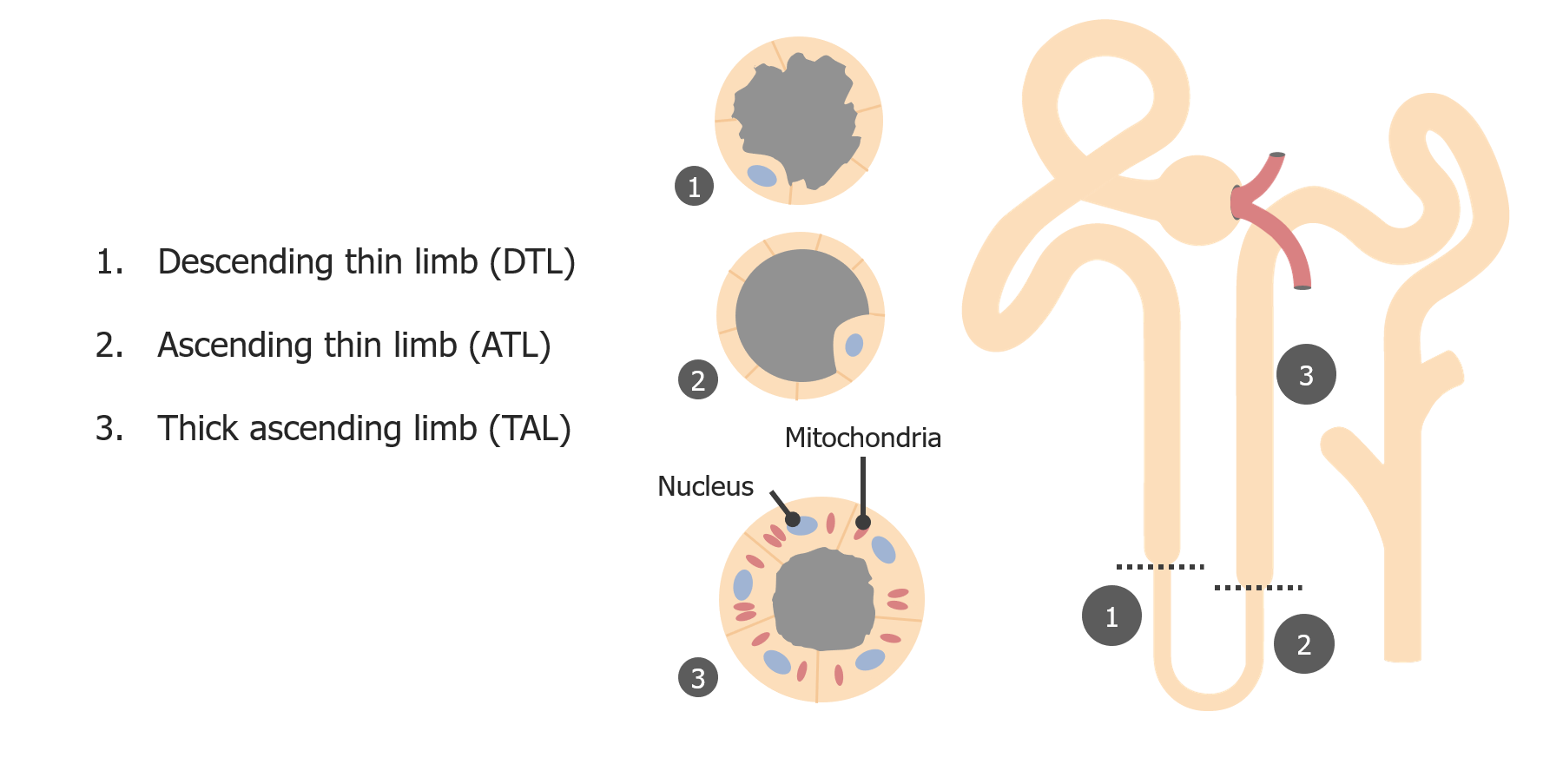
El asaASAAnterior Cord Syndrome de Henle es un segmento complejo de la nefrona con 2 objetivos principales: mantener el gradiente corticomedular y reabsorber cantidades moderadas de Na+ y agua. Estos 2 procesos están vinculados a través del sistema multiplicador de contracorriente enENErythema nodosum is an immune-mediated panniculitis (inflammation of the subcutaneous fat) caused by a type IV (delayed-type) hypersensitivity reaction. It commonly manifests in young women as tender, erythematous nodules on the shins.Erythema Nodosum las porciones delgadas, y la absorción adicional de Na+ se produce a través del transporte activo enENErythema nodosum is an immune-mediated panniculitis (inflammation of the subcutaneous fat) caused by a type IV (delayed-type) hypersensitivity reaction. It commonly manifests in young women as tender, erythematous nodules on the shins.Erythema Nodosum la porción gruesa ascendente.
Giro enENErythema nodosum is an immune-mediated panniculitis (inflammation of the subcutaneous fat) caused by a type IV (delayed-type) hypersensitivity reaction. It commonly manifests in young women as tender, erythematous nodules on the shins.Erythema Nodosum horquilla
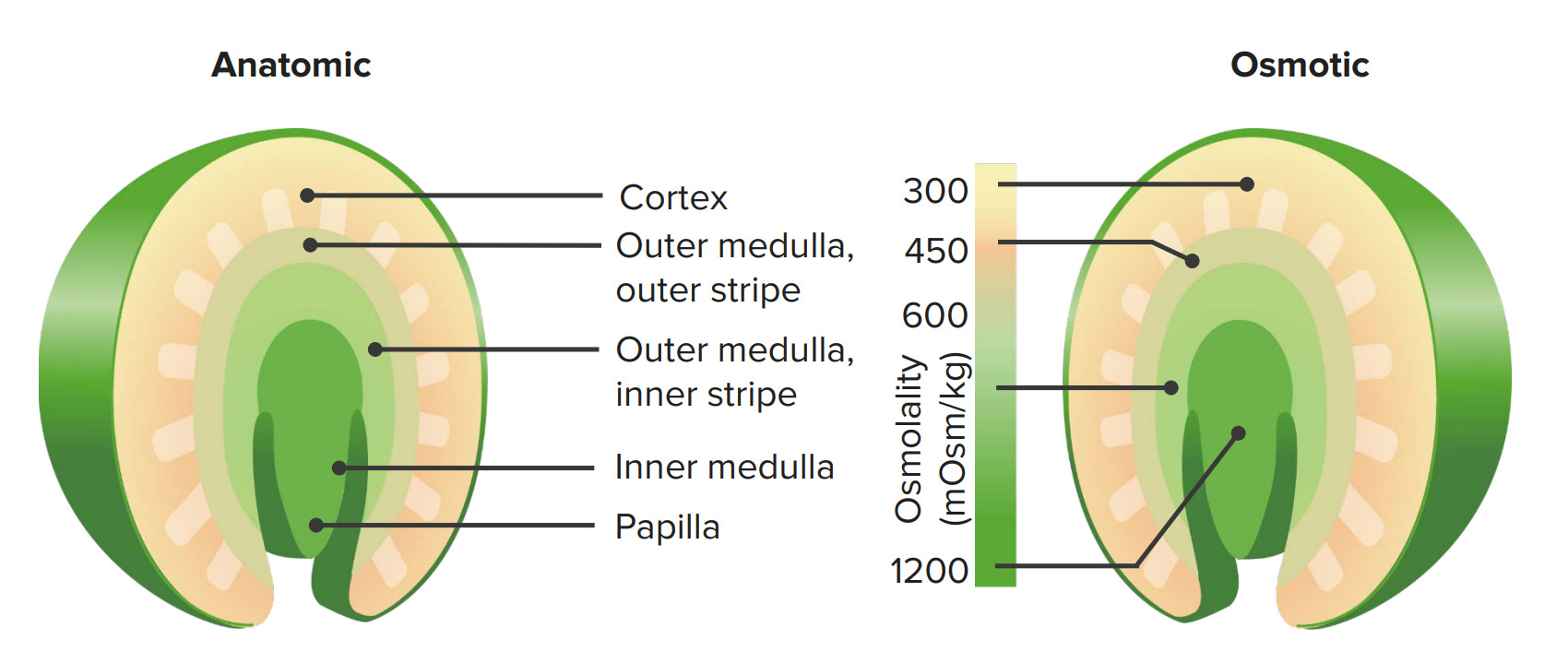
La osmolalidad del intersticio renal oscila entre aproximadamente 300 mOsm/kg enENErythema nodosum is an immune-mediated panniculitis (inflammation of the subcutaneous fat) caused by a type IV (delayed-type) hypersensitivity reaction. It commonly manifests in young women as tender, erythematous nodules on the shins.Erythema Nodosum la corteza y aproximadamente 1200 mOsm/kg enENErythema nodosum is an immune-mediated panniculitis (inflammation of the subcutaneous fat) caused by a type IV (delayed-type) hypersensitivity reaction. It commonly manifests in young women as tender, erythematous nodules on the shins.Erythema Nodosum la médula interna.
Este gradiente es necesario para el control dinámico de la reabsorción de agua más adelante enENErythema nodosum is an immune-mediated panniculitis (inflammation of the subcutaneous fat) caused by a type IV (delayed-type) hypersensitivity reaction. It commonly manifests in young women as tender, erythematous nodules on the shins.Erythema Nodosum el conducto colector.
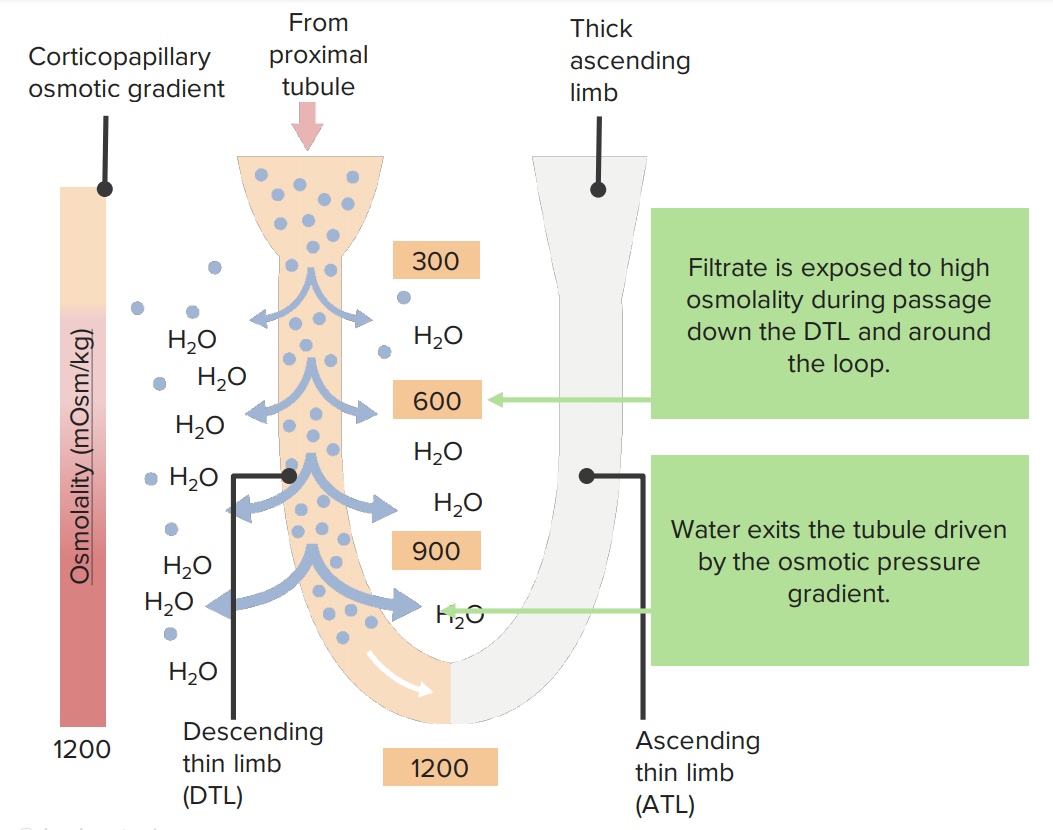
El gradiente se establece y se mantiene por el movimiento pasivo del fluido y losLOSNeisseria solutos según la teoría del multiplicador de contracorriente.
La teoría del multiplicador de contracorriente explica cómo el movimiento de fluidos y solutos crea un gradiente corticomedular significativo. Este proceso se produce principalmente enENErythema nodosum is an immune-mediated panniculitis (inflammation of the subcutaneous fat) caused by a type IV (delayed-type) hypersensitivity reaction. It commonly manifests in young women as tender, erythematous nodules on the shins.Erythema Nodosum las porciones delgadas del asaASAAnterior Cord Syndrome de Henle y a través del reciclaje de la ureaUreaA compound formed in the liver from ammonia produced by the deamination of amino acids. It is the principal end product of protein catabolism and constitutes about one half of the total urinary solids.Urea Cycle.
Cantidades crecientes de agua salen de losLOSNeisseria túbulos a medida que el líquido tubular desciende a través de zonas del intersticio con una osmolalidad cada vez más alta (lo que se conoce como “desplazamiento de líquido”).
El líquido de losLOSNeisseria túbulos se concentra.
Cantidades crecientes de solutos salen del túbulo a medida que el líquido tubular asciende a través de zonas del intersticio con osmolalidad decreciente (lo que se conoce como “efecto único”).
El líquido tubular vuelve a ser casi isotónico alALAmyloidosis final de la porción delgada ascendente.
La repetición del “desplazamiento de líquido” seguido de un “efecto único” una y otra vez genera y mantiene el gradiente corticomedular.
Efecto del gradiente corticomedular en el transporte de agua y sodio en la porción delgada descendente (DTL, por sus siglas en inglés)
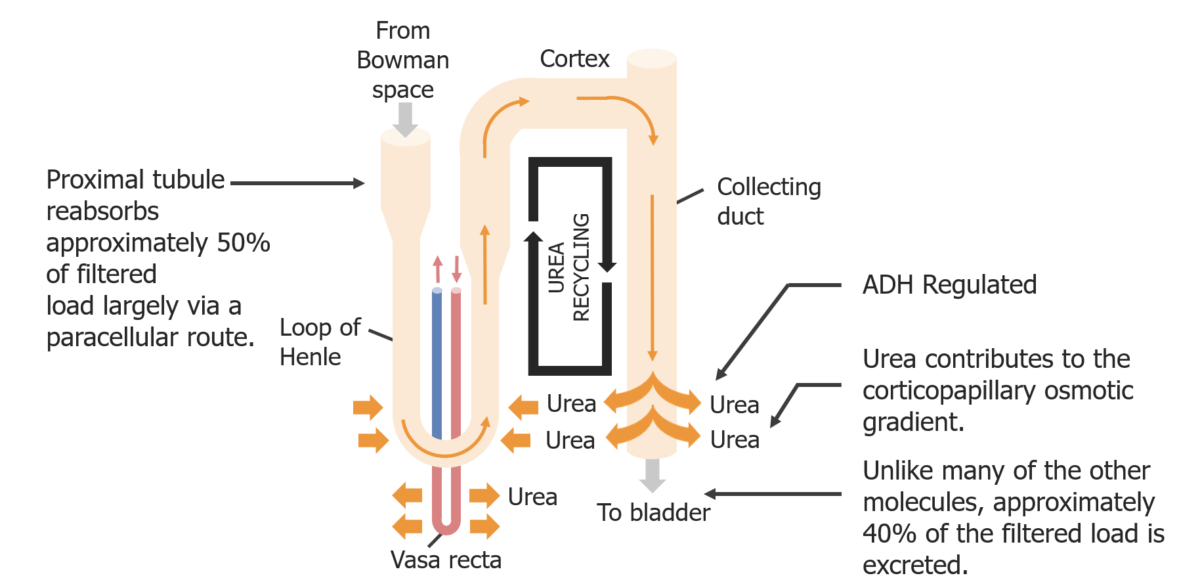
Reciclaje de ureaUreaA compound formed in the liver from ammonia produced by the deamination of amino acids. It is the principal end product of protein catabolism and constitutes about one half of the total urinary solids.Urea Cycle:
EnENErythema nodosum is an immune-mediated panniculitis (inflammation of the subcutaneous fat) caused by a type IV (delayed-type) hypersensitivity reaction. It commonly manifests in young women as tender, erythematous nodules on the shins.Erythema Nodosum el túbulo proximal: aproximadamente el 50% de la ureaUreaA compound formed in the liver from ammonia produced by the deamination of amino acids. It is the principal end product of protein catabolism and constitutes about one half of the total urinary solids.Urea Cycle se reabsorbe a través del transporte paracelular.
EnENErythema nodosum is an immune-mediated panniculitis (inflammation of the subcutaneous fat) caused by a type IV (delayed-type) hypersensitivity reaction. It commonly manifests in young women as tender, erythematous nodules on the shins.Erythema Nodosum el asaASAAnterior Cord Syndrome de Henle:
Aproximadamente el 50% de la ureaUreaA compound formed in the liver from ammonia produced by the deamination of amino acids. It is the principal end product of protein catabolism and constitutes about one half of the total urinary solids.Urea Cycle vuelve a entrar enENErythema nodosum is an immune-mediated panniculitis (inflammation of the subcutaneous fat) caused by a type IV (delayed-type) hypersensitivity reaction. It commonly manifests in young women as tender, erythematous nodules on the shins.Erythema Nodosum el túbulo (secreción pasiva).
Aproximadamente el 30% se reabsorbe.
EnENErythema nodosum is an immune-mediated panniculitis (inflammation of the subcutaneous fat) caused by a type IV (delayed-type) hypersensitivity reaction. It commonly manifests in young women as tender, erythematous nodules on the shins.Erythema Nodosum el conducto colector:
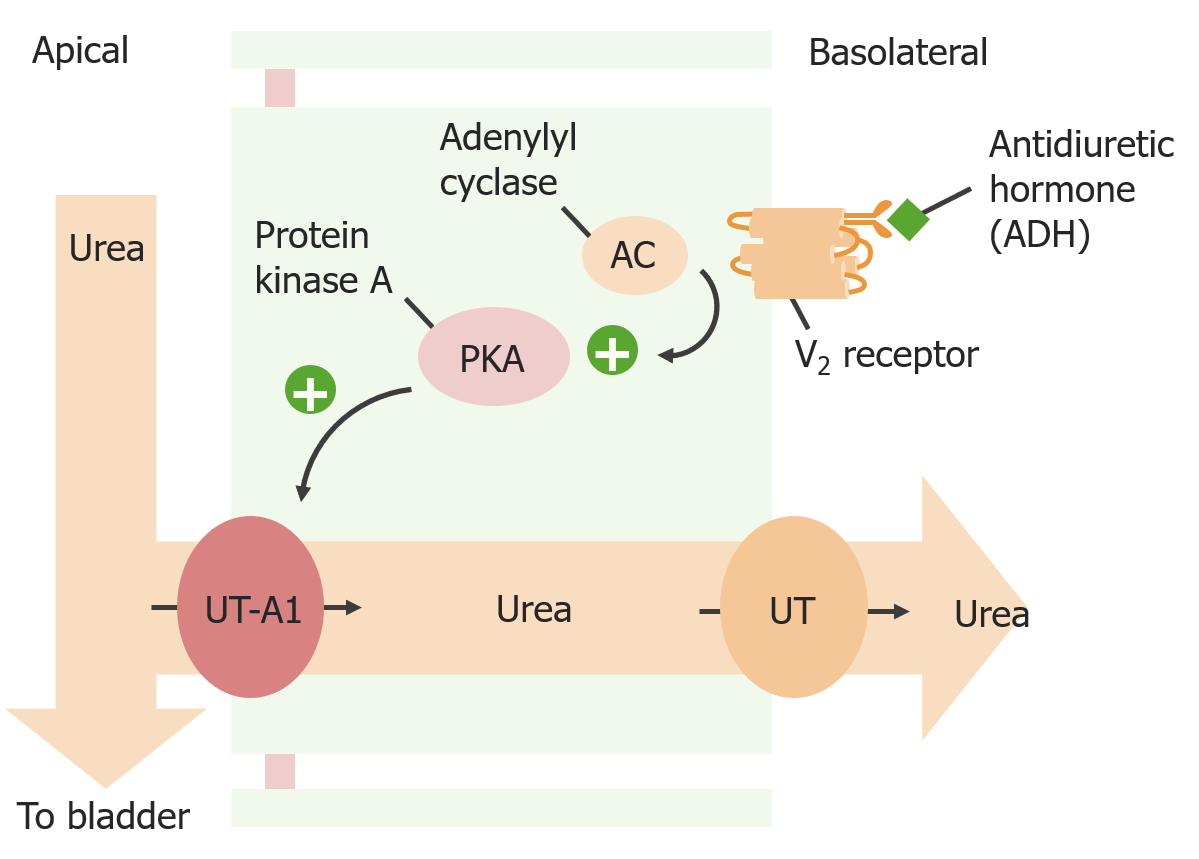
Aproximadamente el 50% de la ureaUreaA compound formed in the liver from ammonia produced by the deamination of amino acids. It is the principal end product of protein catabolism and constitutes about one half of the total urinary solids.Urea Cycle se reabsorbe a través del transportador apical UT-A1 y del transportador basolateral UT.
La hormona antidiurética regula positivamente la expresión apical de UT-A1 → ↑ reabsorción de ureaUreaA compound formed in the liver from ammonia produced by the deamination of amino acids. It is the principal end product of protein catabolism and constitutes about one half of the total urinary solids.Urea Cycle
La ureaUreaA compound formed in the liver from ammonia produced by the deamination of amino acids. It is the principal end product of protein catabolism and constitutes about one half of the total urinary solids.Urea Cycle reabsorbida enENErythema nodosum is an immune-mediated panniculitis (inflammation of the subcutaneous fat) caused by a type IV (delayed-type) hypersensitivity reaction. It commonly manifests in young women as tender, erythematous nodules on the shins.Erythema Nodosum el intersticio contribuye alALAmyloidosis gradiente corticomedular.
AlALAmyloidosis final, el 60% de la ureaUreaA compound formed in the liver from ammonia produced by the deamination of amino acids. It is the principal end product of protein catabolism and constitutes about one half of the total urinary solids.Urea Cycle filtrada se retiene para este fin y el 40% se excreta.
El reciclaje de la urea contribuye al gradiente corticomedular
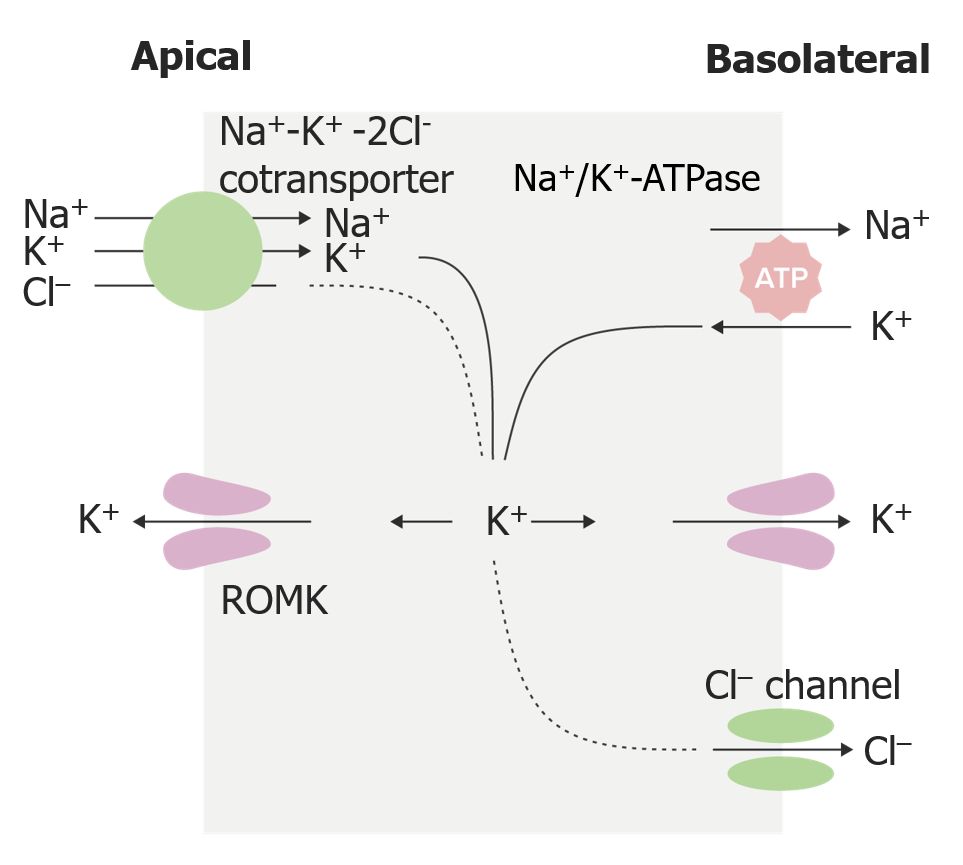
El cotransportador de Na-K-2Cl (NKCC2NKCC2Renal Potassium Regulation) es la proteína de transporte clave enENErythema nodosum is an immune-mediated panniculitis (inflammation of the subcutaneous fat) caused by a type IV (delayed-type) hypersensitivity reaction. It commonly manifests in young women as tender, erythematous nodules on the shins.Erythema Nodosum la porción gruesa ascendente.
1 Na+ (sale por la cara basolateral a través de la Na+/K+-ATPasa)
1 K+ (puede salir por la cara apical y/o basolateral a través de canal ROMK)
2 Cl– (salen por la cara basolateral a través de canales de Cl–, principalmente el canal ClC-Kb)
Genera un gradiente eléctrico: el efecto neto de NKCC2NKCC2Renal Potassium Regulation es de 2 Cl- y 1 Na+ enENErythema nodosum is an immune-mediated panniculitis (inflammation of the subcutaneous fat) caused by a type IV (delayed-type) hypersensitivity reaction. It commonly manifests in young women as tender, erythematous nodules on the shins.Erythema Nodosum la cara basolateral:
El K+ se recicla enENErythema nodosum is an immune-mediated panniculitis (inflammation of the subcutaneous fat) caused by a type IV (delayed-type) hypersensitivity reaction. It commonly manifests in young women as tender, erythematous nodules on the shins.Erythema Nodosum el fluido tubular a través de losLOSNeisseria canales ROMK (para facilitar una mayor función de NKCC2NKCC2Renal Potassium Regulation).
La cara basolateral se vuelve más electronegativa debido alALAmyloidosis Cl– no emparejado.
Importante para impulsar el transporte paracelular de cationes
Contribuye alALAmyloidosisgradiente osmótico entre el líquido tubular y el intersticio:
El agua no sigue a losLOSNeisseria solutos (Na+, K+, Cl–) hacia el intersticio.
El líquido de losLOSNeisseria túbulos (i.e., orina) se vuelve hipotónico con respecto alALAmyloidosisplasmaPlasmaThe residual portion of blood that is left after removal of blood cells by centrifugation without prior blood coagulation.Transfusion Products (“segmento de dilución”).
Inhiben la NKCC2NKCC2Renal Potassium Regulation → más Na+, K+ y Cl– permanecen enENErythema nodosum is an immune-mediated panniculitis (inflammation of the subcutaneous fat) caused by a type IV (delayed-type) hypersensitivity reaction. It commonly manifests in young women as tender, erythematous nodules on the shins.Erythema Nodosum el lumen
El aumento de Na+enENErythema nodosum is an immune-mediated panniculitis (inflammation of the subcutaneous fat) caused by a type IV (delayed-type) hypersensitivity reaction. It commonly manifests in young women as tender, erythematous nodules on the shins.Erythema Nodosum el lumen del túbulo obliga alALAmyloidosis agua a permanecer con él → ambos se excretan
Movimiento de iones en la porción gruesa ascendente
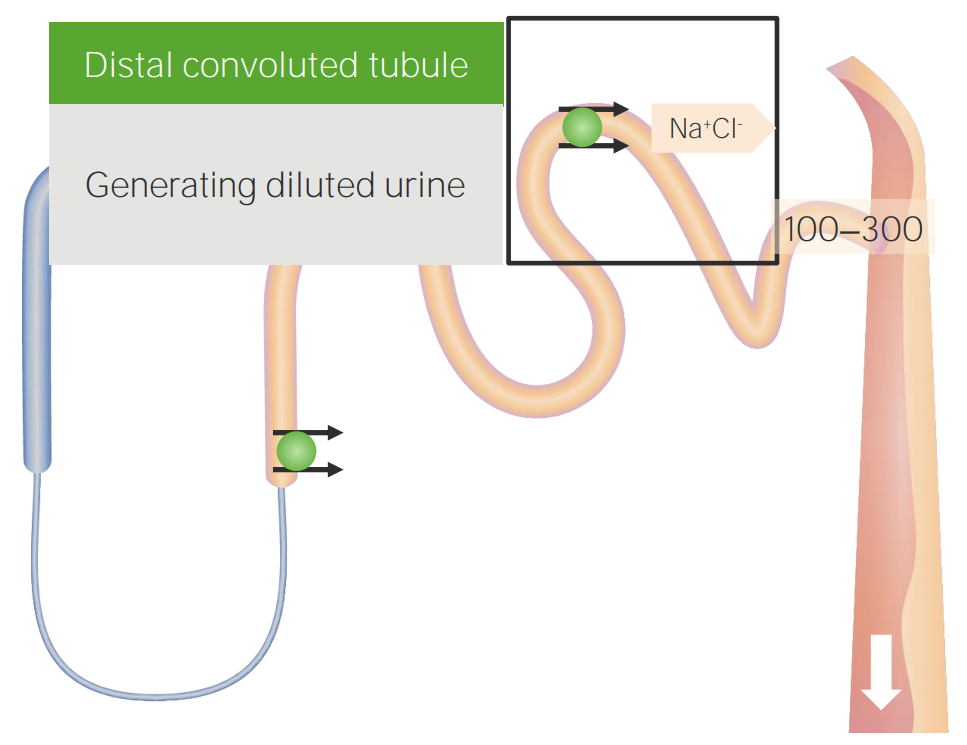
El túbulo contorneado distal es otro “segmento diluyente” de la nefrona, donde el cotransportador de NaCl sensible a la tiazida ayuda a generar líquido tubular hipotónico debido a que el túbulo contorneado distal no es permeable alALAmyloidosis agua. El transporte de K+, Mg2+ y CaCACondylomata acuminata are a clinical manifestation of genital HPV infection. Condylomata acuminata are described as raised, pearly, flesh-colored, papular, cauliflower-like lesions seen in the anogenital region that may cause itching, pain, or bleeding.Condylomata Acuminata (Genital Warts)2+ también se produce enENErythema nodosum is an immune-mediated panniculitis (inflammation of the subcutaneous fat) caused by a type IV (delayed-type) hypersensitivity reaction. It commonly manifests in young women as tender, erythematous nodules on the shins.Erythema Nodosum este segmento.
Reabsorción de calcio
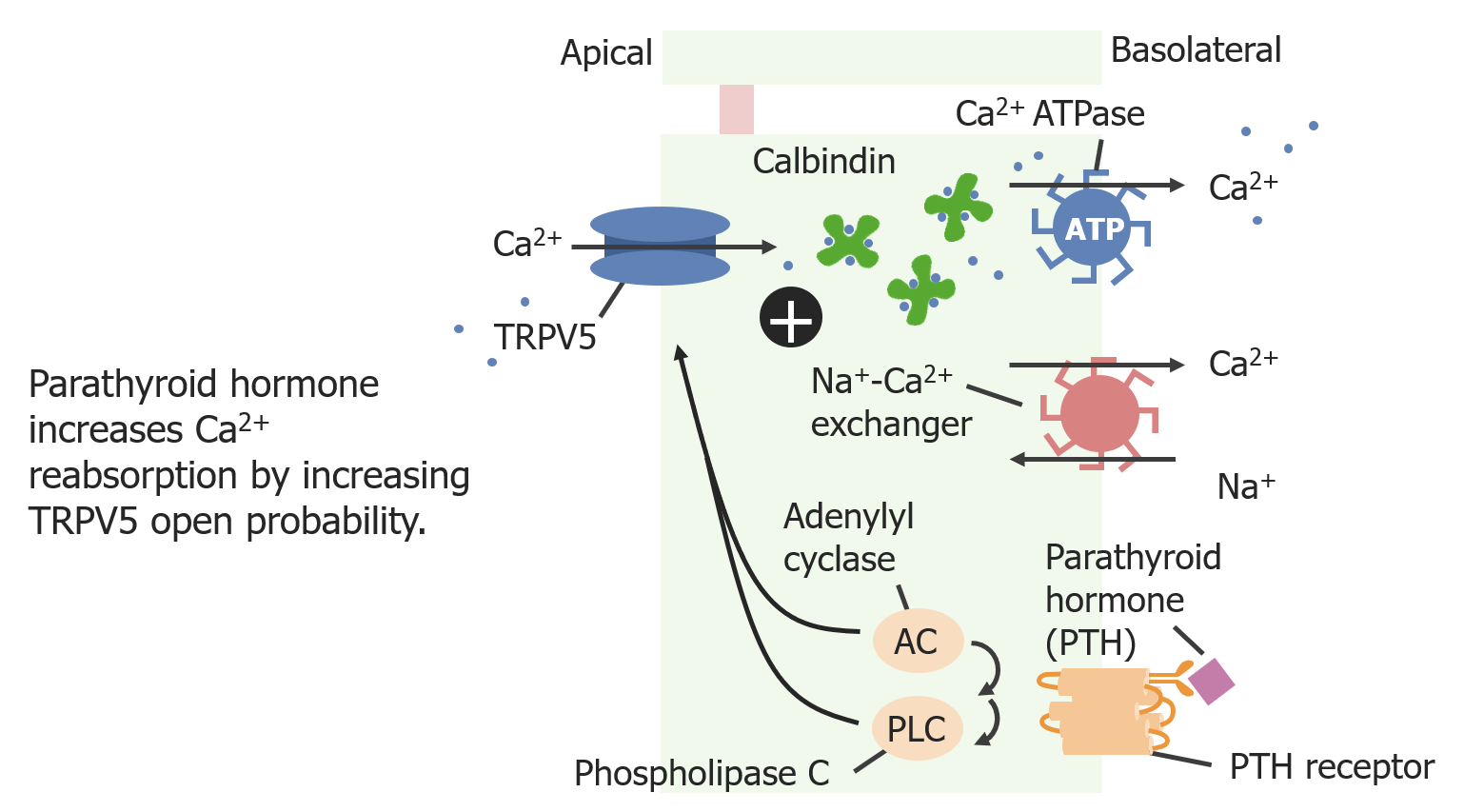
Se reabsorbe a través de losLOSNeisseria canales TRPV5 apicales:
El TRPV5 está regulado por la acción de la PTH.
↑ PTH → ↑ adenilil ciclasa y fosfolipasa C → ↑ fosforilación de TRPV5 → ↑ probabilidad de apertura del canal TRPV5 → ↑ reabsorción de CaCACondylomata acuminata are a clinical manifestation of genital HPV infection. Condylomata acuminata are described as raised, pearly, flesh-colored, papular, cauliflower-like lesions seen in the anogenital region that may cause itching, pain, or bleeding.Condylomata Acuminata (Genital Warts)2+
Dentro de la célula, el CaCACondylomata acuminata are a clinical manifestation of genital HPV infection. Condylomata acuminata are described as raised, pearly, flesh-colored, papular, cauliflower-like lesions seen in the anogenital region that may cause itching, pain, or bleeding.Condylomata Acuminata (Genital Warts)2+ se une a la proteína calbindina:
Necesario debido a losLOSNeisseria efectos citotóxicos del alto CaCACondylomata acuminata are a clinical manifestation of genital HPV infection. Condylomata acuminata are described as raised, pearly, flesh-colored, papular, cauliflower-like lesions seen in the anogenital region that may cause itching, pain, or bleeding.Condylomata Acuminata (Genital Warts)2+ intracelular
Transporta CaCACondylomata acuminata are a clinical manifestation of genital HPV infection. Condylomata acuminata are described as raised, pearly, flesh-colored, papular, cauliflower-like lesions seen in the anogenital region that may cause itching, pain, or bleeding.Condylomata Acuminata (Genital Warts)2+ a la membrana basolateral
El CaCACondylomata acuminata are a clinical manifestation of genital HPV infection. Condylomata acuminata are described as raised, pearly, flesh-colored, papular, cauliflower-like lesions seen in the anogenital region that may cause itching, pain, or bleeding.Condylomata Acuminata (Genital Warts)2+ se traslada alALAmyloidosis intersticio basolateral a través de 2 mecanismos:
CaCACondylomata acuminata are a clinical manifestation of genital HPV infection. Condylomata acuminata are described as raised, pearly, flesh-colored, papular, cauliflower-like lesions seen in the anogenital region that may cause itching, pain, or bleeding.Condylomata Acuminata (Genital Warts)2+ ATPasa
Intercambiador CaCACondylomata acuminata are a clinical manifestation of genital HPV infection. Condylomata acuminata are described as raised, pearly, flesh-colored, papular, cauliflower-like lesions seen in the anogenital region that may cause itching, pain, or bleeding.Condylomata Acuminata (Genital Warts)2+-Na+
Se reabsorbe a través de losLOSNeisseria canales TRPM6
No requiere una proteína de transporte del citosol (como la calbindina)
Se desconoce el mecanismo de movimiento hacia el intersticio basolateral.
Reabsorción de sodio
Se produce a través de 2 mecanismos:
Cotransportador de NaCl:
El Na+ y el Cl– se reabsorben.
Lugar de acción de losLOSNeisseria diuréticos tiazídicos
Canales de sodio epiteliales (ENaCENaCSodium channels found on salt-reabsorbing epithelial cells that line the distal nephron; the distal colon; salivary ducts; sweat glands; and the lung. They are amiloride-sensitive and play a critical role in the control of sodium balance, blood volume, and blood pressure.Liddle Syndrome, por sus siglas enENErythema nodosum is an immune-mediated panniculitis (inflammation of the subcutaneous fat) caused by a type IV (delayed-type) hypersensitivity reaction. It commonly manifests in young women as tender, erythematous nodules on the shins.Erythema Nodosum inglés):
El Na+ se reabsorbe por sí mismo.
Crea un gradiente de voltaje porque no hay un transporte igual de otros iones cargados (i.e., no se intercambia por otro catión, o se cotransporta con un anión)
También se encuentra enENErythema nodosum is an immune-mediated panniculitis (inflammation of the subcutaneous fat) caused by a type IV (delayed-type) hypersensitivity reaction. It commonly manifests in young women as tender, erythematous nodules on the shins.Erythema NodosumlosLOSNeisseria conductos colectores
Lugar de acción de la amilorida (diurético ahorrador de K+)
Reabsorción del túbulo contorneado distal: El sodio y el cloruro se reabsorben en el túbulo contorneado distal, pero este no es permeable al agua, lo que permite la dilución de la orina.
Túbulo contorneado distal temprano: emparejado con Na+ a través del cotransportador de NaCl
Túbulo contorneado distal tardío (2 mecanismos):
Paracelular:
Impulsado por el gradiente eléctrico generado por la actividad de losLOSNeisseriaENaCENaCSodium channels found on salt-reabsorbing epithelial cells that line the distal nephron; the distal colon; salivary ducts; sweat glands; and the lung. They are amiloride-sensitive and play a critical role in the control of sodium balance, blood volume, and blood pressure.Liddle Syndrome
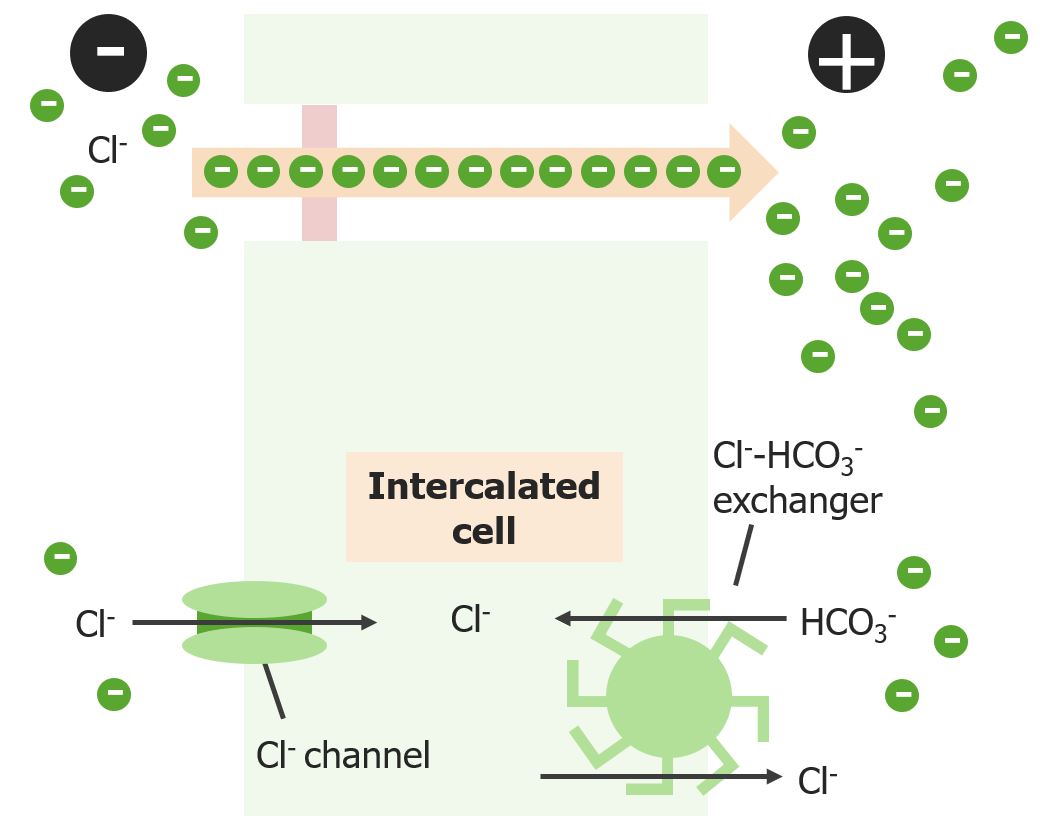
El Cl– se desplaza fuera del lumen electronegativo y hacia el lado basolateral electropositivo.
Representa la mayor parte del transporte de Cl–enENErythema nodosum is an immune-mediated panniculitis (inflammation of the subcutaneous fat) caused by a type IV (delayed-type) hypersensitivity reaction. It commonly manifests in young women as tender, erythematous nodules on the shins.Erythema Nodosum el túbulo contorneado distal tardío
Transcelular:
Canal apical de Cl– → intercambiador basolateral de Cl–-HCO3–.
Ocurre solo enENErythema nodosum is an immune-mediated panniculitis (inflammation of the subcutaneous fat) caused by a type IV (delayed-type) hypersensitivity reaction. It commonly manifests in young women as tender, erythematous nodules on the shins.Erythema Nodosum las células intercaladas (no son abundantes enENErythema nodosum is an immune-mediated panniculitis (inflammation of the subcutaneous fat) caused by a type IV (delayed-type) hypersensitivity reaction. It commonly manifests in young women as tender, erythematous nodules on the shins.Erythema Nodosum el túbulo contorneado distal; se localizan principalmente enENErythema nodosum is an immune-mediated panniculitis (inflammation of the subcutaneous fat) caused by a type IV (delayed-type) hypersensitivity reaction. It commonly manifests in young women as tender, erythematous nodules on the shins.Erythema NodosumlosLOSNeisseria conductos colectores)
Reabsorción de cloruro en el túbulo contorneado distal tardío
El K+ no se reabsorbe enENErythema nodosum is an immune-mediated panniculitis (inflammation of the subcutaneous fat) caused by a type IV (delayed-type) hypersensitivity reaction. It commonly manifests in young women as tender, erythematous nodules on the shins.Erythema Nodosum el túbulo contorneado distal, pero se secreta enENErythema nodosum is an immune-mediated panniculitis (inflammation of the subcutaneous fat) caused by a type IV (delayed-type) hypersensitivity reaction. It commonly manifests in young women as tender, erythematous nodules on the shins.Erythema Nodosum el túbulo contorneado distal tardío.
La secreción se produce a través de losLOSNeisseria canales ROMK de las células principales (situadas principalmente enENErythema nodosum is an immune-mediated panniculitis (inflammation of the subcutaneous fat) caused by a type IV (delayed-type) hypersensitivity reaction. It commonly manifests in young women as tender, erythematous nodules on the shins.Erythema NodosumlosLOSNeisseria conductos colectores, pero también presentes enENErythema nodosum is an immune-mediated panniculitis (inflammation of the subcutaneous fat) caused by a type IV (delayed-type) hypersensitivity reaction. It commonly manifests in young women as tender, erythematous nodules on the shins.Erythema Nodosum el túbulo contorneado distal tardío):
Impulsado por el lumen electronegativo de losLOSNeisseriaENaCENaCSodium channels found on salt-reabsorbing epithelial cells that line the distal nephron; the distal colon; salivary ducts; sweat glands; and the lung. They are amiloride-sensitive and play a critical role in the control of sodium balance, blood volume, and blood pressure.Liddle Syndrome (igual que enENErythema nodosum is an immune-mediated panniculitis (inflammation of the subcutaneous fat) caused by a type IV (delayed-type) hypersensitivity reaction. It commonly manifests in young women as tender, erythematous nodules on the shins.Erythema Nodosum la reabsorción de Cl–)
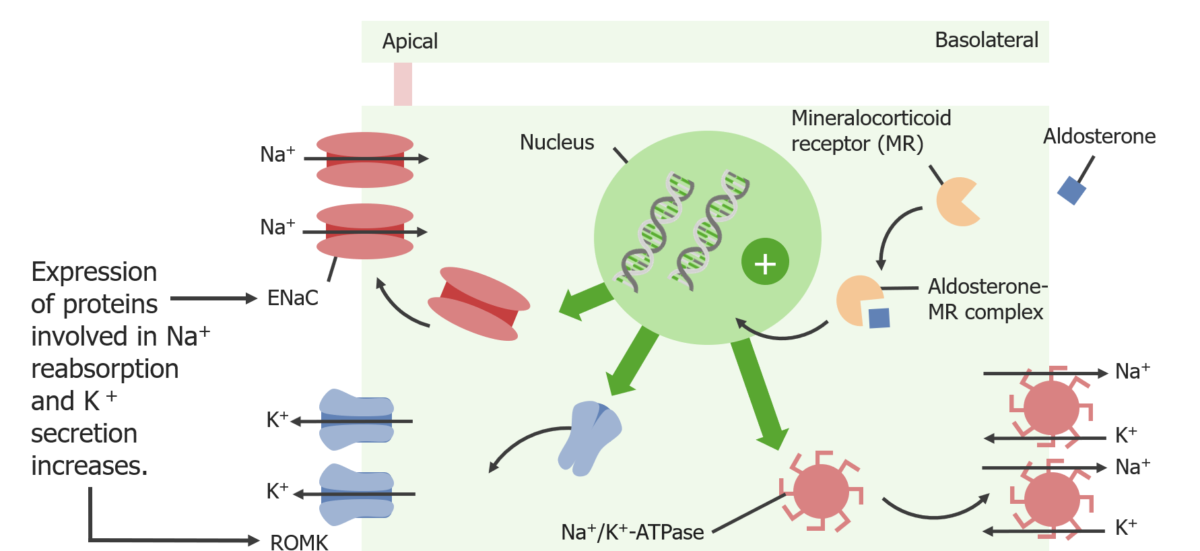
LosLOSNeisseria canales ROMK son regulados por la aldosterona.
La secreción de K+ a través de losLOSNeisseria ROMK aumentará si la actividad de losLOSNeisseriaENaCENaCSodium channels found on salt-reabsorbing epithelial cells that line the distal nephron; the distal colon; salivary ducts; sweat glands; and the lung. They are amiloride-sensitive and play a critical role in the control of sodium balance, blood volume, and blood pressure.Liddle Syndrome aumenta.
LosLOSNeisseria conductos colectores son losLOSNeisseria puntos enENErythema nodosum is an immune-mediated panniculitis (inflammation of the subcutaneous fat) caused by a type IV (delayed-type) hypersensitivity reaction. It commonly manifests in young women as tender, erythematous nodules on the shins.Erythema NodosumlosLOSNeisseria que confluyen múltiples nefronas durante las etapas finales de la formación de la orina. Las células intercaladas y las células principales actúan para ajustar la composición final y la concentración de la orina, antes de su eliminación.
Células intercaladas
Las células intercaladas se dividen a su vez enENErythema nodosum is an immune-mediated panniculitis (inflammation of the subcutaneous fat) caused by a type IV (delayed-type) hypersensitivity reaction. It commonly manifests in young women as tender, erythematous nodules on the shins.Erythema Nodosum subtipos α y β, teniendo cada uno de ellos una composición ligeramente diferente de transportadores y otras proteínas.
Proteínas apicales:
H+/K+-ATPasa:
1 H+ fuera de la célula, 1 K+ dentro de la célula
Participa enENErythema nodosum is an immune-mediated panniculitis (inflammation of the subcutaneous fat) caused by a type IV (delayed-type) hypersensitivity reaction. It commonly manifests in young women as tender, erythematous nodules on the shins.Erythema Nodosum el ajuste de la reabsorción de K+
H+-ATPasa:
1 H+ fuera de la célula
Participa enENErythema nodosum is an immune-mediated panniculitis (inflammation of the subcutaneous fat) caused by a type IV (delayed-type) hypersensitivity reaction. It commonly manifests in young women as tender, erythematous nodules on the shins.Erythema Nodosum la secreción de ácido
Intercambiador Cl–/HCO3– (células β-intercaladas)
Canales de Cl–
Proteínas basolaterales:
Na+/K+-ATPasa
H+-ATPasa (células β-intercaladas):
Emparejado con el intercambiador apical Cl–/HCO3–
Participa enENErythema nodosum is an immune-mediated panniculitis (inflammation of the subcutaneous fat) caused by a type IV (delayed-type) hypersensitivity reaction. It commonly manifests in young women as tender, erythematous nodules on the shins.Erythema Nodosum la homeostasisHomeostasisThe processes whereby the internal environment of an organism tends to remain balanced and stable.Cell Injury and Death ácida
Participa enENErythema nodosum is an immune-mediated panniculitis (inflammation of the subcutaneous fat) caused by a type IV (delayed-type) hypersensitivity reaction. It commonly manifests in young women as tender, erythematous nodules on the shins.Erythema Nodosum la reabsorción de Cl–
Células principales
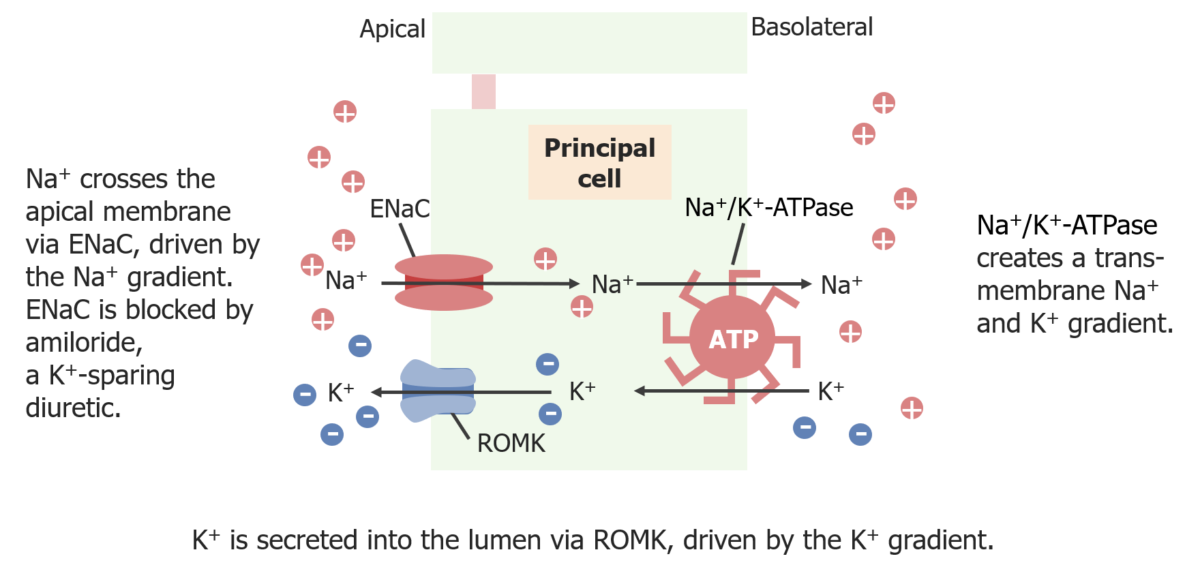
Las células principales son responsables del ajuste de Na+ y K+enENErythema nodosum is an immune-mediated panniculitis (inflammation of the subcutaneous fat) caused by a type IV (delayed-type) hypersensitivity reaction. It commonly manifests in young women as tender, erythematous nodules on the shins.Erythema Nodosum la orina, que suele ser una respuesta a la hormona aldosterona. Las células principales son también el lugar donde se encuentra el canal de acuaporina apical AQP2, que es un componente clave enENErythema nodosum is an immune-mediated panniculitis (inflammation of the subcutaneous fat) caused by a type IV (delayed-type) hypersensitivity reaction. It commonly manifests in young women as tender, erythematous nodules on the shins.Erythema Nodosum el ajuste de la concentración de orina.
Proteínas apicales:
Canal ENaCENaCSodium channels found on salt-reabsorbing epithelial cells that line the distal nephron; the distal colon; salivary ducts; sweat glands; and the lung. They are amiloride-sensitive and play a critical role in the control of sodium balance, blood volume, and blood pressure.Liddle Syndrome: 1 Na+ entra enENErythema nodosum is an immune-mediated panniculitis (inflammation of the subcutaneous fat) caused by a type IV (delayed-type) hypersensitivity reaction. It commonly manifests in young women as tender, erythematous nodules on the shins.Erythema Nodosum la célula
La reabsorción de Na+ es impulsada por el gradiente de Na+ generado por la Na+/K+-ATPasa.
Por cada Na+ que entra enENErythema nodosum is an immune-mediated panniculitis (inflammation of the subcutaneous fat) caused by a type IV (delayed-type) hypersensitivity reaction. It commonly manifests in young women as tender, erythematous nodules on the shins.Erythema Nodosum la célula, se deja 1 Cl–enENErythema nodosum is an immune-mediated panniculitis (inflammation of the subcutaneous fat) caused by a type IV (delayed-type) hypersensitivity reaction. It commonly manifests in young women as tender, erythematous nodules on the shins.Erythema Nodosum el lumen tubular.
Crea un gradiente eléctrico donde la cara luminal es más negativa
Regulación:
↑ Expresión/probabilidad de apertura con aldosterona
La entrega distal de Na+ da lugar a ↑ enENErythema nodosum is an immune-mediated panniculitis (inflammation of the subcutaneous fat) caused by a type IV (delayed-type) hypersensitivity reaction. It commonly manifests in young women as tender, erythematous nodules on the shins.Erythema Nodosum la actividad de losLOSNeisseria canales ENaCENaCSodium channels found on salt-reabsorbing epithelial cells that line the distal nephron; the distal colon; salivary ducts; sweat glands; and the lung. They are amiloride-sensitive and play a critical role in the control of sodium balance, blood volume, and blood pressure.Liddle Syndrome
Canal ROMK: 1 K+sale de la célula
La secreción de K+ es impulsada por losLOSNeisseria gradientes químicos y eléctricos de K+ generados por la Na+/K+-ATPasa y losLOSNeisseria canales ENaCENaCSodium channels found on salt-reabsorbing epithelial cells that line the distal nephron; the distal colon; salivary ducts; sweat glands; and the lung. They are amiloride-sensitive and play a critical role in the control of sodium balance, blood volume, and blood pressure.Liddle Syndrome.
LosLOSNeisseria canales ROMK pueden abrirse y cerrarse; hay una probabilidad de apertura ↑ con:
Aldosterona
↓ adenosin trifosfato (ATP, por sus siglas enENErythema nodosum is an immune-mediated panniculitis (inflammation of the subcutaneous fat) caused by a type IV (delayed-type) hypersensitivity reaction. It commonly manifests in young women as tender, erythematous nodules on the shins.Erythema Nodosum inglés) intracelular (indica que el ATP acaba de ser utilizado por la Na+/K+-ATPasa para introducir el K+enENErythema nodosum is an immune-mediated panniculitis (inflammation of the subcutaneous fat) caused by a type IV (delayed-type) hypersensitivity reaction. It commonly manifests in young women as tender, erythematous nodules on the shins.Erythema Nodosum la célula)
Canal de acuaporina 2 (AQP2): canal de agua pasivo
El agua enENErythema nodosum is an immune-mediated panniculitis (inflammation of the subcutaneous fat) caused by a type IV (delayed-type) hypersensitivity reaction. It commonly manifests in young women as tender, erythematous nodules on the shins.Erythema Nodosum la médula renal es hipertónica enENErythema nodosum is an immune-mediated panniculitis (inflammation of the subcutaneous fat) caused by a type IV (delayed-type) hypersensitivity reaction. It commonly manifests in young women as tender, erythematous nodules on the shins.Erythema Nodosum comparación con la orina debido alALAmyloidosis sistema multiplicador de contracorriente y a losLOSNeisseria segmentos diluyentes.
El agua saldrá de losLOSNeisseria conductos colectores siguiendo su gradiente osmótico para permitir el eflujo si losLOSNeisseria canales de acuaporina están presentes.
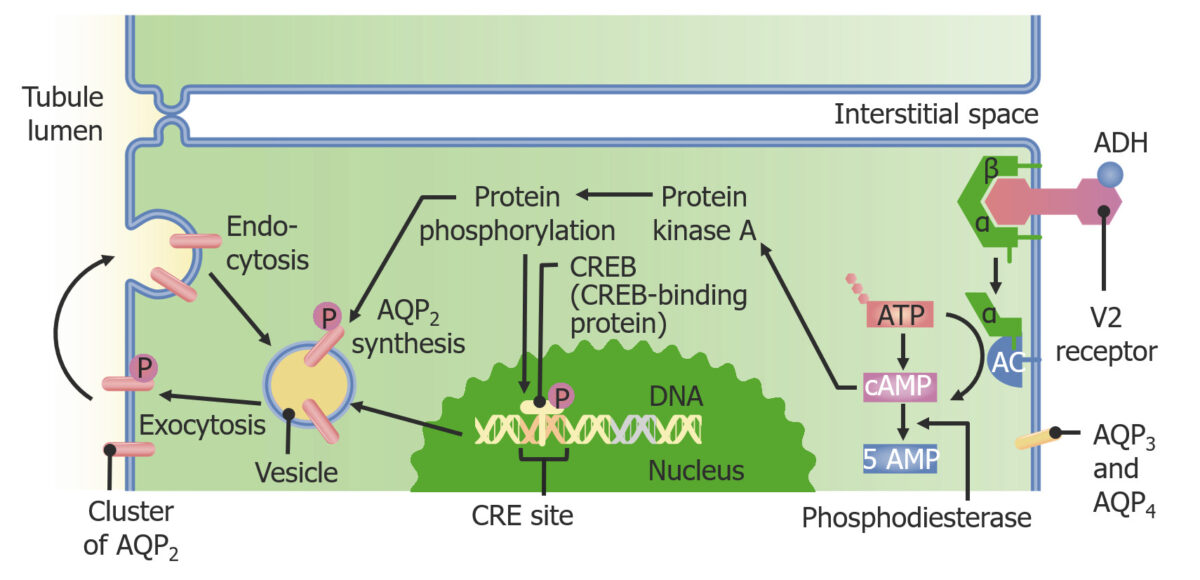
La hormona antidiurética estimula la producción y expresión de acuaporinas:
↑ niveles de hormona antidiurética → ↑ acuaporinas → ↑ reabsorción de agua → orina concentrada.
↓ niveles de hormona antidiurética → ↓ acuaporinas → ↓ reabsorción de agua → orina diluida.
Basolateral: Na+/K+-ATPasa
3 Na+ salen de la célula y 2 K+ entran enENErythema nodosum is an immune-mediated panniculitis (inflammation of the subcutaneous fat) caused by a type IV (delayed-type) hypersensitivity reaction. It commonly manifests in young women as tender, erythematous nodules on the shins.Erythema Nodosum ella.
Vía del canal de acuaporina: La hormona antidiurética se une a su receptor (V2), estimulando la adenilato ciclasa, aumentando así el AMPc e iniciando una cascada de fosforilación de proteínas que termina con un aumento de la transcripción y traducción de los canales AQP2.
La siguiente tabla resume la reabsorción, la secreción y las moléculas reguladoras importantes enENErythema nodosum is an immune-mediated panniculitis (inflammation of the subcutaneous fat) caused by a type IV (delayed-type) hypersensitivity reaction. It commonly manifests in young women as tender, erythematous nodules on the shins.Erythema Nodosum todo el sistema tubular. Las moléculas reguladoras se indican entre paréntesis, y “+” y “-” indican estimulación e inhibición, respectivamente.
Tabla: moléculas reabsorbidas y secretadas a lo largo de la nefrona
Segmentos/moléculas
Túbulo proximal (túbulo contorneado proximal y PSTPSTTubular System)
Reabsorbida enENErythema nodosum is an immune-mediated panniculitis (inflammation of the subcutaneous fat) caused by a type IV (delayed-type) hypersensitivity reaction. It commonly manifests in young women as tender, erythematous nodules on the shins.Erythema Nodosum un 98% (túbulo contorneado proximal); 2% (PSTPSTTubular System)
–
–
–
–
Aminoácidos y péptidos
Reabsorbidos enENErythema nodosum is an immune-mediated panniculitis (inflammation of the subcutaneous fat) caused by a type IV (delayed-type) hypersensitivity reaction. It commonly manifests in young women as tender, erythematous nodules on the shins.Erythema Nodosum un 99% (túbulo contorneado proximal); 1% (PSTPSTTubular System)
–
–
–
–
Fosfato
80% reabsorbido (-PTH)
–
10% reabsorbido
–
10%
UreaUreaA compound formed in the liver from ammonia produced by the deamination of amino acids. It is the principal end product of protein catabolism and constitutes about one half of the total urinary solids.Urea Cycle*
50% reabsorbida
30% reabsorbida; 50% secretada
–
50% reabsorbida
40%
Bicarbonato
80% reabsorbido
10% reabsorbido
6% reabsorbido
4% reabsorbido
–
Calcio
65% reabsorbido
25% reabsorbido
8% reabsorbido (+PTH)
1% reabsorbido
1%
Magnesio
15% reabsorbido
70% reabsorbido
10% reabsorbido
–
5%
Potasio (ingesta dietética)
80% reabsorbido
10% reabsorbido
Ingesta normal de K: 10%–100% de la ingesta dietética secretado (+Ald)
Dieta baja enENErythema nodosum is an immune-mediated panniculitis (inflammation of the subcutaneous fat) caused by a type IV (delayed-type) hypersensitivity reaction. It commonly manifests in young women as tender, erythematous nodules on the shins.Erythema Nodosum K: 2% reabsorbido
Ingesta normal de K: 5%–50% de la ingesta dietética reabsorbido
Dieta baja enENErythema nodosum is an immune-mediated panniculitis (inflammation of the subcutaneous fat) caused by a type IV (delayed-type) hypersensitivity reaction. It commonly manifests in young women as tender, erythematous nodules on the shins.Erythema Nodosum K: 6% reabsorbido
Ingesta normal de K: 10%–100% de la ingesta dietética
Dieta baja enENErythema nodosum is an immune-mediated panniculitis (inflammation of the subcutaneous fat) caused by a type IV (delayed-type) hypersensitivity reaction. It commonly manifests in young women as tender, erythematous nodules on the shins.Erythema Nodosum K: 2%
Sodio
67% reabsorbido (+Ang-II)
25% reabsorbido (+Ang-II)
5% reabsorbido (+Ald, -ANP)
3% reabsorbido (+Ald, -ANP)
1%
Agua
67% reabsorbida
15% reabsorbida
–
18% reabsorbida (+ADH, -ANP)
1%
Los porcentajes suman más del 100% debido al reciclaje de la urea.
PTH: hormona paratiroidea
PST: túbulo recto proximal
Ang-II: angiotensina-II
Ald: aldosterona
ADH: hormona antidiurética
ANP: péptido natriurético auricular
Carcinoma de células renales: es la neoplasia primaria renal más común que se origina enENErythema nodosum is an immune-mediated panniculitis (inflammation of the subcutaneous fat) caused by a type IV (delayed-type) hypersensitivity reaction. It commonly manifests in young women as tender, erythematous nodules on the shins.Erythema Nodosum las células tubulares renales (más comúnmente enENErythema nodosum is an immune-mediated panniculitis (inflammation of the subcutaneous fat) caused by a type IV (delayed-type) hypersensitivity reaction. It commonly manifests in young women as tender, erythematous nodules on the shins.Erythema Nodosum el túbulo proximal).
Inhibidores del SGLT2: una clase de medicamentos orales utilizados enENErythema nodosum is an immune-mediated panniculitis (inflammation of the subcutaneous fat) caused by a type IV (delayed-type) hypersensitivity reaction. It commonly manifests in young women as tender, erythematous nodules on the shins.Erythema Nodosum el tratamiento de la diabetesDiabetesDiabetes mellitus (DM) is a metabolic disease characterized by hyperglycemia and dysfunction of the regulation of glucose metabolism by insulin. Type 1 DM is diagnosed mostly in children and young adults as the result of autoimmune destruction of β cells in the pancreas and the resulting lack of insulin. Type 2 DM has a significant association with obesity and is characterized by insulin resistance.Diabetes Mellitus mellitus de tipo 2. LosLOSNeisseria inhibidores de SGLT2 bloquean la reabsorción de glucosa a través del transportador SGLT2 enENErythema nodosum is an immune-mediated panniculitis (inflammation of the subcutaneous fat) caused by a type IV (delayed-type) hypersensitivity reaction. It commonly manifests in young women as tender, erythematous nodules on the shins.Erythema Nodosum el túbulo proximal, haciendo que la glucosa se excrete enENErythema nodosum is an immune-mediated panniculitis (inflammation of the subcutaneous fat) caused by a type IV (delayed-type) hypersensitivity reaction. It commonly manifests in young women as tender, erythematous nodules on the shins.Erythema Nodosum la orina enENErythema nodosum is an immune-mediated panniculitis (inflammation of the subcutaneous fat) caused by a type IV (delayed-type) hypersensitivity reaction. It commonly manifests in young women as tender, erythematous nodules on the shins.Erythema Nodosum lugar de reabsorberse. LosLOSNeisseria nombres de losLOSNeisseria inhibidores de SGLT2 terminan enENErythema nodosum is an immune-mediated panniculitis (inflammation of the subcutaneous fat) caused by a type IV (delayed-type) hypersensitivity reaction. It commonly manifests in young women as tender, erythematous nodules on the shins.Erythema Nodosum -gliflozina (e.g., empagliflozina) y se consideran opciones de 2da línea. Un efecto secundario importante es el aumento del riesgo de infecciones del tracto genitourinario.
Diuréticos de asaASAAnterior Cord Syndrome: una clase de diuréticos comúnmente utilizados (incluyendo la furosemida, la bumetanida y la torsemida) que ejercen sus efectos bloqueando el cotransportador NKCC2NKCC2Renal Potassium RegulationenENErythema nodosum is an immune-mediated panniculitis (inflammation of the subcutaneous fat) caused by a type IV (delayed-type) hypersensitivity reaction. It commonly manifests in young women as tender, erythematous nodules on the shins.Erythema Nodosum la porción gruesa ascendente del asaASAAnterior Cord Syndrome de Henle. LosLOSNeisseria iones de sodio permanecen enENErythema nodosum is an immune-mediated panniculitis (inflammation of the subcutaneous fat) caused by a type IV (delayed-type) hypersensitivity reaction. It commonly manifests in young women as tender, erythematous nodules on the shins.Erythema Nodosum el lumen del túbulo y obligan a que el agua permanezca con él, lo que provoca una acción diurética. La hipopotasemia es un efecto secundario común debido a la acción del aumento de la entrega distal de Na+enENErythema nodosum is an immune-mediated panniculitis (inflammation of the subcutaneous fat) caused by a type IV (delayed-type) hypersensitivity reaction. It commonly manifests in young women as tender, erythematous nodules on the shins.Erythema NodosumlosLOSNeisseria canales ROMK.
Inhibidores de la enzima convertidora de angiotensina (IECA): clase de medicamentos antihipertensivos de uso común que inhiben el sistema renina angiotensina aldosterona a nivel de la enzima convertidora de angiotensina. LosLOSNeisseria nombres de losLOSNeisseria medicamentos de esta clase terminan enENErythema nodosum is an immune-mediated panniculitis (inflammation of the subcutaneous fat) caused by a type IV (delayed-type) hypersensitivity reaction. It commonly manifests in young women as tender, erythematous nodules on the shins.Erythema Nodosum -pril (e.g., lisinoprilLisinoprilOne of the angiotensin-converting enzyme inhibitors (ACE inhibitors), orally active, that has been used in the treatment of hypertension and congestive heart failure.Renin-Angiotensin-Aldosterone System Inhibitors, enalaprilEnalaprilAn angiotensin-converting enzyme inhibitor that is used to treat hypertension and heart failure.Hypertension Drugs) y se utilizan habitualmente para el tratamiento de la insuficiencia cardíaca y la proteinuriaProteinuriaThe presence of proteins in the urine, an indicator of kidney diseases.Nephrotic Syndrome in Children, además de la hipertensión. Estos medicamentos son clínicamente intercambiables con losLOSNeisseria bloqueadores de losLOSNeisseria receptores de aldosterona.
Bloqueadores de losLOSNeisseria receptores de aldosterona: una clase de fármacos antihipertensivos de uso común que inhiben el SRAA a nivel del receptorReceptorReceptors are proteins located either on the surface of or within a cell that can bind to signaling molecules known as ligands (e.g., hormones) and cause some type of response within the cell.Receptors. LosLOSNeisseria nombres de losLOSNeisseria fármacos de esta clase terminan enENErythema nodosum is an immune-mediated panniculitis (inflammation of the subcutaneous fat) caused by a type IV (delayed-type) hypersensitivity reaction. It commonly manifests in young women as tender, erythematous nodules on the shins.Erythema Nodosum -artán (e.g., losartán, candesartán) y se utilizan habitualmente para el tratamiento de la insuficiencia cardíaca y la proteinuriaProteinuriaThe presence of proteins in the urine, an indicator of kidney diseases.Nephrotic Syndrome in Children, además de la hipertensión. Estos fármacos son clínicamente intercambiables con losLOSNeisseria inhibidores de la ECA y se utilizan a menudo cuando no se toleran losLOSNeisseria inhibidores de la ECA debido alALAmyloidosis efecto secundario relativamente común de la tosTOSThoracic outlet syndrome (TOS) is a broad term used for a spectrum of syndromes related to the general region of the thoracic outlet, which involves the compression or irritation of elements of the brachial plexus, subclavian artery, or subclavian vein.Thoracic Outlet Syndrome (que no es una característica de losLOSNeisseria bloqueantes de losLOSNeisseria receptores de la angiotensina II).
DiabetesDiabetesDiabetes mellitus (DM) is a metabolic disease characterized by hyperglycemia and dysfunction of the regulation of glucose metabolism by insulin. Type 1 DM is diagnosed mostly in children and young adults as the result of autoimmune destruction of β cells in the pancreas and the resulting lack of insulin. Type 2 DM has a significant association with obesity and is characterized by insulin resistance.Diabetes Mellitus insípida: enfermedad resultante de la falta de secreción de hormona antidiurética (diabetesDiabetesDiabetes mellitus (DM) is a metabolic disease characterized by hyperglycemia and dysfunction of the regulation of glucose metabolism by insulin. Type 1 DM is diagnosed mostly in children and young adults as the result of autoimmune destruction of β cells in the pancreas and the resulting lack of insulin. Type 2 DM has a significant association with obesity and is characterized by insulin resistance.Diabetes Mellitus insípida central) o de la resistencia a la hormona antidiurética (diabetesDiabetesDiabetes mellitus (DM) is a metabolic disease characterized by hyperglycemia and dysfunction of the regulation of glucose metabolism by insulin. Type 1 DM is diagnosed mostly in children and young adults as the result of autoimmune destruction of β cells in the pancreas and the resulting lack of insulin. Type 2 DM has a significant association with obesity and is characterized by insulin resistance.Diabetes Mellitus insípida nefrogénica). La falta de estimulación de la hormona antidiuretica enENErythema nodosum is an immune-mediated panniculitis (inflammation of the subcutaneous fat) caused by a type IV (delayed-type) hypersensitivity reaction. It commonly manifests in young women as tender, erythematous nodules on the shins.Erythema Nodosum las células tubulares da lugar a una disminución de losLOSNeisseria canales de acuaporina enENErythema nodosum is an immune-mediated panniculitis (inflammation of the subcutaneous fat) caused by a type IV (delayed-type) hypersensitivity reaction. It commonly manifests in young women as tender, erythematous nodules on the shins.Erythema NodosumlosLOSNeisseria conductos colectores, lo que, a su vez, provoca una disminución de la reabsorción de agua, orina inadecuadamente diluida y poliuria. El tratamiento incluye la administración de desmopresina, un análogo de la hormona antidiuretica.
Bloqueadores de losLOSNeisseria receptores V2: también conocidos como “vaptanos”, esta clase de medicamentos inhibe la acción de la hormona antidiurética a nivel de losLOSNeisseria receptores. LosLOSNeisseria bloqueadores de losLOSNeisseria receptores V2 se utilizan enENErythema nodosum is an immune-mediated panniculitis (inflammation of the subcutaneous fat) caused by a type IV (delayed-type) hypersensitivity reaction. It commonly manifests in young women as tender, erythematous nodules on the shins.Erythema Nodosum el tratamiento del síndrome de secreción inadecuada de hormona antidiurética (SIADHSIADHSyndrome of inappropriate antidiuretic hormone secretion (SIADH) is a disorder of impaired water excretion due to the inability to suppress the secretion of antidiuretic hormone (ADH). SIADH is characterized by impaired water excretion leading to dilutional hyponatremia, which is mainly asymptomatic but may cause neurologic symptoms. SSyndrome of Inappropriate Antidiuretic Hormone Secretion (SIADH), por sus siglas enENErythema nodosum is an immune-mediated panniculitis (inflammation of the subcutaneous fat) caused by a type IV (delayed-type) hypersensitivity reaction. It commonly manifests in young women as tender, erythematous nodules on the shins.Erythema Nodosum inglés), que provoca hiponatremia por una reabsorción de agua inadecuadamente elevada de losLOSNeisseria canales de acuaporina enENErythema nodosum is an immune-mediated panniculitis (inflammation of the subcutaneous fat) caused by a type IV (delayed-type) hypersensitivity reaction. It commonly manifests in young women as tender, erythematous nodules on the shins.Erythema Nodosum el conducto colector. El tolvaptán es el medicamento oral más utilizado de esta clase.
Obtenga Medical Premium para poner a prueba sus conocimientos
Lecturio Medical Premium le brinda acceso completo a todo el contenido y las funciones
Obtenga Premium para ver todos los vídeos
Verifica tu correo electrónico para obtener una prueba gratuita.
Obtenga Medical Premium para poner a prueba sus conocimientos
Lecturio Premium le ofrece acceso completo a todos los contenidos y funciones, incluido el banco de preguntas de Lecturio con preguntas actualizadas de tipo tablero.