Domina Conceptos Médicos

Estudia para la escuela de medicina y tus examenes con Lecturio.

Digestión y Absorción de los Carbohidratos

Los LOS Neisseria carbohidratos almacenan energía y son uno de los LOS Neisseria 3 macronutrientes principales (además de las proteínas y los LOS Neisseria lípidos). Los LOS Neisseria carbohidratos están presentes en EN Erythema nodosum is an immune-mediated panniculitis (inflammation of the subcutaneous fat) caused by a type IV (delayed-type) hypersensitivity reaction. It commonly manifests in young women as tender, erythematous nodules on the shins. Erythema Nodosum numerosos alimentos, como los LOS Neisseria cereales, las frutas, las legumbres y muchas verduras. Los LOS Neisseria polisacáridos, sobre todo en EN Erythema nodosum is an immune-mediated panniculitis (inflammation of the subcutaneous fat) caused by a type IV (delayed-type) hypersensitivity reaction. It commonly manifests in young women as tender, erythematous nodules on the shins. Erythema Nodosum forma de almidón, son la principal fuente dietética de carbohidratos para el ser humano. Para ser utilizados como energía por los LOS Neisseria seres humanos, la mayoría de los LOS Neisseria carbohidratos deben ser digeridos (descompuestos) en EN Erythema nodosum is an immune-mediated panniculitis (inflammation of the subcutaneous fat) caused by a type IV (delayed-type) hypersensitivity reaction. It commonly manifests in young women as tender, erythematous nodules on the shins. Erythema Nodosum monosacáridos que puedan ser absorbidos y luego metabolizados. La digestión de los LOS Neisseria carbohidratos comienza en EN Erythema nodosum is an immune-mediated panniculitis (inflammation of the subcutaneous fat) caused by a type IV (delayed-type) hypersensitivity reaction. It commonly manifests in young women as tender, erythematous nodules on the shins. Erythema Nodosum la boca con la acción de las amilasas salivales. El resto del almidón es descompuesto por la amilasa pancreática y las enzimas del borde en EN Erythema nodosum is an immune-mediated panniculitis (inflammation of the subcutaneous fat) caused by a type IV (delayed-type) hypersensitivity reaction. It commonly manifests in young women as tender, erythematous nodules on the shins. Erythema Nodosum cepillo de los LOS Neisseria enterocitos en EN Erythema nodosum is an immune-mediated panniculitis (inflammation of the subcutaneous fat) caused by a type IV (delayed-type) hypersensitivity reaction. It commonly manifests in young women as tender, erythematous nodules on the shins. Erythema Nodosum los LOS Neisseria intestinos. La oxidación de 1 g de carbohidratos proporciona 4 kcal de energía

Last updated: Apr 25, 2025

Editorial responsibility: Stanley Oiseth, Lindsay Jones, Evelin Maza

Revisión de la Estructura de los Carbohidratos

Clasificación

Table: Clasificación de los LOS Neisseria carbohidratos según su tamaño
Nombre Definición Ejemplos en EN Erythema nodosum is an immune-mediated panniculitis (inflammation of the subcutaneous fat) caused by a type IV (delayed-type) hypersensitivity reaction. It commonly manifests in young women as tender, erythematous nodules on the shins. Erythema Nodosum humanos
Monosacáridos Moléculas formadas por un solo grupo de azúcares
  • Glucosa
  • Galactosa
  • Fructosa
    Disacáridos Una combinación de 2 monosacáridos
    • Maltosa (glucosa + glucosa)
    • Lactosa (glucosa + galactosa)
    • Sacarosa (glucosa + fructosa)
      Oligosacáridos Una combinación de 3‒10 monosacáridos Usualmente unidos a:
      • Proteínas (formando glicoproteínas)
      • Lípidos (formando glicolípidos)
        Polisacáridoss Una combinación de > 10 monosacáridos
        • Glucógeno
        • Celulosa
        • Glicosaminoglicanos (GAGs)
        • Almidón (una combinación of 2 polisacáridos: amilosa y amilopectina)

          Enlaces glicosídicos

          • Conectan una molécula de azúcar con algo más
          • Enlaces covalentes entre:
            • El grupo -OH del carbono anomérico (normalmente C1) de un azúcar
            • El grupo -OH de otro compuesto (puede ser una molécula de azúcar u otra molécula)
          • La formación del enlace da lugar a la pérdida de H₂O
          • Se denomina así en EN Erythema nodosum is an immune-mediated panniculitis (inflammation of the subcutaneous fat) caused by a type IV (delayed-type) hypersensitivity reaction. It commonly manifests in young women as tender, erythematous nodules on the shins. Erythema Nodosum función de los LOS Neisseria carbonos unidos y del anomerismo del carbono anomérico
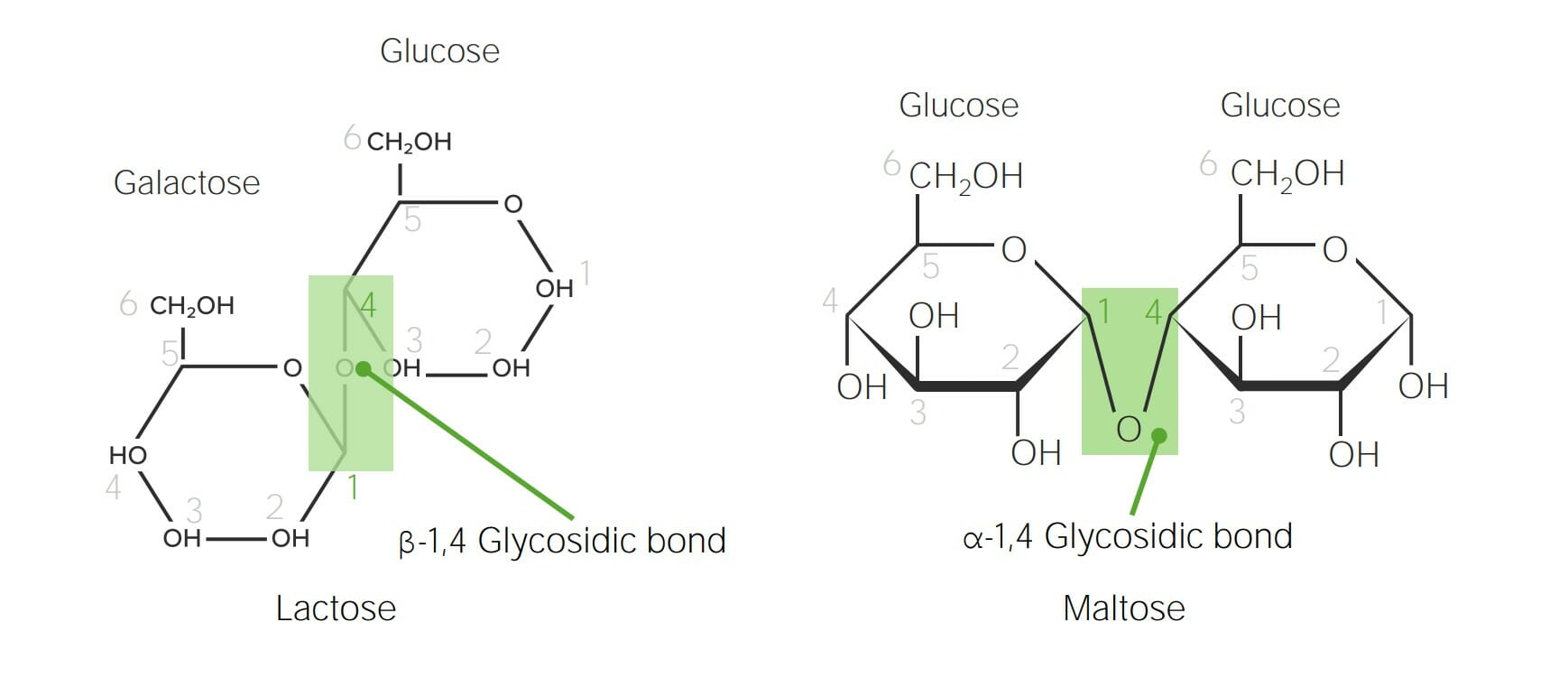
            • E.g, los LOS Neisseria enlaces α-1,4-glicosídicos unen el carbono C1 (anomérico) del primer sacárido (cuyo grupo hidroxilo estaba orientado en EN Erythema nodosum is an immune-mediated panniculitis (inflammation of the subcutaneous fat) caused by a type IV (delayed-type) hypersensitivity reaction. It commonly manifests in young women as tender, erythematous nodules on the shins. Erythema Nodosum la configuración α) con el grupo hidroxilo del carbono C4 del siguiente sacárido
          Chemical structure of lactose and maltose demonstrating α versus β glycosidic bonds

          Estructura química de la lactosa y la maltosa que demuestra los enlaces glicosídicos α versus los β:
          En la lactosa, el carbono anomérico de la galactosa (C1) está en la configuración β (el grupo hidroxilo apunta hacia arriba); por lo tanto, cuando la galactosa se une al C4 de la glucosa, se forma un enlace β-1,4-glicosídico. La maltosa está formada por 2 moléculas de glucosa. El carbono anomérico de la glucosa (C1) tiene la configuración α (el grupo hidroxilo apunta hacia abajo); por lo tanto, el enlace en la maltosa es un enlace α-1,4-glicosídico entre 2 moléculas de glucosa.

          Imagen por Lecturio.

          Digestión de los Carbohidratos

          Los LOS Neisseria carbohidratos son digeridos principalmente por las amilasas y las enzimas del borde en EN Erythema nodosum is an immune-mediated panniculitis (inflammation of the subcutaneous fat) caused by a type IV (delayed-type) hypersensitivity reaction. It commonly manifests in young women as tender, erythematous nodules on the shins. Erythema Nodosum cepillo de los LOS Neisseria enterocitos. Los LOS Neisseria carbohidratos solo pueden ser absorbidos como monosacáridos, por lo que estas enzimas rompen las grandes moléculas de almidón en EN Erythema nodosum is an immune-mediated panniculitis (inflammation of the subcutaneous fat) caused by a type IV (delayed-type) hypersensitivity reaction. It commonly manifests in young women as tender, erythematous nodules on the shins. Erythema Nodosum monosacáridos individuales.

          Nota: Muchos de los LOS Neisseria carbohidratos de la dieta se encuentran en EN Erythema nodosum is an immune-mediated panniculitis (inflammation of the subcutaneous fat) caused by a type IV (delayed-type) hypersensitivity reaction. It commonly manifests in young women as tender, erythematous nodules on the shins. Erythema Nodosum forma de almidón, que es una mezcla de amilosa y amilopectina (ambos están hechos completamente de moléculas de glucosa):
          • La amilosa es una cadena recta de moléculas de glucosa unidas por enlaces α-1,4 glicosídicos.
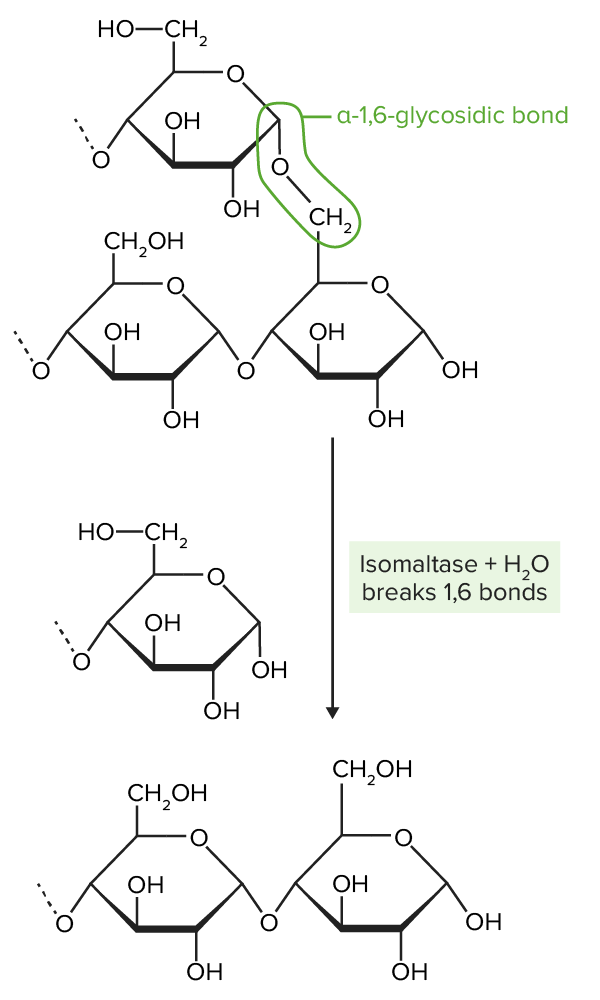
          • La amilopectina incluye numerosas ramificaciones formadas por enlaces α-1,6-glicosídicos.

          Amilasas

          • Escinden los LOS Neisseria enlaces α-1,4 glicosídicos entre las moléculas de azúcar
          • Crean cadenas de polisacáridos cada vez más pequeñas hasta que la mayoría de los LOS Neisseria enlaces α-1,4 glicosídicos se rompen dejando:
            • Monosacáridos
            • Disacáridos
            • Oligosacáridos
            • Almidones indigeribles (azúcares unidos por otro tipo de enlaces)
          • Activas a mayor pH pH The quantitative measurement of the acidity or basicity of a solution. Acid-Base Balance:
            • Activas en EN Erythema nodosum is an immune-mediated panniculitis (inflammation of the subcutaneous fat) caused by a type IV (delayed-type) hypersensitivity reaction. It commonly manifests in young women as tender, erythematous nodules on the shins. Erythema Nodosum la boca y el intestino delgado
            • Inactivadas en EN Erythema nodosum is an immune-mediated panniculitis (inflammation of the subcutaneous fat) caused by a type IV (delayed-type) hypersensitivity reaction. It commonly manifests in young women as tender, erythematous nodules on the shins. Erythema Nodosum el estómago
          • Tipos y localización de las amilasas:
            • Amilasa salival: segregada en EN Erythema nodosum is an immune-mediated panniculitis (inflammation of the subcutaneous fat) caused by a type IV (delayed-type) hypersensitivity reaction. It commonly manifests in young women as tender, erythematous nodules on the shins. Erythema Nodosum la boca por glándulas salivales
            • Amilasa pancreática: segregada en EN Erythema nodosum is an immune-mediated panniculitis (inflammation of the subcutaneous fat) caused by a type IV (delayed-type) hypersensitivity reaction. It commonly manifests in young women as tender, erythematous nodules on the shins. Erythema Nodosum el duodeno por el páncreas exocrino
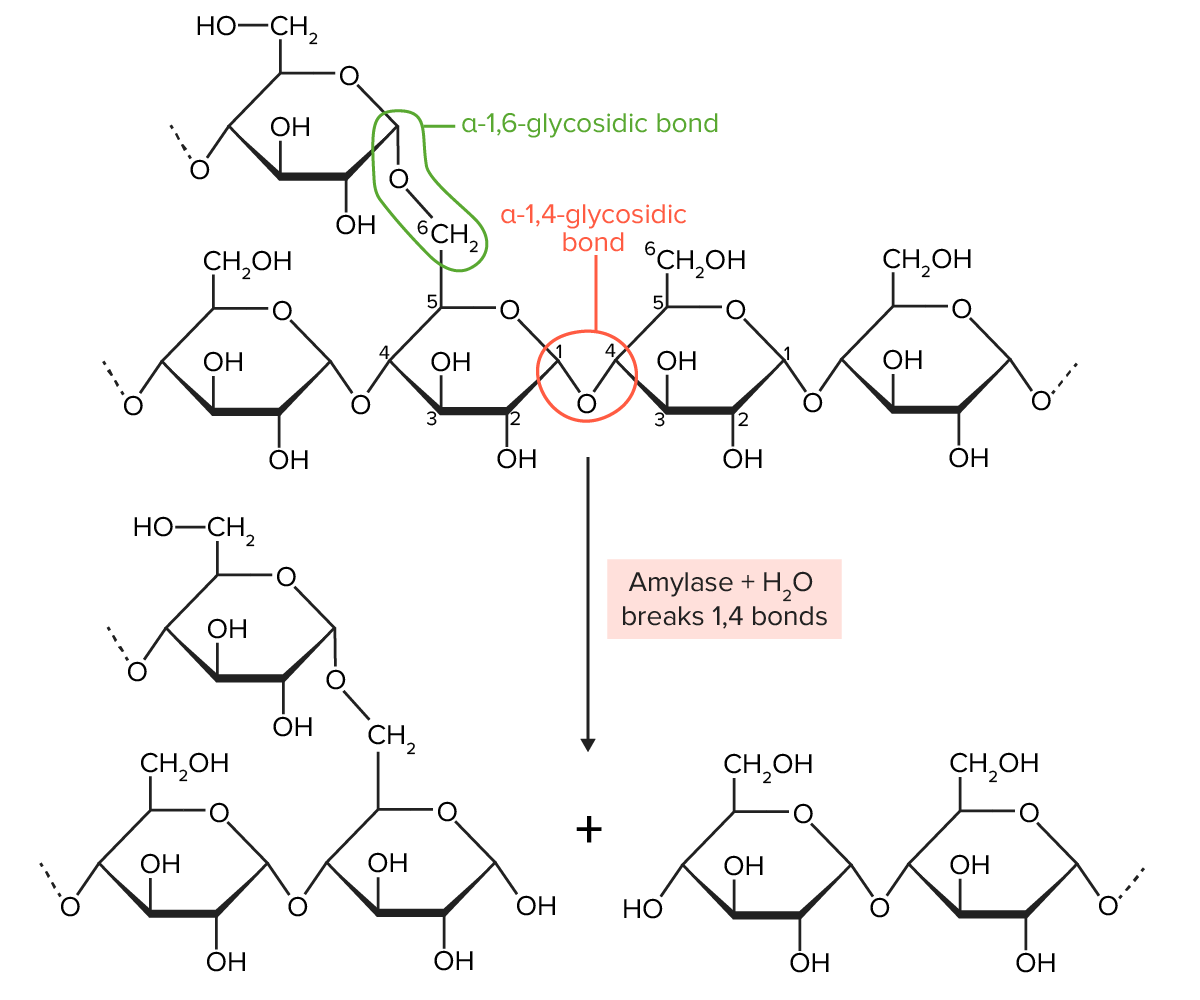
          Amylopectin is partially digested by amylase

          La amilopectina es parcialmente digerida por la amilasa. Las moléculas de amilopectina son cadenas de glucosa, unidas por enlaces α-1,4-glicosídicos (crean una cadena recta de moléculas de glucosa) y enlaces α-1,6-glicosídicos (crean una ramificación de la cadena recta). La amilasa rompe los enlaces α-1,4-glicosídicos.

          Imagen por Lecturio.

          Enzimas del borde en EN Erythema nodosum is an immune-mediated panniculitis (inflammation of the subcutaneous fat) caused by a type IV (delayed-type) hypersensitivity reaction. It commonly manifests in young women as tender, erythematous nodules on the shins. Erythema Nodosum cepillo de los LOS Neisseria enterocitos

          Las enzimas del borde en EN Erythema nodosum is an immune-mediated panniculitis (inflammation of the subcutaneous fat) caused by a type IV (delayed-type) hypersensitivity reaction. It commonly manifests in young women as tender, erythematous nodules on the shins. Erythema Nodosum cepillo son proteínas unidas a la membrana en EN Erythema nodosum is an immune-mediated panniculitis (inflammation of the subcutaneous fat) caused by a type IV (delayed-type) hypersensitivity reaction. It commonly manifests in young women as tender, erythematous nodules on the shins. Erythema Nodosum la superficie luminal de los LOS Neisseria enterocitos del intestino delgado. Hay 4 enzimas principales del borde en EN Erythema nodosum is an immune-mediated panniculitis (inflammation of the subcutaneous fat) caused by a type IV (delayed-type) hypersensitivity reaction. It commonly manifests in young women as tender, erythematous nodules on the shins. Erythema Nodosum cepillo que participan en EN Erythema nodosum is an immune-mediated panniculitis (inflammation of the subcutaneous fat) caused by a type IV (delayed-type) hypersensitivity reaction. It commonly manifests in young women as tender, erythematous nodules on the shins. Erythema Nodosum la digestión de los LOS Neisseria carbohidratos.
          • Isomaltasa: escinde los LOS Neisseria enlaces α-1,6-glicosídicos
          • Maltasa:
            • Divide la maltosa → glucosa + glucosa
            • Divide la maltotriosa → glucosa + glucosa + glucosa
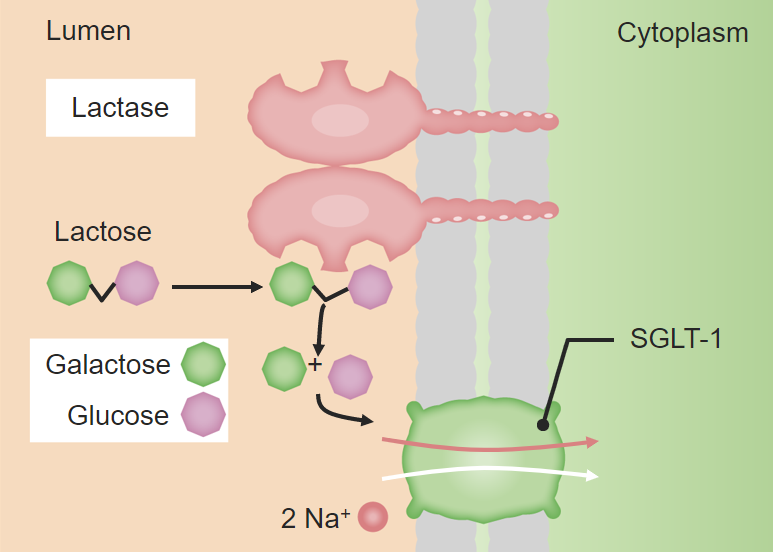
          • Lactasa: divide la lactosa → glucosa + galactosa
          • Sacarasa:
            • Divide la sacarosa → glucosa + fructosa
            • Divide otros pequeños oligosacáridos

          Absorción de los Carbohidratos

          Después de la digestión, los LOS Neisseria carbohidratos se absorben y se transportan a través de la sangre hacia la circulación portal. El transporte puede ser un mecanismo activo, facilitado o pasivo.

          • El transporte activo implica el uso de enzimas transportadoras, que utiliza energía para mover los LOS Neisseria carbohidratos a través de la membrana plasmática, incluso en EN Erythema nodosum is an immune-mediated panniculitis (inflammation of the subcutaneous fat) caused by a type IV (delayed-type) hypersensitivity reaction. It commonly manifests in young women as tender, erythematous nodules on the shins. Erythema Nodosum contra del gradiente de concentración.
          • La difusión facilitada ocurre a favor de gradientes de concentración con la ayuda adicional de enzimas transmembrana que no requieren energía.
          • La absorción pasiva mueve los LOS Neisseria azúcares por gradientes de concentración sin necesidad de soporte enzimática o de energía; es el mecanismo más lento.

          Los LOS Neisseria transportadores tienen roles específicos y sus funciones pueden ser activas, facilitadas o pasivas.

          • Transportador de sodio-glucosa 1 (SGLT1, por sus siglas en EN Erythema nodosum is an immune-mediated panniculitis (inflammation of the subcutaneous fat) caused by a type IV (delayed-type) hypersensitivity reaction. It commonly manifests in young women as tender, erythematous nodules on the shins. Erythema Nodosum inglés):
            • Se encuentra en EN Erythema nodosum is an immune-mediated panniculitis (inflammation of the subcutaneous fat) caused by a type IV (delayed-type) hypersensitivity reaction. It commonly manifests in young women as tender, erythematous nodules on the shins. Erythema Nodosum la membrana luminal de los LOS Neisseria enterocitos en EN Erythema nodosum is an immune-mediated panniculitis (inflammation of the subcutaneous fat) caused by a type IV (delayed-type) hypersensitivity reaction. It commonly manifests in young women as tender, erythematous nodules on the shins. Erythema Nodosum el intestino delgado
            • Funciones de transporte de glucosa y galactosa hacia los LOS Neisseria enterocitos
            • Se basa en EN Erythema nodosum is an immune-mediated panniculitis (inflammation of the subcutaneous fat) caused by a type IV (delayed-type) hypersensitivity reaction. It commonly manifests in young women as tender, erythematous nodules on the shins. Erythema Nodosum un gradiente de sodio activamente generado por una bomba ATPasa (bomba Na+/K+-ATPasa)
            • Transporta 2 sodios, 1 glucosa o galactosa y agua
          • Transportador de glucosa 2 ( GLUT2 GLUT2 A glucose transport facilitator that is expressed primarily in pancreatic beta cells; liver; and kidneys. It may function as a glucose sensor to regulate insulin release and glucose homeostasis. Digestion and Absorption, por sus siglas en EN Erythema nodosum is an immune-mediated panniculitis (inflammation of the subcutaneous fat) caused by a type IV (delayed-type) hypersensitivity reaction. It commonly manifests in young women as tender, erythematous nodules on the shins. Erythema Nodosum inglés)
            • Se encuentra en EN Erythema nodosum is an immune-mediated panniculitis (inflammation of the subcutaneous fat) caused by a type IV (delayed-type) hypersensitivity reaction. It commonly manifests in young women as tender, erythematous nodules on the shins. Erythema Nodosum riñón, hígado y páncreas y en EN Erythema nodosum is an immune-mediated panniculitis (inflammation of the subcutaneous fat) caused by a type IV (delayed-type) hypersensitivity reaction. It commonly manifests in young women as tender, erythematous nodules on the shins. Erythema Nodosum la membrana basolateral de los LOS Neisseria enterocitos en EN Erythema nodosum is an immune-mediated panniculitis (inflammation of the subcutaneous fat) caused by a type IV (delayed-type) hypersensitivity reaction. It commonly manifests in young women as tender, erythematous nodules on the shins. Erythema Nodosum el intestino delgado
            • Transporta los LOS Neisseria 3 monosacáridos principales (glucosa, galactosa y fructosa) por difusión facilitada
            • Con respecto a la absorción: GLUT2 GLUT2 A glucose transport facilitator that is expressed primarily in pancreatic beta cells; liver; and kidneys. It may function as a glucose sensor to regulate insulin release and glucose homeostasis. Digestion and Absorption mueve los LOS Neisseria monosacáridos fuera de los LOS Neisseria enterocitos y hacia el espacio intersticial.
            • La bidireccionalidad permite un cambio de función según las condiciones celulares.
          • GLUT5 GLUT5 A hexose transporter that mediates fructose transport in skeletal muscle and adipocytes and is responsible for luminal uptake of dietary fructose in the small intestine. Digestion and Absorption
            • Transporta fructosa a través de difusión facilitada

          La absorción pasiva de glucosa representa una minoría de las capacidades de absorción. La mayor parte de la absorción ocurre en EN Erythema nodosum is an immune-mediated panniculitis (inflammation of the subcutaneous fat) caused by a type IV (delayed-type) hypersensitivity reaction. It commonly manifests in young women as tender, erythematous nodules on the shins. Erythema Nodosum la 1ra parte del intestino delgado (duodeno, yeyuno).

          Orden de los LOS Neisseria acontecimientos en EN Erythema nodosum is an immune-mediated panniculitis (inflammation of the subcutaneous fat) caused by a type IV (delayed-type) hypersensitivity reaction. It commonly manifests in young women as tender, erythematous nodules on the shins. Erythema Nodosum la absorción de monosacáridos:
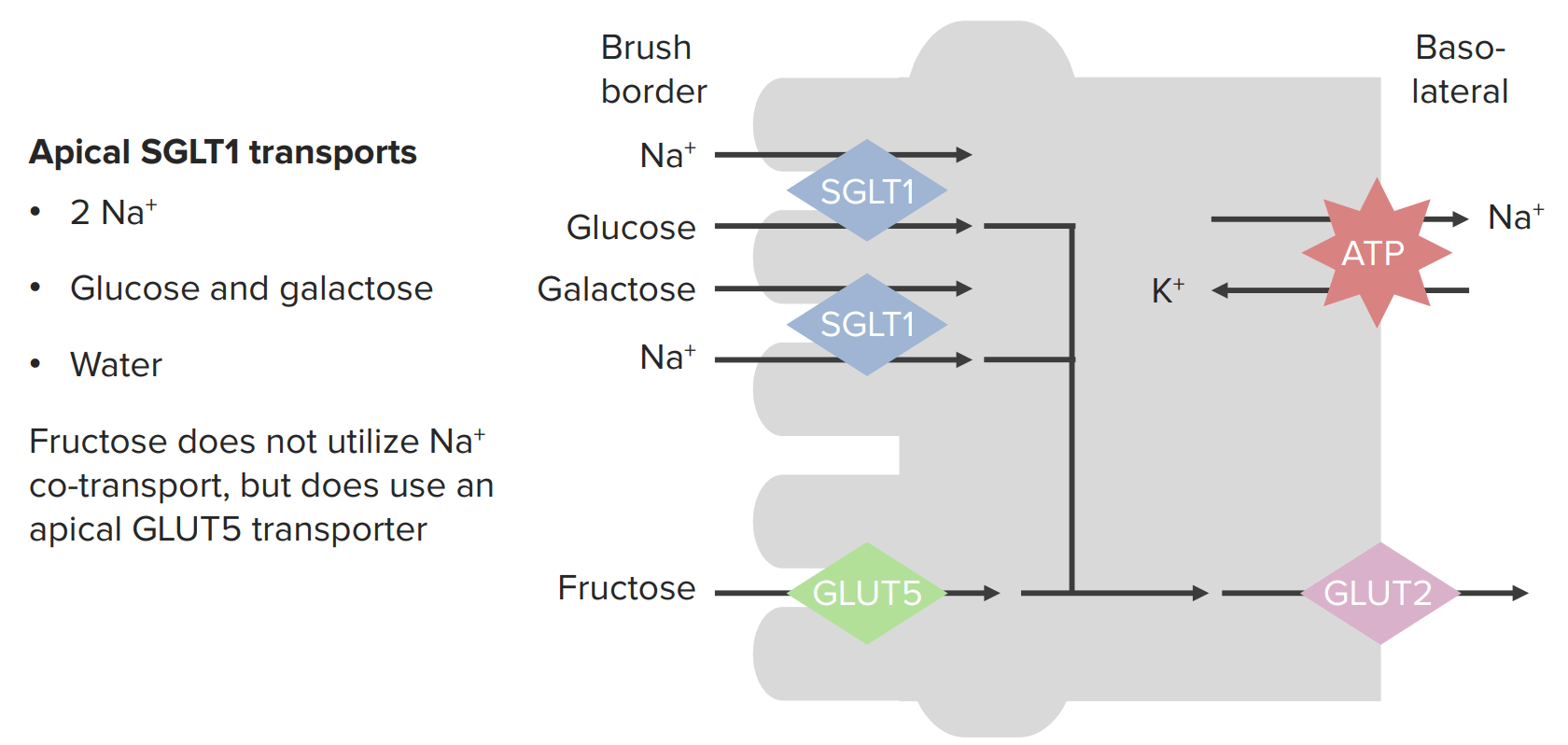
          1. Absorción en los enterocitos a través de la membrana apical:
            1. Glucosa y galactosa: vía SGLT1
            2. Fructosa: a través de GLUT5 GLUT5 A hexose transporter that mediates fructose transport in skeletal muscle and adipocytes and is responsible for luminal uptake of dietary fructose in the small intestine. Digestion and Absorption
          2. Liberación en EN Erythema nodosum is an immune-mediated panniculitis (inflammation of the subcutaneous fat) caused by a type IV (delayed-type) hypersensitivity reaction. It commonly manifests in young women as tender, erythematous nodules on the shins. Erythema Nodosum el espacio intersticial a través de GLUT2 GLUT2 A glucose transport facilitator that is expressed primarily in pancreatic beta cells; liver; and kidneys. It may function as a glucose sensor to regulate insulin release and glucose homeostasis. Digestion and Absorption en EN Erythema nodosum is an immune-mediated panniculitis (inflammation of the subcutaneous fat) caused by a type IV (delayed-type) hypersensitivity reaction. It commonly manifests in young women as tender, erythematous nodules on the shins. Erythema Nodosum la membrana basolateral mediante difusión facilitada
          3. Absorción hacia los LOS Neisseria capilares desde el espacio intersticial
          4. Capilares drenan en EN Erythema nodosum is an immune-mediated panniculitis (inflammation of the subcutaneous fat) caused by a type IV (delayed-type) hypersensitivity reaction. It commonly manifests in young women as tender, erythematous nodules on the shins. Erythema Nodosum venas → vena porta → hígado para el metabolismo
          Absorption Monosaccharides

          Absorción de monosacáridos a través de los enterocitos
          SGLT1: transportador de sodio-glucosa
          GLUT5: transportador de glucosa 5
          GLUT2: transportador de glucosa 2

          Imagen por Lecturio.

          Transporte de Monosacáridos en el Cuerpo

          Una vez en EN Erythema nodosum is an immune-mediated panniculitis (inflammation of the subcutaneous fat) caused by a type IV (delayed-type) hypersensitivity reaction. It commonly manifests in young women as tender, erythematous nodules on the shins. Erythema Nodosum la sangre, los LOS Neisseria monosacáridos son transportados a las células de todo el cuerpo y absorbidos por las células periféricas por medio de diferentes transportadores. Varios transportadores importantes de glucosa incluyen:

          • GLUT4:
            • El transportador más importante para la captación de glucosa.
            • Es el que más se expresa en EN Erythema nodosum is an immune-mediated panniculitis (inflammation of the subcutaneous fat) caused by a type IV (delayed-type) hypersensitivity reaction. It commonly manifests in young women as tender, erythematous nodules on the shins. Erythema Nodosum el músculo esquelético y en EN Erythema nodosum is an immune-mediated panniculitis (inflammation of the subcutaneous fat) caused by a type IV (delayed-type) hypersensitivity reaction. It commonly manifests in young women as tender, erythematous nodules on the shins. Erythema Nodosum el tejido adiposo
            • Estimulado por insulina para transportar la glucosa circulante a las células para su uso y/o almacenamiento
          • SGLT2:
            • Situado en EN Erythema nodosum is an immune-mediated panniculitis (inflammation of the subcutaneous fat) caused by a type IV (delayed-type) hypersensitivity reaction. It commonly manifests in young women as tender, erythematous nodules on the shins. Erythema Nodosum el túbulo contorneado proximal en EN Erythema nodosum is an immune-mediated panniculitis (inflammation of the subcutaneous fat) caused by a type IV (delayed-type) hypersensitivity reaction. It commonly manifests in young women as tender, erythematous nodules on the shins. Erythema Nodosum los LOS Neisseria riñones
            • Responsable de > 90% de reabsorción de la glucosa filtrada
          Tabla: Revisión de transportadores
          Transportador Localización Función
          GLUT1 La mayoría de las células humanas: eritrocitos, SNC, córnea, placenta Placenta A highly vascularized mammalian fetal-maternal organ and major site of transport of oxygen, nutrients, and fetal waste products. It includes a fetal portion (chorionic villi) derived from trophoblasts and a maternal portion (decidua) derived from the uterine endometrium. The placenta produces an array of steroid, protein and peptide hormones (placental hormones). Placenta, Umbilical Cord, and Amniotic Cavity, tejido fetal
          • Controla la absorción de glucosa en EN Erythema nodosum is an immune-mediated panniculitis (inflammation of the subcutaneous fat) caused by a type IV (delayed-type) hypersensitivity reaction. It commonly manifests in young women as tender, erythematous nodules on the shins. Erythema Nodosum el SNC a través de la barrera hematoencefálica
          • Captación basal de glucosa en EN Erythema nodosum is an immune-mediated panniculitis (inflammation of the subcutaneous fat) caused by a type IV (delayed-type) hypersensitivity reaction. It commonly manifests in young women as tender, erythematous nodules on the shins. Erythema Nodosum todas las células
          • Alta afinidad por la glucosa
          GLUT2 GLUT2 A glucose transport facilitator that is expressed primarily in pancreatic beta cells; liver; and kidneys. It may function as a glucose sensor to regulate insulin release and glucose homeostasis. Digestion and Absorption
          • Intestino delgado: membrana basolateral de los LOS Neisseria enterocitos
          • Hígado: hepatocitos
          • Células β de los LOS Neisseria islotes pancreáticos
          • Riñón e intestino delgado
          • Transporta monosacáridos desde la membrana basal de los LOS Neisseria enterocitos a la sangre
          • Permite a los LOS Neisseria hepatocitos captar y liberar glucosa para la glucólisis y la gluconeogénesis
          GLUT3
          • Mayoría de las células humanas
          • SNC
          • Placenta Placenta A highly vascularized mammalian fetal-maternal organ and major site of transport of oxygen, nutrients, and fetal waste products. It includes a fetal portion (chorionic villi) derived from trophoblasts and a maternal portion (decidua) derived from the uterine endometrium. The placenta produces an array of steroid, protein and peptide hormones (placental hormones). Placenta, Umbilical Cord, and Amniotic Cavity
          • Transporta la glucosa a través de la barrera hematoencefálica, incluso en EN Erythema nodosum is an immune-mediated panniculitis (inflammation of the subcutaneous fat) caused by a type IV (delayed-type) hypersensitivity reaction. It commonly manifests in young women as tender, erythematous nodules on the shins. Erythema Nodosum momentos de hipoglicemia relativa
          • Alta afinidad por la glucosa
          GLUT4
          • Tejido adiposo
          • Tejido muscular
          • Regula la homeostasis Homeostasis The processes whereby the internal environment of an organism tends to remain balanced and stable. Cell Injury and Death de la glucosa
          • Estimulado por la insulina: captación y almacenamiento controlado de glucosa
          • Inducido por el ejercicio físico
          GLUT5 GLUT5 A hexose transporter that mediates fructose transport in skeletal muscle and adipocytes and is responsible for luminal uptake of dietary fructose in the small intestine. Digestion and Absorption
          • Enterocitos
          • Espermatocitos
          Transporta fructosa
          SGLT1 Membrana apical de los LOS Neisseria enterocitos del intestino delgado Absorción de glucosa y galactosa del lumen intestinal en EN Erythema nodosum is an immune-mediated panniculitis (inflammation of the subcutaneous fat) caused by a type IV (delayed-type) hypersensitivity reaction. It commonly manifests in young women as tender, erythematous nodules on the shins. Erythema Nodosum los LOS Neisseria enterocitos
          SGLT2 Túbulo contorneado proximal
          • Proteínas de transporte de alta afinidad y baja capacidad
          • Responsable de > 90% de la reabsorción de glucosa

          Relevancia Clínica

          • Intolerancia a la lactosa: trastorno gastrointestinal de malabsorción causado por una deficiencia de lactasa, una enzima del borde en EN Erythema nodosum is an immune-mediated panniculitis (inflammation of the subcutaneous fat) caused by a type IV (delayed-type) hypersensitivity reaction. It commonly manifests in young women as tender, erythematous nodules on the shins. Erythema Nodosum cepillo involucrada en EN Erythema nodosum is an immune-mediated panniculitis (inflammation of the subcutaneous fat) caused by a type IV (delayed-type) hypersensitivity reaction. It commonly manifests in young women as tender, erythematous nodules on the shins. Erythema Nodosum la digestión y absorción de la lactosa. La lactosa es un disacárido compuesto de glucosa y galactosa. Los LOS Neisseria pacientes con intolerancia a la lactosa presentan dolor Dolor Inflammation abdominal, diarrea y flatulencia después de consumir productos con lactosa. El tratamiento es la modificación de la dieta o la suplementación con lactasa en EN Erythema nodosum is an immune-mediated panniculitis (inflammation of the subcutaneous fat) caused by a type IV (delayed-type) hypersensitivity reaction. It commonly manifests in young women as tender, erythematous nodules on the shins. Erythema Nodosum los LOS Neisseria casos más leves.
          • Galactosemia Galactosemia Galactosemia is a disorder caused by defects in galactose metabolism. Galactosemia is an inherited, autosomal-recessive condition, which results in inadequate galactose processing and high blood levels of monosaccharide. The rare disorder often presents in infants with symptoms of lethargy, nausea, vomiting, diarrhea, and jaundice. Galactosemia: enfermedad autosómica recesiva que impide el procesamiento de la galactosa debido a una deficiencia en EN Erythema nodosum is an immune-mediated panniculitis (inflammation of the subcutaneous fat) caused by a type IV (delayed-type) hypersensitivity reaction. It commonly manifests in young women as tender, erythematous nodules on the shins. Erythema Nodosum 1 de 3 enzimas clave, la más común es la galactosa-1-fosfato uridiltransferasa. La galactosemia Galactosemia Galactosemia is a disorder caused by defects in galactose metabolism. Galactosemia is an inherited, autosomal-recessive condition, which results in inadequate galactose processing and high blood levels of monosaccharide. The rare disorder often presents in infants with symptoms of lethargy, nausea, vomiting, diarrhea, and jaundice. Galactosemia es una afección grave que se presenta en EN Erythema nodosum is an immune-mediated panniculitis (inflammation of the subcutaneous fat) caused by a type IV (delayed-type) hypersensitivity reaction. It commonly manifests in young women as tender, erythematous nodules on the shins. Erythema Nodosum las primeras etapas de la vida de los LOS Neisseria bebés, que experimentan letargo, náuseas, vómitos, diarrea e ictericia. Las manifestaciones posteriores pueden incluir síntomas del neurodesarrollo, cataratas, retraso del crecimiento e insuficiencia ovárica prematura. El tratamiento es la modificación de la dieta.
          • Diabetes Diabetes Diabetes mellitus (DM) is a metabolic disease characterized by hyperglycemia and dysfunction of the regulation of glucose metabolism by insulin. Type 1 DM is diagnosed mostly in children and young adults as the result of autoimmune destruction of β cells in the pancreas and the resulting lack of insulin. Type 2 DM has a significant association with obesity and is characterized by insulin resistance. Diabetes Mellitus mellitus: condición metabólica causada por la hiperglicemia crónica. La diabetes Diabetes Diabetes mellitus (DM) is a metabolic disease characterized by hyperglycemia and dysfunction of the regulation of glucose metabolism by insulin. Type 1 DM is diagnosed mostly in children and young adults as the result of autoimmune destruction of β cells in the pancreas and the resulting lack of insulin. Type 2 DM has a significant association with obesity and is characterized by insulin resistance. Diabetes Mellitus mellitus se debe a una deficiencia o resistencia a la insulina. Los LOS Neisseria transportadores GLUT4 son sensibles a la insulina y contribuyen a favorecer el almacenamiento de glucosa en EN Erythema nodosum is an immune-mediated panniculitis (inflammation of the subcutaneous fat) caused by a type IV (delayed-type) hypersensitivity reaction. It commonly manifests in young women as tender, erythematous nodules on the shins. Erythema Nodosum determinadas condiciones. Los LOS Neisseria pacientes con diabetes Diabetes Diabetes mellitus (DM) is a metabolic disease characterized by hyperglycemia and dysfunction of the regulation of glucose metabolism by insulin. Type 1 DM is diagnosed mostly in children and young adults as the result of autoimmune destruction of β cells in the pancreas and the resulting lack of insulin. Type 2 DM has a significant association with obesity and is characterized by insulin resistance. Diabetes Mellitus mellitus de tipo 2 tienen una alteración en EN Erythema nodosum is an immune-mediated panniculitis (inflammation of the subcutaneous fat) caused by a type IV (delayed-type) hypersensitivity reaction. It commonly manifests in young women as tender, erythematous nodules on the shins. Erythema Nodosum su respuesta a la insulina y, por tanto, la glucosa se acumula en EN Erythema nodosum is an immune-mediated panniculitis (inflammation of the subcutaneous fat) caused by a type IV (delayed-type) hypersensitivity reaction. It commonly manifests in young women as tender, erythematous nodules on the shins. Erythema Nodosum la sangre, provocando hiperglicemia crónica. Los LOS Neisseria síntomas incluyen frecuencia urinaria, aumento de la sed y del apetito. Las complicaciones graves de la diabetes Diabetes Diabetes mellitus (DM) is a metabolic disease characterized by hyperglycemia and dysfunction of the regulation of glucose metabolism by insulin. Type 1 DM is diagnosed mostly in children and young adults as the result of autoimmune destruction of β cells in the pancreas and the resulting lack of insulin. Type 2 DM has a significant association with obesity and is characterized by insulin resistance. Diabetes Mellitus mellitus son la cetoacidosis diabética, enfermedades cardiovasculares, neuropatía y enfermedades renales.

          Referencias

          1. Fan, S., Wang, Y., Zhang, X., Li, J., Sun, S., & Chen, W. (2024). Rethinking the classification of non‐digestible carbohydrates: Perspectives from the gut microbiome. Comprehensive Reviews in Food Science and Food Safety, 23(6), Article e70046. https://doi.org/10.1111/1541-4337.70046
          2. Lenti, M. V., Sanders, D. S., Biagi, F., Corazza, G. R., Di Sabatino, A., Elli, L., Gasbarrini, A., Le Moli, R., Ludvigsson, J. F., Mulder, C. J. J., Pesce, M., Rogler, G., Schumann, M., Torres, J., Uhlig, H. H., Volta, U., & Iacono, G. (2025). European Consensus on Malabsorption—UEG & SIGE, LGA, SPG, SRGH, CGS, ESPCG, EAGEN, ESPEN, and ESPGHAN. Part 1: Definitions, clinical phenotypes, and diagnostic testing for malabsorption. United European Gastroenterology Journal, 13(4), 599–613. https://doi.org/10.1002/ueg2.70012
          3. Mphasha, M. H., & Vagiri, R. (2025). A narrative review of the interplay between carbohydrate intake and diabetes medications: Unexplored connections and clinical implications. International Journal of Molecular Sciences, 26(2), Article 624. https://doi.org/10.3390/ijms26020624
          4. Nelson, D. L., & Cox, M. M. (2021). Lehninger principles of biochemistry (8th ed.). W. H. Freeman and Company.
          5. Yin, J., Wang, X., Li, Y., Liu, R., Ye, X., & Kong, F. (2025). Understanding the influence of the digestive characteristics of glycemic carbohydrates on eating behavior: Nutrient-sensing perspectives. Food Research International, 153, Article 116582. https://doi.org/10.1016/j.foodres.2025.116582
          6. Zalewski, B. M., Patro-Gołąb, B., Szajewska, H., Aggett, P., Koletzko, B., van Goudoever, J. B., Fewtrell, M., & Shamir, R. (2025). ILSI Europe systematic review: The impact of digestible and nondigestible carbohydrate consumption for toddlers (1–4 years) in relation to health outcomes. Nutrition

          ¡Crea tu cuenta gratis o inicia una sesión para seguir leyendo!

          Regístrate ahora y obtén acceso gratuito a Lecturio con páginas de concepto, videos médicos y cuestionarios para tu educación médica.

          User Reviews

          Que tengas una sesión de estudio alegre y navideña 🎁 Ahorra 50% en todos los planes >>

          Details