Domina Conceptos Médicos

Estudia para la escuela de medicina y tus examenes con Lecturio.

Desarrollo del Sistema Urogenital

El sistema urogenital se deriva del mesodermo intermedio. El mesodermo intermedio se diferencia en EN Erythema nodosum is an immune-mediated panniculitis (inflammation of the subcutaneous fat) caused by a type IV (delayed-type) hypersensitivity reaction. It commonly manifests in young women as tender, erythematous nodules on the shins. Erythema Nodosum cordones nefrogénicos (que pasarán a formar el sistema urinario) y un área adyacente conocida como cresta gonadal (que pasará a formar las gónadas). Los LOS Neisseria cordones nefrogénicos se alargan en EN Erythema nodosum is an immune-mediated panniculitis (inflammation of the subcutaneous fat) caused by a type IV (delayed-type) hypersensitivity reaction. It commonly manifests in young women as tender, erythematous nodules on the shins. Erythema Nodosum dirección caudal y desarrollan secuencialmente 3 estructuras diferentes: el pronefros (rudimentario y no funcional), el mesonefros (forma el sistema urinario primitivo) y el metanefros (forma el riñón permanente). Al AL Amyloidosis mismo tiempo, el sistema genital se desarrolla en EN Erythema nodosum is an immune-mediated panniculitis (inflammation of the subcutaneous fat) caused by a type IV (delayed-type) hypersensitivity reaction. It commonly manifests in young women as tender, erythematous nodules on the shins. Erythema Nodosum estrecha asociación con el sistema urinario. El desarrollo genital depende del sexo cromosómico, que determina si las gónadas primitivas se diferencian en EN Erythema nodosum is an immune-mediated panniculitis (inflammation of the subcutaneous fat) caused by a type IV (delayed-type) hypersensitivity reaction. It commonly manifests in young women as tender, erythematous nodules on the shins. Erythema Nodosum testículos u ovarios. Las gónadas luego secretan ciertas hormonas, que dirigen un mayor desarrollo de las estructuras genitales internas y externas.

Last updated: Dec 15, 2025

Editorial responsibility: Stanley Oiseth, Lindsay Jones, Evelin Maza

Desarrollo Embrionario Temprano

Disco bilaminar

Se desarrolla alrededor de la semana 2 de vida embrionaria:

  • Capas:
    • Epiblasto
    • Hipoblasto
  • Se somete a un proceso llamado gastrulación para formar el disco trilaminar

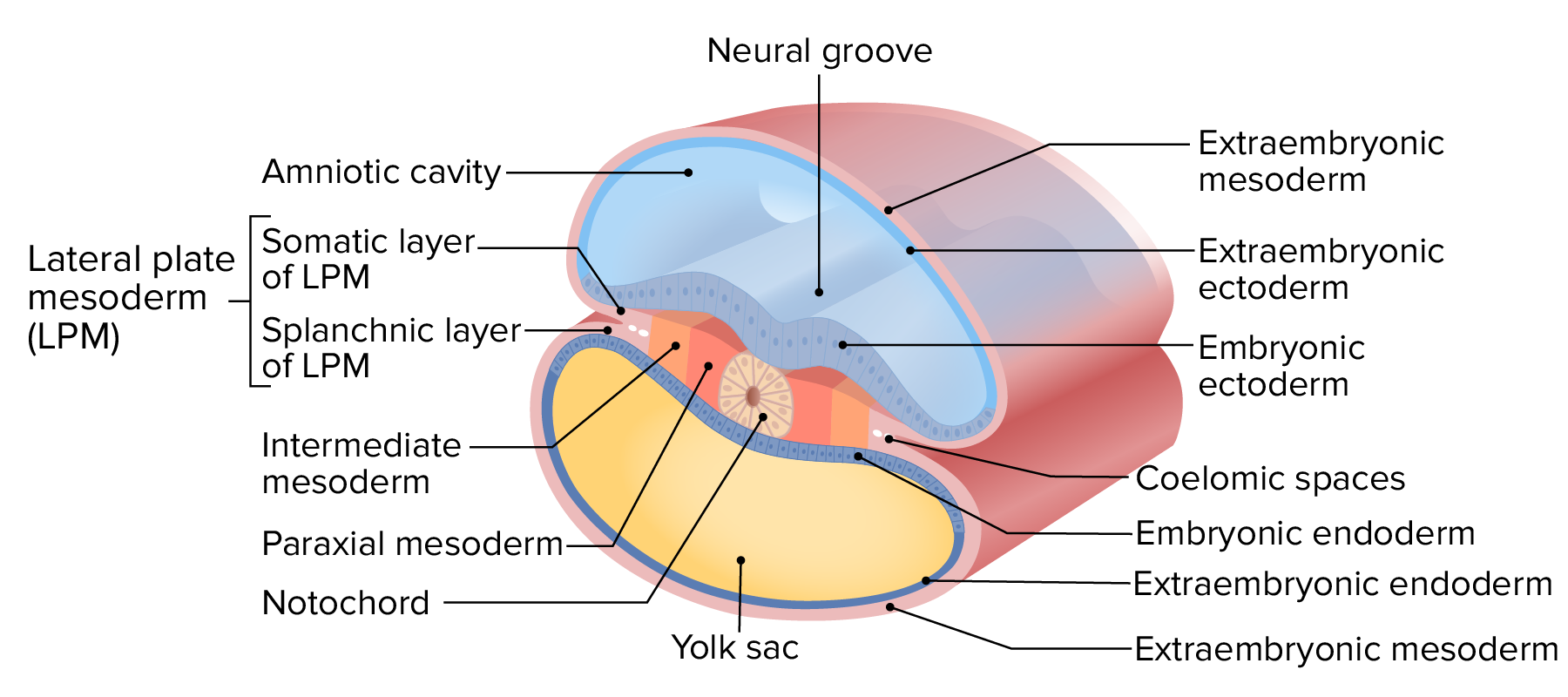
Disco trilaminar

Capas:

  • Ectodermo
  • Mesodermo:
    • Mesodermo paraxial
    • Mesodermo intermedio
    • Mesodermo de la placa lateral:
      • Capa somática del mesodermo de la placa lateral
      • Capa esplácnica del mesodermo de la placa lateral
  • Endodermo (se convierte en EN Erythema nodosum is an immune-mediated panniculitis (inflammation of the subcutaneous fat) caused by a type IV (delayed-type) hypersensitivity reaction. It commonly manifests in young women as tender, erythematous nodules on the shins. Erythema Nodosum el tubo intestinal primitivo)
Capas del disco trilaminar

Capas del disco trilaminar

Imagen por Lecturio.

Plegado

  • El disco trilaminar se pliega en EN Erythema nodosum is an immune-mediated panniculitis (inflammation of the subcutaneous fat) caused by a type IV (delayed-type) hypersensitivity reaction. It commonly manifests in young women as tender, erythematous nodules on the shins. Erythema Nodosum 2 direcciones:
    • El plegado lateral crea una estructura “cilíndrica” rodeada de ectodermo.
    • Plegado cráneo-caudal
  • Estructuras clave para el desarrollo urogenital en EN Erythema nodosum is an immune-mediated panniculitis (inflammation of the subcutaneous fat) caused by a type IV (delayed-type) hypersensitivity reaction. It commonly manifests in young women as tender, erythematous nodules on the shins. Erythema Nodosum esta etapa:
    • Mesodermo intermedio → se convierte en EN Erythema nodosum is an immune-mediated panniculitis (inflammation of the subcutaneous fat) caused by a type IV (delayed-type) hypersensitivity reaction. It commonly manifests in young women as tender, erythematous nodules on the shins. Erythema Nodosum:
      • Cordones nefrogénicos → formará el sistema urinario
      • Cresta gonadal (área adyacente a los LOS Neisseria cordones nefrogénicos) → formará el tejido estromal de las gónadas
    • Células germinales primordiales:
      • Se originan a partir de células del epiblasto
      • Las células migran al AL Amyloidosis saco vitelino
      • Eventualmente, migrarán a lo largo de la alantoides hasta la cresta gonadal
      • Pasan a convertirse en EN Erythema nodosum is an immune-mediated panniculitis (inflammation of the subcutaneous fat) caused by a type IV (delayed-type) hypersensitivity reaction. It commonly manifests in young women as tender, erythematous nodules on the shins. Erythema Nodosum espermatozoides u ovocitos
Vista transversal del embrión temprano

Vista transversal del embrión temprano

Imagen por Lecturio.

Desarrollo del Sistema Urinario

El riñón se desarrolla a partir del mesodermo embrionario en EN Erythema nodosum is an immune-mediated panniculitis (inflammation of the subcutaneous fat) caused by a type IV (delayed-type) hypersensitivity reaction. It commonly manifests in young women as tender, erythematous nodules on the shins. Erythema Nodosum 3 formas sucesivas a partir de los LOS Neisseria cordones nefrogénicos a medida que los LOS Neisseria cordones se alargan en EN Erythema nodosum is an immune-mediated panniculitis (inflammation of the subcutaneous fat) caused by a type IV (delayed-type) hypersensitivity reaction. It commonly manifests in young women as tender, erythematous nodules on the shins. Erythema Nodosum una dirección de craneal a caudal.
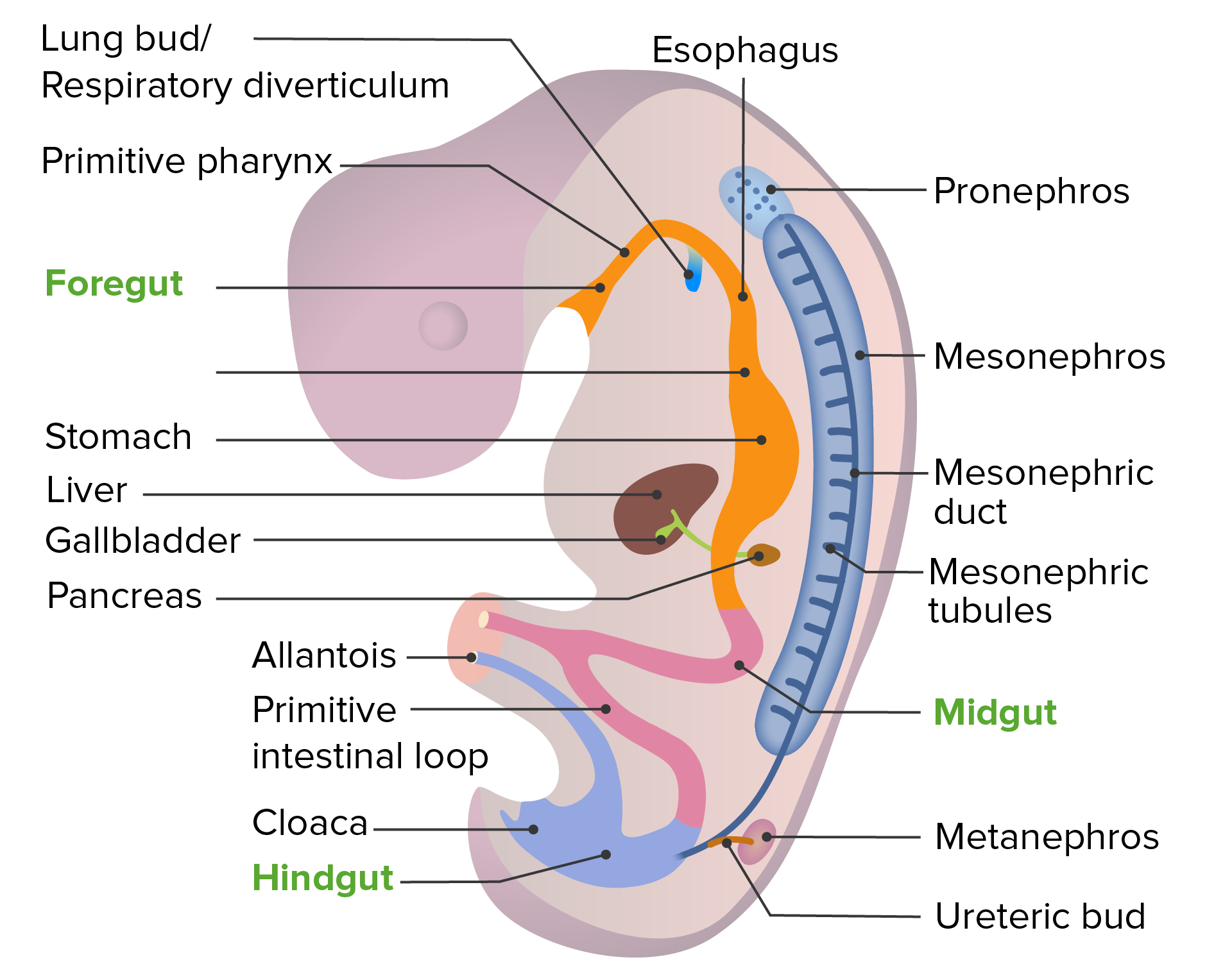
Pronefros

  • Aparece en EN Erythema nodosum is an immune-mediated panniculitis (inflammation of the subcutaneous fat) caused by a type IV (delayed-type) hypersensitivity reaction. It commonly manifests in young women as tender, erythematous nodules on the shins. Erythema Nodosum la semana 4 como un grupo de un túbulo y algunas células (nefrotomas)
  • Se desarrolla en EN Erythema nodosum is an immune-mediated panniculitis (inflammation of the subcutaneous fat) caused by a type IV (delayed-type) hypersensitivity reaction. It commonly manifests in young women as tender, erythematous nodules on the shins. Erythema Nodosum cordones nefrogénicos en EN Erythema nodosum is an immune-mediated panniculitis (inflammation of the subcutaneous fat) caused by a type IV (delayed-type) hypersensitivity reaction. It commonly manifests in young women as tender, erythematous nodules on the shins. Erythema Nodosum la región cervical
  • Rudimentario y no funcional
  • Degenera al AL Amyloidosis final de la semana 4 (persiste < 1 semana)
  • El propósito no está claro, aunque puede ser un “andamio” a partir del cual se desarrolla la siguiente estructura (el mesonefros)
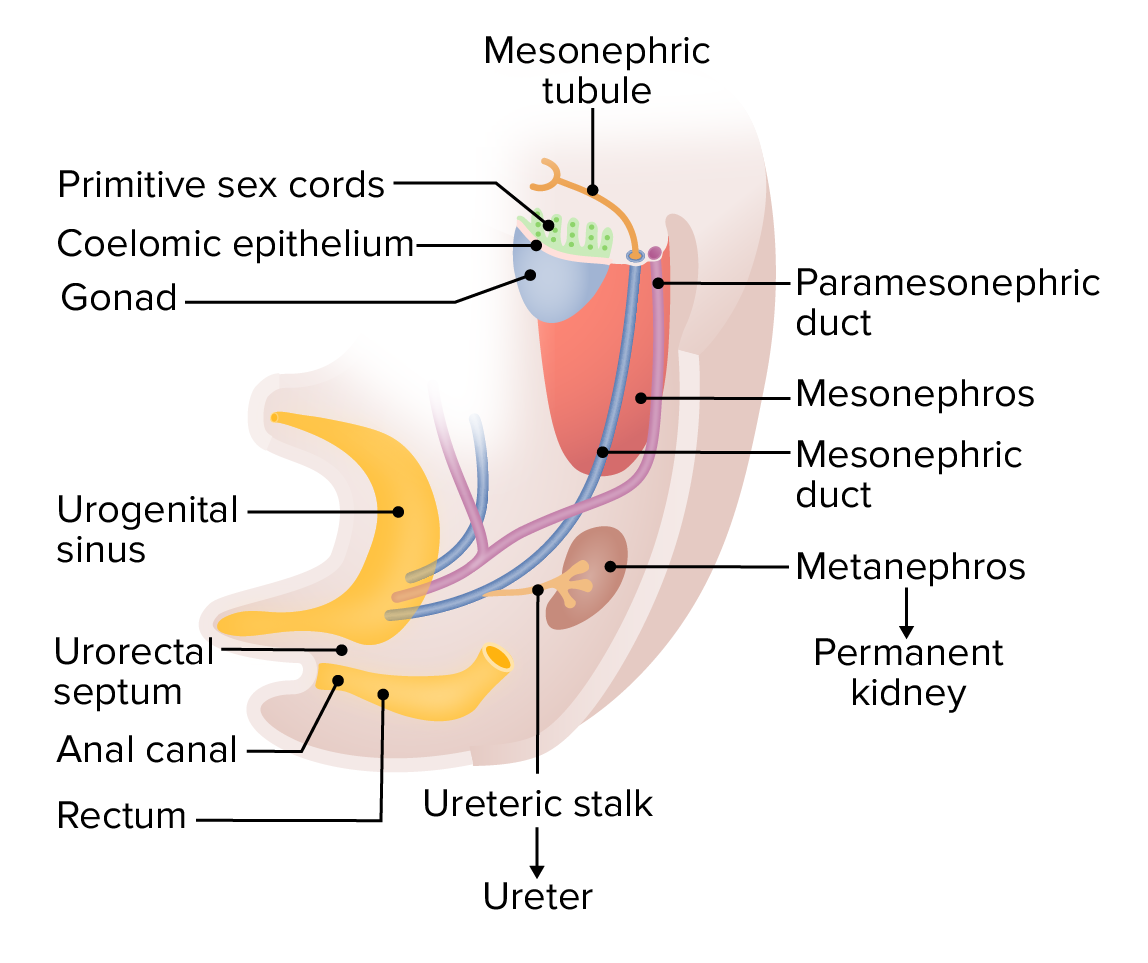
Ubicación del desarrollo del pronefros, mesonefros y metanefros en el embrión en desarrollo.

Localización del desarrollo del pronefros, mesonefros y metanefros en el embrión en desarrollo

Imagen por Lecturio.
Mesonefros

  • Comienza a desarrollarse a medida que el pronefros retrocede alrededor de la semana 5
  • La mayoría del mesonefros retrocede en EN Erythema nodosum is an immune-mediated panniculitis (inflammation of the subcutaneous fat) caused by a type IV (delayed-type) hypersensitivity reaction. It commonly manifests in young women as tender, erythematous nodules on the shins. Erythema Nodosum la semana 10.
  • Se desarrolla más abajo, en EN Erythema nodosum is an immune-mediated panniculitis (inflammation of the subcutaneous fat) caused by a type IV (delayed-type) hypersensitivity reaction. It commonly manifests in young women as tender, erythematous nodules on the shins. Erythema Nodosum la región toracolumbar
  • Se conecta con la cloaca Cloaca A dilated cavity extended caudally from the hindgut. In adult birds, reptiles, amphibians, and many fishes but few mammals, cloaca is a common chamber into which the digestive, urinary and reproductive tracts discharge their contents. In most mammals, cloaca gives rise to large intestine; urinary bladder; and genitalia. Development of the Abdominal Organs en EN Erythema nodosum is an immune-mediated panniculitis (inflammation of the subcutaneous fat) caused by a type IV (delayed-type) hypersensitivity reaction. It commonly manifests in young women as tender, erythematous nodules on the shins. Erythema Nodosum el extremo caudal del tubo intestinal primitivo
  • Consiste en EN Erythema nodosum is an immune-mediated panniculitis (inflammation of the subcutaneous fat) caused by a type IV (delayed-type) hypersensitivity reaction. It commonly manifests in young women as tender, erythematous nodules on the shins. Erythema Nodosum:
    • Un conducto mesonéfrico longitudinal (también llamado conducto de Wolff)
    • Una serie de túbulos que salen de ese conducto principal y crecen anteriormente hacia la aorta Aorta The main trunk of the systemic arteries. Mediastinum and Great Vessels: Anatomy
  • Pequeños vasos glomerulares crecen posteriormente desde la aorta Aorta The main trunk of the systemic arteries. Mediastinum and Great Vessels: Anatomy hacia los LOS Neisseria túbulos mesonéfricos, formando corpúsculos renales primitivos:
    • Los LOS Neisseria túbulos mesonéfricos crecen alrededor de los LOS Neisseria capilares glomerulares, formando cápsulas de Bowman (aunque estas finalmente retrocederán).
    • Forman el sistema urinario primitivo
  • Comienza la filtración de sangre:
    • La sangre fluye por la aorta Aorta The main trunk of the systemic arteries. Mediastinum and Great Vessels: Anatomy → capilares glomerulares
    • Filtrado a través de la cápsula Bowman
    • El filtrado desciende por el túbulo mesonéfrico → conducto mesonéfrico → cloaca Cloaca A dilated cavity extended caudally from the hindgut. In adult birds, reptiles, amphibians, and many fishes but few mammals, cloaca is a common chamber into which the digestive, urinary and reproductive tracts discharge their contents. In most mammals, cloaca gives rise to large intestine; urinary bladder; and genitalia. Development of the Abdominal Organs → alantoides
  • El mesonefros está presente solo desde las semanas 5–10 (momento en EN Erythema nodosum is an immune-mediated panniculitis (inflammation of the subcutaneous fat) caused by a type IV (delayed-type) hypersensitivity reaction. It commonly manifests in young women as tender, erythematous nodules on the shins. Erythema Nodosum el que el riñón permanente formado a partir del metanefros asume el control).
  • Los LOS Neisseria conductos mesonéfricos persisten en EN Erythema nodosum is an immune-mediated panniculitis (inflammation of the subcutaneous fat) caused by a type IV (delayed-type) hypersensitivity reaction. It commonly manifests in young women as tender, erythematous nodules on the shins. Erythema Nodosum los LOS Neisseria hombres y forman parte del sistema reproductor masculino.
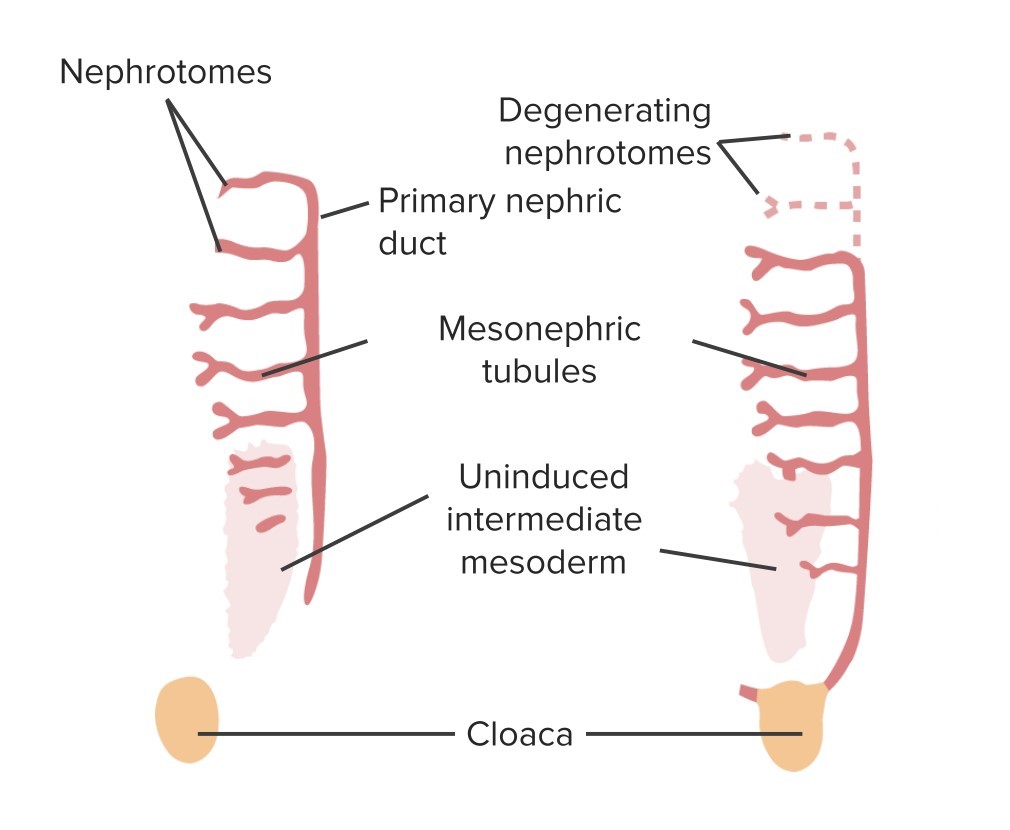
Resumen gráfico del mesonefros

Resumen gráfico de los mesonefros:
Obsérvese que los cordones nefrogénicos (conductos néfricos primarios) se alargan y se unen con la cloaca. Los túbulos mesonéfricos crecen en un patrón similar a una escalera y funcionan como un sistema urinario primitivo, mientras que el riñón definitivo se desarrolla a partir de los metanefros más abajo en la pelvis en crecimiento.

Imagen por Lecturio.

Metanefros

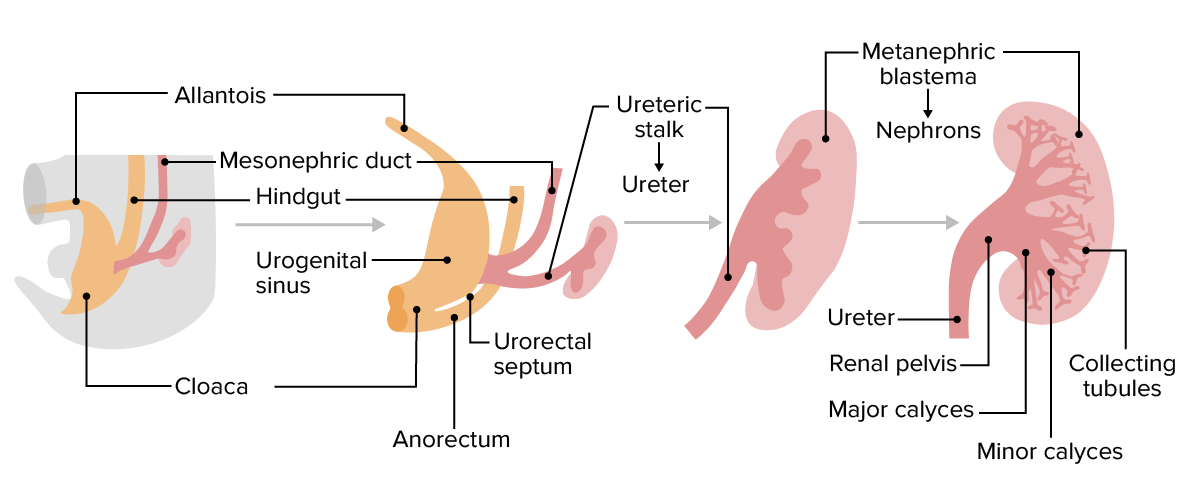
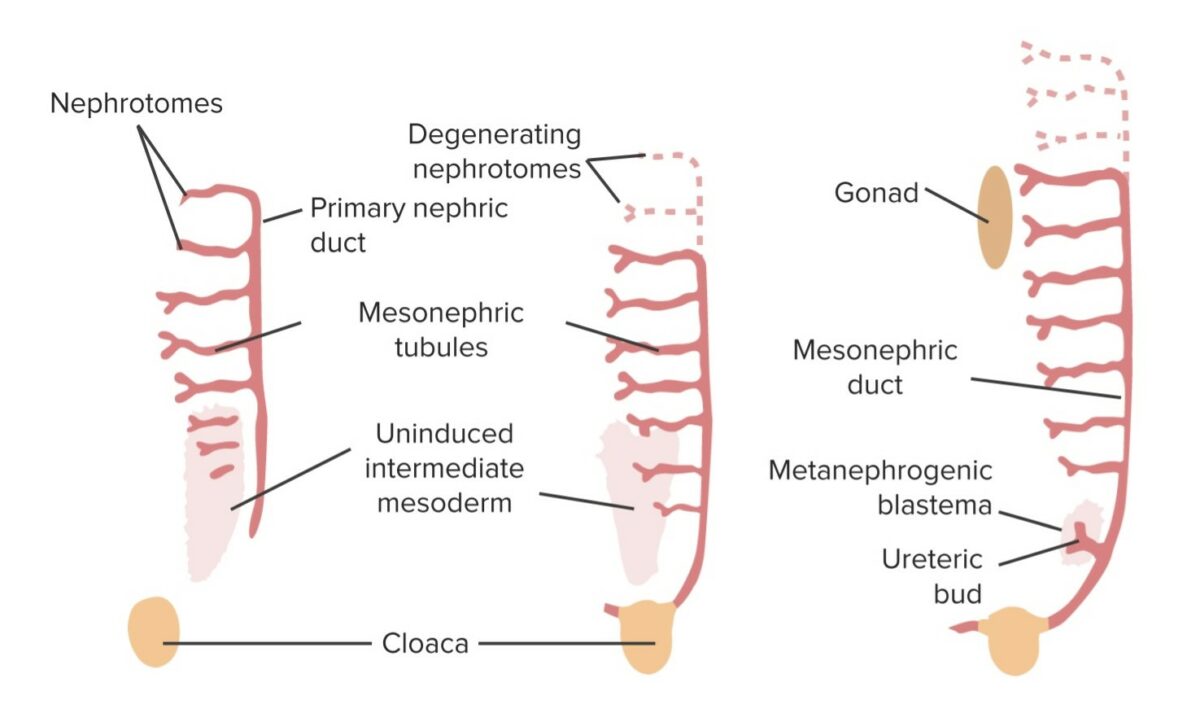
El riñón permanente se forma a partir de los LOS Neisseria metanefros.
  • Se desarrolla a partir de la 5ta semana
  • Las células del mesodermo intermedio en EN Erythema nodosum is an immune-mediated panniculitis (inflammation of the subcutaneous fat) caused by a type IV (delayed-type) hypersensitivity reaction. It commonly manifests in young women as tender, erythematous nodules on the shins. Erythema Nodosum la región pélvica comienzan a diferenciarse en EN Erythema nodosum is an immune-mediated panniculitis (inflammation of the subcutaneous fat) caused by a type IV (delayed-type) hypersensitivity reaction. It commonly manifests in young women as tender, erythematous nodules on the shins. Erythema Nodosum una estructura llamada blastema metanéfrico, que:
    • En EN Erythema nodosum is an immune-mediated panniculitis (inflammation of the subcutaneous fat) caused by a type IV (delayed-type) hypersensitivity reaction. It commonly manifests in young women as tender, erythematous nodules on the shins. Erythema Nodosum última instancia, se convierte en EN Erythema nodosum is an immune-mediated panniculitis (inflammation of the subcutaneous fat) caused by a type IV (delayed-type) hypersensitivity reaction. It commonly manifests in young women as tender, erythematous nodules on the shins. Erythema Nodosum las células que forman las nefronas
    • Libera factores de crecimiento que estimulan el desarrollo de unas bolsas que salen de la porción caudal del conducto mesonéfrico llamados brotes ureterales
  • Los LOS Neisseria brotes ureterales crecen e invaden el blastema metanéfrico:
    • El tallo alargado del brote ureteral se convierte en EN Erythema nodosum is an immune-mediated panniculitis (inflammation of the subcutaneous fat) caused by a type IV (delayed-type) hypersensitivity reaction. It commonly manifests in young women as tender, erythematous nodules on the shins. Erythema Nodosum el uréter.
    • Dentro del blastema metanéfrico, los LOS Neisseria brotes ureterales experimentan una serie de ramificaciones para formar:
      • Pelvis Pelvis The pelvis consists of the bony pelvic girdle, the muscular and ligamentous pelvic floor, and the pelvic cavity, which contains viscera, vessels, and multiple nerves and muscles. The pelvic girdle, composed of 2 “hip” bones and the sacrum, is a ring-like bony structure of the axial skeleton that links the vertebral column with the lower extremities. Pelvis: Anatomy renal
      • Cálices mayores
      • Cálices menores
      • Túbulos colectores
  • Casquete mesodérmico metanéfrico:
    • Mesodermo del blastema metanéfrico sentado “encima de” los LOS Neisseria conductos colectores en EN Erythema nodosum is an immune-mediated panniculitis (inflammation of the subcutaneous fat) caused by a type IV (delayed-type) hypersensitivity reaction. It commonly manifests in young women as tender, erythematous nodules on the shins. Erythema Nodosum desarrollo
    • Se alarga, formando el sistema tubular de las nefronas → se conoce como túbulo metanéfrico
    • El túbulo metanéfrico se fusiona con el túbulo colector, creando 1 sistema continuo.
  • Cápsula de Bowman: se forma a partir del extremo en EN Erythema nodosum is an immune-mediated panniculitis (inflammation of the subcutaneous fat) caused by a type IV (delayed-type) hypersensitivity reaction. It commonly manifests in young women as tender, erythematous nodules on the shins. Erythema Nodosum crecimiento del túbulo metanéfrico
  • Capilares glomerulares:
    • Se desarrollan a partir de las arterias ilíacas comunes
    • Se asocian con la cápsula de Bowman al AL Amyloidosis final de los LOS Neisseria túbulos metanéfricos → comienzan a crear “orina” (nota: los LOS Neisseria verdaderos productos de desecho del feto se eliminan a través de la placenta Placenta A highly vascularized mammalian fetal-maternal organ and major site of transport of oxygen, nutrients, and fetal waste products. It includes a fetal portion (chorionic villi) derived from trophoblasts and a maternal portion (decidua) derived from the uterine endometrium. The placenta produces an array of steroid, protein and peptide hormones (placental hormones). Placenta, Umbilical Cord, and Amniotic Cavity).
  • Las nefronas se forman hasta el nacimiento.
  • La maduración de la nefrona continúa después del nacimiento.

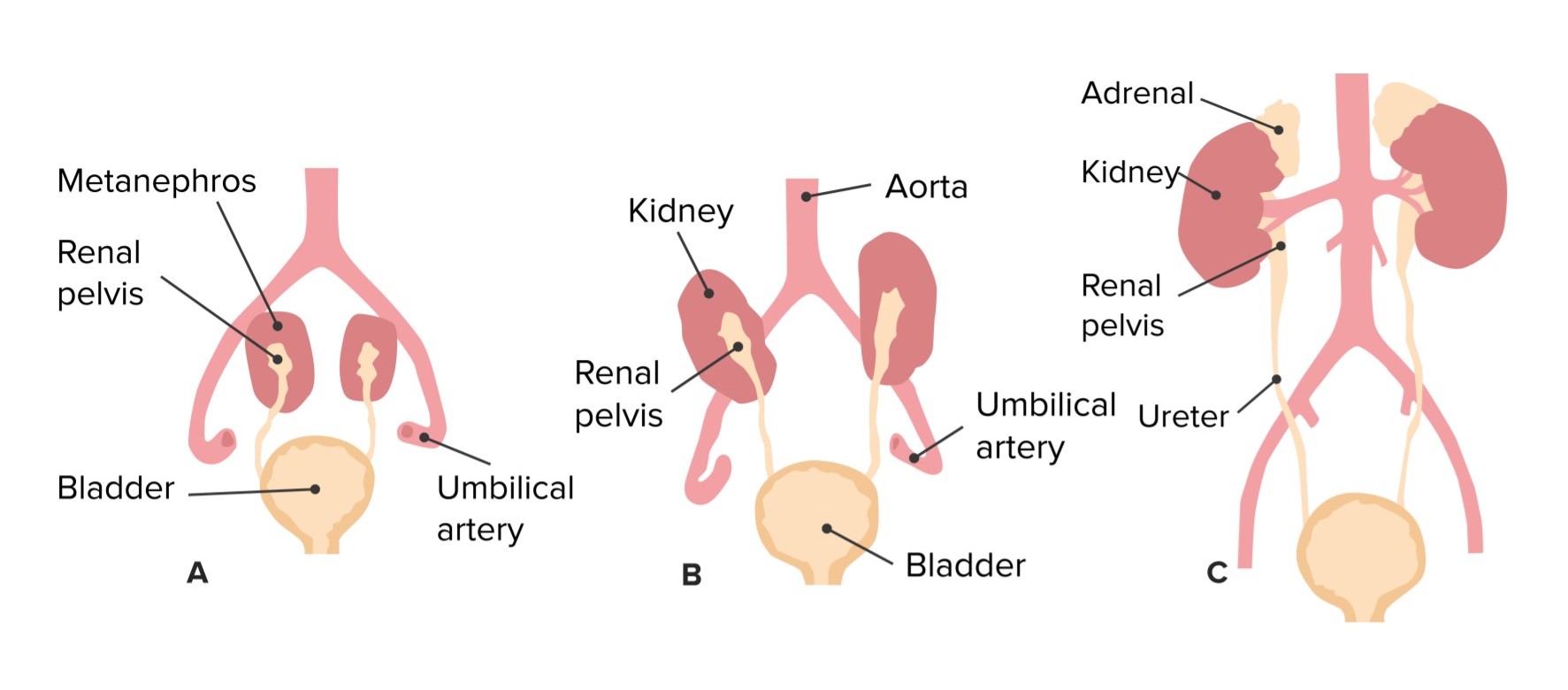
Posición del riñón y cambios en EN Erythema nodosum is an immune-mediated panniculitis (inflammation of the subcutaneous fat) caused by a type IV (delayed-type) hypersensitivity reaction. It commonly manifests in young women as tender, erythematous nodules on the shins. Erythema Nodosum la vascularización

  • Los LOS Neisseria riñones se localizan inicialmente en EN Erythema nodosum is an immune-mediated panniculitis (inflammation of the subcutaneous fat) caused by a type IV (delayed-type) hypersensitivity reaction. It commonly manifests in young women as tender, erythematous nodules on the shins. Erythema Nodosum la región pélvica.
  • A medida que la porción caudal del cuerpo crece hacia abajo, la ubicación relativa de los LOS Neisseria riñones “asciende” hacia los LOS Neisseria cuadrantes superiores del abdomen (la falta de ascenso da como resultado un riñón pélvico).
  • A medida que los LOS Neisseria riñones ascienden, la irrigación original se degenera.
  • Nuevos vasos (más arriba) se desarrollan en EN Erythema nodosum is an immune-mediated panniculitis (inflammation of the subcutaneous fat) caused by a type IV (delayed-type) hypersensitivity reaction. It commonly manifests in young women as tender, erythematous nodules on the shins. Erythema Nodosum la aorta Aorta The main trunk of the systemic arteries. Mediastinum and Great Vessels: Anatomy e invaden los LOS Neisseria riñones, convirtiéndose en EN Erythema nodosum is an immune-mediated panniculitis (inflammation of the subcutaneous fat) caused by a type IV (delayed-type) hypersensitivity reaction. It commonly manifests in young women as tender, erythematous nodules on the shins. Erythema Nodosum las arterias renales maduras.
  • Si los LOS Neisseria vasos originales no retroceden, pueden persistir como arterias o venas renales adicionales.
Ascenso de los riñones y cambio correspondiente en el suministro vascular.

Ascenso de los riñones y cambios correspondientes en la irrigación

Imagen por Lecturio.

Desarrollo de la vejiga y la uretra

Entre la 4ta y la 7ma semana de desarrollo, la cloaca Cloaca A dilated cavity extended caudally from the hindgut. In adult birds, reptiles, amphibians, and many fishes but few mammals, cloaca is a common chamber into which the digestive, urinary and reproductive tracts discharge their contents. In most mammals, cloaca gives rise to large intestine; urinary bladder; and genitalia. Development of the Abdominal Organs se divide en EN Erythema nodosum is an immune-mediated panniculitis (inflammation of the subcutaneous fat) caused by a type IV (delayed-type) hypersensitivity reaction. It commonly manifests in young women as tender, erythematous nodules on the shins. Erythema Nodosum:
  • Seno urogenital:
    • De la porción anterior de la cloaca Cloaca A dilated cavity extended caudally from the hindgut. In adult birds, reptiles, amphibians, and many fishes but few mammals, cloaca is a common chamber into which the digestive, urinary and reproductive tracts discharge their contents. In most mammals, cloaca gives rise to large intestine; urinary bladder; and genitalia. Development of the Abdominal Organs
    • Se conecta a los LOS Neisseria uréteres y conductos mesonéfricos
    • El seno urogenital tiene 3 porciones:
      • Proximal (más grande) → vejiga urinaria
      • Media (estrecha) → origen de la próstata y uretra prostática y membranosa en EN Erythema nodosum is an immune-mediated panniculitis (inflammation of the subcutaneous fat) caused by a type IV (delayed-type) hypersensitivity reaction. It commonly manifests in young women as tender, erythematous nodules on the shins. Erythema Nodosum hombres y toda la uretra en EN Erythema nodosum is an immune-mediated panniculitis (inflammation of the subcutaneous fat) caused by a type IV (delayed-type) hypersensitivity reaction. It commonly manifests in young women as tender, erythematous nodules on the shins. Erythema Nodosum mujeres
      • Distal → uretra peneana en EN Erythema nodosum is an immune-mediated panniculitis (inflammation of the subcutaneous fat) caused by a type IV (delayed-type) hypersensitivity reaction. It commonly manifests in young women as tender, erythematous nodules on the shins. Erythema Nodosum hombres
  • Canal anal:
    • De la porción posterior de la cloaca Cloaca A dilated cavity extended caudally from the hindgut. In adult birds, reptiles, amphibians, and many fishes but few mammals, cloaca is a common chamber into which the digestive, urinary and reproductive tracts discharge their contents. In most mammals, cloaca gives rise to large intestine; urinary bladder; and genitalia. Development of the Abdominal Organs
    • Se conecta al AL Amyloidosis intestino posterior en EN Erythema nodosum is an immune-mediated panniculitis (inflammation of the subcutaneous fat) caused by a type IV (delayed-type) hypersensitivity reaction. It commonly manifests in young women as tender, erythematous nodules on the shins. Erythema Nodosum desarrollo
  • Tabique urorrectal:
    • Separa el seno urogenital del canal anal
    • Comienza en EN Erythema nodosum is an immune-mediated panniculitis (inflammation of the subcutaneous fat) caused by a type IV (delayed-type) hypersensitivity reaction. It commonly manifests in young women as tender, erythematous nodules on the shins. Erythema Nodosum la porción superior/proximal de la cloaca Cloaca A dilated cavity extended caudally from the hindgut. In adult birds, reptiles, amphibians, and many fishes but few mammals, cloaca is a common chamber into which the digestive, urinary and reproductive tracts discharge their contents. In most mammals, cloaca gives rise to large intestine; urinary bladder; and genitalia. Development of the Abdominal Organs → crece distalmente hasta llegar al AL Amyloidosis exterior del cuerpo, donde se convierte en EN Erythema nodosum is an immune-mediated panniculitis (inflammation of the subcutaneous fat) caused by a type IV (delayed-type) hypersensitivity reaction. It commonly manifests in young women as tender, erythematous nodules on the shins. Erythema Nodosum el cuerpo perineal
    • Si el tabique no se forma correctamente, puede provocar fístulas entre el sistema urogenital y el anorecto.
  • La alantoides (drena la cloaca Cloaca A dilated cavity extended caudally from the hindgut. In adult birds, reptiles, amphibians, and many fishes but few mammals, cloaca is a common chamber into which the digestive, urinary and reproductive tracts discharge their contents. In most mammals, cloaca gives rise to large intestine; urinary bladder; and genitalia. Development of the Abdominal Organs a través del cordón umbilical) → finalmente se convierte en EN Erythema nodosum is an immune-mediated panniculitis (inflammation of the subcutaneous fat) caused by a type IV (delayed-type) hypersensitivity reaction. It commonly manifests in young women as tender, erythematous nodules on the shins. Erythema Nodosum el ligamento umbilical medio

Desarrollo Embrionario Temprano del Sistema Genital

Descripción general del desarrollo sexual típico

  • Sexo cromosómico → determina el sexo gonadal → determina el sexo fenotípico
  • Hasta las 6 semanas de gestación, el desarrollo sexual es idéntico y no binario; las estructuras en EN Erythema nodosum is an immune-mediated panniculitis (inflammation of the subcutaneous fat) caused by a type IV (delayed-type) hypersensitivity reaction. It commonly manifests in young women as tender, erythematous nodules on the shins. Erythema Nodosum desarrollo incluyen:
    • Gónadas no binarias, bipotentes e indiferenciadas
    • Conductos mesonéfricos (también conocidos como conductos de Wolff; también forman parte del sistema urinario primitivo)
    • Conductos paramesonéfricos (también conocidos como conductos de Müller)
    • Seno urogenital
    • El tubérculo genital, las protuberancias genitales y los LOS Neisseria pliegues genitales
  • Los LOS Neisseria genes Genes A category of nucleic acid sequences that function as units of heredity and which code for the basic instructions for the development, reproduction, and maintenance of organisms. DNA Types and Structure presentes en EN Erythema nodosum is an immune-mediated panniculitis (inflammation of the subcutaneous fat) caused by a type IV (delayed-type) hypersensitivity reaction. It commonly manifests in young women as tender, erythematous nodules on the shins. Erythema Nodosum la fecundación determinarán cómo se diferencian las gónadas bipotentes en EN Erythema nodosum is an immune-mediated panniculitis (inflammation of the subcutaneous fat) caused by a type IV (delayed-type) hypersensitivity reaction. It commonly manifests in young women as tender, erythematous nodules on the shins. Erythema Nodosum desarrollo (e.g., en EN Erythema nodosum is an immune-mediated panniculitis (inflammation of the subcutaneous fat) caused by a type IV (delayed-type) hypersensitivity reaction. It commonly manifests in young women as tender, erythematous nodules on the shins. Erythema Nodosum un testículo o en EN Erythema nodosum is an immune-mediated panniculitis (inflammation of the subcutaneous fat) caused by a type IV (delayed-type) hypersensitivity reaction. It commonly manifests in young women as tender, erythematous nodules on the shins. Erythema Nodosum un ovario).
  • Las gónadas en EN Erythema nodosum is an immune-mediated panniculitis (inflammation of the subcutaneous fat) caused by a type IV (delayed-type) hypersensitivity reaction. It commonly manifests in young women as tender, erythematous nodules on the shins. Erythema Nodosum desarrollo luego secretarán hormonas.
    • La presencia y/o ausencia de hormonas específicas determinará la diferenciación de las estructuras restantes.
    • En EN Erythema nodosum is an immune-mediated panniculitis (inflammation of the subcutaneous fat) caused by a type IV (delayed-type) hypersensitivity reaction. It commonly manifests in young women as tender, erythematous nodules on the shins. Erythema Nodosum general, los LOS Neisseria órganos y estructuras femeninas son el fenotipo por defecto” si no hay genes Genes A category of nucleic acid sequences that function as units of heredity and which code for the basic instructions for the development, reproduction, and maintenance of organisms. DNA Types and Structure y hormonas específicos que estimulen la diferenciación masculina.
Diferenciación de sexos

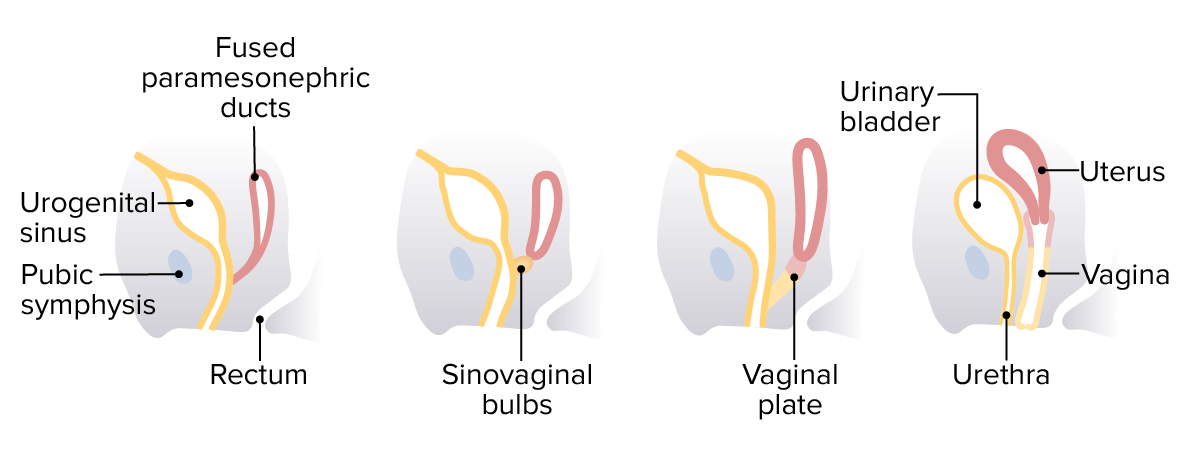
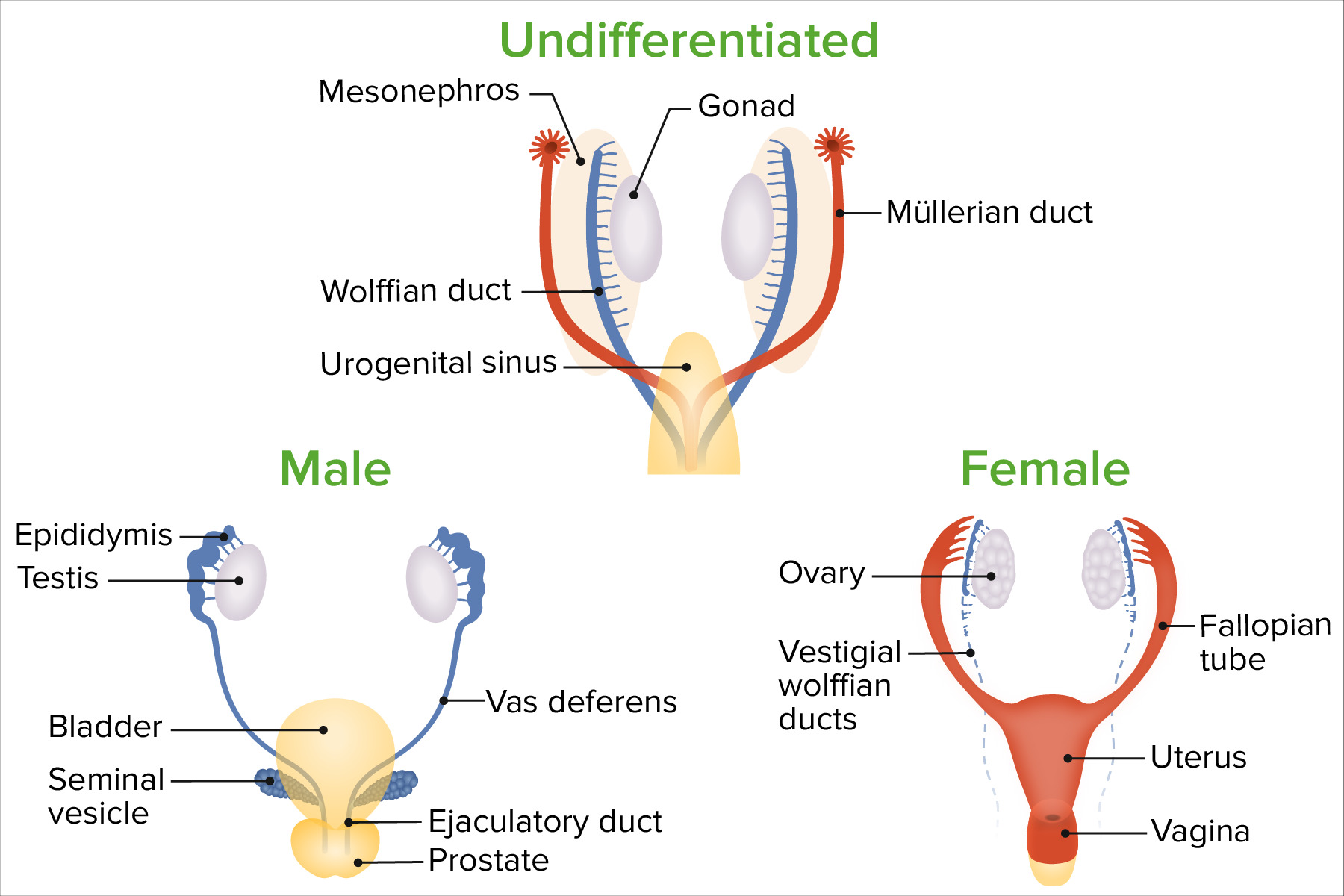
Diferenciación sexual de los conductos mesonéfricos (de Wolff) y paramesonéfricos (de Müller):
En las mujeres, los conductos mesonéfricos retroceden, mientras que los conductos paramesonéfricos persisten. Los conductos paramesonéfricos permanecen abiertos al celoma intraembrionario (la eventual cavidad peritoneal) cerca de las gónadas, y los extremos inferior/medial se fusionan en un cuerpo común en la línea media, formando el útero y la vagina superior.
En los hombres, los conductos mesonéfricos están estrechamente asociados con las gónadas; entran en el seno urogenital por separado en cada lado y se convierten en partes del sistema eyaculatorio, mientras que el seno urogenital se convierte en vejiga y próstata.
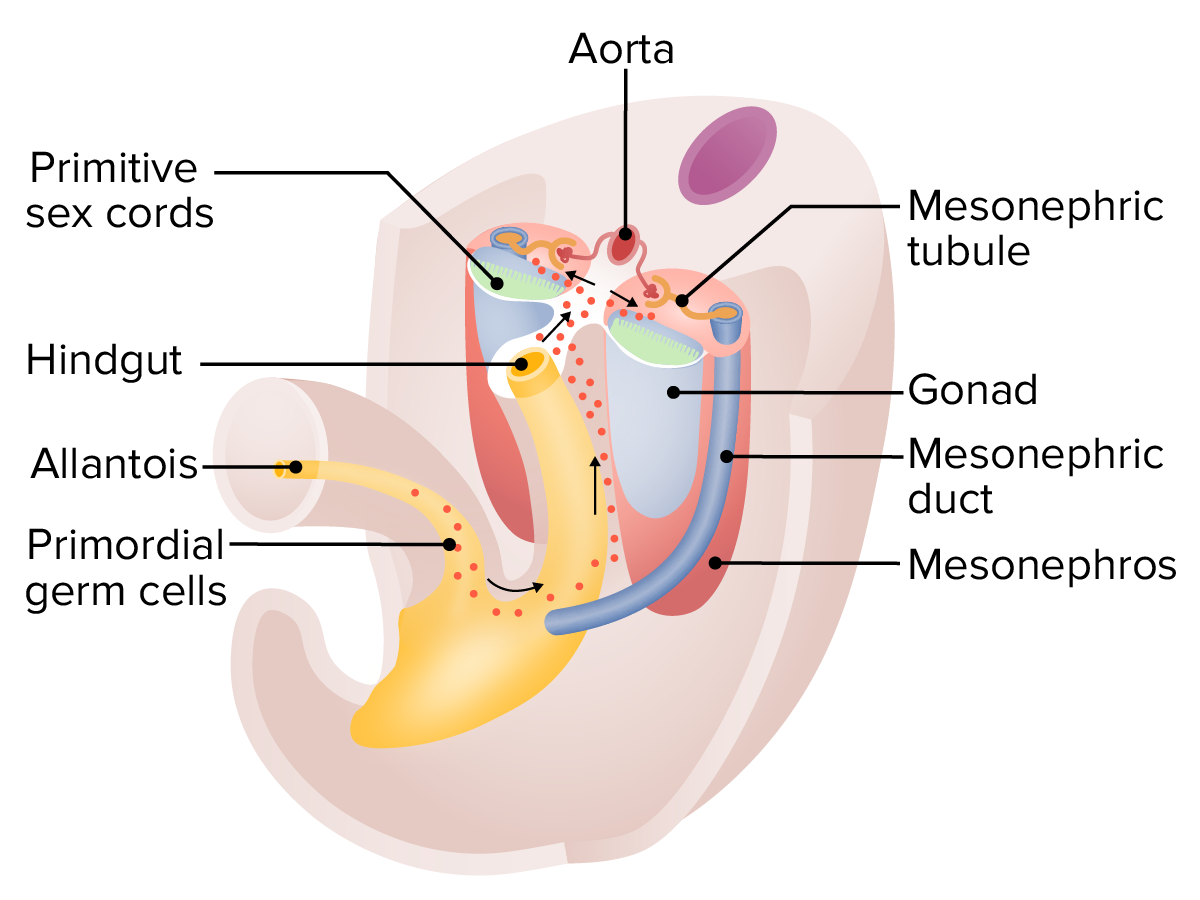
Imagen por Lecturio. Licencia: CC BY-NC-SA 4.0

Desarrollo embrionario de las gónadas bipotentes

  • Una porción del mesodermo intermedio que cubre la porción anterior de los LOS Neisseria cordones nefrogénicos → conocida como cresta gonadal
  • Células epiteliales en EN Erythema nodosum is an immune-mediated panniculitis (inflammation of the subcutaneous fat) caused by a type IV (delayed-type) hypersensitivity reaction. It commonly manifests in young women as tender, erythematous nodules on the shins. Erythema Nodosum la cresta gonadal:
    • Proliferan y se condensan
    • Penetran en EN Erythema nodosum is an immune-mediated panniculitis (inflammation of the subcutaneous fat) caused by a type IV (delayed-type) hypersensitivity reaction. It commonly manifests in young women as tender, erythematous nodules on the shins. Erythema Nodosum el mesénquima para formar los LOS Neisseria cordones sexuales primitivos (gónadas aún indiferenciadas)
    • Estas células se convertirán en EN Erythema nodosum is an immune-mediated panniculitis (inflammation of the subcutaneous fat) caused by a type IV (delayed-type) hypersensitivity reaction. It commonly manifests in young women as tender, erythematous nodules on the shins. Erythema Nodosum células estromales:
      • Células de Sertoli y Leydig en EN Erythema nodosum is an immune-mediated panniculitis (inflammation of the subcutaneous fat) caused by a type IV (delayed-type) hypersensitivity reaction. It commonly manifests in young women as tender, erythematous nodules on the shins. Erythema Nodosum hombres
      • Células de la granulosa y de la teca en EN Erythema nodosum is an immune-mediated panniculitis (inflammation of the subcutaneous fat) caused by a type IV (delayed-type) hypersensitivity reaction. It commonly manifests in young women as tender, erythematous nodules on the shins. Erythema Nodosum mujeres
  • Células germinales primordiales:
    • Se diferenciarán en EN Erythema nodosum is an immune-mediated panniculitis (inflammation of the subcutaneous fat) caused by a type IV (delayed-type) hypersensitivity reaction. It commonly manifests in young women as tender, erythematous nodules on the shins. Erythema Nodosum espermatozoides u ovocitos
    • Se originan en EN Erythema nodosum is an immune-mediated panniculitis (inflammation of the subcutaneous fat) caused by a type IV (delayed-type) hypersensitivity reaction. It commonly manifests in young women as tender, erythematous nodules on the shins. Erythema Nodosum el epiblasto
    • Migran al AL Amyloidosis saco vitelino → a través de la alantoides (cordón umbilical) → a lo largo del mesenterio dorsal del intestino posterior → crestas genitales
    • Las células germinales invaden las crestas gonadales aproximadamente a las 6 semanas
  • Los LOS Neisseria cordones sexuales en EN Erythema nodosum is an immune-mediated panniculitis (inflammation of the subcutaneous fat) caused by a type IV (delayed-type) hypersensitivity reaction. It commonly manifests in young women as tender, erythematous nodules on the shins. Erythema Nodosum desarrollo se asocian con la migración de células germinales primordiales para formar gónadas.

Desarrollo de los Genitales Masculinos Internos

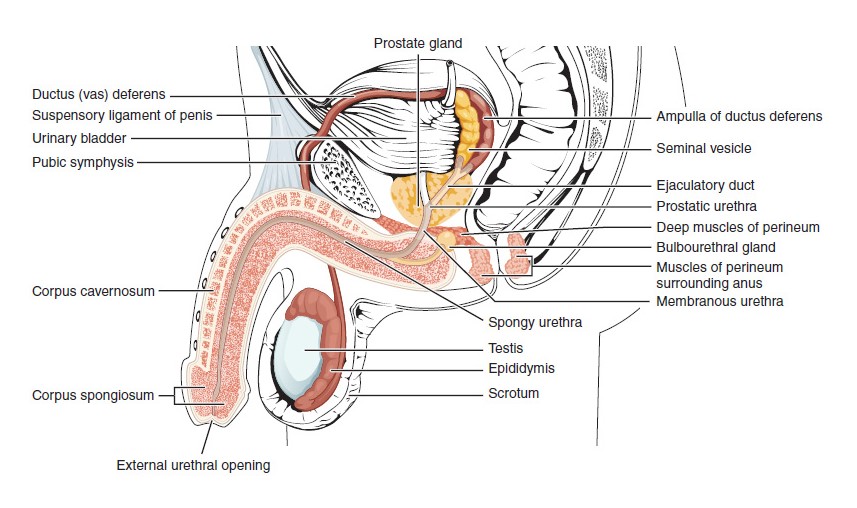
Descripción general de las estructuras genitales masculinas adultas

Estructuras del sistema reproductor masculino.

Estructuras del sistema reproductor masculino

Imagen: “Male Reproductive System” por OpenStax College. Licencia: CC BY 4.0, recortado por Lecturio.
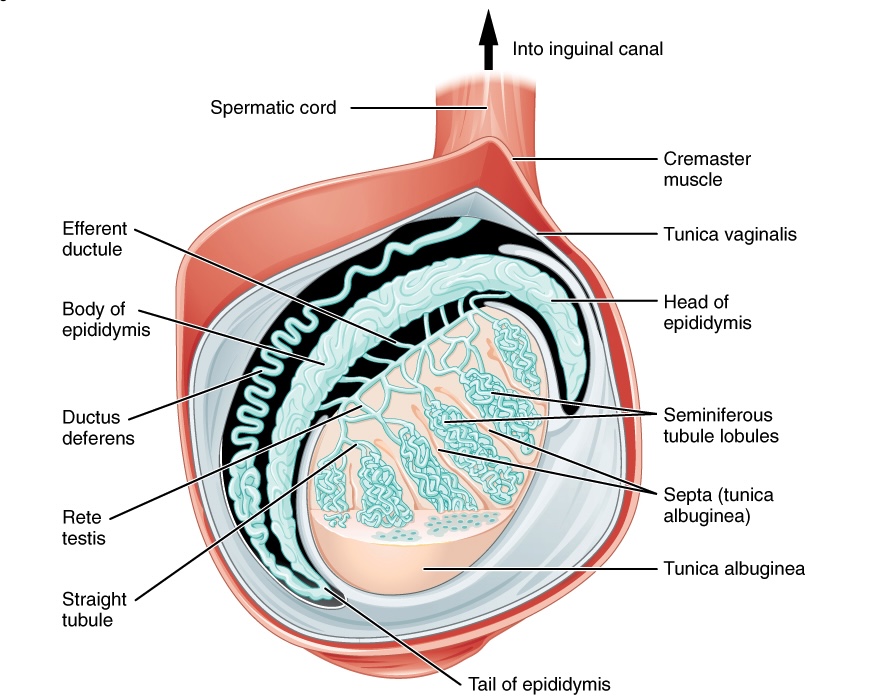
Desarrollo de los LOS Neisseria testículos

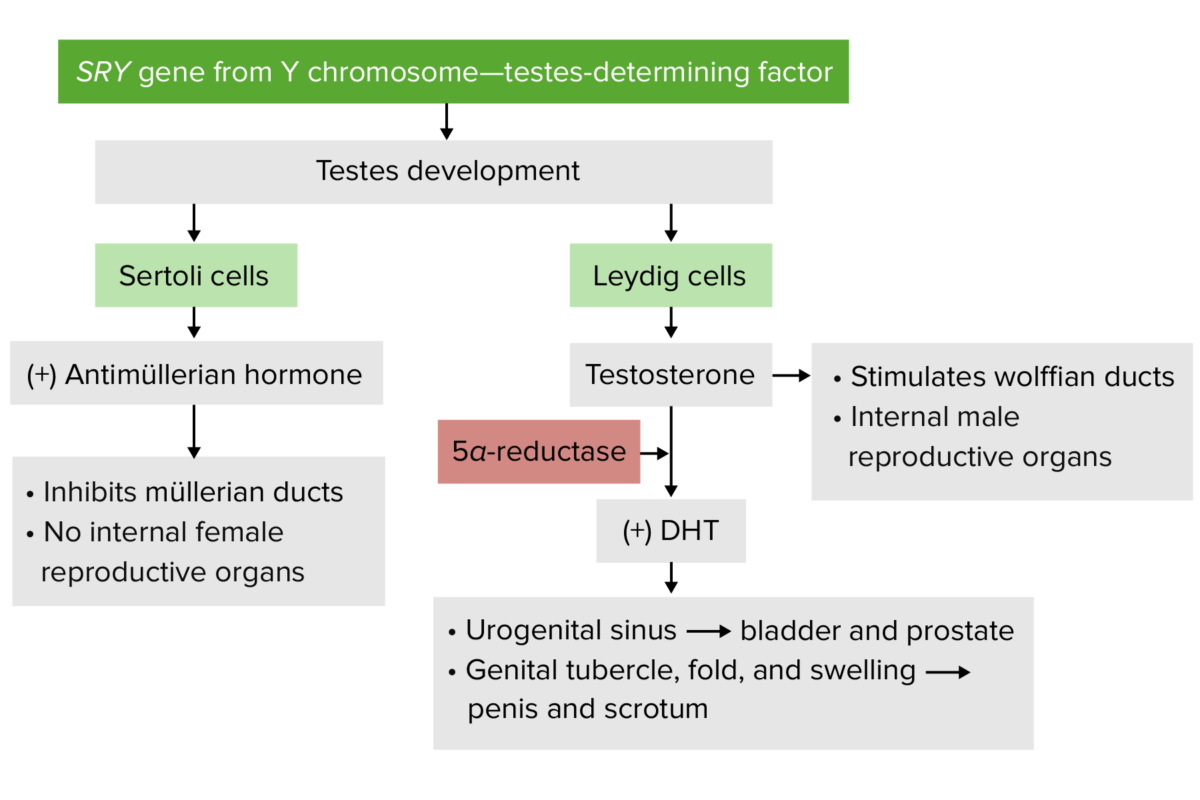
  • El desarrollo masculino comienza como resultado de la presencia de la región determinante del sexo del gen del cromosoma Y (gen SRY):
    • Produce proteína SRY (también conocida como factor determinante de testículos)
    • SRY/factor determinante de testículos estimulan la diferenciación de la gónada bipotente en EN Erythema nodosum is an immune-mediated panniculitis (inflammation of the subcutaneous fat) caused by a type IV (delayed-type) hypersensitivity reaction. It commonly manifests in young women as tender, erythematous nodules on the shins. Erythema Nodosum testículos estimulando las células estromales para que se diferencien en EN Erythema nodosum is an immune-mediated panniculitis (inflammation of the subcutaneous fat) caused by a type IV (delayed-type) hypersensitivity reaction. It commonly manifests in young women as tender, erythematous nodules on the shins. Erythema Nodosum:
      • Células de Leydig → secretan testosterona
      • Células de Sertoli → secretan factor inhibidor de Müller (también llamado hormona antimülleriana)
      • Túbulos seminíferos
  • Testosterona:
    • Estimula la diferenciación de los LOS Neisseria conductos de Wolff/mesonéfricos en EN Erythema nodosum is an immune-mediated panniculitis (inflammation of the subcutaneous fat) caused by a type IV (delayed-type) hypersensitivity reaction. It commonly manifests in young women as tender, erythematous nodules on the shins. Erythema Nodosum:
      • Epidídimo
      • Vaso deferente
      • Vesículas seminales
      • Conductos eyaculatorios
    • Se convierte en EN Erythema nodosum is an immune-mediated panniculitis (inflammation of the subcutaneous fat) caused by a type IV (delayed-type) hypersensitivity reaction. It commonly manifests in young women as tender, erythematous nodules on the shins. Erythema Nodosum dihidrotestosterona por la 5α-reductasa → estimula el desarrollo de:
      • La próstata a partir del seno urogenital
      • Genitales masculinos externos
  • Factor antimülleriano provoca la regresión de los LOS Neisseria conductos de Müller/paramesonéfricos (que se convierten en EN Erythema nodosum is an immune-mediated panniculitis (inflammation of the subcutaneous fat) caused by a type IV (delayed-type) hypersensitivity reaction. It commonly manifests in young women as tender, erythematous nodules on the shins. Erythema Nodosum estructuras femeninas internas)
  • Las células germinales primordiales se diferencian en EN Erythema nodosum is an immune-mediated panniculitis (inflammation of the subcutaneous fat) caused by a type IV (delayed-type) hypersensitivity reaction. It commonly manifests in young women as tender, erythematous nodules on the shins. Erythema Nodosum espermatozoides.
  • El proceso de diferenciación se completa en EN Erythema nodosum is an immune-mediated panniculitis (inflammation of the subcutaneous fat) caused by a type IV (delayed-type) hypersensitivity reaction. It commonly manifests in young women as tender, erythematous nodules on the shins. Erythema Nodosum gran medida a las 12 semanas de gestación.

Desarrollo de los Genitales Femeninos Internos

Desarrollo de los LOS Neisseria ovarios

  • El desarrollo del ovario a partir de la gónada bipotente requiere:
    • Ausencia del gen SRY (que evita la diferenciación en EN Erythema nodosum is an immune-mediated panniculitis (inflammation of the subcutaneous fat) caused by a type IV (delayed-type) hypersensitivity reaction. It commonly manifests in young women as tender, erythematous nodules on the shins. Erythema Nodosum testículos)
      • Sin testosterona → no hay desarrollo de los LOS Neisseria conductos mesonéfricos
      • Sin factor antimülleriano → persisten los LOS Neisseria conductos paramesonéfricos/de Müller
    • Presencia de varios genes Genes A category of nucleic acid sequences that function as units of heredity and which code for the basic instructions for the development, reproduction, and maintenance of organisms. DNA Types and Structure que se encuentran en EN Erythema nodosum is an immune-mediated panniculitis (inflammation of the subcutaneous fat) caused by a type IV (delayed-type) hypersensitivity reaction. It commonly manifests in young women as tender, erythematous nodules on the shins. Erythema Nodosum el cromosoma X
    • Comienza alrededor de las 10 semanas de gestación
  • Las células epiteliales de la cresta gonadal → se convierten en EN Erythema nodosum is an immune-mediated panniculitis (inflammation of the subcutaneous fat) caused by a type IV (delayed-type) hypersensitivity reaction. It commonly manifests in young women as tender, erythematous nodules on the shins. Erythema Nodosum células foliculares:
    • Tipos de células:
      • Células de la granulosa
      • Células de la teca
    • Producen estrógeno → estimula la formación de los LOS Neisseria genitales femeninos externos
  • Células germinales primordiales:
    • Se convierten en EN Erythema nodosum is an immune-mediated panniculitis (inflammation of the subcutaneous fat) caused by a type IV (delayed-type) hypersensitivity reaction. It commonly manifests in young women as tender, erythematous nodules on the shins. Erythema Nodosum ovocitos
    • Se asocian con las células foliculares

Desarrollo de las trompas de Falopio, el útero y la vagina Vagina The vagina is the female genital canal, extending from the vulva externally to the cervix uteri internally. The structures have sexual, reproductive, and urinary functions and a rich blood supply, mainly arising from the internal iliac artery. Vagina, Vulva, and Pelvic Floor: Anatomy

Paso 1: fusión de los LOS Neisseria conductos paramesonéfricos

  • Los LOS Neisseria conductos se fusionan en EN Erythema nodosum is an immune-mediated panniculitis (inflammation of the subcutaneous fat) caused by a type IV (delayed-type) hypersensitivity reaction. It commonly manifests in young women as tender, erythematous nodules on the shins. Erythema Nodosum la línea media adyacente al AL Amyloidosis seno urogenital.
  • Los LOS Neisseria conductos paramesonéfricos fusionados se diferencian en EN Erythema nodosum is an immune-mediated panniculitis (inflammation of the subcutaneous fat) caused by a type IV (delayed-type) hypersensitivity reaction. It commonly manifests in young women as tender, erythematous nodules on the shins. Erythema Nodosum:
    • Útero
    • Cuello uterino
    • Vagina Vagina The vagina is the female genital canal, extending from the vulva externally to the cervix uteri internally. The structures have sexual, reproductive, and urinary functions and a rich blood supply, mainly arising from the internal iliac artery. Vagina, Vulva, and Pelvic Floor: Anatomy superior
  • Las paredes mediales de los LOS Neisseria conductos forman inicialmente un tabique longitudinal en EN Erythema nodosum is an immune-mediated panniculitis (inflammation of the subcutaneous fat) caused by a type IV (delayed-type) hypersensitivity reaction. It commonly manifests in young women as tender, erythematous nodules on the shins. Erythema Nodosum la línea media.
    • Este tabique normalmente retrocede por completo, creando una sola cavidad.
    • El tabique puede persistir, dando como resultado un tabique uterino, cervical y/o vaginal longitudinal.
  • Los LOS Neisseria extremos laterales de los LOS Neisseria conductos paramesonéfricos permanecen “sin fusionar” → estos se diferenciarán en EN Erythema nodosum is an immune-mediated panniculitis (inflammation of the subcutaneous fat) caused by a type IV (delayed-type) hypersensitivity reaction. It commonly manifests in young women as tender, erythematous nodules on the shins. Erythema Nodosum las trompas de Falopio

Paso 2: conexión de los LOS Neisseria conductos paramesonéfricos fusionados al AL Amyloidosis seno urogenital
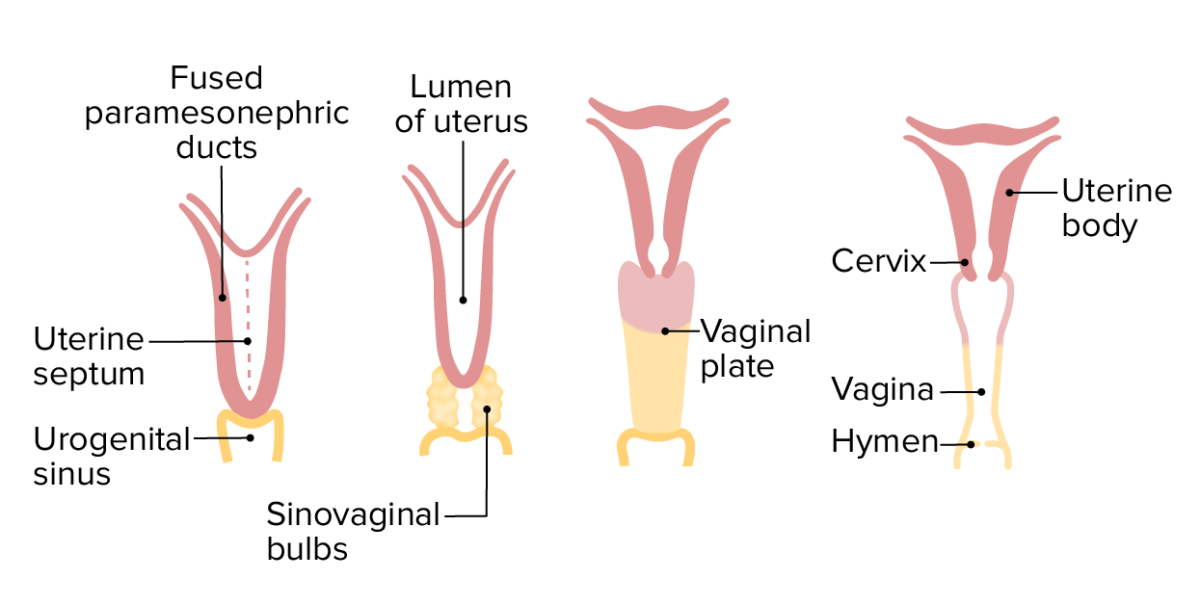
  • Unos engrosamientos crecen en EN Erythema nodosum is an immune-mediated panniculitis (inflammation of the subcutaneous fat) caused by a type IV (delayed-type) hypersensitivity reaction. It commonly manifests in young women as tender, erythematous nodules on the shins. Erythema Nodosum la porción superior del seno urogenital llamados bulbos sinovaginales.
  • Bulbos sinovaginales:
    • Localizados entre los LOS Neisseria conductos paramesonéfricos fusionados y el seno urogenital
    • Se engrosan y crecen hasta convertirse en EN Erythema nodosum is an immune-mediated panniculitis (inflammation of the subcutaneous fat) caused by a type IV (delayed-type) hypersensitivity reaction. It commonly manifests in young women as tender, erythematous nodules on the shins. Erythema Nodosum una estructura sólida llamada placa vaginal
  • Placa vaginal:
    • Se alarga
    • Conecta el útero en EN Erythema nodosum is an immune-mediated panniculitis (inflammation of the subcutaneous fat) caused by a type IV (delayed-type) hypersensitivity reaction. It commonly manifests in young women as tender, erythematous nodules on the shins. Erythema Nodosum desarrollo (desde los LOS Neisseria conductos paramesonéfricos) al AL Amyloidosis vestíbulo (abertura hacia el exterior del cuerpo, que se origina en EN Erythema nodosum is an immune-mediated panniculitis (inflammation of the subcutaneous fat) caused by a type IV (delayed-type) hypersensitivity reaction. It commonly manifests in young women as tender, erythematous nodules on the shins. Erythema Nodosum el seno urogenital)
    • Un lumen se desarrolla dentro de la placa vaginal, creando la vagina Vagina The vagina is the female genital canal, extending from the vulva externally to the cervix uteri internally. The structures have sexual, reproductive, and urinary functions and a rich blood supply, mainly arising from the internal iliac artery. Vagina, Vulva, and Pelvic Floor: Anatomy
    • La falta de canalización da como resultado agenesia vaginal
    • Himen: membrana donde la placa vaginal se encuentra con el seno urogenital

Desarrollo de los Genitales Externos

  • Hasta las 6 semanas de gestación, el desarrollo del sexo es idéntico y no binario.
  • Las primeras estructuras se desarrollan a partir de pliegues en EN Erythema nodosum is an immune-mediated panniculitis (inflammation of the subcutaneous fat) caused by a type IV (delayed-type) hypersensitivity reaction. It commonly manifests in young women as tender, erythematous nodules on the shins. Erythema Nodosum la cloaca Cloaca A dilated cavity extended caudally from the hindgut. In adult birds, reptiles, amphibians, and many fishes but few mammals, cloaca is a common chamber into which the digestive, urinary and reproductive tracts discharge their contents. In most mammals, cloaca gives rise to large intestine; urinary bladder; and genitalia. Development of the Abdominal Organs e incluyen:
    • Tubérculo genital
    • Pliegues genitales
    • Protuberancias genitales.
  • El desarrollo de los LOS Neisseria genitales externos depende de las hormonas presentes:
    • Testosterona/dihidrotestosterona → estructuras masculinas
    • Estrógeno → estructuras femeninas
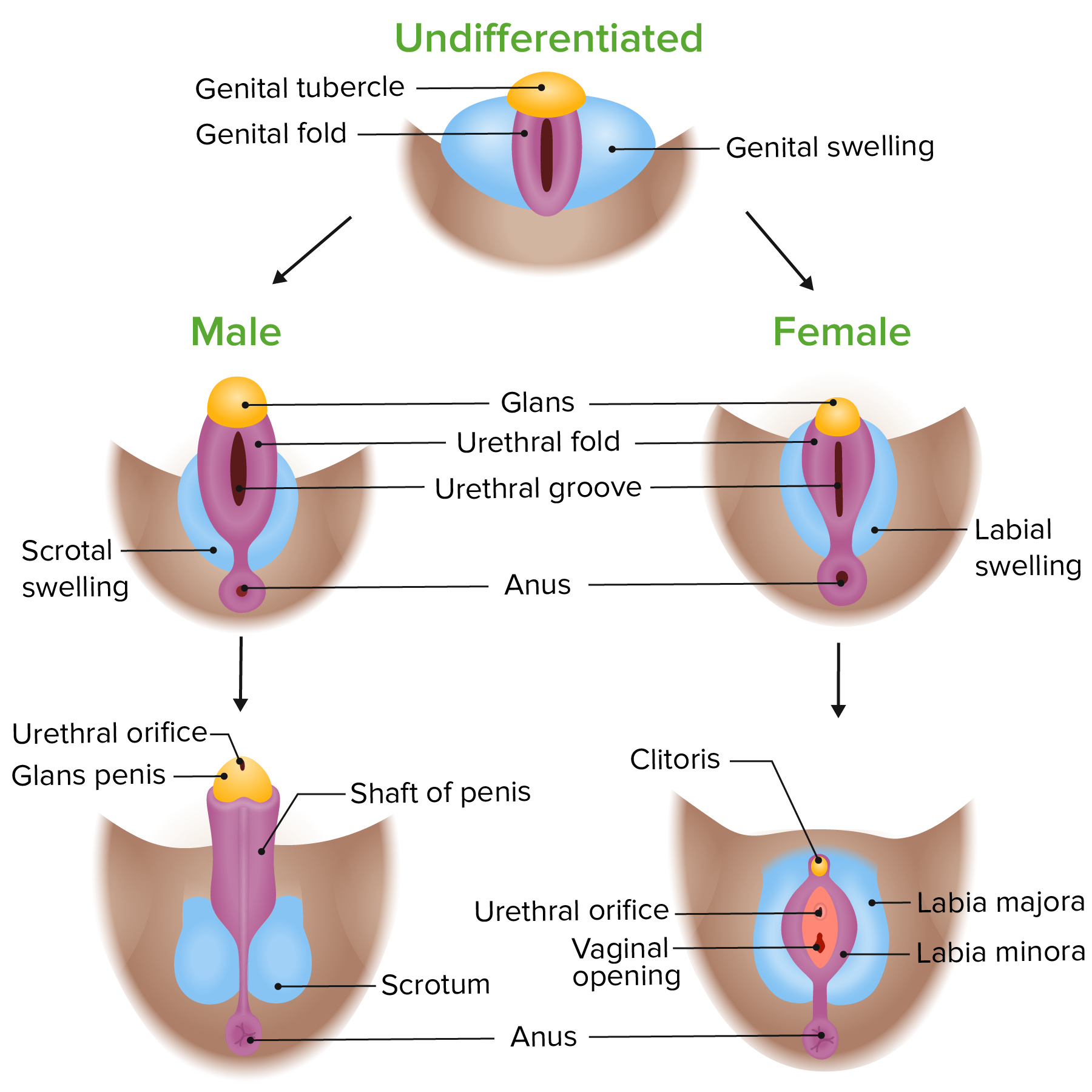
Tabla: Desarrollo de los LOS Neisseria genitales externos a partir de estructuras tempranas
Estructura indiferenciada En EN Erythema nodosum is an immune-mediated panniculitis (inflammation of the subcutaneous fat) caused by a type IV (delayed-type) hypersensitivity reaction. It commonly manifests in young women as tender, erythematous nodules on the shins. Erythema Nodosum presencia de testosterona Estrógeno/falta de testosterona
Seno urogenital
  • Uretra prostática
  • Uretra membranosa
  • Glándula prostática
  • Glándulas bulbouretrales
  • (Vejiga*)
  • Uretra femenina
  • Glándulas de Bartolino
  • Glándulas de Skene
  • (Vejiga*)
Tubérculo genital (forma tejido eréctil)
  • Glande del pene
  • Cuerpo cavernoso
  • Cuerpo esponjoso
  • Glande del clítoris
  • Bulbos vestibulares
Pliegues genitales
  • Cuerpo del pene
  • Uretra peneana
Labios menores
Protuberancia genital Escroto Labios mayores
* El desarrollo es independiente de las hormonas.
Diferenciación fenotípica de los genitales externos en embriones masculinos y femeninos

Diferenciación fenotípica de los genitales externos en embriones masculinos y femeninos:
Tanto los genitales externos masculinos como femeninos se desarrollan a partir de las mismas estructuras iniciales, pero divergen ya que están expuestos a diferentes niveles de andrógenos y estrógenos.
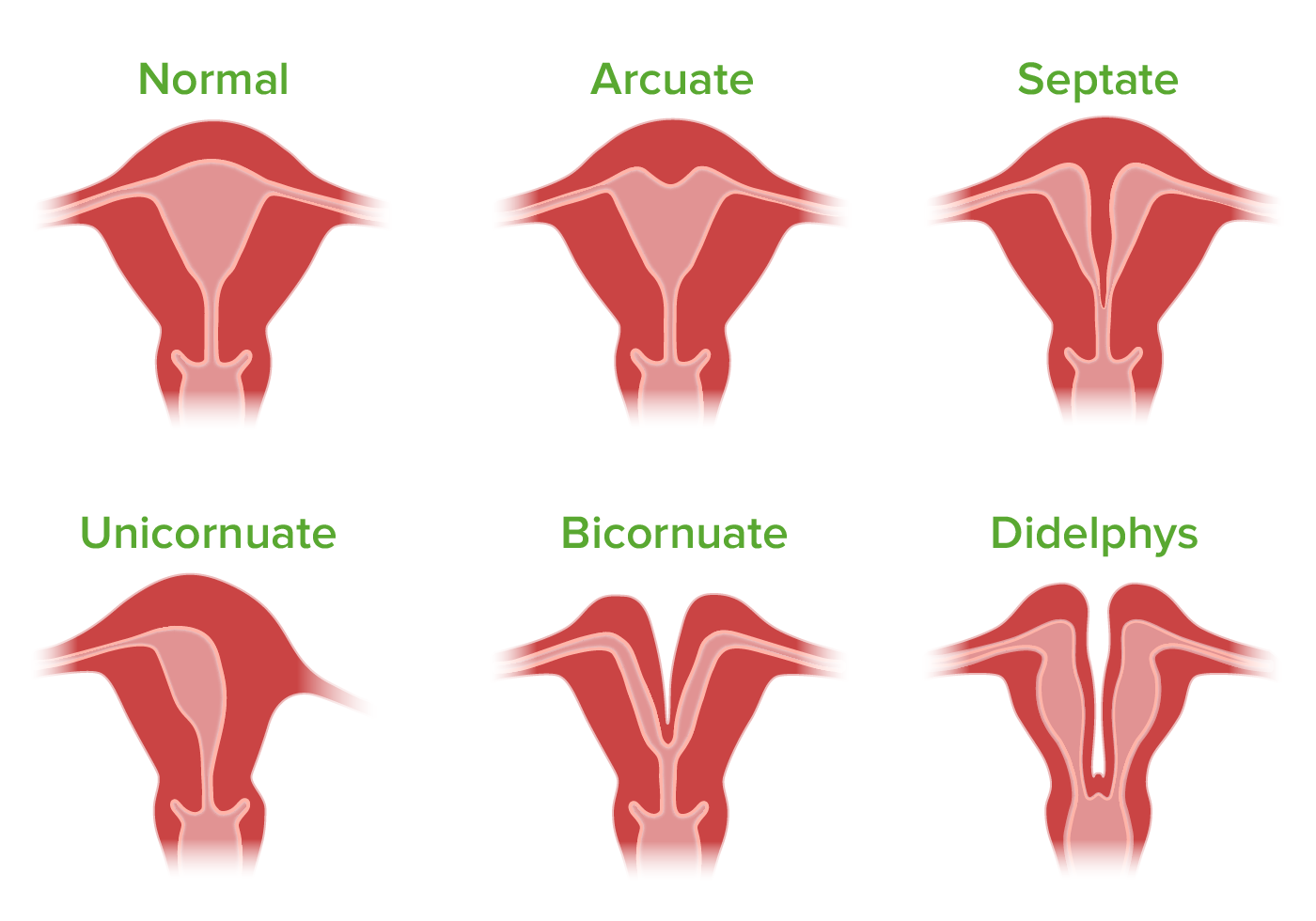
Imagen por Lecturio. Licencia: CC BY-NC-SA 4.0

Relevancia Clínica

Trastornos del desarrollo urinario

  • Riñón en EN Erythema nodosum is an immune-mediated panniculitis (inflammation of the subcutaneous fat) caused by a type IV (delayed-type) hypersensitivity reaction. It commonly manifests in young women as tender, erythematous nodules on the shins. Erythema Nodosum herradura: defecto del desarrollo de los LOS Neisseria riñones en EN Erythema nodosum is an immune-mediated panniculitis (inflammation of the subcutaneous fat) caused by a type IV (delayed-type) hypersensitivity reaction. It commonly manifests in young women as tender, erythematous nodules on the shins. Erythema Nodosum el que los LOS Neisseria polos inferiores se fusionan. A medida que el riñón intenta migrar hacia arriba durante el desarrollo, es bloqueado por la arteria mesentérica superior. La irrigación y el sistema colector del riñón también tienden a tener varios grados de distorsión. Los LOS Neisseria individuos suelen ser asintomáticos y el diagnóstico incidental se realiza mediante imagenología. Otras presentaciones incluyen infección, obstrucción, hidronefrosis y cálculos.
  • Duplicaciones del sistema colector: conocido como “sistema duplicado”. Las duplicaciones del sistema colector son la anomalía congénita más común del tracto urinario. En EN Erythema nodosum is an immune-mediated panniculitis (inflammation of the subcutaneous fat) caused by a type IV (delayed-type) hypersensitivity reaction. It commonly manifests in young women as tender, erythematous nodules on the shins. Erythema Nodosum estos casos, un riñón tendrá 2 sistemas pelvicaliceales separados y 2 uréteres. La inserción ureteral en EN Erythema nodosum is an immune-mediated panniculitis (inflammation of the subcutaneous fat) caused by a type IV (delayed-type) hypersensitivity reaction. It commonly manifests in young women as tender, erythematous nodules on the shins. Erythema Nodosum la vejiga desde el sistema duplicado también suele ser anormal. La mayoría de las personas son asintomáticas, aunque pueden producirse infecciones recurrentes del tracto urinario (ITU) u obstrucción.
  • Agenesia renal: ausencia congénita de un riñón, concretamente de tejido parenquimatoso renal. Esta ausencia resulta de la interrupción del desarrollo del metanefros. La mayoría de las personas son asintomáticas (porque tienen otro riñón que funciona normalmente) y se les diagnostica de manera incidental con imagenología. La agenesia renal a menudo se asocia con anomalías congénitas adicionales.
  • Válvulas uretrales posteriores: persistencia de la membrana urogenital, lo que provoca obstrucción uretral en EN Erythema nodosum is an immune-mediated panniculitis (inflammation of the subcutaneous fat) caused by a type IV (delayed-type) hypersensitivity reaction. It commonly manifests in young women as tender, erythematous nodules on the shins. Erythema Nodosum los LOS Neisseria hombres. Los LOS Neisseria lactantes afectados a menudo se presentan in utero con hidronefrosis bilateral grave que se observa en EN Erythema nodosum is an immune-mediated panniculitis (inflammation of the subcutaneous fat) caused by a type IV (delayed-type) hypersensitivity reaction. It commonly manifests in young women as tender, erythematous nodules on the shins. Erythema Nodosum el ultrasonido y que causa necrosis Necrosis The death of cells in an organ or tissue due to disease, injury or failure of the blood supply. Ischemic Cell Damage por presión del tejido renal y enfermedad renal crónica en EN Erythema nodosum is an immune-mediated panniculitis (inflammation of the subcutaneous fat) caused by a type IV (delayed-type) hypersensitivity reaction. It commonly manifests in young women as tender, erythematous nodules on the shins. Erythema Nodosum estos niños. Existe una alta probabilidad de que sea necesario un trasplante renal.
  • Fístula uracal: persistencia del uraco. El uraco se conoce como alantoides en EN Erythema nodosum is an immune-mediated panniculitis (inflammation of the subcutaneous fat) caused by a type IV (delayed-type) hypersensitivity reaction. It commonly manifests in young women as tender, erythematous nodules on the shins. Erythema Nodosum una etapa más temprana del desarrollo y se conecta a la vejiga. Los LOS Neisseria lactantes con una fístula uracal pueden expulsar orina por el ombligo al AL Amyloidosis nacer.

Anomalías congénitas del sistema reproductivo

  • Quistes del conducto de Gartner: quistes benignos que se pueden ver a ambos lados de los LOS Neisseria órganos reproductores femeninos (por lo general, la parte superior de la vagina Vagina The vagina is the female genital canal, extending from the vulva externally to the cervix uteri internally. The structures have sexual, reproductive, and urinary functions and a rich blood supply, mainly arising from the internal iliac artery. Vagina, Vulva, and Pelvic Floor: Anatomy). Estos quistes representan restos de los LOS Neisseria conductos mesonéfricos y suelen ser asintomáticos.
  • Anomalías müllerianas: la fusión anormal de los LOS Neisseria conductos müllerianos/paramesonéfricos puede resultar en EN Erythema nodosum is an immune-mediated panniculitis (inflammation of the subcutaneous fat) caused by a type IV (delayed-type) hypersensitivity reaction. It commonly manifests in young women as tender, erythematous nodules on the shins. Erythema Nodosum una variedad de anomalías uterinas, cervicales y vaginales. Las personas a menudo son asintomáticas, aunque pueden presentar infertilidad o problemas relacionados con la menstruación.
Malformaciones del útero.

Ilustración que muestra los tipos de malformaciones congénitas del útero

Imagen por Lecturio. Licencia: CC BY-NC-SA 4.0
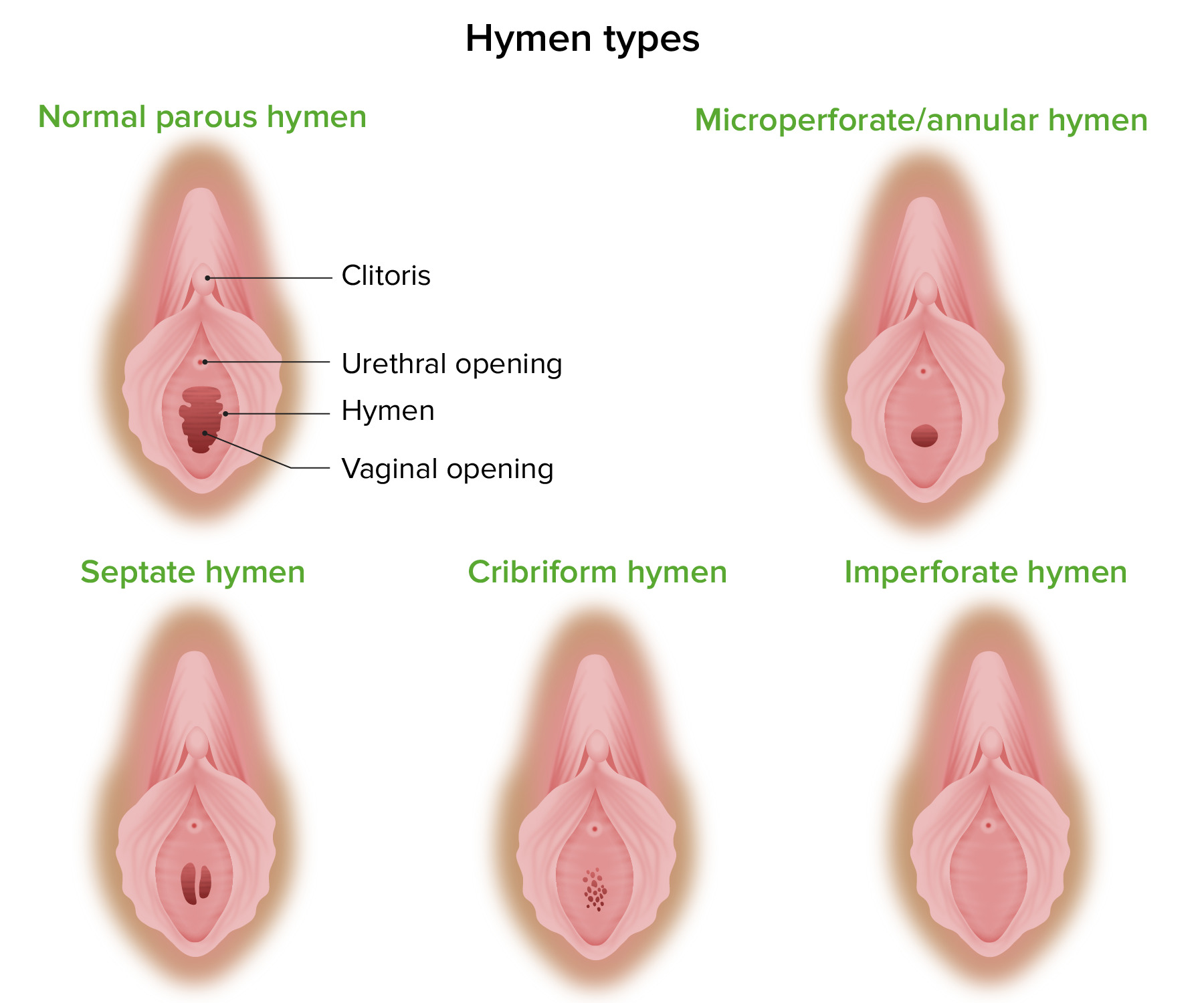
  • Anomalías del himen: el himen es la membrana donde la placa vaginal se encuentra con el seno urogenital. Normalmente, el himen se rompe antes del nacimiento, sin embargo, es posible que surjan varias anomalías. Un himen imperforado no permitirá la salida de ningún líquido uterino y, por lo general, se presenta con dolor Dolor Inflammation al AL Amyloidosis inicio de la menstruación. El tratamiento es quirúrgico.
Malformaciones del himen

Himen poroso normal en comparación con las malformaciones comunes del himen, incluidos himen microperforado, tabicado, cribiforme e imperforado

Imagen por Lecturio. Licencia: CC BY-NC-SA 4.0
  • Hipospadias: anomalía congénita de la uretra masculina que se caracteriza por una ubicación anormal del meato uretral en EN Erythema nodosum is an immune-mediated panniculitis (inflammation of the subcutaneous fat) caused by a type IV (delayed-type) hypersensitivity reaction. It commonly manifests in young women as tender, erythematous nodules on the shins. Erythema Nodosum la superficie ventral del pene. El meato puede estar ubicado en EN Erythema nodosum is an immune-mediated panniculitis (inflammation of the subcutaneous fat) caused by a type IV (delayed-type) hypersensitivity reaction. It commonly manifests in young women as tender, erythematous nodules on the shins. Erythema Nodosum cualquier parte del glande, el cuerpo del pene, el escroto o el periné.

Trastornos del desarrollo sexual

Los LOS Neisseria trastornos del desarrollo sexual son un grupo de afecciones caracterizadas por un desarrollo sexual atípico en EN Erythema nodosum is an immune-mediated panniculitis (inflammation of the subcutaneous fat) caused by a type IV (delayed-type) hypersensitivity reaction. It commonly manifests in young women as tender, erythematous nodules on the shins. Erythema Nodosum un individuo, que puede involucrar anomalías en EN Erythema nodosum is an immune-mediated panniculitis (inflammation of the subcutaneous fat) caused by a type IV (delayed-type) hypersensitivity reaction. It commonly manifests in young women as tender, erythematous nodules on the shins. Erythema Nodosum la estructura y/o función de los LOS Neisseria órganos reproductores internos y/o genitales externos.

  • Hiperplasia suprarrenal congénita: aumento de la formación de hormonas sexuales masculinas (andrógenos) con virilización de los LOS Neisseria genitales femeninos externos. Caracterizado por niveles bajos de cortisol Cortisol Glucocorticoids, niveles altos de hormona adrenocorticotropa (ACTH, por sus siglas en EN Erythema nodosum is an immune-mediated panniculitis (inflammation of the subcutaneous fat) caused by a type IV (delayed-type) hypersensitivity reaction. It commonly manifests in young women as tender, erythematous nodules on the shins. Erythema Nodosum inglés) e hiperplasia suprarrenal.
  • Síndrome de insensibilidad a los LOS Neisseria andrógenos: las mutaciones en EN Erythema nodosum is an immune-mediated panniculitis (inflammation of the subcutaneous fat) caused by a type IV (delayed-type) hypersensitivity reaction. It commonly manifests in young women as tender, erythematous nodules on the shins. Erythema Nodosum los LOS Neisseria receptores de andrógenos provocan una resistencia parcial o completa a la testosterona. Genotípicamente, los LOS Neisseria individuos afectados tienen un cariotipo 46XY y los LOS Neisseria testículos están presentes internamente. Los LOS Neisseria niveles de testosterona están elevados y parte de esta testosterona se convierte en EN Erythema nodosum is an immune-mediated panniculitis (inflammation of the subcutaneous fat) caused by a type IV (delayed-type) hypersensitivity reaction. It commonly manifests in young women as tender, erythematous nodules on the shins. Erythema Nodosum estrógeno periféricamente. Clínicamente, las personas con síndrome de insensibilidad a los LOS Neisseria andrógenos completo se presentarán sin vello sexual y tendrán genitales externos femeninos de apariencia normal. Por lo general, a los LOS Neisseria individuos se les asigna el género femenino al AL Amyloidosis nacer y se presentarán en EN Erythema nodosum is an immune-mediated panniculitis (inflammation of the subcutaneous fat) caused by a type IV (delayed-type) hypersensitivity reaction. It commonly manifests in young women as tender, erythematous nodules on the shins. Erythema Nodosum la pubertad con amenorrea.
  • Deficiencia de aromatasa: resulta en EN Erythema nodosum is an immune-mediated panniculitis (inflammation of the subcutaneous fat) caused by a type IV (delayed-type) hypersensitivity reaction. It commonly manifests in young women as tender, erythematous nodules on the shins. Erythema Nodosum una incapacidad para convertir la testosterona en EN Erythema nodosum is an immune-mediated panniculitis (inflammation of the subcutaneous fat) caused by a type IV (delayed-type) hypersensitivity reaction. It commonly manifests in young women as tender, erythematous nodules on the shins. Erythema Nodosum estrógeno, lo que provoca principalmente la virilización de los LOS Neisseria genitales externos en EN Erythema nodosum is an immune-mediated panniculitis (inflammation of the subcutaneous fat) caused by a type IV (delayed-type) hypersensitivity reaction. It commonly manifests in young women as tender, erythematous nodules on the shins. Erythema Nodosum las mujeres.
  • Deficiencia de 5α-reductasa: trastorno autosómico recesivo que altera la conversión de testosterona en EN Erythema nodosum is an immune-mediated panniculitis (inflammation of the subcutaneous fat) caused by a type IV (delayed-type) hypersensitivity reaction. It commonly manifests in young women as tender, erythematous nodules on the shins. Erythema Nodosum dihidrotestosterona, impidiendo el desarrollo completo de los LOS Neisseria genitales externos en EN Erythema nodosum is an immune-mediated panniculitis (inflammation of the subcutaneous fat) caused by a type IV (delayed-type) hypersensitivity reaction. It commonly manifests in young women as tender, erythematous nodules on the shins. Erythema Nodosum los LOS Neisseria hombres. Este trastorno da como resultado genitales ambiguos en EN Erythema nodosum is an immune-mediated panniculitis (inflammation of the subcutaneous fat) caused by a type IV (delayed-type) hypersensitivity reaction. It commonly manifests in young women as tender, erythematous nodules on the shins. Erythema Nodosum individuos 46XY al AL Amyloidosis nacer.
  • Disgenesia gonadal pura: resulta en EN Erythema nodosum is an immune-mediated panniculitis (inflammation of the subcutaneous fat) caused by a type IV (delayed-type) hypersensitivity reaction. It commonly manifests in young women as tender, erythematous nodules on the shins. Erythema Nodosum gónadas no funcionales. En EN Erythema nodosum is an immune-mediated panniculitis (inflammation of the subcutaneous fat) caused by a type IV (delayed-type) hypersensitivity reaction. It commonly manifests in young women as tender, erythematous nodules on the shins. Erythema Nodosum individuos 46XX, la disgenesia gonadal pura se presenta con insuficiencia ovárica prematura (i.e., menopausia prematura) en EN Erythema nodosum is an immune-mediated panniculitis (inflammation of the subcutaneous fat) caused by a type IV (delayed-type) hypersensitivity reaction. It commonly manifests in young women as tender, erythematous nodules on the shins. Erythema Nodosum mujeres de apariencia normal. En EN Erythema nodosum is an immune-mediated panniculitis (inflammation of the subcutaneous fat) caused by a type IV (delayed-type) hypersensitivity reaction. It commonly manifests in young women as tender, erythematous nodules on the shins. Erythema Nodosum individuos 46XY, la afección se conoce como síndrome de Swyer; sin testículos funcionales, no se produce testosterona ni factor inhibidor de Müller, por lo que los LOS Neisseria individuos tienen genitales femeninos externos y estructuras müllerianas normales. Las personas afectadas se presentan en EN Erythema nodosum is an immune-mediated panniculitis (inflammation of the subcutaneous fat) caused by a type IV (delayed-type) hypersensitivity reaction. It commonly manifests in young women as tender, erythematous nodules on the shins. Erythema Nodosum la adolescencia con amenorrea primaria y ausencia de todas las características sexuales secundarias.
  • Síndrome de Klinefelter: aneuploidia cromosómica caracterizada por la existencia de ≥ 1 cromosoma X adicional en EN Erythema nodosum is an immune-mediated panniculitis (inflammation of the subcutaneous fat) caused by a type IV (delayed-type) hypersensitivity reaction. It commonly manifests in young women as tender, erythematous nodules on the shins. Erythema Nodosum un cariotipo masculino (e.g., 47XXY o 48XXXY). Los LOS Neisseria síntomas generalmente no se observan durante la infancia. Durante la edad adulta, los LOS Neisseria individuos suelen ser hombres altos que presentan ginecomastia e infertilidad relacionada con el hipogonadismo. Las dificultades educativas también son comunes.
  • Síndrome de Turner: aneuploidia cromosómica caracterizada por la ausencia de un cromosoma X en EN Erythema nodosum is an immune-mediated panniculitis (inflammation of the subcutaneous fat) caused by a type IV (delayed-type) hypersensitivity reaction. It commonly manifests in young women as tender, erythematous nodules on the shins. Erythema Nodosum un cariotipo femenino (e.g., 45X0). Las manifestaciones clínicas incluyen un fenotipo característico (estatura baja, cuello palmeado, pezones muy espaciados) y múltiples anomalías que generalmente involucran los LOS Neisseria sistemas cardíaco, renal, reproductivo, esquelético y linfático. Es probable que exista disgenesia gonadal e infertilidad.
  • Trastorno ovotesticular del desarrollo sexual (antes llamado “hermafroditismo verdadero”): presencia de una gónada ovotesticular que contiene elementos tanto ováricos como testiculares. Los LOS Neisseria individuos afectados suelen nacer con genitales ambiguos y las estructuras internas dependen del tejido gonadal adyacente. El cariotipo más frecuente es 46XX.

Referencias

  1. OpenStax College, Anatomy and physiology. OpenStax CNX. http://cnx.org/contents/14fb4ad7-39a1-4eee-ab6e-3ef2482e3e22@11.1.
  2. Saladin, K. S., Miller, L. (2004). Anatomy and physiology, 3rd ed., pp. 881–887
  3. Rehman, S. (2021). Embryology, kidney bladder, and ureter. StatPearls. Retrieved October 12, 2021, from https://www.statpearls.com/articlelibrary/viewarticle/36194/ 
  4. Moncada-Madrazo, M. (2021). Embryology, uterus. n StatPearls. Retrieved October 12, 2021, from https://www.statpearls.com/articlelibrary/viewarticle/37084/ 
  5. Titi-Lartey, O. (2021). Embryology, testicle. StatPearls. Retrieved October 12, 2021, from https://www.statpearls.com/articlelibrary/viewarticle/36068/ 
  6. Baskin, L. (2021). Hypospadias: pathogenesis, diagnosis, and evaluation. UpToDate. Retrieved October 12, 2021, from https://www.uptodate.com/contents/hypospadias-pathogenesis-diagnosis-and-evaluation 

¡Crea tu cuenta gratis o inicia una sesión para seguir leyendo!

Regístrate ahora y obtén acceso gratuito a Lecturio con páginas de concepto, videos médicos y cuestionarios para tu educación médica.

User Reviews

Que tengas una sesión de estudio alegre y navideña 🎁 Ahorra 50% en todos los planes >>

Details