Domina Conceptos Médicos

Estudia para la escuela de medicina y tus examenes con Lecturio.

Coccidioides/Coccidioidomicosis

La coccidioidomicosis, comúnmente conocida como fiebre del Valle de San Joaquín, es una enfermedad fúngica causada por Coccidioides immitis Coccidioides immitis Coccidioides/Coccidioidomycosis o Coccidioides posadasii Coccidioides posadasii Coccidioides/Coccidioidomycosis. Cuando las esporas de Coccidioides Coccidioides Coccidioidomycosis, commonly known as San Joaquin Valley fever, is a fungal disease caused by Coccidioides immitis or Coccidioides posadasii. When Coccidioides spores are inhaled, they transform into spherules that result in infection. Coccidioidomycosis is also a common cause of community-acquired pneumonia and can cause severe disease in the immunocompromised. Coccidioides/Coccidioidomycosis se inhalan, se transforman en EN Erythema nodosum is an immune-mediated panniculitis (inflammation of the subcutaneous fat) caused by a type IV (delayed-type) hypersensitivity reaction. It commonly manifests in young women as tender, erythematous nodules on the shins. Erythema Nodosum esférulas que producen la infección. La coccidioidomicosis también es una causa común de neumonía adquirida en EN Erythema nodosum is an immune-mediated panniculitis (inflammation of the subcutaneous fat) caused by a type IV (delayed-type) hypersensitivity reaction. It commonly manifests in young women as tender, erythematous nodules on the shins. Erythema Nodosum la comunidad y puede causar una enfermedad grave en EN Erythema nodosum is an immune-mediated panniculitis (inflammation of the subcutaneous fat) caused by a type IV (delayed-type) hypersensitivity reaction. It commonly manifests in young women as tender, erythematous nodules on the shins. Erythema Nodosum los LOS Neisseria inmunocomprometidos. Los LOS Neisseria pacientes pueden presentar fiebre, escalofríos, tos TOS Thoracic outlet syndrome (TOS) is a broad term used for a spectrum of syndromes related to the general region of the thoracic outlet, which involves the compression or irritation of elements of the brachial plexus, subclavian artery, or subclavian vein. Thoracic Outlet Syndrome, dolor Dolor Inflammation torácico y dificultad respiratoria. El diagnóstico se basa en EN Erythema nodosum is an immune-mediated panniculitis (inflammation of the subcutaneous fat) caused by a type IV (delayed-type) hypersensitivity reaction. It commonly manifests in young women as tender, erythematous nodules on the shins. Erythema Nodosum los LOS Neisseria antecedentes clínicos, la radiología, la microscopía, el cultivo de hongos y en EN Erythema nodosum is an immune-mediated panniculitis (inflammation of the subcutaneous fat) caused by a type IV (delayed-type) hypersensitivity reaction. It commonly manifests in young women as tender, erythematous nodules on the shins. Erythema Nodosum los LOS Neisseria datos serológicos. El tratamiento consiste en EN Erythema nodosum is an immune-mediated panniculitis (inflammation of the subcutaneous fat) caused by a type IV (delayed-type) hypersensitivity reaction. It commonly manifests in young women as tender, erythematous nodules on the shins. Erythema Nodosum la administración de antifúngicos y cuidados de soporte. En EN Erythema nodosum is an immune-mediated panniculitis (inflammation of the subcutaneous fat) caused by a type IV (delayed-type) hypersensitivity reaction. It commonly manifests in young women as tender, erythematous nodules on the shins. Erythema Nodosum la enfermedad grave, es fundamental abordar la etiología de la inmunosupresión.

Last updated: Dec 15, 2025

Editorial responsibility: Stanley Oiseth, Lindsay Jones, Evelin Maza

Características Generales y Epidemiología

Características básicas de Coccidioides Coccidioides Coccidioidomycosis, commonly known as San Joaquin Valley fever, is a fungal disease caused by Coccidioides immitis or Coccidioides posadasii. When Coccidioides spores are inhaled, they transform into spherules that result in infection. Coccidioidomycosis is also a common cause of community-acquired pneumonia and can cause severe disease in the immunocompromised. Coccidioides/Coccidioidomycosis

Taxonomía:

  • Orden: Onygenales Onygenales An order of fungi in the phylum ascomycota containing many medically important species. There are four families and mitosporic (anamorphic) forms are prominent. Coccidioides/Coccidioidomycosis
  • Familia: Onygenaceae Onygenaceae Coccidioides/Coccidioidomycosis
  • Género: Coccidioides Coccidioides Coccidioidomycosis, commonly known as San Joaquin Valley fever, is a fungal disease caused by Coccidioides immitis or Coccidioides posadasii. When Coccidioides spores are inhaled, they transform into spherules that result in infection. Coccidioidomycosis is also a common cause of community-acquired pneumonia and can cause severe disease in the immunocompromised. Coccidioides/Coccidioidomycosis

Formas:

  • Hongo dimórfico
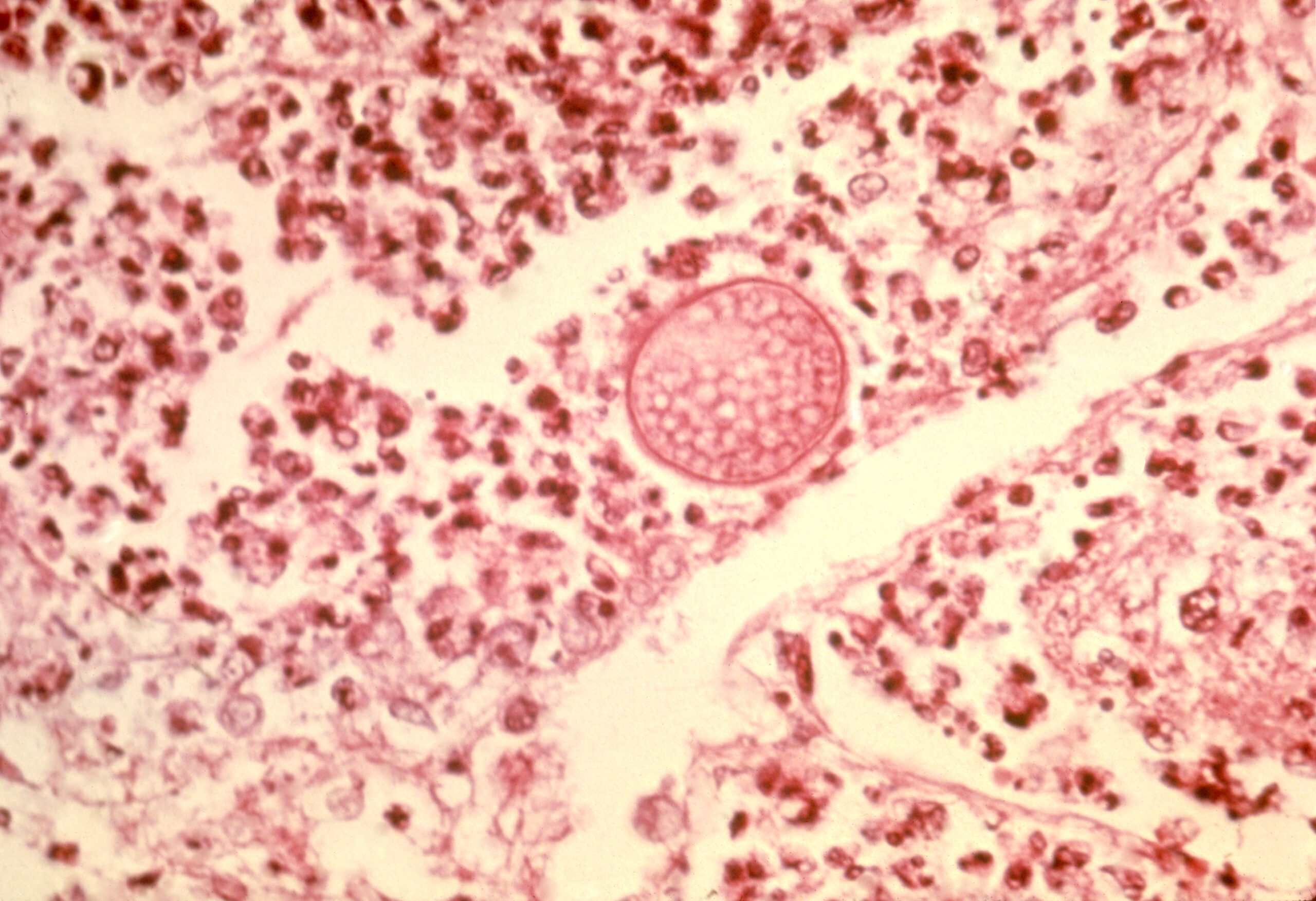
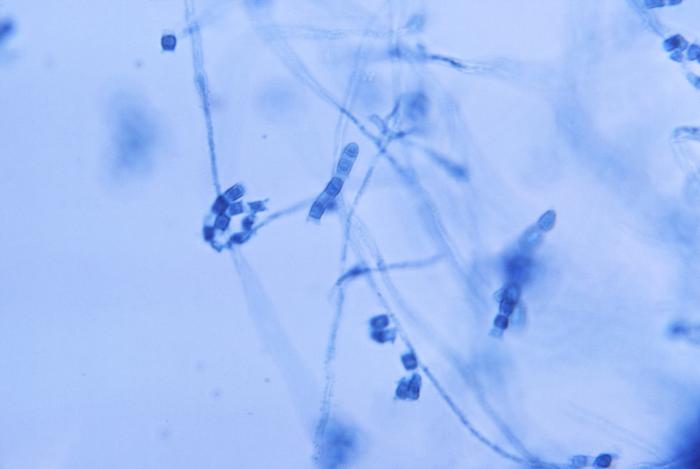
  • Existe como micelio o como esférula (formas asexuales)

Reproducción:

  • No se ha HA Hemolytic anemia (HA) is the term given to a large group of anemias that are caused by the premature destruction/hemolysis of circulating red blood cells (RBCs). Hemolysis can occur within (intravascular hemolysis) or outside the blood vessels (extravascular hemolysis). Hemolytic Anemia encontrado ninguna forma sexual.
  • Los LOS Neisseria micelios y las esférulas experimentan fisión binaria.
  • Los LOS Neisseria artroconidios son las partículas infecciosas de la especie Coccidioides Coccidioides Coccidioidomycosis, commonly known as San Joaquin Valley fever, is a fungal disease caused by Coccidioides immitis or Coccidioides posadasii. When Coccidioides spores are inhaled, they transform into spherules that result in infection. Coccidioidomycosis is also a common cause of community-acquired pneumonia and can cause severe disease in the immunocompromised. Coccidioides/Coccidioidomycosis.
    • Se transforman en EN Erythema nodosum is an immune-mediated panniculitis (inflammation of the subcutaneous fat) caused by a type IV (delayed-type) hypersensitivity reaction. It commonly manifests in young women as tender, erythematous nodules on the shins. Erythema Nodosum esférulas en EN Erythema nodosum is an immune-mediated panniculitis (inflammation of the subcutaneous fat) caused by a type IV (delayed-type) hypersensitivity reaction. It commonly manifests in young women as tender, erythematous nodules on the shins. Erythema Nodosum los LOS Neisseria pulmones y tejidos
    • Las esférulas están llenas de endosporas que estallan y amplifican la infección.

Especies clínicamente relevantes

La coccidioidomicosis (también conocida como fiebre del Valle de San Joaquín) puede ser causada por:

Epidemiología

  • En EN Erythema nodosum is an immune-mediated panniculitis (inflammation of the subcutaneous fat) caused by a type IV (delayed-type) hypersensitivity reaction. It commonly manifests in young women as tender, erythematous nodules on the shins. Erythema Nodosum Norteamérica, Coccidioides Coccidioides Coccidioidomycosis, commonly known as San Joaquin Valley fever, is a fungal disease caused by Coccidioides immitis or Coccidioides posadasii. When Coccidioides spores are inhaled, they transform into spherules that result in infection. Coccidioidomycosis is also a common cause of community-acquired pneumonia and can cause severe disease in the immunocompromised. Coccidioides/Coccidioidomycosis es endémico del suroeste de Estados Unidos:
    • California
    • Arizona
    • Utah
    • Nevada
    • Nuevo México
  • Aproximadamente el 30%–60% de las personas que viven en EN Erythema nodosum is an immune-mediated panniculitis (inflammation of the subcutaneous fat) caused by a type IV (delayed-type) hypersensitivity reaction. It commonly manifests in young women as tender, erythematous nodules on the shins. Erythema Nodosum zonas endémicas están expuestas en EN Erythema nodosum is an immune-mediated panniculitis (inflammation of the subcutaneous fat) caused by a type IV (delayed-type) hypersensitivity reaction. It commonly manifests in young women as tender, erythematous nodules on the shins. Erythema Nodosum algún momento.
  • Incidencia: aproximadamente 42 casos por cada 100 000 personas
    • Mayor incidencia en EN Erythema nodosum is an immune-mediated panniculitis (inflammation of the subcutaneous fat) caused by a type IV (delayed-type) hypersensitivity reaction. It commonly manifests in young women as tender, erythematous nodules on the shins. Erythema Nodosum ancianos
    • Puede causar 15%–30% de las neumonías adquiridas en EN Erythema nodosum is an immune-mediated panniculitis (inflammation of the subcutaneous fat) caused by a type IV (delayed-type) hypersensitivity reaction. It commonly manifests in young women as tender, erythematous nodules on the shins. Erythema Nodosum la comunidad de estas zonas

Patogénesis

Reservorios

  • Presentes en EN Erythema nodosum is an immune-mediated panniculitis (inflammation of the subcutaneous fat) caused by a type IV (delayed-type) hypersensitivity reaction. It commonly manifests in young women as tender, erythematous nodules on the shins. Erythema Nodosum el suelo de las regiones endémicas
  • Los LOS Neisseria roedores pueden servir como reservorios animales (no se ha HA Hemolytic anemia (HA) is the term given to a large group of anemias that are caused by the premature destruction/hemolysis of circulating red blood cells (RBCs). Hemolysis can occur within (intravascular hemolysis) or outside the blood vessels (extravascular hemolysis). Hemolytic Anemia reportado transmisión zoonótica a los LOS Neisseria humanos).

Transmisión

Los LOS Neisseria artroconidios de Coccidioides Coccidioides Coccidioidomycosis, commonly known as San Joaquin Valley fever, is a fungal disease caused by Coccidioides immitis or Coccidioides posadasii. When Coccidioides spores are inhaled, they transform into spherules that result in infection. Coccidioidomycosis is also a common cause of community-acquired pneumonia and can cause severe disease in the immunocompromised. Coccidioides/Coccidioidomycosis pueden transmitirse por el aire cuando se remueve el suelo, lo que permite la transmisión por inhalación.

Factores de riesgo del huésped

  • La coccidioidomicosis progresiva es infrecuente en EN Erythema nodosum is an immune-mediated panniculitis (inflammation of the subcutaneous fat) caused by a type IV (delayed-type) hypersensitivity reaction. It commonly manifests in young women as tender, erythematous nodules on the shins. Erythema Nodosum personas sanas y los LOS Neisseria factores de riesgo incluyen:
    • SIDA
    • Uso de medicamentos inmunosupresores
    • Uso crónico de esteroides
    • Ancianos
    • Pacientes embarazadas
    • Antecedentes de diabetes Diabetes Diabetes mellitus (DM) is a metabolic disease characterized by hyperglycemia and dysfunction of the regulation of glucose metabolism by insulin. Type 1 DM is diagnosed mostly in children and young adults as the result of autoimmune destruction of β cells in the pancreas and the resulting lack of insulin. Type 2 DM has a significant association with obesity and is characterized by insulin resistance. Diabetes Mellitus mellitus
    • Etnia afroamericana o filipina
  • Personas con alta exposición a las esporas también tienen un mayor riesgo a la infección:
    • Trabajadores de construcción
    • Agricultores
    • Arqueólogos

Patogénesis

  • Inhalación de artroconidias → se convierten en EN Erythema nodosum is an immune-mediated panniculitis (inflammation of the subcutaneous fat) caused by a type IV (delayed-type) hypersensitivity reaction. It commonly manifests in young women as tender, erythematous nodules on the shins. Erythema Nodosum esférulas invasoras de tejidos
    • Se agrandan y se rompen, liberando miles de endosporas → pueden formar nuevas esférulas
    • Puede ser autolimitada o causar enfermedad pulmonar
    • Pueden desencadenar una respuesta inflamatoria local
      • Infiltración de neutrófilos y eosinófilos
      • Respuesta granulomatosa con linfocitos B y T, y macrófagos
  • La enfermedad diseminada se produce a través de la diseminación hematógena (especialmente en EN Erythema nodosum is an immune-mediated panniculitis (inflammation of the subcutaneous fat) caused by a type IV (delayed-type) hypersensitivity reaction. It commonly manifests in young women as tender, erythematous nodules on the shins. Erythema Nodosum pacientes inmunocomprometidos y embarazadas)
  • La enfermedad cutánea puede ser el resultado de cualquiera de las dos cosas:
    • Diseminación
    • Inoculación directa

Presentación Clínica y Diagnóstico

La presentación clínica puede variar desde una infección asintomática a una potencialmente mortal. El período de incubación es de 1–4 semanas después de la exposición.

Síntomas constitucionales

  • Fiebre de bajo grado
  • Sudoración nocturna
  • Anorexia Anorexia The lack or loss of appetite accompanied by an aversion to food and the inability to eat. It is the defining characteristic of the disorder anorexia nervosa. Anorexia Nervosa
  • Pérdida de peso
  • Debilidad
  • Escalofríos

Afectación pulmonar

  • Dolor Dolor Inflammation torácico
  • Disnea
  • Tos TOS Thoracic outlet syndrome (TOS) is a broad term used for a spectrum of syndromes related to the general region of the thoracic outlet, which involves the compression or irritation of elements of the brachial plexus, subclavian artery, or subclavian vein. Thoracic Outlet Syndrome
    • Seca o con esputo
    • Puede presentarse con hemoptisis

Afectación cutánea

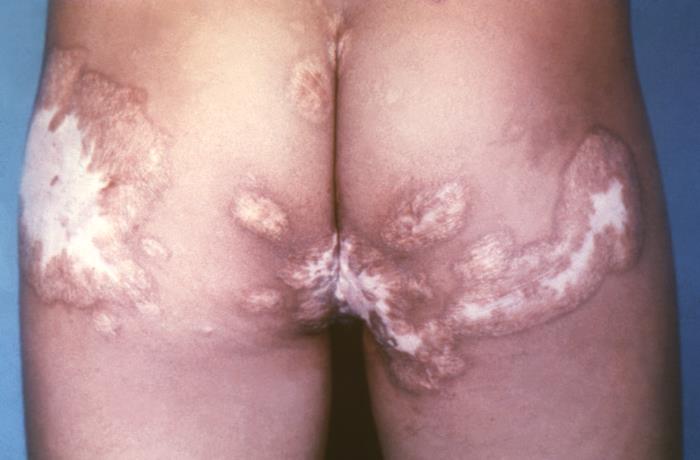
La afectación cutánea puede producirse junto con la afectación pulmonar, mediante la inoculación directa o por enfermedad diseminada.
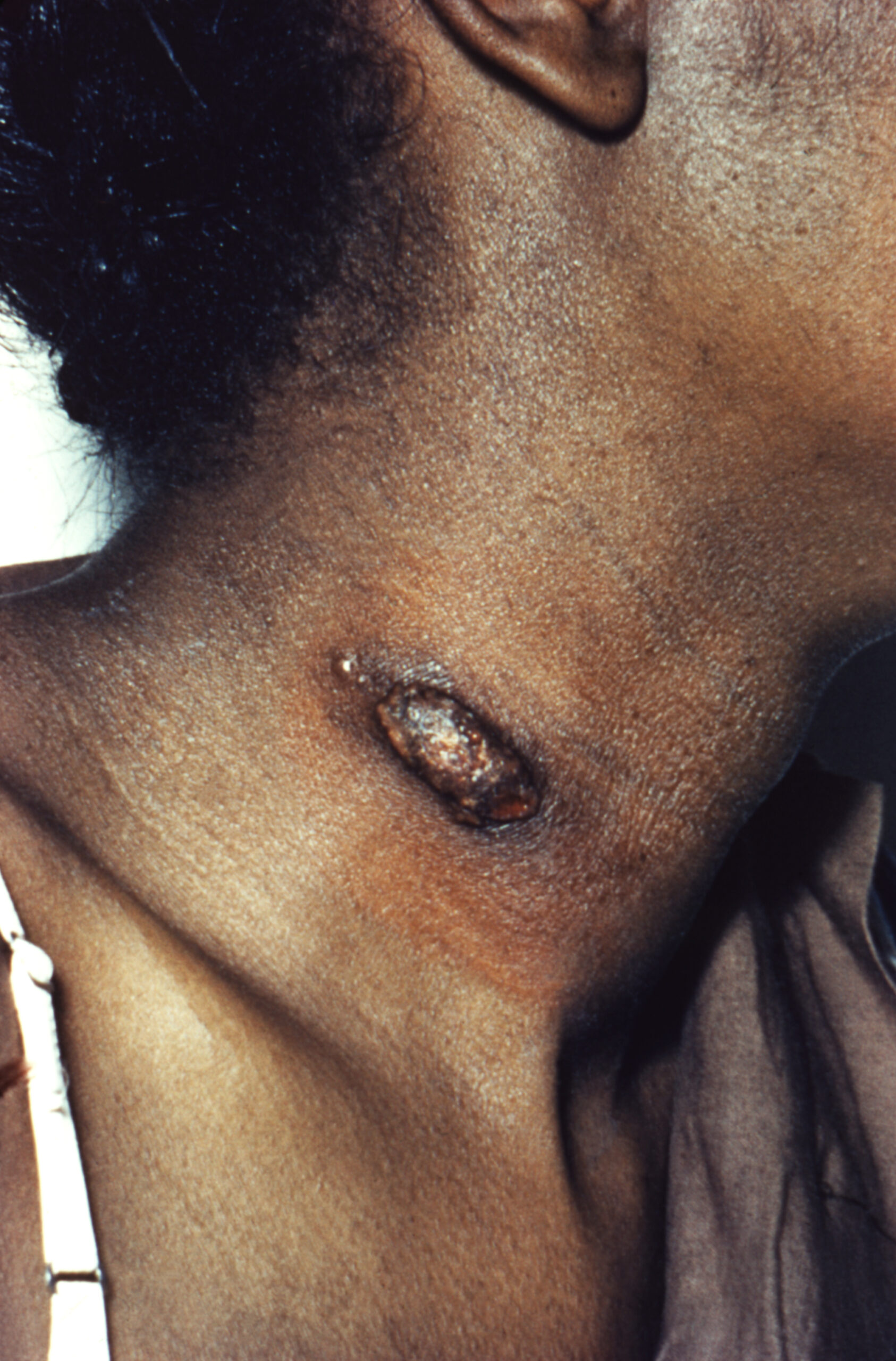
  • Lesiones cutáneas granulomatosas únicas o múltiples
  • Abscesos
  • Drenaje de los LOS Neisseria senos nasales
  • Erupciones inducidas inmunológicamente:
    • Eritema multiforme
    • Eritema nodoso

Infección diseminada

La infección diseminada se define como la enfermedad fuera de la cavidad torácica y se considera una enfermedad definitoria del SIDA. Los LOS Neisseria pacientes pueden presentar lo siguiente (la lista no es exhaustiva):

  • Meningitis Meningitis Meningitis is inflammation of the meninges, the protective membranes of the brain, and spinal cord. The causes of meningitis are varied, with the most common being bacterial or viral infection. The classic presentation of meningitis is a triad of fever, altered mental status, and nuchal rigidity. Meningitis
  • Mialgias
  • Artritis (especialmente en EN Erythema nodosum is an immune-mediated panniculitis (inflammation of the subcutaneous fat) caused by a type IV (delayed-type) hypersensitivity reaction. It commonly manifests in young women as tender, erythematous nodules on the shins. Erythema Nodosum la rodilla)
  • Osteomielitis

Tríada clásica de la coccidioidomicosis

El “reumatismo del desierto” suele definirse por la presencia de:

  • Fiebre
  • Artralgia
  • Eritema nodoso

Diagnóstico

El diagnóstico se realiza con base en EN Erythema nodosum is an immune-mediated panniculitis (inflammation of the subcutaneous fat) caused by a type IV (delayed-type) hypersensitivity reaction. It commonly manifests in young women as tender, erythematous nodules on the shins. Erythema Nodosum los LOS Neisseria antecedentes y el examen físico mediante el apoyo de datos imagenológicos y de laboratorio.

Pruebas de laboratorio

  • Cultivos de hongos
  • Microscopía de esférulas en EN Erythema nodosum is an immune-mediated panniculitis (inflammation of the subcutaneous fat) caused by a type IV (delayed-type) hypersensitivity reaction. It commonly manifests in young women as tender, erythematous nodules on the shins. Erythema Nodosum muestras de fluidos corporales
  • Pruebas serológicas
    • Inmunoensayo enzimático
    • Fijación del complemento (anticuerpos IgG IgG The major immunoglobulin isotype class in normal human serum. There are several isotype subclasses of igg, for example, igg1, igg2a, and igg2b. Hypersensitivity Pneumonitis)
    • Kit de inmunodifusión (anticuerpos IgM IgM A class of immunoglobulin bearing mu chains (immunoglobulin mu-chains). Igm can fix complement. The name comes from its high molecular weight and originally being called a macroglobulin. Immunoglobulins: Types and Functions o IgG IgG The major immunoglobulin isotype class in normal human serum. There are several isotype subclasses of igg, for example, igg1, igg2a, and igg2b. Hypersensitivity Pneumonitis)
  • Reacción en EN Erythema nodosum is an immune-mediated panniculitis (inflammation of the subcutaneous fat) caused by a type IV (delayed-type) hypersensitivity reaction. It commonly manifests in young women as tender, erythematous nodules on the shins. Erythema Nodosum cadena de la polimerasa ( PCR PCR Polymerase chain reaction (PCR) is a technique that amplifies DNA fragments exponentially for analysis. The process is highly specific, allowing for the targeting of specific genomic sequences, even with minuscule sample amounts. The PCR cycles multiple times through 3 phases: denaturation of the template DNA, annealing of a specific primer to the individual DNA strands, and synthesis/elongation of new DNA molecules. Polymerase Chain Reaction (PCR), por sus siglas en EN Erythema nodosum is an immune-mediated panniculitis (inflammation of the subcutaneous fat) caused by a type IV (delayed-type) hypersensitivity reaction. It commonly manifests in young women as tender, erythematous nodules on the shins. Erythema Nodosum inglés) para muestras del tracto respiratorio inferior (no es ampliamente disponible)
  • Análisis de antígenos en EN Erythema nodosum is an immune-mediated panniculitis (inflammation of the subcutaneous fat) caused by a type IV (delayed-type) hypersensitivity reaction. It commonly manifests in young women as tender, erythematous nodules on the shins. Erythema Nodosum orina

Modalidades de imagenología

  • Radiografía de tórax
    • Infiltrados pulmonares, nódulos y cavidades
    • Derrame pleural
    • Adenopatía
  • TC de tórax
    • Infiltrados pleurales
      • Micronodulares
      • Signo del árbol en EN Erythema nodosum is an immune-mediated panniculitis (inflammation of the subcutaneous fat) caused by a type IV (delayed-type) hypersensitivity reaction. It commonly manifests in young women as tender, erythematous nodules on the shins. Erythema Nodosum brote
      • Opacidades multifocales en EN Erythema nodosum is an immune-mediated panniculitis (inflammation of the subcutaneous fat) caused by a type IV (delayed-type) hypersensitivity reaction. It commonly manifests in young women as tender, erythematous nodules on the shins. Erythema Nodosum vidrio esmerilado
    • Derrame pleural
    • Adenopatía hiliar
    • Cavitaciones
    • Patrón miliar difuso en EN Erythema nodosum is an immune-mediated panniculitis (inflammation of the subcutaneous fat) caused by a type IV (delayed-type) hypersensitivity reaction. It commonly manifests in young women as tender, erythematous nodules on the shins. Erythema Nodosum pacientes inmunosuprimidos
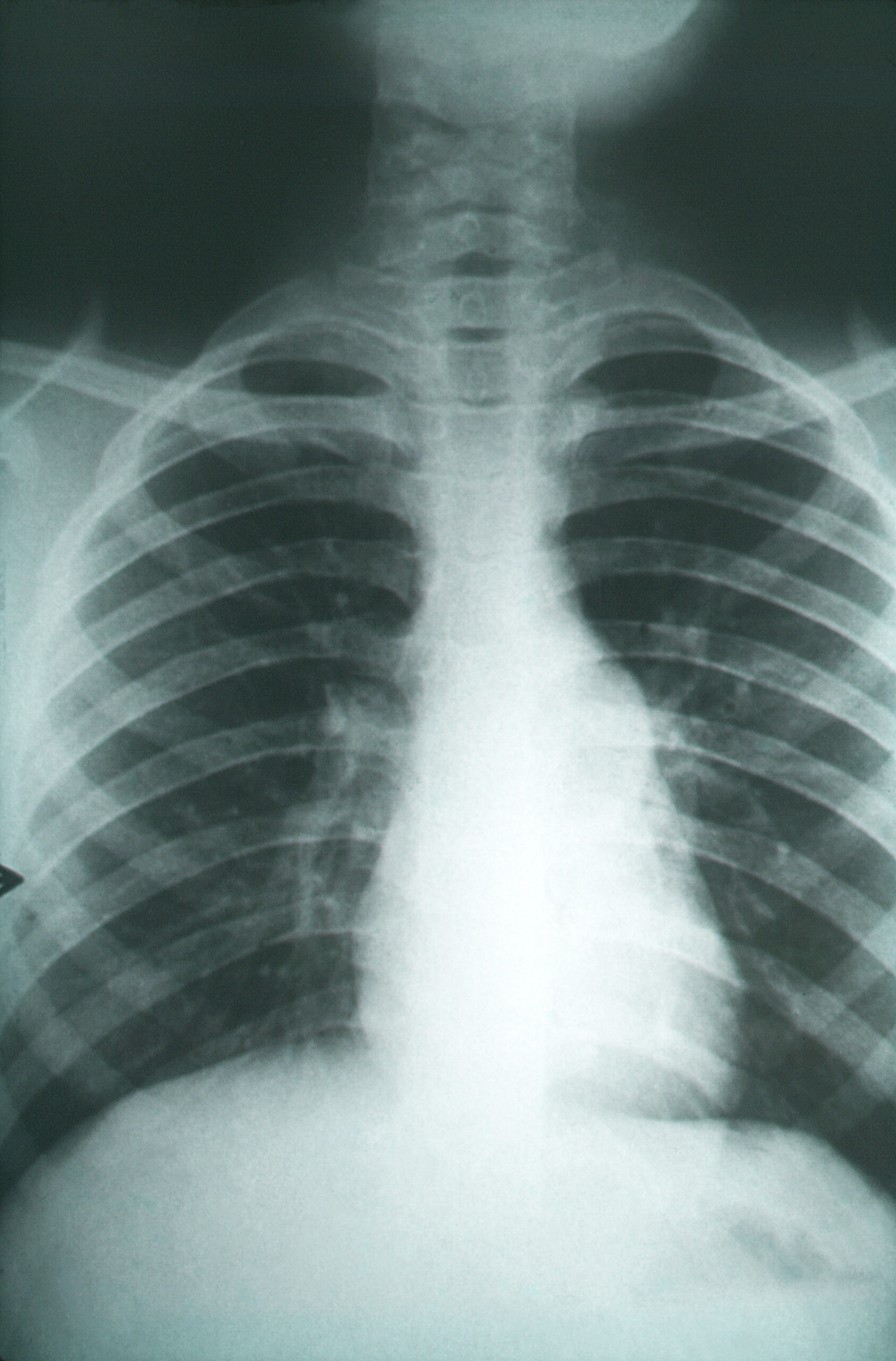
radiografía de tórax anteroposterior con fibrosis pulmonar por coccidioidomicosis

Esta radiografía de tórax anteroposterior revela cambios pulmonares indicativos de fibrosis pulmonar en un caso de coccidioidomicosis, causada por hongos del género Coccidioides:
Dado que estos cambios también se parecen a los observados en otras infecciones pulmonares, incluida la tuberculosis, los hallazgos descubiertos con una radiografía de tórax deben ir acompañados de pruebas serológicas, así como de una posible biopsia tisular. El grado de cambios fibróticos, indicativo de la cicatrización encontrada en las radiografías, puede correlacionarse directamente con la gravedad de la infección fúngica.

Imagen: “A case of pulmonary fibrosis caused by coccidioidomycosis” por CDC/Dr. Lucille K. Georg. Licencia: Dominio Público
Técnicas invasivas de muestreo

  • Broncoscopia con lavado broncoalveolar
  • Líquido cefalorraquídeo
  • Biopsia de la zona infectada

Tratamiento

Estrategias generales del tratamiento

  • Los LOS Neisseria casos asintomáticos o leves no requieren tratamiento.
  • Antifúngicos para pacientes sintomáticos o con factores de riesgo de enfermedad diseminada
  • Tratar la etiología de la inmunosupresión.
  • Cuidados de soporte con apoyo respiratorio y soporte hemodinámico
  • La cirugía puede ser necesaria para la enfermedad cavitaria progresiva.

Terapia antimicrobiana

  • Fluconazol (preferido) o itraconazol para la enfermedad leve a moderada
  • El posaconazol y el voriconazol son terapias alternativas.
  • Anfotericina B:
    • Se prefiere para la enfermedad grave o infecciones persistentes
    • Se recomienda cambiar a terapia oral con azoles Azoles Azoles are a widely used class of antifungal medications inhibiting the production of ergosterol, a critical component in the fungal cell membrane. The 2 primary subclasses of azoles are the imidazoles, older agents typically only used for topical applications, and the triazoles, newer agents with a wide spectrum of uses. Azoles al AL Amyloidosis estabilizar la enfermedad

Complicaciones y Prevención

Complicaciones

Las complicaciones enumeradas se asocian al AL Amyloidosis hecho de estar inmunodeprimido y/o al AL Amyloidosis retraso en EN Erythema nodosum is an immune-mediated panniculitis (inflammation of the subcutaneous fat) caused by a type IV (delayed-type) hypersensitivity reaction. It commonly manifests in young women as tender, erythematous nodules on the shins. Erythema Nodosum el tratamiento:

  • Neumonía grave, que evoluciona a síndrome de dificultad respiratoria aguda
  • Cavitaciones pulmonares
    • Puede requerir resección quirúrgica
    • La neumonía bacteriana secundaria o por otros hongos pueden ser el resultado de una cavitación existente.
    • El pioneumotórax puede ser el resultado de la ruptura de una cavitación.
    • La ruptura de las cavitaciones pueden dar lugar a fístulas broncopleurales.
  • Neumonía fibrocavitaria crónica
  • Enfermedad diseminada

Prevención

Es difícil prevenir la coccidioidomicosis cuando se vive en EN Erythema nodosum is an immune-mediated panniculitis (inflammation of the subcutaneous fat) caused by a type IV (delayed-type) hypersensitivity reaction. It commonly manifests in young women as tender, erythematous nodules on the shins. Erythema Nodosum una zona endémica. Las estrategias generales incluyen:

  • Evitar las zonas con polvo (e.g., las obras de construcción o las excavaciones)
  • Usar una mascarilla si no se puede evitar el polvo
  • Evitar el contacto con la tierra
  • Evitar las tormentas de polvo
  • Abordar la etiología del inmunocompromiso

Diagnóstico Diferencial

  • Neumonía bacteriana: los LOS Neisseria pacientes pueden presentar fiebre, dificultad respiratoria, tos TOS Thoracic outlet syndrome (TOS) is a broad term used for a spectrum of syndromes related to the general region of the thoracic outlet, which involves the compression or irritation of elements of the brachial plexus, subclavian artery, or subclavian vein. Thoracic Outlet Syndrome y malestar general. Una toma exhaustiva de los LOS Neisseria antecedentes debe abordar los LOS Neisseria factores de riesgo de las neumonías bacterianas típicas frente a las atípicas. El diagnóstico se basa en EN Erythema nodosum is an immune-mediated panniculitis (inflammation of the subcutaneous fat) caused by a type IV (delayed-type) hypersensitivity reaction. It commonly manifests in young women as tender, erythematous nodules on the shins. Erythema Nodosum los LOS Neisseria antecedentes, el examen físico, las imagenología, los LOS Neisseria cultivos y las pruebas de antígenos. Los LOS Neisseria tratamientos incluyen cuidados de soporte, oxigenación suplementaria y antimicrobianos.
  • Blastomicosis: endémica en EN Erythema nodosum is an immune-mediated panniculitis (inflammation of the subcutaneous fat) caused by a type IV (delayed-type) hypersensitivity reaction. It commonly manifests in young women as tender, erythematous nodules on the shins. Erythema Nodosum los LOS Neisseria valles de los LOS Neisseria ríos Ohio y Mississippi y en EN Erythema nodosum is an immune-mediated panniculitis (inflammation of the subcutaneous fat) caused by a type IV (delayed-type) hypersensitivity reaction. It commonly manifests in young women as tender, erythematous nodules on the shins. Erythema Nodosum las regiones de los LOS Neisseria Grandes Lagos de Estados Unidos. La blastomicosis puede presentarse con neumonía, lesiones cutáneas, osteomielitis y meningitis Meningitis Meningitis is inflammation of the meninges, the protective membranes of the brain, and spinal cord. The causes of meningitis are varied, with the most common being bacterial or viral infection. The classic presentation of meningitis is a triad of fever, altered mental status, and nuchal rigidity. Meningitis. El diagnóstico se realiza mediante la identificación del organismo en EN Erythema nodosum is an immune-mediated panniculitis (inflammation of the subcutaneous fat) caused by a type IV (delayed-type) hypersensitivity reaction. It commonly manifests in young women as tender, erythematous nodules on the shins. Erythema Nodosum muestras de esputo o de tejido, cultivo, PCR PCR Polymerase chain reaction (PCR) is a technique that amplifies DNA fragments exponentially for analysis. The process is highly specific, allowing for the targeting of specific genomic sequences, even with minuscule sample amounts. The PCR cycles multiple times through 3 phases: denaturation of the template DNA, annealing of a specific primer to the individual DNA strands, and synthesis/elongation of new DNA molecules. Polymerase Chain Reaction (PCR) o pruebas de antígenos. Para el tratamiento se utilizan antifúngicos.
  • Histoplasmosis Histoplasmosis Histoplasmosis is an infection caused by Histoplasma capsulatum, a dimorphic fungus. Transmission is through inhalation, and exposure to soils containing bird or bat droppings increases the risk of infection. Most infections are asymptomatic; however, immunocompromised individuals generally develop acute pulmonary infection, chronic infection, or even disseminated disease. Histoplasma/Histoplasmosis: endémica en EN Erythema nodosum is an immune-mediated panniculitis (inflammation of the subcutaneous fat) caused by a type IV (delayed-type) hypersensitivity reaction. It commonly manifests in young women as tender, erythematous nodules on the shins. Erythema Nodosum los LOS Neisseria valles de los LOS Neisseria ríos Mississippi y Ohio. Los LOS Neisseria pacientes pueden presentar neumonía, linfadenopatía, hepatoesplenomegalia y ulceraciones orales. El diagnóstico se realiza mediante cultivos de hongos, serología y pruebas de antígenos. El tratamiento es con antifúngicos y cuidados de soporte.
  • Tuberculosis Tuberculosis Tuberculosis (TB) is an infectious disease caused by Mycobacterium tuberculosis complex bacteria. The bacteria usually attack the lungs but can also damage other parts of the body. Approximately 30% of people around the world are infected with this pathogen, with the majority harboring a latent infection. Tuberculosis spreads through the air when a person with active pulmonary infection coughs or sneezes. Tuberculosis: enfermedad infecciosa causada por la bacteria Bacteria Bacteria are prokaryotic single-celled microorganisms that are metabolically active and divide by binary fission. Some of these organisms play a significant role in the pathogenesis of diseases. Bacteriology del complejo Mycobacterium tuberculosis Mycobacterium tuberculosis Tuberculosis (TB) is an infectious disease caused by Mycobacterium tuberculosis complex bacteria. The bacteria usually attack the lungs but can also damage other parts of the body. Approximately 30% of people around the world are infected with this pathogen, with the majority harboring a latent infection. Tuberculosis spreads through the air when a person with active pulmonary infection coughs or sneezes. Tuberculosis. La enfermedad pulmonar se presenta con fiebre, sudoración nocturna, tos TOS Thoracic outlet syndrome (TOS) is a broad term used for a spectrum of syndromes related to the general region of the thoracic outlet, which involves the compression or irritation of elements of the brachial plexus, subclavian artery, or subclavian vein. Thoracic Outlet Syndrome, hemoptisis, fatiga y pérdida de peso. Las manifestaciones extrapulmonares pueden incluir pleuritis Pleuritis Pleuritis, also known as pleurisy, is an inflammation of the visceral and parietal layers of the pleural membranes of the lungs. The condition can be primary or secondary and results in sudden, sharp, and intense chest pain on inhalation and exhalation. Pleuritis, meningitis Meningitis Meningitis is inflammation of the meninges, the protective membranes of the brain, and spinal cord. The causes of meningitis are varied, with the most common being bacterial or viral infection. The classic presentation of meningitis is a triad of fever, altered mental status, and nuchal rigidity. Meningitis, enfermedad de Pott, pericarditis Pericarditis Pericarditis is an inflammation of the pericardium, often with fluid accumulation. It can be caused by infection (often viral), myocardial infarction, drugs, malignancies, metabolic disorders, autoimmune disorders, or trauma. Acute, subacute, and chronic forms exist. Pericarditis y enfermedad miliar. El diagnóstico se establece con la prueba cutánea de la tuberculina, el cultivo de esputo y la imagenología pulmonar. El pilar del tratamiento son los LOS Neisseria medicamentos antituberculosos.
  • Sarcoidosis Sarcoidosis Sarcoidosis is a multisystem inflammatory disease that causes noncaseating granulomas. The exact etiology is unknown. Sarcoidosis usually affects the lungs and thoracic lymph nodes, but it can also affect almost every system in the body, including the skin, heart, and eyes, most commonly. Sarcoidosis: trastorno inflamatorio caracterizado por granulomas Granulomas A relatively small nodular inflammatory lesion containing grouped mononuclear phagocytes, caused by infectious and noninfectious agents. Sarcoidosis no caseificantes en EN Erythema nodosum is an immune-mediated panniculitis (inflammation of the subcutaneous fat) caused by a type IV (delayed-type) hypersensitivity reaction. It commonly manifests in young women as tender, erythematous nodules on the shins. Erythema Nodosum pulmones, hígado, cerebro, ojos y piel. El diagnóstico puede sugerirse radiográficamente y confirmarse mediante una biopsia. El tratamiento es con corticosteroides y otros agentes inmunosupresores.

Referencias

  1. Akram, SM. (2023). Coccidioidomycosis. StatPearls. Retrieved October 28, 2025, from https://www.ncbi.nlm.nih.gov/books/NBK448161/
  2. Ampel, NM, & Hoover, S.E. (2015). Pathogenesis of coccidioidomycosis. Current Fungal Infection Reports, 9(4), 253–258. https://doi.org/10.1007/s12281-015-0242-1
  3. Centers for Disease Control and Prevention. (2024). About Valley Fever. U.S. Department of Health and Human Services. Retrieved October 28, 2025, from https://www.cdc.gov/valley-fever/about/index.html
  4. Galgiani, JN, Ampel, NM, Blair, JE, Catanzaro, A, Johnson, RH, Stevens, DA, & Williams, PL. (2005). Coccidioidomycosis. Clinical Infectious Diseases, 41(9), 1217–1223. https://doi.org/10.1086/496991
  5. Revankar, SG. (2023). Coccidioidomycosis (San Joaquin fever; Valley fever). MSD Manual Professional Version. Retrieved October 28, 2025, from https://www.msdmanuals.com/professional/infectious-diseases/fungi/coccidioidomycosis
  6. Blair, JE, & Ampel, NM. (2025). Primary pulmonary coccidioidal infection. In Mitty, J. (Ed.), UpToDate. Retrieved October 28, 2025, from https://www.uptodate.com/contents/primary-pulmonary-coccidioidal-infection
  7. Blair, JE, & Ampel, NM. (2025). Coccidioidomycosis: Laboratory diagnosis and screening. In Mitty, J. (Ed.), UpToDate. Retrieved October 28, 2025, from https://www.uptodate.com/contents/coccidioidomycosis-laboratory-diagnosis-and-screening
  8. Jaroszewski, D, Blair, JE, & Ampel, NM. (2025). Management of pulmonary sequelae and complications of coccidioidomycosis. In Mitty, J. (Ed.), UpToDate. Retrieved October 28, 2025, from https://www.uptodate.com/contents/management-of-pulmonary-sequelae-and-complications-of-coccidioidomycosis
  9. Hospenthal, DR, Thompson III, GR, Oppenheimer, AP, and Arsura, EL. (2022). Coccidioidomycosis and valley fever. In Bronze, M.S. (Ed.), Medscape. Retrieved October 28, 2025, from https://emedicine.medscape.com/article/215978-overview

¡Crea tu cuenta gratis o inicia una sesión para seguir leyendo!

Regístrate ahora y obtén acceso gratuito a Lecturio con páginas de concepto, videos médicos y cuestionarios para tu educación médica.

User Reviews

Que tengas una sesión de estudio alegre y navideña 🎁 Ahorra 50% en todos los planes >>

Details