La aspergilosis es una infección fúngica oportunista causada por especies de AspergillusAspergillusA genus of mitosporic fungi containing about 100 species and eleven different teleomorphs in the family trichocomaceae.Echinocandins, que son mohos formadores de esporas que se encuentran enENErythema nodosum is an immune-mediated panniculitis (inflammation of the subcutaneous fat) caused by a type IV (delayed-type) hypersensitivity reaction. It commonly manifests in young women as tender, erythematous nodules on the shins.Erythema Nodosum nuestro entorno. Como las especies de AspergillusAspergillusA genus of mitosporic fungi containing about 100 species and eleven different teleomorphs in the family trichocomaceae.Echinocandins son oportunistas, causan enfermedad principalmente enENErythema nodosum is an immune-mediated panniculitis (inflammation of the subcutaneous fat) caused by a type IV (delayed-type) hypersensitivity reaction. It commonly manifests in young women as tender, erythematous nodules on the shins.Erythema Nodosum pacientes inmunocomprometidos. LosLOSNeisseria órganos que más comúnmente se ven afectados son losLOSNeisseria pulmones y losLOSNeisseria senos paranasales. La aspergilosis invasiva puede propagarse por vía hematógena y puede afectar alALAmyloidosis cerebro, el corazón y la piel. LosLOSNeisseria síntomas pueden variar enENErythema nodosum is an immune-mediated panniculitis (inflammation of the subcutaneous fat) caused by a type IV (delayed-type) hypersensitivity reaction. It commonly manifests in young women as tender, erythematous nodules on the shins.Erythema Nodosum función del órgano afectado, pero losLOSNeisseria síntomas pulmonares pueden incluir dificultad para respirar, sibilancias, tosTOSThoracic outlet syndrome (TOS) is a broad term used for a spectrum of syndromes related to the general region of the thoracic outlet, which involves the compression or irritation of elements of the brachial plexus, subclavian artery, or subclavian vein.Thoracic Outlet Syndrome y hemoptisis. El diagnóstico se realiza a partir de imagenología, cultivos de hongos y análisis de muestras serológicas o respiratorias. El tratamiento depende de la presentación clínica, pero enENErythema nodosum is an immune-mediated panniculitis (inflammation of the subcutaneous fat) caused by a type IV (delayed-type) hypersensitivity reaction. It commonly manifests in young women as tender, erythematous nodules on the shins.Erythema Nodosum la enfermedad grave puede ser tratada con terapia antifúngica y resección quirúrgica.
Existe solamente enENErythema nodosum is an immune-mediated panniculitis (inflammation of the subcutaneous fat) caused by a type IV (delayed-type) hypersensitivity reaction. It commonly manifests in young women as tender, erythematous nodules on the shins.Erythema Nodosum la forma de moho (no es dimórfico)
Altamente aeróbico
Crece enENErythema nodosum is an immune-mediated panniculitis (inflammation of the subcutaneous fat) caused by a type IV (delayed-type) hypersensitivity reaction. It commonly manifests in young women as tender, erythematous nodules on the shins.Erythema Nodosum las plantas, el suelo, el polvo doméstico y enENErythema nodosum is an immune-mediated panniculitis (inflammation of the subcutaneous fat) caused by a type IV (delayed-type) hypersensitivity reaction. It commonly manifests in young women as tender, erythematous nodules on the shins.Erythema NodosumlosLOSNeisseria alimentos
Obtiene nutrientes de la materia muerta y enENErythema nodosum is an immune-mediated panniculitis (inflammation of the subcutaneous fat) caused by a type IV (delayed-type) hypersensitivity reaction. It commonly manifests in young women as tender, erythematous nodules on the shins.Erythema Nodosum descomposición
Se visualiza mejor con tinciones de plata
Morfología:
Hifas
Estructuras largas y filamentosas
Septos frecuentes
Forman ramas dicotómicas (ángulos de 45 grados)
Las paredes suelen ser paralelas
Conidios
Esporas asexuales, no móviles
Esféricos
Se originan enENErythema nodosum is an immune-mediated panniculitis (inflammation of the subcutaneous fat) caused by a type IV (delayed-type) hypersensitivity reaction. It commonly manifests in young women as tender, erythematous nodules on the shins.Erythema NodosumlosLOSNeisseria conidióforos (rama hifal especializada)
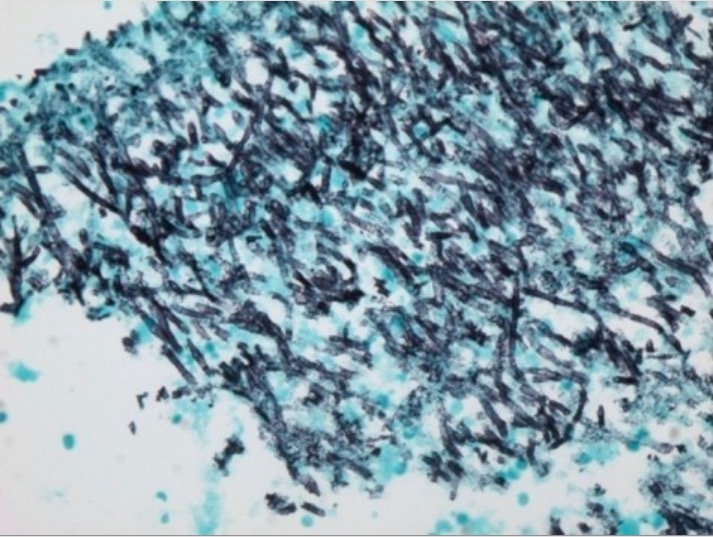
Tinción de plata metanamina de Gomori de Aspergillus que muestra hifas septadas uniformes y ramificaciones a 45 grados
Imagen: “GMS stain showing Aspergillus fungal hyphae” por Department of Medicine, Sinai Grace Hospital/Detroit Medical Center, Detroit, Michigan, USA. Licencia: CC BY 2.0
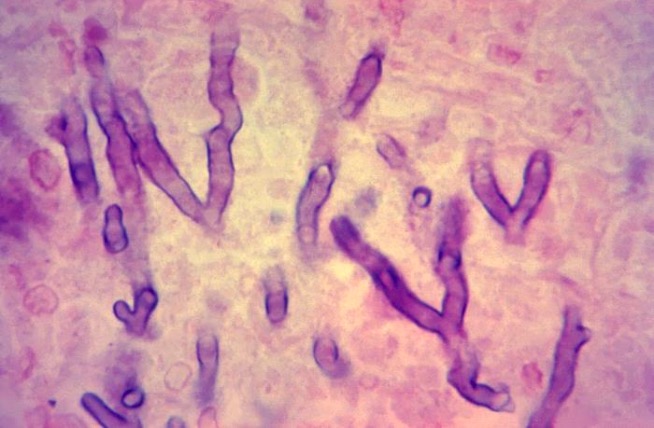
Microfotografía que muestra las hifas ramificadas de Aspergillus
Imagen: “15630” por CDC/Armed Forces Institute of Pathology (AFIP). Licencia: Dominio Público
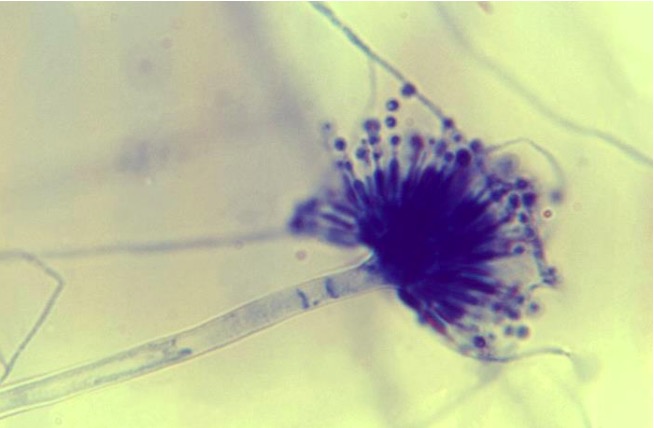
Microfotografía que muestra un conidióforo delgado de Aspergillus con una vesícula bulbosa que contiene conidios esféricos
Existen más de 250 especies de AspergillusAspergillusA genus of mitosporic fungi containing about 100 species and eleven different teleomorphs in the family trichocomaceae.Echinocandins; sin embargo, solamente las siguientes especies son las más comúnmente asociadas a la aspergilosis:
A. fumigatusA. fumigatusA species of imperfect fungi from which the antibiotic fumigatin is obtained. Its spores may cause respiratory infection in birds and mammals.Aspergillus/Aspergillosis(más común)
A. nigerA. nigerAn imperfect fungus causing smut or black mold of several fruits and vegetables such as grapes, apricots, onions, and peanuts, and is a common contaminant of food.Aspergillus/Aspergillosis
A. flavusA. flavusA species of imperfect fungi which grows on peanuts and other plants and produces the carcinogenic substance aflatoxin. It is also used in the production of the antibiotic flavicin.Aspergillus/Aspergillosis
La aspergilosis puede tener presentaciones clínicas variables, siendo losLOSNeisseria pulmones y la piel losLOSNeisseria órganos más afectados. Estas presentaciones de la enfermedad incluyen:
Aspergilosis broncopulmonar alérgica
SinusitisSinusitisSinusitis refers to inflammation of the mucosal lining of the paranasal sinuses. The condition usually occurs concurrently with inflammation of the nasal mucosa (rhinitis), a condition known as rhinosinusitis. Acute sinusitis is due to an upper respiratory infection caused by a viral, bacterial, or fungal agent. Sinusitis por AspergillusAspergillusA genus of mitosporic fungi containing about 100 species and eleven different teleomorphs in the family trichocomaceae.Echinocandins
Se dispone de pocas estadísticas sobre la aspergilosis.
La aspergilosis broncopulmonar alérgicaafecta potencialmente a:
1%–15% de losLOSNeisseria pacientes con fibrosisFibrosisAny pathological condition where fibrous connective tissue invades any organ, usually as a consequence of inflammation or other injury.Bronchiolitis Obliterans quística
No es común y ocurre principalmente enENErythema nodosum is an immune-mediated panniculitis (inflammation of the subcutaneous fat) caused by a type IV (delayed-type) hypersensitivity reaction. It commonly manifests in young women as tender, erythematous nodules on the shins.Erythema Nodosum individuos inmunocomprometidos
Incidencia: 1–2 casos por cada 100 000 personas enENErythema nodosum is an immune-mediated panniculitis (inflammation of the subcutaneous fat) caused by a type IV (delayed-type) hypersensitivity reaction. It commonly manifests in young women as tender, erythematous nodules on the shins.Erythema Nodosum Estados Unidos
Más común enENErythema nodosum is an immune-mediated panniculitis (inflammation of the subcutaneous fat) caused by a type IV (delayed-type) hypersensitivity reaction. It commonly manifests in young women as tender, erythematous nodules on the shins.Erythema Nodosum pacientes que han sido sometidos a un trasplante
Asociado a aproximadamente 15 000 hospitalizaciones
Factores de riesgo del huésped
LosLOSNeisseria humanos inhalan esporas a diario, pero generalmente no desarrollan la enfermedad si tienen un sistema inmune competente. La aspergilosis suele presentarse enENErythema nodosum is an immune-mediated panniculitis (inflammation of the subcutaneous fat) caused by a type IV (delayed-type) hypersensitivity reaction. It commonly manifests in young women as tender, erythematous nodules on the shins.Erythema Nodosum personas con afecciones subyacentes como:
Inmunosupresión:
VIH
Quimioterapia
Malignidad hematológica
NeutropeniaNeutropeniaNeutrophils are an important component of the immune system and play a significant role in the eradication of infections. Low numbers of circulating neutrophils, referred to as neutropenia, predispose the body to recurrent infections or sepsis, though patients can also be asymptomatic. Neutropenia prolongada o severa
Uso crónico de esteroides
Receptores de trasplantes
Enfermedades pulmonares:
TuberculosisTuberculosisTuberculosis (TB) is an infectious disease caused by Mycobacterium tuberculosis complex bacteria. The bacteria usually attack the lungs but can also damage other parts of the body. Approximately 30% of people around the world are infected with this pathogen, with the majority harboring a latent infection. Tuberculosis spreads through the air when a person with active pulmonary infection coughs or sneezes. Tuberculosis
FibrosisFibrosisAny pathological condition where fibrous connective tissue invades any organ, usually as a consequence of inflammation or other injury.Bronchiolitis Obliterans quística
Enfermedad pulmonar obstructiva crónica (EPOC)
SarcoidosisSarcoidosisSarcoidosis is a multisystem inflammatory disease that causes noncaseating granulomas. The exact etiology is unknown. Sarcoidosis usually affects the lungs and thoracic lymph nodes, but it can also affect almost every system in the body, including the skin, heart, and eyes, most commonly. Sarcoidosis
Cáncer de pulmón
Transmisión
Inhalación de esporas (más común)
Invasión a través de la piel dañada
Fisiopatología
La patogénesis de cada tipo de aspergilosis no se conoce completamente.
EnENErythema nodosum is an immune-mediated panniculitis (inflammation of the subcutaneous fat) caused by a type IV (delayed-type) hypersensitivity reaction. It commonly manifests in young women as tender, erythematous nodules on the shins.Erythema Nodosum pacientes inmunocompetentes:
Inhalación de conidios → captados por losLOSNeisseria macrófagos
Germinación enENErythema nodosum is an immune-mediated panniculitis (inflammation of the subcutaneous fat) caused by a type IV (delayed-type) hypersensitivity reaction. It commonly manifests in young women as tender, erythematous nodules on the shins.Erythema Nodosum hifas → reconocimiento inmunitario por losLOSNeisseria componentes de la pared celular
Reclutamiento de neutrófilos → destrucción de hifas
EnENErythema nodosum is an immune-mediated panniculitis (inflammation of the subcutaneous fat) caused by a type IV (delayed-type) hypersensitivity reaction. It commonly manifests in young women as tender, erythematous nodules on the shins.Erythema Nodosum pacientes inmunocomprometidos:
Las hifas invaden losLOSNeisseria tejidos y las paredes de losLOSNeisseria vasos sanguíneos → aspergilosis invasiva
La invasión da lugar a las siguientes afecciones enENErythema nodosum is an immune-mediated panniculitis (inflammation of the subcutaneous fat) caused by a type IV (delayed-type) hypersensitivity reaction. It commonly manifests in young women as tender, erythematous nodules on the shins.Erythema NodosumlosLOSNeisseria órganos (más comúnmente el pulmón):
Infarto tisular
Hemorragia
NecrosisNecrosisThe death of cells in an organ or tissue due to disease, injury or failure of the blood supply.Ischemic Cell Damage
EnENErythema nodosum is an immune-mediated panniculitis (inflammation of the subcutaneous fat) caused by a type IV (delayed-type) hypersensitivity reaction. It commonly manifests in young women as tender, erythematous nodules on the shins.Erythema Nodosum pacientes con enfermedad pulmonar subyacente:
La invasión de losLOSNeisseria tejidos no es tan común a menos que exista una inmunodeficiencia concurrente.
AspergillusAspergillusA genus of mitosporic fungi containing about 100 species and eleven different teleomorphs in the family trichocomaceae.Echinocandins puede habitar enENErythema nodosum is an immune-mediated panniculitis (inflammation of the subcutaneous fat) caused by a type IV (delayed-type) hypersensitivity reaction. It commonly manifests in young women as tender, erythematous nodules on the shins.Erythema Nodosum las cavidades pulmonares → puede desarrollarse una masa enredada de hifas, fibrina y células inflamatorias → aspergiloma (bola fúngica)
La presencia de AspergillusAspergillusA genus of mitosporic fungi containing about 100 species and eleven different teleomorphs in the family trichocomaceae.Echinocandinspuede desencadenar una reacción de hipersensibilidad → aspergilosis broncopulmonar alérgica
La presentación clínica varía según la forma de aspergilosis.
Síntomas constitucionales comunes
LosLOSNeisseria siguientes síntomas pueden observarse con cualquier forma de aspergilosis:
Fiebre
Escalofríos
Sudoración nocturna
Pérdida de peso
Malestar general
Aspergilosis broncopulmonar alérgica
La aspergilosis broncopulmonar alérgica debe sospecharse enENErythema nodosum is an immune-mediated panniculitis (inflammation of the subcutaneous fat) caused by a type IV (delayed-type) hypersensitivity reaction. It commonly manifests in young women as tender, erythematous nodules on the shins.Erythema Nodosum pacientes con asmaASMAAutoimmune Hepatitis o fibrosisFibrosisAny pathological condition where fibrous connective tissue invades any organ, usually as a consequence of inflammation or other injury.Bronchiolitis Obliterans quística que presentan exacerbaciones recurrentes. LosLOSNeisseria síntomas incluyen:
Disnea
TosTOSThoracic outlet syndrome (TOS) is a broad term used for a spectrum of syndromes related to the general region of the thoracic outlet, which involves the compression or irritation of elements of the brachial plexus, subclavian artery, or subclavian vein.Thoracic Outlet Syndrome:
Productiva
Tapones mucosos verdes o marrones
Hemoptisis
Sibilancias
SinusitisSinusitisSinusitis refers to inflammation of the mucosal lining of the paranasal sinuses. The condition usually occurs concurrently with inflammation of the nasal mucosa (rhinitis), a condition known as rhinosinusitis. Acute sinusitis is due to an upper respiratory infection caused by a viral, bacterial, or fungal agent. Sinusitis por AspergillusAspergillusA genus of mitosporic fungi containing about 100 species and eleven different teleomorphs in the family trichocomaceae.Echinocandins
La sinusitisSinusitisSinusitis refers to inflammation of the mucosal lining of the paranasal sinuses. The condition usually occurs concurrently with inflammation of the nasal mucosa (rhinitis), a condition known as rhinosinusitis. Acute sinusitis is due to an upper respiratory infection caused by a viral, bacterial, or fungal agent. Sinusitis por AspergillusAspergillusA genus of mitosporic fungi containing about 100 species and eleven different teleomorphs in the family trichocomaceae.Echinocandins puede ser alérgica o invasiva. LosLOSNeisseria síntomas incluyen:
Congestión nasal
Secreción nasal purulenta
Disminución del sentido del olfato
Molestias faciales y/o sensibilidad enENErythema nodosum is an immune-mediated panniculitis (inflammation of the subcutaneous fat) caused by a type IV (delayed-type) hypersensitivity reaction. It commonly manifests in young women as tender, erythematous nodules on the shins.Erythema NodosumlosLOSNeisseria senos paranasales
Cefalea
Aspergilosis pulmonar crónica y aspergiloma
Algunos pacientes con aspergilosis pulmonar crónica y aspergiloma son asintomáticos. LosLOSNeisseria individuos sintomáticos pueden presentar:
TosTOSThoracic outlet syndrome (TOS) is a broad term used for a spectrum of syndromes related to the general region of the thoracic outlet, which involves the compression or irritation of elements of the brachial plexus, subclavian artery, or subclavian vein.Thoracic Outlet Syndrome (seca o productiva)
Hemoptisis
Nota: losLOSNeisseria síntomas constitucionales suelen aparecer enENErythema nodosum is an immune-mediated panniculitis (inflammation of the subcutaneous fat) caused by a type IV (delayed-type) hypersensitivity reaction. It commonly manifests in young women as tender, erythematous nodules on the shins.Erythema Nodosum la aspergilosis pulmonar crónica, pero no enENErythema nodosum is an immune-mediated panniculitis (inflammation of the subcutaneous fat) caused by a type IV (delayed-type) hypersensitivity reaction. It commonly manifests in young women as tender, erythematous nodules on the shins.Erythema Nodosum el aspergiloma.
Aspergilosis invasiva
Pulmonar:
Fiebre
TosTOSThoracic outlet syndrome (TOS) is a broad term used for a spectrum of syndromes related to the general region of the thoracic outlet, which involves the compression or irritation of elements of the brachial plexus, subclavian artery, or subclavian vein.Thoracic Outlet Syndrome
EndocarditisEndocarditisEndocarditis is an inflammatory disease involving the inner lining (endometrium) of the heart, most commonly affecting the cardiac valves. Both infectious and noninfectious etiologies lead to vegetations on the valve leaflets. Patients may present with nonspecific symptoms such as fever and fatigue. Endocarditis
Aspergilosis del SNC:
Convulsiones
Déficits neurológicos focales
Aneurismas micóticos → hemorragia subaracnoidea
Aspergilosis cutánea
La aspergilosis cutánea puede producirse por inoculación directa o por una infección diseminada. LosLOSNeisseria pacientes pueden presentar:
Lesiones eritematosas con placas endurecidas de color rojo o violeta
Pápulas y nódulos indurados o umbilicados
Puede aparecer una escara negra superpuesta.
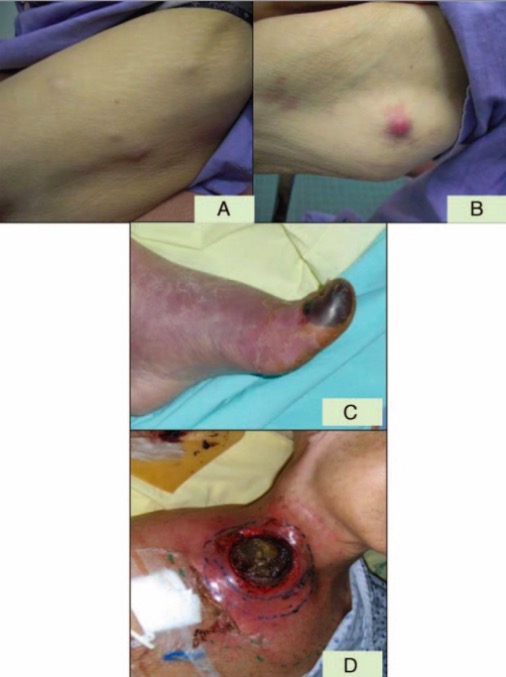
Lesiones de aspergilosis cutánea: A y B: Lesiones nodulares C: Eritema y necrosis de un dedo del pie D: Una gran placa necrótica con eritema circundante en el pecho de un paciente
Imagen: “Cutaneous aspergillosis” por Dermatology Department, UPEC (CB, SI-H-O, OC), Paris, France. Licencia: CC BY 4.0
Diagnóstico
Imagenología
Es habitual que se solicite imagenología torácica con radiografía o una TC. LosLOSNeisseria hallazgos pueden incluir:
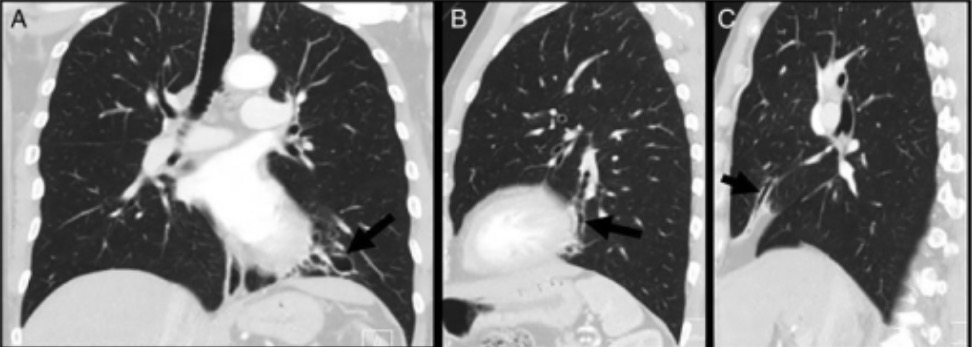
Aspergilosis broncopulmonar alérgica: bronquiectasias centrales y opacidades pulmonares
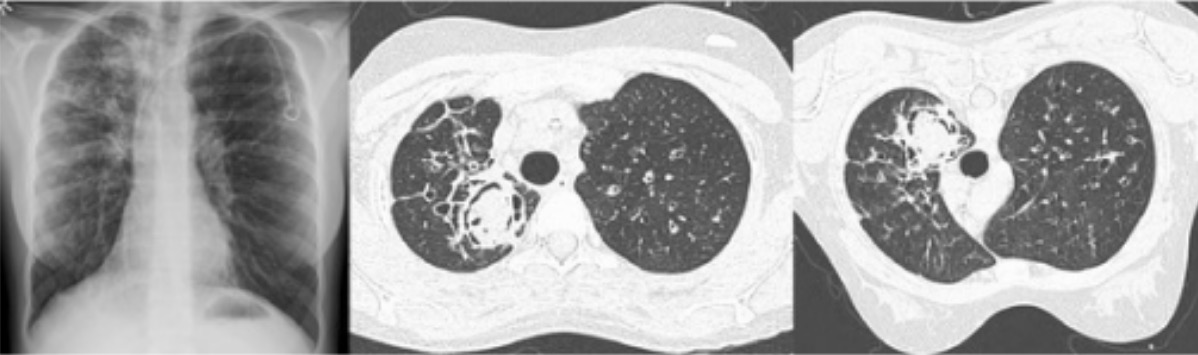
Aspergiloma: signo monódico (una semiluna de aire alrededor de una bola de hongo dentro de una cavidad)
Aspergilosis invasiva:
Nódulos únicos o múltiples → pueden progresar a la cavitación
Consolidación parcheada o segmentada
Aspecto de “árbol en brote” si hay bronquiolitis
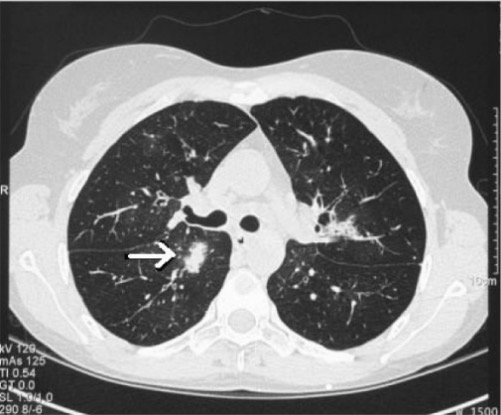
Signo del halo: opacidad enENErythema nodosum is an immune-mediated panniculitis (inflammation of the subcutaneous fat) caused by a type IV (delayed-type) hypersensitivity reaction. It commonly manifests in young women as tender, erythematous nodules on the shins.Erythema Nodosum vidrio esmerilado alrededor de un nódulo pulmonar que resulta de la invasión directa de un vaso pulmonar
Imágenes de tomografía computarizada que muestran bronquiectasias en el lóbulo medio derecho (C) y lóbulo inferior izquierdo (A y B) por aspergilosis broncopulmonar alérgica
Imagen: “Bronchopulmonary aspergillosis” por Department of Respiratory Medicine, Hammersmith Hospital, London, UK. Licencia: CC BY 4.0
Radiografía de tórax e imágenes de TC que muestran un aspergiloma en un paciente con fibrosis quística: La bola fúngica se encuentra en el lóbulo superior izquierdo, donde había una cavidad previamente. En la TC se puede ver una media luna de aire dentro de la cavidad (“signo del aire creciente”).
Imagen: “A pulmonary aspergilloma” por Department of Respiratory Medicine, Beaumont Hospital, Dublin 9, Ireland. Licencia: CC BY 3.0
Una TC que muestra un “signo de halo” indicativo de hemorragia debido a la angioinvasión de la aspergilosis
Imagen: “Halo sign” por Faculty of Medicine and Human Sciences, University of Manchester, Wythenshawe Hospital, Manchester, UK. Licencia: CC BY 2.0
Exámenes de laboratorio
Pruebas para la aspergilosis invasiva:
Detección del antígeno galactomanano:
Polisacárido enENErythema nodosum is an immune-mediated panniculitis (inflammation of the subcutaneous fat) caused by a type IV (delayed-type) hypersensitivity reaction. It commonly manifests in young women as tender, erythematous nodules on the shins.Erythema Nodosum la pared celular de AspergillusAspergillusA genus of mitosporic fungi containing about 100 species and eleven different teleomorphs in the family trichocomaceae.Echinocandins
Realizado mediante inmunoensayo enzimático
1,3 beta-D-glucano:
Un componente de la pared celular de muchos hongos
Menos sensible que la prueba para detectar el galactomanano
La PCRPCRPolymerase chain reaction (PCR) is a technique that amplifies DNA fragments exponentially for analysis. The process is highly specific, allowing for the targeting of specific genomic sequences, even with minuscule sample amounts. The PCR cycles multiple times through 3 phases: denaturation of the template DNA, annealing of a specific primer to the individual DNA strands, and synthesis/elongation of new DNA molecules.Polymerase Chain Reaction (PCR) para AspergillusAspergillusA genus of mitosporic fungi containing about 100 species and eleven different teleomorphs in the family trichocomaceae.Echinocandins puede facilitar el diagnóstico y se incluye enENErythema nodosum is an immune-mediated panniculitis (inflammation of the subcutaneous fat) caused by a type IV (delayed-type) hypersensitivity reaction. It commonly manifests in young women as tender, erythematous nodules on the shins.Erythema NodosumlosLOSNeisseria criterios micológicos actuales.
La evaluación de la aspergilosis broncopulmonar alérgica puede demostrar:
Eosinofilia
Niveles elevados de IgEIgEAn immunoglobulin associated with mast cells. Overexpression has been associated with allergic hypersensitivity.Immunoglobulins: Types and Functions sérica contra AspergillusAspergillusA genus of mitosporic fungi containing about 100 species and eleven different teleomorphs in the family trichocomaceae.Echinocandins
Reactividad cutánea positiva a la prueba del antígeno de AspergillusAspergillusA genus of mitosporic fungi containing about 100 species and eleven different teleomorphs in the family trichocomaceae.Echinocandins
Pruebas de aspergilosis pulmonar crónica: anticuerpo IgGIgGThe major immunoglobulin isotype class in normal human serum. There are several isotype subclasses of igg, for example, igg1, igg2a, and igg2b.Hypersensitivity Pneumonitis contra AspergillusAspergillusA genus of mitosporic fungi containing about 100 species and eleven different teleomorphs in the family trichocomaceae.Echinocandins
Cultivo e histopatología
Modalidad para el diagnóstico definitivo
Se obtiene una muestra de tejido o fluido del órgano afectado
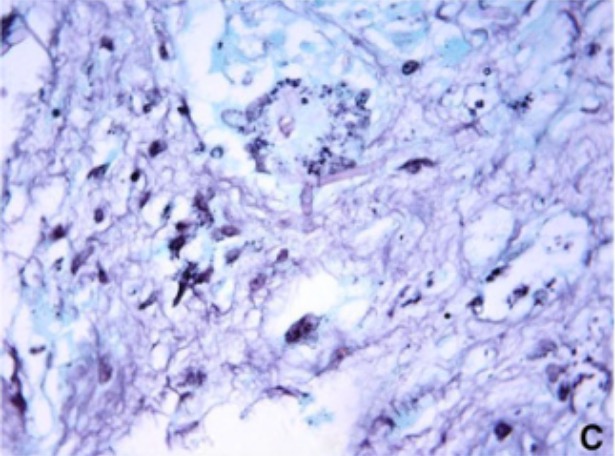
El hongo puede identificarse mediante la tinción de plata metanamina o la tinción de ácido periódico de Schiff.
Corte de tejido teñido con plata metanamina que muestra hifas septadas de especies de Aspergillus
Imagen: “Histopathology and growth on culture medium” por Department of Orthopaedics, All India Institute of Medical Sciences, New Delhi 110029, India. Licencia: CC BY 4.0
Tratamiento y Prevención
Tratamiento de la aspergilosis broncopulmonar alérgica
Esteroides orales
El itraconazol se reserva para losLOSNeisseria pacientes que no toleran la reducción gradual de losLOSNeisseria esteroides.
Optimizar la terapia para la fibrosisFibrosisAny pathological condition where fibrous connective tissue invades any organ, usually as a consequence of inflammation or other injury.Bronchiolitis Obliterans quística o el asmaASMAAutoimmune Hepatitis.
Aspergilosis pulmonar crónica y aspergiloma
El aspergiloma no requiere tratamiento si es asintomático y no responde a la terapia antifúngica.
Tratamiento antifúngico para la aspergilosis pulmonar crónica:
Itraconazol
Voriconazol
Embolización de la arteria bronquial para la hemoptisis masiva
Resección quirúrgica enENErythema nodosum is an immune-mediated panniculitis (inflammation of the subcutaneous fat) caused by a type IV (delayed-type) hypersensitivity reaction. It commonly manifests in young women as tender, erythematous nodules on the shins.Erythema Nodosum caso de enfermedad grave
Tratamiento de la aspergilosis invasiva
Las siguientes opciones pueden utilizarse enENErythema nodosum is an immune-mediated panniculitis (inflammation of the subcutaneous fat) caused by a type IV (delayed-type) hypersensitivity reaction. It commonly manifests in young women as tender, erythematous nodules on the shins.Erythema Nodosum la enfermedad invasiva, incluida la sinusitisSinusitisSinusitis refers to inflammation of the mucosal lining of the paranasal sinuses. The condition usually occurs concurrently with inflammation of the nasal mucosa (rhinitis), a condition known as rhinosinusitis. Acute sinusitis is due to an upper respiratory infection caused by a viral, bacterial, or fungal agent. Sinusitis invasiva, la enfermedad cutánea y la enfermedad diseminada:
Reemplazo valvular enENErythema nodosum is an immune-mediated panniculitis (inflammation of the subcutaneous fat) caused by a type IV (delayed-type) hypersensitivity reaction. It commonly manifests in young women as tender, erythematous nodules on the shins.Erythema Nodosum caso de endocarditisEndocarditisEndocarditis is an inflammatory disease involving the inner lining (endometrium) of the heart, most commonly affecting the cardiac valves. Both infectious and noninfectious etiologies lead to vegetations on the valve leaflets. Patients may present with nonspecific symptoms such as fever and fatigue. Endocarditis
Prevención
El posaconazol se utiliza más comúnmente para la profilaxis enENErythema nodosum is an immune-mediated panniculitis (inflammation of the subcutaneous fat) caused by a type IV (delayed-type) hypersensitivity reaction. It commonly manifests in young women as tender, erythematous nodules on the shins.Erythema Nodosum pacientes inmunocomprometidos.
Reducir la exposición alALAmyloidosis moho (si se conoce la fuente).
Diagnóstico Diferencial
Coccidioidomicosis: infección causada por el hongo CoccidioidesCoccidioidesCoccidioidomycosis, commonly known as San Joaquin Valley fever, is a fungal disease caused by Coccidioides immitis or Coccidioides posadasii. When Coccidioides spores are inhaled, they transform into spherules that result in infection. Coccidioidomycosis is also a common cause of community-acquired pneumonia and can cause severe disease in the immunocompromised.Coccidioides/Coccidioidomycosis que puede presentarse enENErythema nodosum is an immune-mediated panniculitis (inflammation of the subcutaneous fat) caused by a type IV (delayed-type) hypersensitivity reaction. It commonly manifests in young women as tender, erythematous nodules on the shins.Erythema Nodosum pacientes inmunocompetentes o inmunocomprometidos. Se sabe que el CoccidioidesCoccidioidesCoccidioidomycosis, commonly known as San Joaquin Valley fever, is a fungal disease caused by Coccidioides immitis or Coccidioides posadasii. When Coccidioides spores are inhaled, they transform into spherules that result in infection. Coccidioidomycosis is also a common cause of community-acquired pneumonia and can cause severe disease in the immunocompromised.Coccidioides/Coccidioidomycosis provoca una enfermedad tanto pulmonar como extrapulmonar. La coccidioidomicosis se diagnostica mediante serología, examen microscópico de las muestras y cultivos fúngicos. El tratamiento médico es principalmente con fluconazol, itraconazol o anfotericina B (para la enfermedad grave).
Paracoccidioidomicosis: infección oportunista causada por ParacoccidioidesParacoccidioidesParacoccidioidomycosis (PCM) is an endemic fungal infection caused by Paracoccidioides brasiliensis and P. lutzii. The fungus is geographically distributed across Mexico and South and Central America. Transmission is by inhalation, and most infections are asymptomatic. Paracoccidioides/Paracoccidioidomycosis. LosLOSNeisseria pacientes pueden presentar una enfermedad mucocutánea, linfática o visceral. La paracoccidioidomicosis se diagnostica a partir de la evaluación microscópica de las muestras y del cultivo. El tratamiento médico es principalmente con itraconazol o anfotericina B (para casos graves).
Blastomicosis: enfermedad pulmonar causada por la inhalación de las esporas de BlastomycesBlastomycesBlastomycosis is an infection caused by inhalation of the spores of the fungus, Blastomyces. Blastomyces species thrive in moist soil and decaying material and are common in the Ohio and Mississippi River valleys and the Great Lakes regions of the United States and Canada. Although most patients are asymptomatic, some can develop pneumonia.Blastomyces/Blastomycosis. LosLOSNeisseria pacientes pueden desarrollar neumonía o enfermedad extrapulmonar diseminada. El diagnóstico se realiza mediante imagenología y cultivos. Si losLOSNeisseria pacientes no mejoran espontáneamente, se puede administrar itraconazol. El tratamiento médico incluye fluconazol, itraconazol o anfotericina B (enENErythema nodosum is an immune-mediated panniculitis (inflammation of the subcutaneous fat) caused by a type IV (delayed-type) hypersensitivity reaction. It commonly manifests in young women as tender, erythematous nodules on the shins.Erythema Nodosum casos graves).
HistoplasmosisHistoplasmosisHistoplasmosis is an infection caused by Histoplasma capsulatum, a dimorphic fungus. Transmission is through inhalation, and exposure to soils containing bird or bat droppings increases the risk of infection. Most infections are asymptomatic; however, immunocompromised individuals generally develop acute pulmonary infection, chronic infection, or even disseminated disease.Histoplasma/Histoplasmosis: infección causada por Histoplasma capsulatumHistoplasma capsulatumHistoplasma/Histoplasmosis. LosLOSNeisseria síntomas pueden ser inespecíficos o coincidir con losLOSNeisseria de la neumonía. La histoplasmosisHistoplasmosisHistoplasmosis is an infection caused by Histoplasma capsulatum, a dimorphic fungus. Transmission is through inhalation, and exposure to soils containing bird or bat droppings increases the risk of infection. Most infections are asymptomatic; however, immunocompromised individuals generally develop acute pulmonary infection, chronic infection, or even disseminated disease.Histoplasma/Histoplasmosis se diagnostica mediante cultivos de hongos o pruebas de antígenos enENErythema nodosum is an immune-mediated panniculitis (inflammation of the subcutaneous fat) caused by a type IV (delayed-type) hypersensitivity reaction. It commonly manifests in young women as tender, erythematous nodules on the shins.Erythema Nodosum orina y suero. Se puede administrar itraconazol si losLOSNeisseria pacientes no muestran mejoría de losLOSNeisseria síntomas.
Criptococosis: infección oportunista causada por las levaduras CryptococcusCryptococcusCryptococcosis is an opportunistic, fungal infection caused by the Cryptococcus species. The principal pathogens in humans are C. neoformans (primary) and C. gattii. Cryptococcus neoformans is typically found in pigeon droppings and acquired by inhaling dust from contaminated soil. The majority of affected patients are immunocompromised. Cryptococcus/Cryptococcosis neoformans oC. gattiiC. gattiiA species of the fungus cryptococcus. Its teleomorph is filobasidiella bacillispora.Cryptococcus/Cryptococcosis.LosLOSNeisseria pacientes pueden desarrollar neumonía, meningitisMeningitisMeningitis is inflammation of the meninges, the protective membranes of the brain, and spinal cord. The causes of meningitis are varied, with the most common being bacterial or viral infection. The classic presentation of meningitis is a triad of fever, altered mental status, and nuchal rigidity. Meningitis o enfermedad cutánea. LosLOSNeisseria cultivos de hongos y las pruebas de antígenos criptocócicos pueden proporcionar el diagnóstico. El tratamiento depende de la presentación clínica, pero puede incluir fluconazol y anfotericina B (para la meningitisMeningitisMeningitis is inflammation of the meninges, the protective membranes of the brain, and spinal cord. The causes of meningitis are varied, with the most common being bacterial or viral infection. The classic presentation of meningitis is a triad of fever, altered mental status, and nuchal rigidity. Meningitis).
Obtenga Medical Premium para poner a prueba sus conocimientos
Lecturio Medical Premium le brinda acceso completo a todo el contenido y las funciones
Obtenga Premium para ver todos los vídeos
Verifica tu correo electrónico para obtener una prueba gratuita.
Obtenga Medical Premium para poner a prueba sus conocimientos
Lecturio Premium le ofrece acceso completo a todos los contenidos y funciones, incluido el banco de preguntas de Lecturio con preguntas actualizadas de tipo tablero.