Domina Conceptos Médicos

Estudia para la escuela de medicina y tus examenes con Lecturio.

Articulación del Tobillo: Anatomía

El tobillo es una articulación sinovial en bisagra formada entre las superficies articulares de la tibia distal, el peroné distal y el astrágalo. El tobillo permite principalmente la flexión plantar y la dorsiflexión del pie. La articulación subastragalina y los otros huesos del tarso crean muchas articulaciones sinérgicas, lo que permite un amplio rango de movimiento—flexión plantar, dorsiflexión, eversión, inversión, abducción y aducción. Los movimientos son generados por grandes grupos de músculos que se originan en la pierna y se insertan y actúan sobre los huesos del pie y el tarso.

Last updated: Dec 15, 2025

Editorial responsibility: Stanley Oiseth, Lindsay Jones, Evelin Maza

Huesos del Tobillo

El tobillo es una articulación sinovial que consta de articulaciones entre la tibia Tibia The second longest bone of the skeleton. It is located on the medial side of the lower leg, articulating with the fibula laterally, the talus distally, and the femur proximally. Knee Joint: Anatomy, el peroné y el astrágalo, reforzadas por los LOS Neisseria ligamentos medial, lateral y sindesmótico. Generalmente, la articulación del tobillo tiene una forma más ancha superior y anteriormente para acomodar el astrágalo en EN Erythema nodosum is an immune-mediated panniculitis (inflammation of the subcutaneous fat) caused by a type IV (delayed-type) hypersensitivity reaction. It commonly manifests in young women as tender, erythematous nodules on the shins. Erythema Nodosum forma de cuña, lo que contribuye a la estabilidad de la articulación.
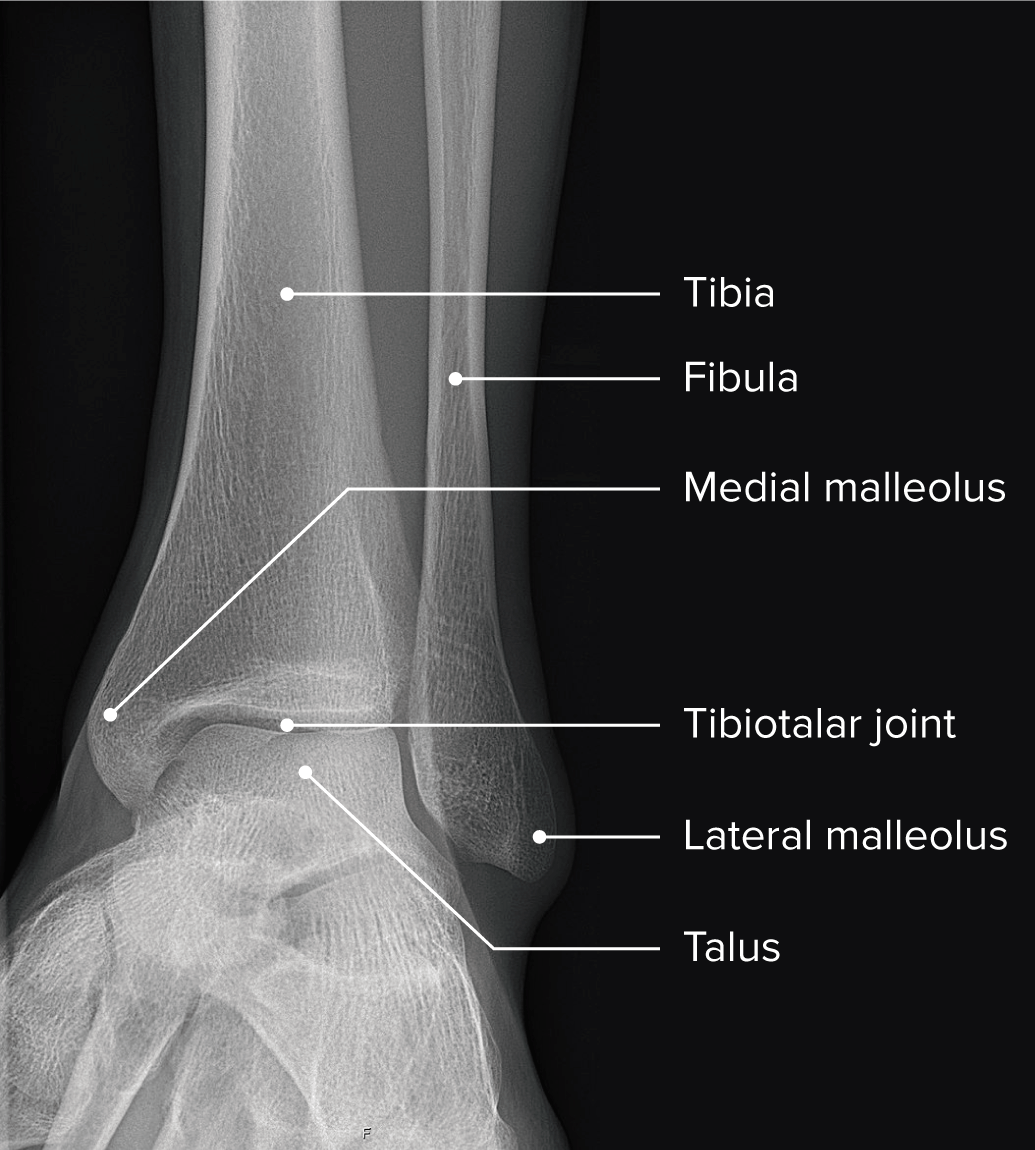
Articulación del tobillo

Radiografía del tobillo que muestra la anatomía normal del tobillo y la relación de los huesos y las articulaciones

Imagen por Lecturio.
  • Tibia Tibia The second longest bone of the skeleton. It is located on the medial side of the lower leg, articulating with the fibula laterally, the talus distally, and the femur proximally. Knee Joint: Anatomy distal
    • Junto con el peroné distal, forman una muesca (cavidad) rectangular en EN Erythema nodosum is an immune-mediated panniculitis (inflammation of the subcutaneous fat) caused by a type IV (delayed-type) hypersensitivity reaction. It commonly manifests in young women as tender, erythematous nodules on the shins. Erythema Nodosum la que se asienta la tróclea del astrágalo.
    • Maléolo medial
      • Extensión distal de la tibia Tibia The second longest bone of the skeleton. It is located on the medial side of the lower leg, articulating with the fibula laterally, the talus distally, and the femur proximally. Knee Joint: Anatomy
      • Proporciona soporte medial
      • Pilón tibial: superficie articular distal de la tibia Tibia The second longest bone of the skeleton. It is located on the medial side of the lower leg, articulating with the fibula laterally, the talus distally, and the femur proximally. Knee Joint: Anatomy
  • Peroné distal
    • Junto con la tibia Tibia The second longest bone of the skeleton. It is located on the medial side of the lower leg, articulating with the fibula laterally, the talus distally, and the femur proximally. Knee Joint: Anatomy distal, forman una muesca (cavidad) rectangular en EN Erythema nodosum is an immune-mediated panniculitis (inflammation of the subcutaneous fat) caused by a type IV (delayed-type) hypersensitivity reaction. It commonly manifests in young women as tender, erythematous nodules on the shins. Erythema Nodosum la que se asienta el astrágalo.
    • Maléolo lateral
      • Extensión distal del peroné
      • Proporciona soporte lateral
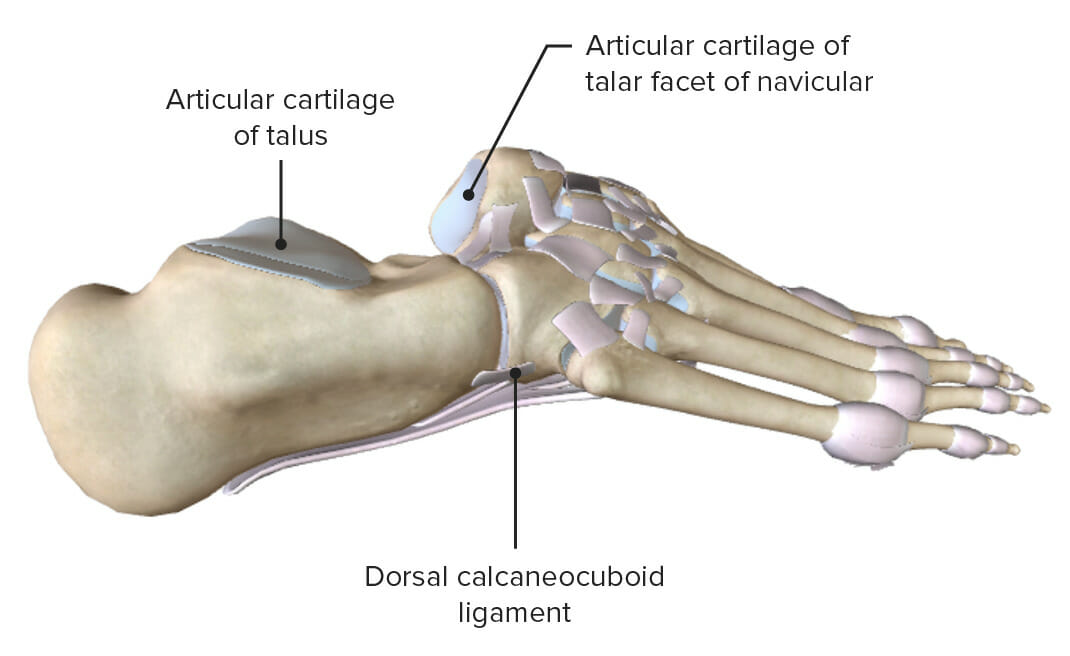
  • Astrágalo
    • El 2do hueso del tarso más grande
    • Tiene forma de cuña
    • La mayor parte de la superficie del astrágalo está cubierta por cartílago articular.
    • Ningún tendón o músculo se inserta o se origina en EN Erythema nodosum is an immune-mediated panniculitis (inflammation of the subcutaneous fat) caused by a type IV (delayed-type) hypersensitivity reaction. It commonly manifests in young women as tender, erythematous nodules on the shins. Erythema Nodosum el astrágalo.
    • Se articula con la tibia Tibia The second longest bone of the skeleton. It is located on the medial side of the lower leg, articulating with the fibula laterally, the talus distally, and the femur proximally. Knee Joint: Anatomy, peroné, escafoides y calcáneo

Related videos

Articulaciones del Tobillo

La tibia Tibia The second longest bone of the skeleton. It is located on the medial side of the lower leg, articulating with the fibula laterally, the talus distally, and the femur proximally. Knee Joint: Anatomy, el peroné y el astrágalo forman la articulación del tobillo y, junto con las articulaciones subastragalina y astragalina, contribuyen al AL Amyloidosis movimiento coordinado del tobillo.
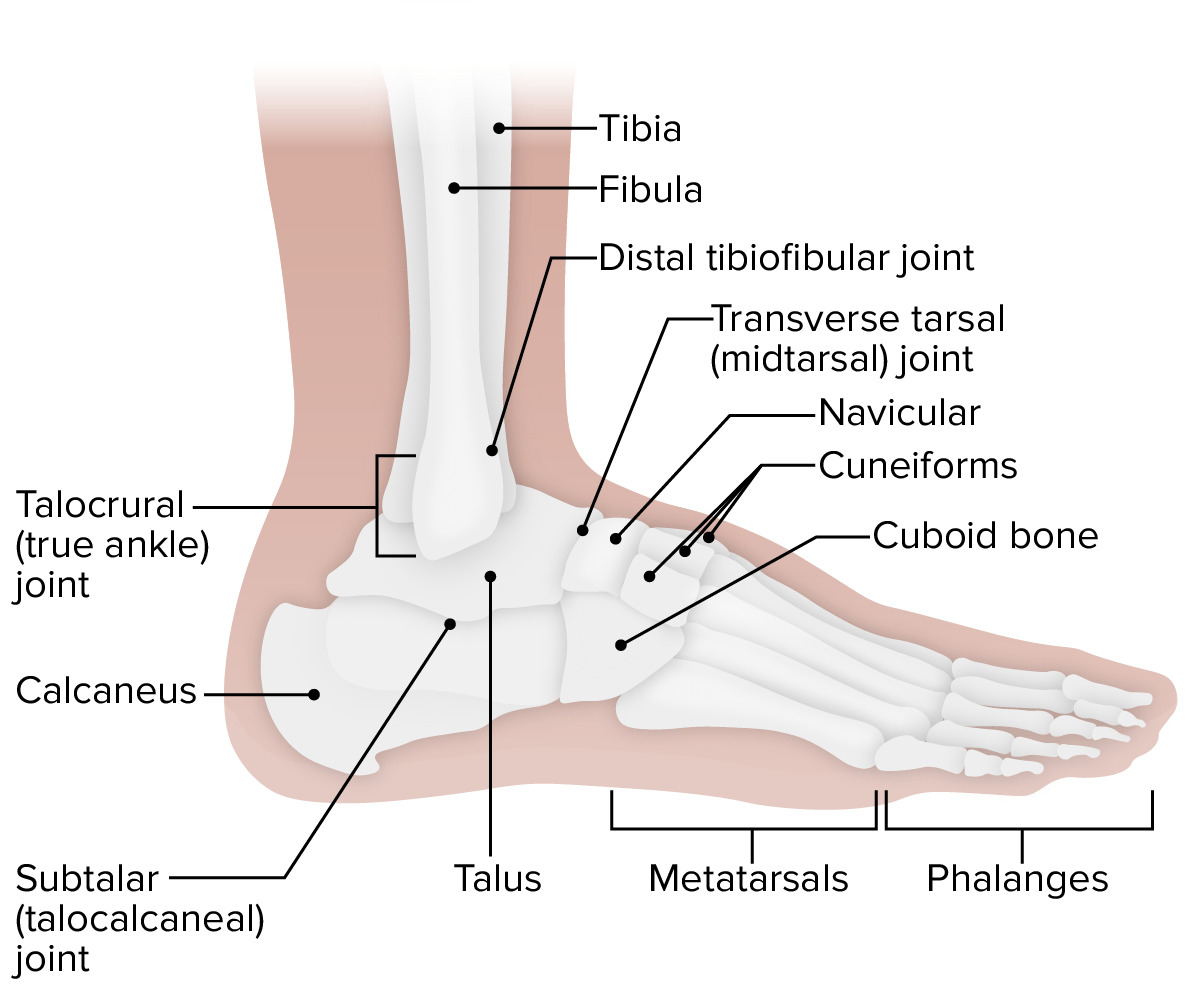
Vista lateral del tobillo

Vista lateral del tobillo: obsérvese las 4 articulaciones diferentes que funcionan sinérgicamente para lograr el rango completo de movimiento del tobillo.

Imagen por Lecturio.
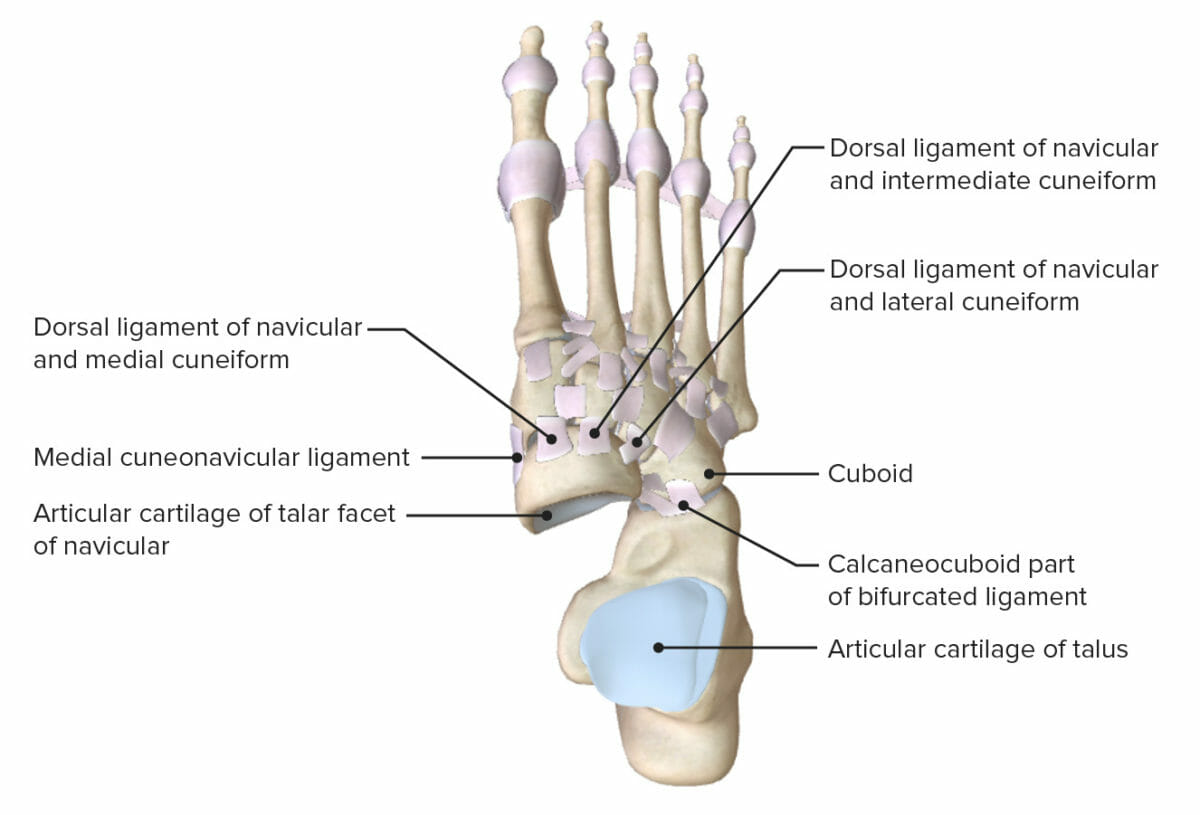
Tibioperoneal distal

  • Tipo: sindesmosis fibrosa
  • Componentes:
    • Cara medial del extremo distal del peroné
    • Cara lateral del extremo distal de la tibia Tibia The second longest bone of the skeleton. It is located on the medial side of the lower leg, articulating with the fibula laterally, the talus distally, and the femur proximally. Knee Joint: Anatomy
  • Ligamentos de soporte:
    • Ligamentos tibioperoneos anterior y posteroinferior
    • Ligamento transverso
    • Membrana interósea
  • Función:
    • Estabilidad
    • Carga de peso
    • Mínimo movimiento

Articulación astragalocrural (tobillo verdadero)

  • Tipo: articulación sinovial en EN Erythema nodosum is an immune-mediated panniculitis (inflammation of the subcutaneous fat) caused by a type IV (delayed-type) hypersensitivity reaction. It commonly manifests in young women as tender, erythematous nodules on the shins. Erythema Nodosum bisagra
  • Componentes:
    • Maléolo medial de la tibia Tibia The second longest bone of the skeleton. It is located on the medial side of the lower leg, articulating with the fibula laterally, the talus distally, and the femur proximally. Knee Joint: Anatomy
    • Maléolo lateral del peroné
    • Faceta proximal y tróclea del astrágalo
  • Ligamentos de soporte:
    • Complejo de ligamentos mediales o ligamento deltoideo:
      • Ligamento tibioescafoideo
      • Ligamento tibiocalcáneo
      • Ligamento tibioastragalino
    • Complejo de ligamentos colaterales laterales:
      • Peroneoastragalino anterior
      • Peroneoastragalino posterior
      • Ligamento calcaneoperoneo
  • Función:
    • 30–50 grados de flexión plantar (flexión del tobillo)
    • 20 grados de dorsiflexión plantar (extensión del tobillo)

Articulación subastragalina (talocalcánea)

  • Tipo: articulación sinovial
  • Componentes:
    • Articulaciones astragalocalcáneas anterior, posterior y media
    • Compuesta por 3 áreas alternas convexas–cóncavas en EN Erythema nodosum is an immune-mediated panniculitis (inflammation of the subcutaneous fat) caused by a type IV (delayed-type) hypersensitivity reaction. It commonly manifests in young women as tender, erythematous nodules on the shins. Erythema Nodosum cada uno de los LOS Neisseria huesos astrágalo y calcáneo
  • Ligamentos de soporte:
    • Ligamento astragalocalcáneo interóseo
    • Ligamentos astragalocalcáneos anterior, posterior, lateral y medial
  • Función:
    • 10 grados de dorsiflexión
    • Inversión y eversión de tobillo y retropié

Articulación transversa del tarso (mediotarsiana)

  • Tipo:
    • La articulación astrágalo-calcáneo-escafoidea es una articulación esférica modificada.
    • La articulación calcaneocuboidea es una articulación tipo silla de montar modificada.
  • Componentes:
    • Articulación astrágalo-calcáneo-escafoidea:
      • Cabeza del astrágalo
      • Concavidad formada por la zona posterior del escafoides y la zona anterior del calcáneo
    • Articulación calcaneocuboidea:
      • Superficie distal del calcáneo
      • Área proximal del cuboides
  • Ligamentos de soporte:
    • Articulación astrágalo-calcáneo-escafoidea: cápsula articular, ligamento astragaloescafoideo dorsal y ligamento calcaneoescafoideo plantar
    • Articulación calcaneocuboidea: ligamento bifurcado ( en EN Erythema nodosum is an immune-mediated panniculitis (inflammation of the subcutaneous fat) caused by a type IV (delayed-type) hypersensitivity reaction. It commonly manifests in young women as tender, erythematous nodules on the shins. Erythema Nodosum forma de Y) en EN Erythema nodosum is an immune-mediated panniculitis (inflammation of the subcutaneous fat) caused by a type IV (delayed-type) hypersensitivity reaction. It commonly manifests in young women as tender, erythematous nodules on the shins. Erythema Nodosum la parte superior, ligamento plantar largo en EN Erythema nodosum is an immune-mediated panniculitis (inflammation of the subcutaneous fat) caused by a type IV (delayed-type) hypersensitivity reaction. It commonly manifests in young women as tender, erythematous nodules on the shins. Erythema Nodosum la parte inferior y ligamento plantar corto
  • Función:
    • La articulación astrágalo-calcáneo-escafoidea realiza la inversión y eversión del pie.
    • La articulación calcaneocuboidea realiza movimientos de deslizamiento y rotación entre el calcáneo y el cuboides.

Ligamentos y Retináculos

Existen varios complejos de ligamentos principales en EN Erythema nodosum is an immune-mediated panniculitis (inflammation of the subcutaneous fat) caused by a type IV (delayed-type) hypersensitivity reaction. It commonly manifests in young women as tender, erythematous nodules on the shins. Erythema Nodosum el tobillo para proporcionar estabilidad y soporte.
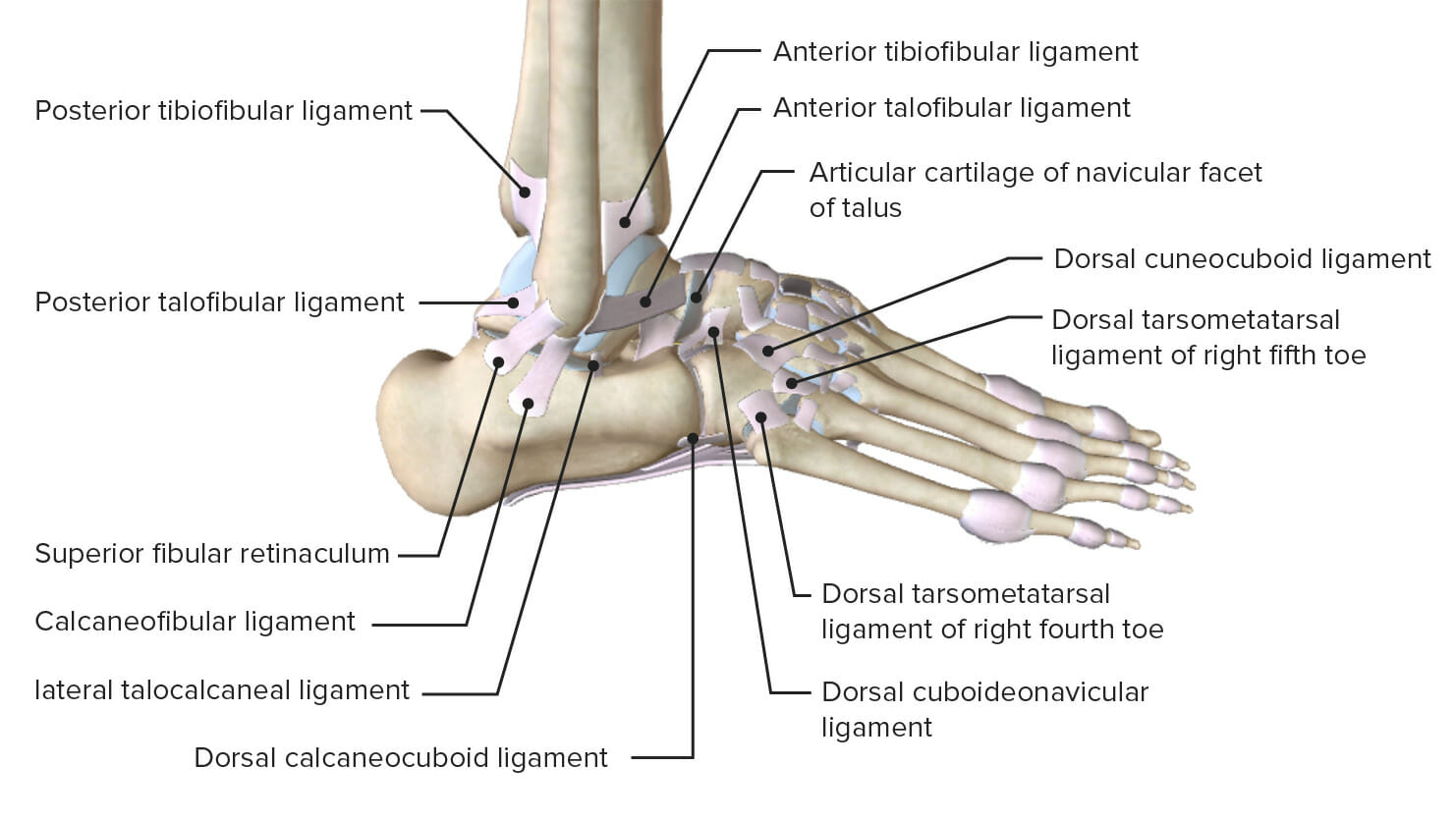
Complejo de ligamentos laterales

  • Resiste la inversión excesiva del pie
  • Se extiende desde el maléolo lateral del peroné
  • Consiste en EN Erythema nodosum is an immune-mediated panniculitis (inflammation of the subcutaneous fat) caused by a type IV (delayed-type) hypersensitivity reaction. It commonly manifests in young women as tender, erythematous nodules on the shins. Erythema Nodosum:
    • Ligamento calcaneoperoneo
      • Se extiende posteroinferiormente
      • Se une a la punta del maléolo lateral
    • Ligamento astragaloperoneo anterior
      • Se extiende anteromedialmente
      • Se une al AL Amyloidosis maléolo lateral
      • Ligamento lesionado con mayor frecuencia
      • Lesionado en EN Erythema nodosum is an immune-mediated panniculitis (inflammation of the subcutaneous fat) caused by a type IV (delayed-type) hypersensitivity reaction. It commonly manifests in young women as tender, erythematous nodules on the shins. Erythema Nodosum esguinces por inversión
    • Ligamento astragaloperoneo posterior
      • Se une a la fosa maleolar del peroné
      • Situado medialmente, discurre horizontalmente
      • Soporta el tobillo en EN Erythema nodosum is an immune-mediated panniculitis (inflammation of the subcutaneous fat) caused by a type IV (delayed-type) hypersensitivity reaction. It commonly manifests in young women as tender, erythematous nodules on the shins. Erythema Nodosum dorsiflexión
vista lateral del tobillo

Vista lateral del tobillo con los ligamentos de soporte de las articulaciones astragalocrural y subastragalina

Imagen por Lecturio.
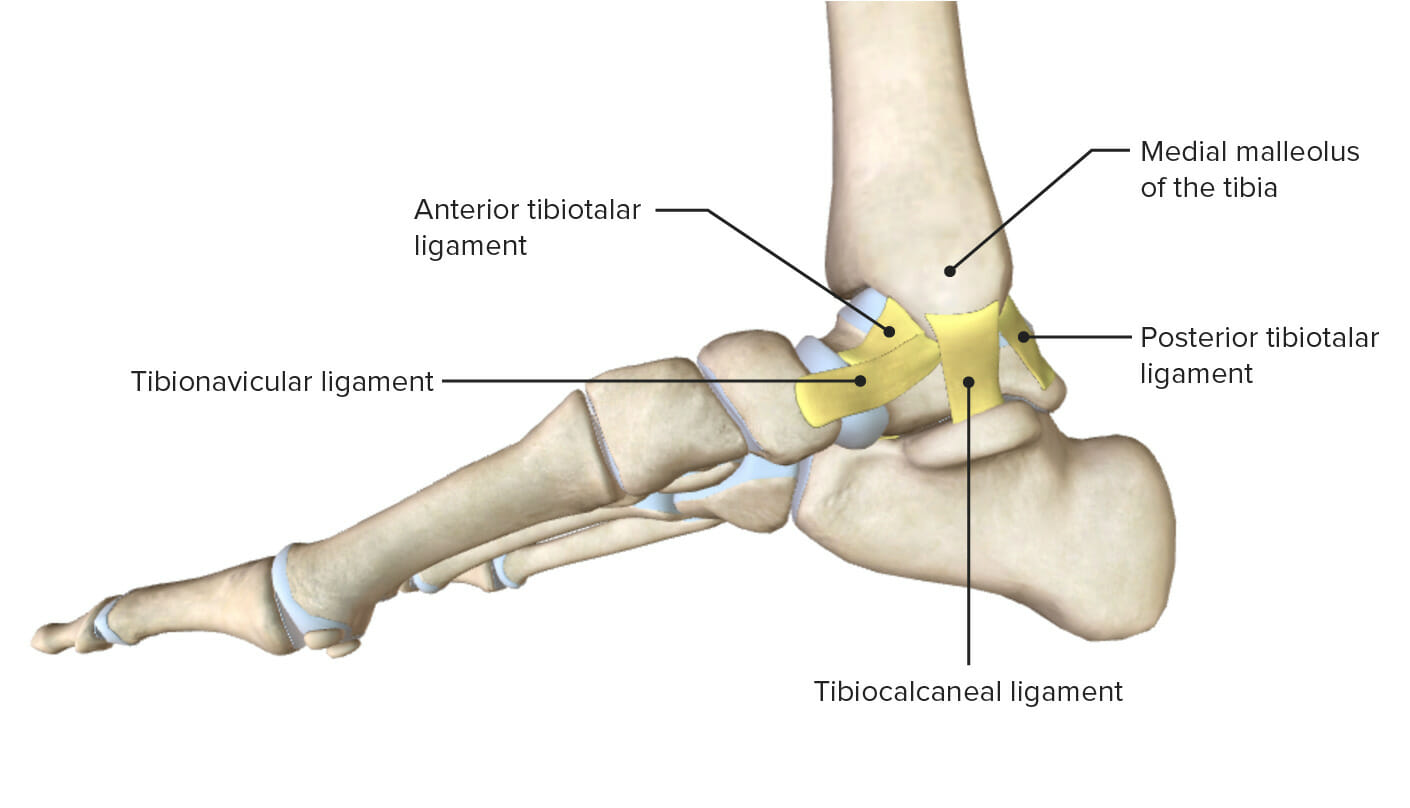
Ligamento medial o deltoides

  • Más fuerte que el complejo lateral
  • Resiste la eversión excesiva del pie
  • Este ligamento se origina en EN Erythema nodosum is an immune-mediated panniculitis (inflammation of the subcutaneous fat) caused by a type IV (delayed-type) hypersensitivity reaction. It commonly manifests in young women as tender, erythematous nodules on the shins. Erythema Nodosum el maléolo medial y luego se abre en EN Erythema nodosum is an immune-mediated panniculitis (inflammation of the subcutaneous fat) caused by a type IV (delayed-type) hypersensitivity reaction. It commonly manifests in young women as tender, erythematous nodules on the shins. Erythema Nodosum 4 hebras distintas:
    • Ligamento tibiocalcáneo
      • Se extiende inferiormente, casi verticalmente
      • Se fija al AL Amyloidosis sustentaculum tali posterior o plataforma astragalina del calcáneo, que es la eminencia horizontal
    • Ligamento tibioescafoideo
      • Se extiende anteriormente
      • Se une a la tuberosidad del hueso escafoides
    • Ligamento tibioastragalino anterior
      • Ligamento corto y delgado que se extiende anterior e inferiormente
      • Se fija al AL Amyloidosis astrágalo medial y al AL Amyloidosis tubérculo medial
      • Se encuentra profundo a los LOS Neisseria ligamentos tibioescafoideo y tibiocalcáneo
    • Ligamento tibioastragalino posterior
      • Se extiende posterior e inferiormente
      • Se une a la superficie posteromedial del astrágalo
Vista medial de la articulación del tobillo

Vista medial del tobillo destacando los diversos ligamentos de la articulación medial del tobillo

Imagen por Lecturio.
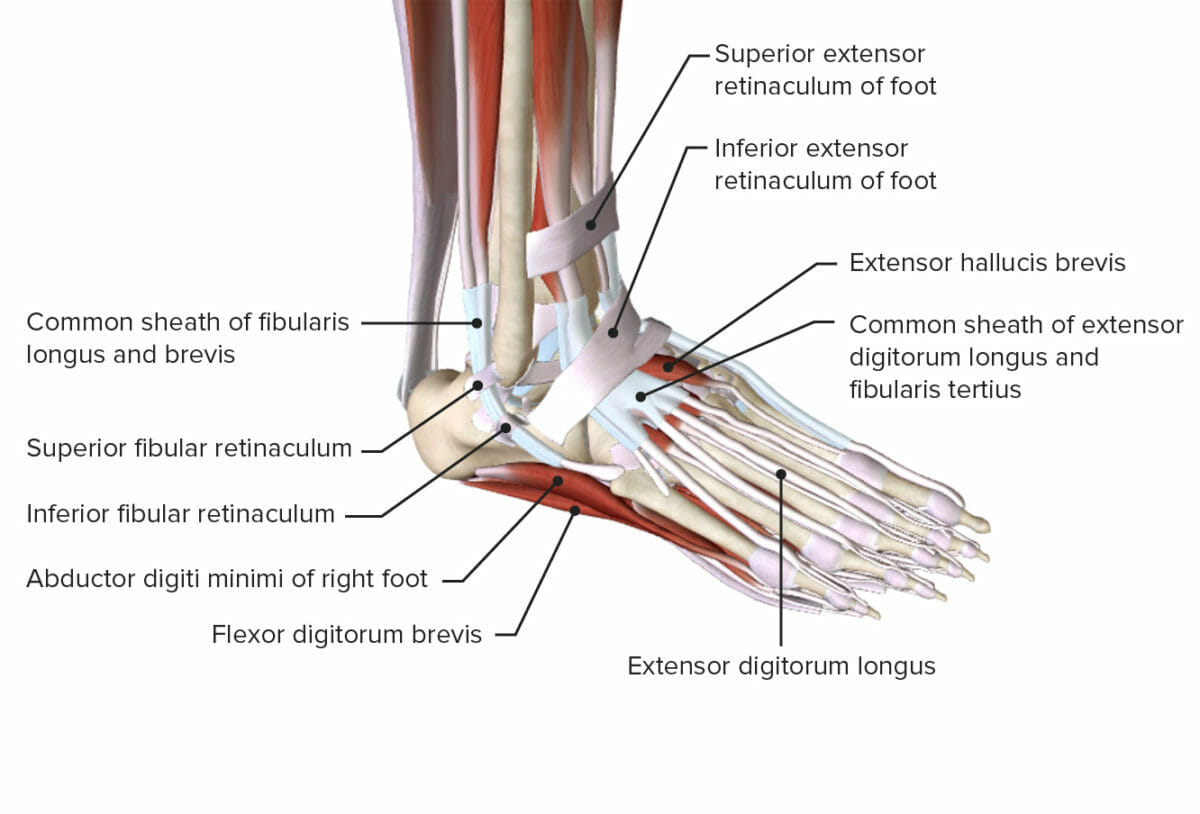
Sindesmosis del tobillo

  • Responsable de la integridad de la muesca del tobillo
  • Consta de los LOS Neisseria siguientes elementos:
    • Membrana interósea
    • Ligamento transverso
    • Ligamentos tibioperoneos anterior y posteroinferior

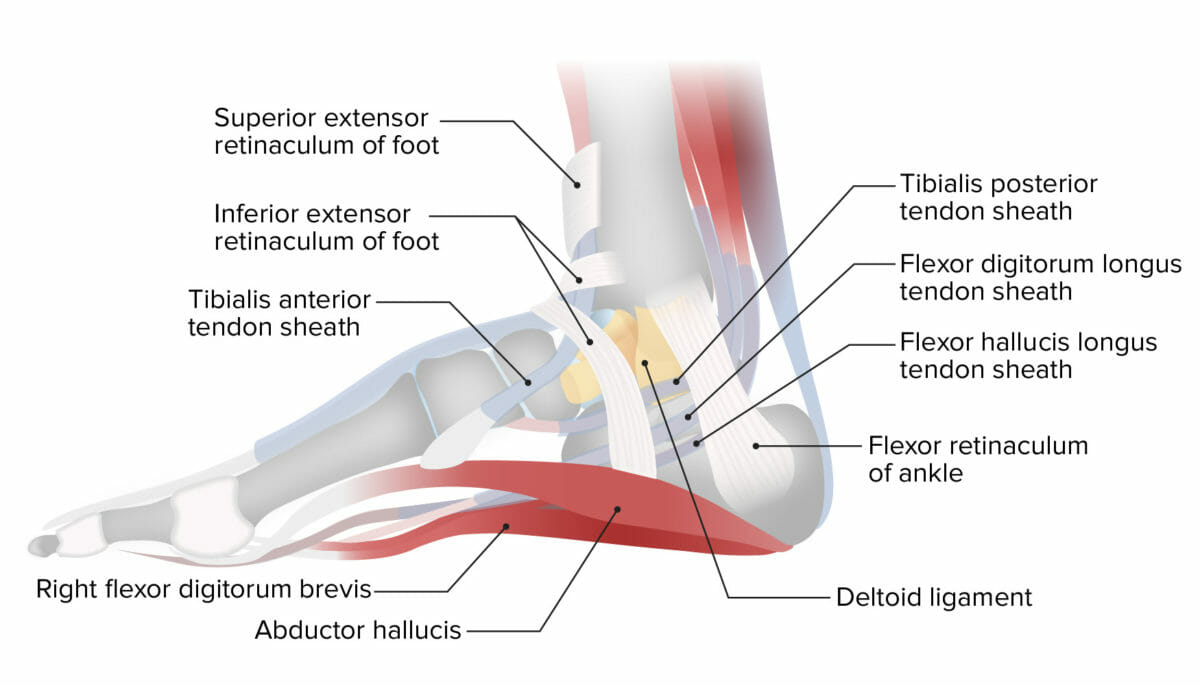
Retináculos

  • Bandas fibrosas que rodean o cubren y estabilizan los LOS Neisseria tendones
  • Actúan como un sistema de poleas para permitir una superficie de deslizamiento suave para los LOS Neisseria tendones musculares, lo que evita que los LOS Neisseria tendones se doblen
  • Retináculo anterior o extensor
    • Los LOS Neisseria tendones musculares del compartimento anterior de la pierna pasan por debajo de este retináculo.
    • Retináculo extensor superior: banda anterior transversal entre el peroné y la tibia Tibia The second longest bone of the skeleton. It is located on the medial side of the lower leg, articulating with the fibula laterally, the talus distally, and the femur proximally. Knee Joint: Anatomy
    • Retináculo extensor inferior: banda transversal en EN Erythema nodosum is an immune-mediated panniculitis (inflammation of the subcutaneous fat) caused by a type IV (delayed-type) hypersensitivity reaction. It commonly manifests in young women as tender, erythematous nodules on the shins. Erythema Nodosum forma de Y que se extiende desde el maléolo medial y la aponeurosis plantar lateralmente hasta la superficie lateral del hueso calcáneo
  • Retináculo medial o flexor
    • Formado por una banda oblicua que se extiende desde el maléolo medial de la tibia Tibia The second longest bone of the skeleton. It is located on the medial side of the lower leg, articulating with the fibula laterally, the talus distally, and the femur proximally. Knee Joint: Anatomy hasta la superficie medial del hueso calcáneo
    • Los LOS Neisseria tendones musculares de la capa profunda del compartimento posterior de la pierna pasan por debajo de este retináculo.
    • Además, los LOS Neisseria vasos tibiales posteriores y el nervio tibial pasan por debajo.
    • Forma el techo del túnel tarsiano, con un espacio estrecho en EN Erythema nodosum is an immune-mediated panniculitis (inflammation of the subcutaneous fat) caused by a type IV (delayed-type) hypersensitivity reaction. It commonly manifests in young women as tender, erythematous nodules on the shins. Erythema Nodosum el lado medial del tobillo a través del cual pasan varias estructuras desde la pierna hasta el pie:
      • Músculo flexor tibial posterior
      • Músculo largo de los LOS Neisseria dedos
      • Arteria y vena tibial posterior
      • Nervio tibial
      • Músculo flexor largo del hallux
  • Retináculos laterales
    • Los LOS Neisseria tendones peroneos (fibulares) pasan por debajo de los LOS Neisseria retináculos laterales.
    • Retináculo peroneo o fibular superior: se extiende desde el maléolo lateral hasta el calcáneo
    • Retináculo peroneo o fibular inferior: continuación del retináculo extensor inferior

Músculos del Tobillo y Rango de Movimiento

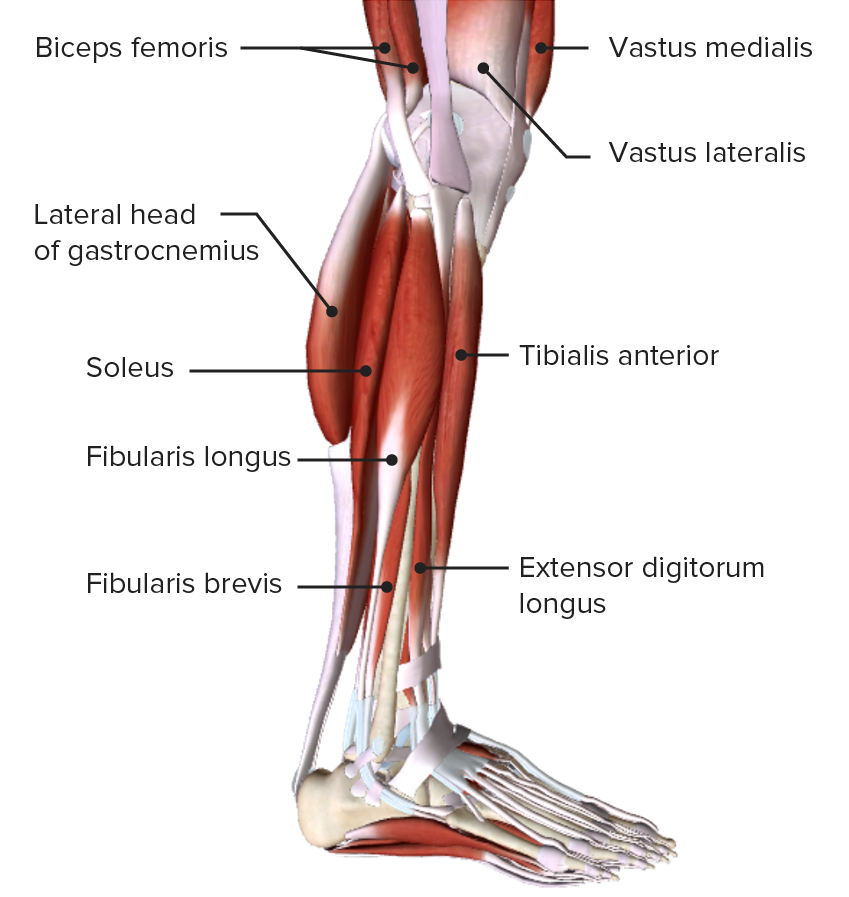
Músculos

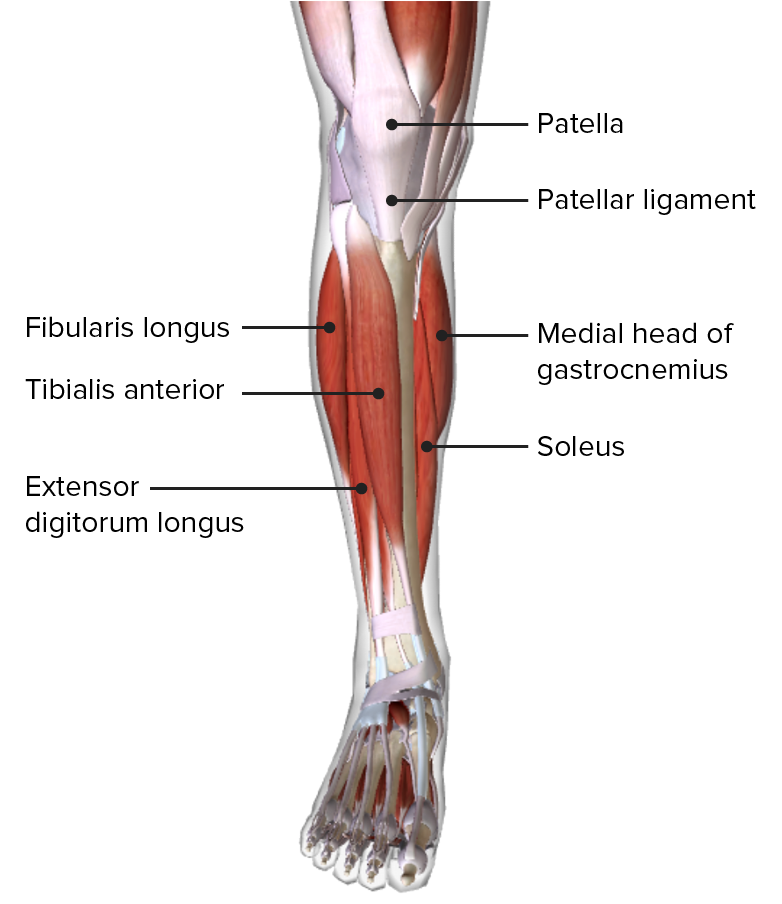
Los LOS Neisseria músculos de la pierna se insertan en EN Erythema nodosum is an immune-mediated panniculitis (inflammation of the subcutaneous fat) caused by a type IV (delayed-type) hypersensitivity reaction. It commonly manifests in young women as tender, erythematous nodules on the shins. Erythema Nodosum los LOS Neisseria huesos del tobillo para crear movimiento y este ocurre en EN Erythema nodosum is an immune-mediated panniculitis (inflammation of the subcutaneous fat) caused by a type IV (delayed-type) hypersensitivity reaction. It commonly manifests in young women as tender, erythematous nodules on the shins. Erythema Nodosum los LOS Neisseria planos cardinales.
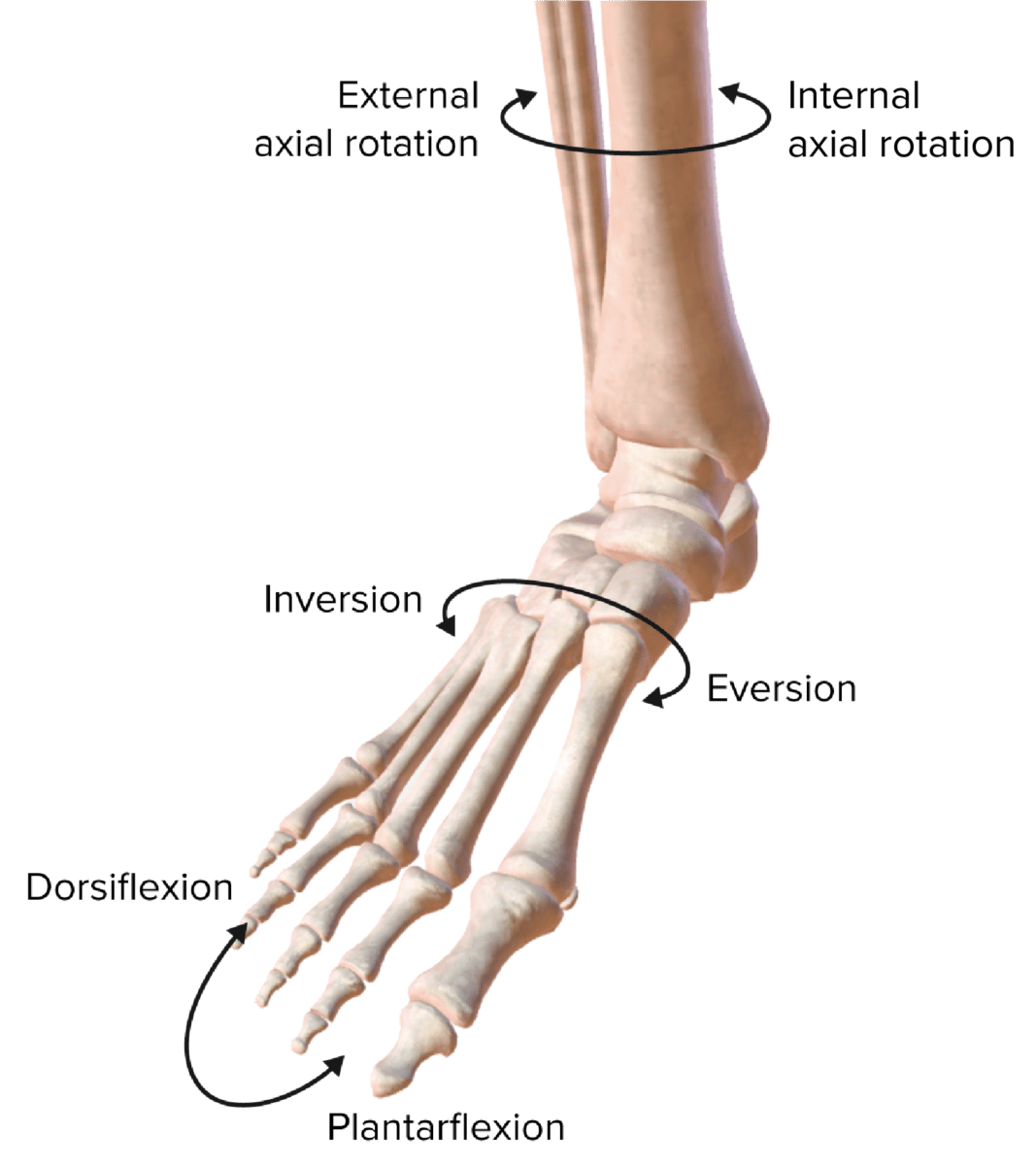
  • Plano sagital (flexión plantar/dorsal)
  • Plano frontal Frontal The bone that forms the frontal aspect of the skull. Its flat part forms the forehead, articulating inferiorly with the nasal bone and the cheek bone on each side of the face. Skull: Anatomy (inversión/eversión)
  • Plano transversal (rotación interna/externa)
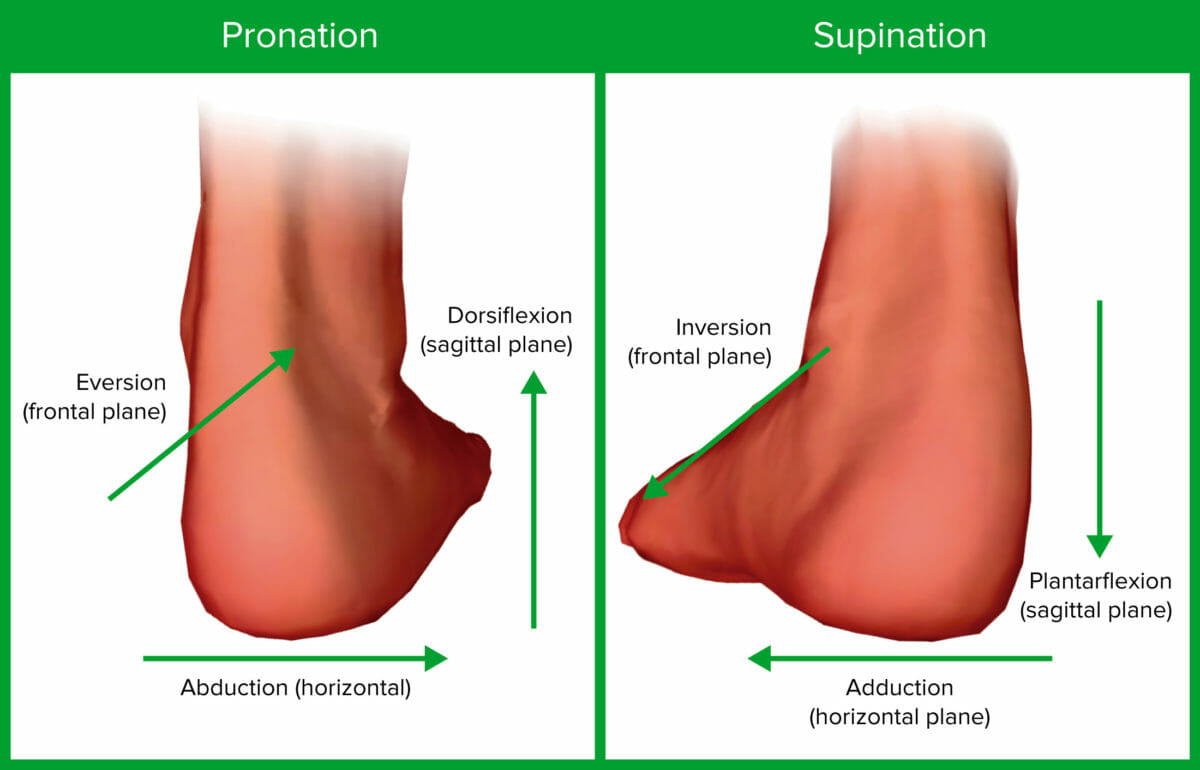
  • Pronación y supinación
    • Una combinación de todos estos movimientos
    • Implica movimiento en EN Erythema nodosum is an immune-mediated panniculitis (inflammation of the subcutaneous fat) caused by a type IV (delayed-type) hypersensitivity reaction. It commonly manifests in young women as tender, erythematous nodules on the shins. Erythema Nodosum las articulaciones astragalocrural, subastragalina y del mediopié
    • Pronación (dorsiflexión del tobillo, eversión subastragalina y abducción del antepié)
    • Supinación (flexión plantar del tobillo, inversión subastragalina y aducción del antepié)
Tabla: Compartimento anterior
Músculo Origen Inserción Acción Inervación
Tibial anterior
  • Cóndilo lateral
  • Eje tibial superior
  • Membrana interósea
Superficie interior del cuneiforme medial Dorsiflexión Nervio peroneo (fibular) profundo
Extensor largo del hallux
  • Eje anteromedial del peroné
  • Membrana interósea
Falange distal del hallux Dorsiflexión Nervio peroneo (fibular) profundo
Extensor largo de los LOS Neisseria dedos
  • Cóndilo lateral de la tibia Tibia The second longest bone of the skeleton. It is located on the medial side of the lower leg, articulating with the fibula laterally, the talus distally, and the femur proximally. Knee Joint: Anatomy
  • Porción proximal del peroné
  • Membrana interósea
Falanges media y distal 2–5 Dorsiflexión Nervio peroneo (fibular) profundo
Tabla: Compartimento lateral
Músculo Origen Inserción Acción Inervación
Peroneo largo Parte supero-lateral del peroné 1er metatarsiano,
cuneiforme medial
Flexión plantar,
eversión
Peroneo superficial
Peroneo corto Eje distal del peroné Extremo proximal del 5to metatarsiano Flexión plantar,
eversión
Peroneo superficial
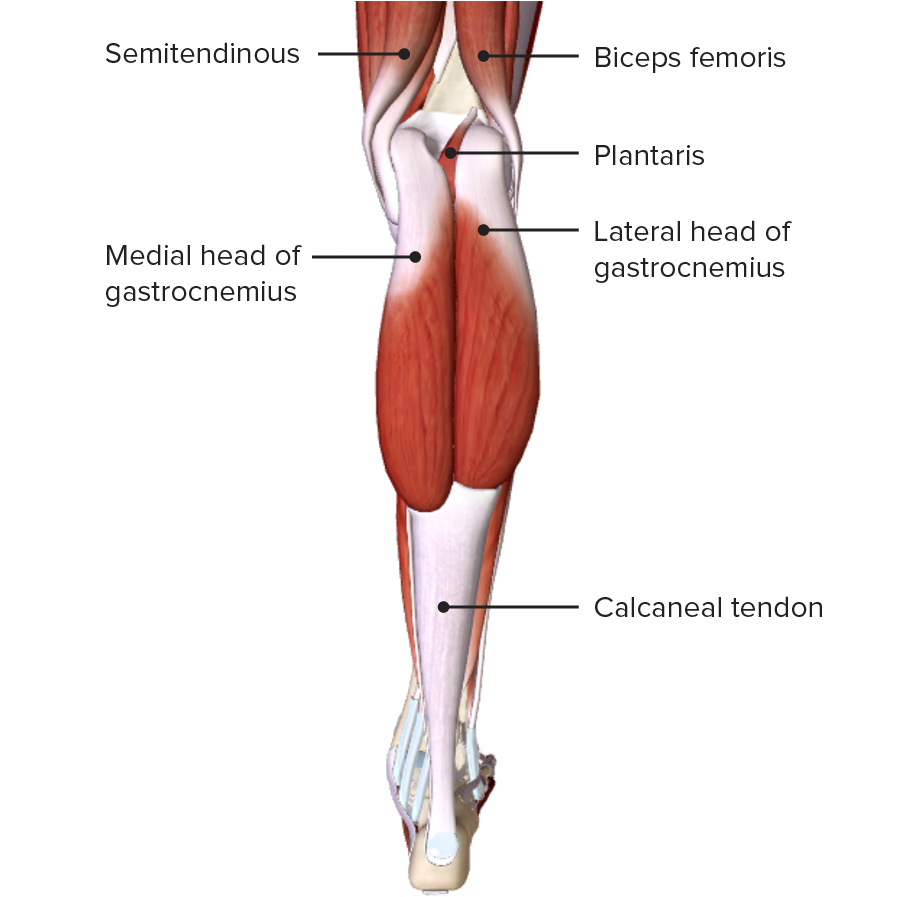
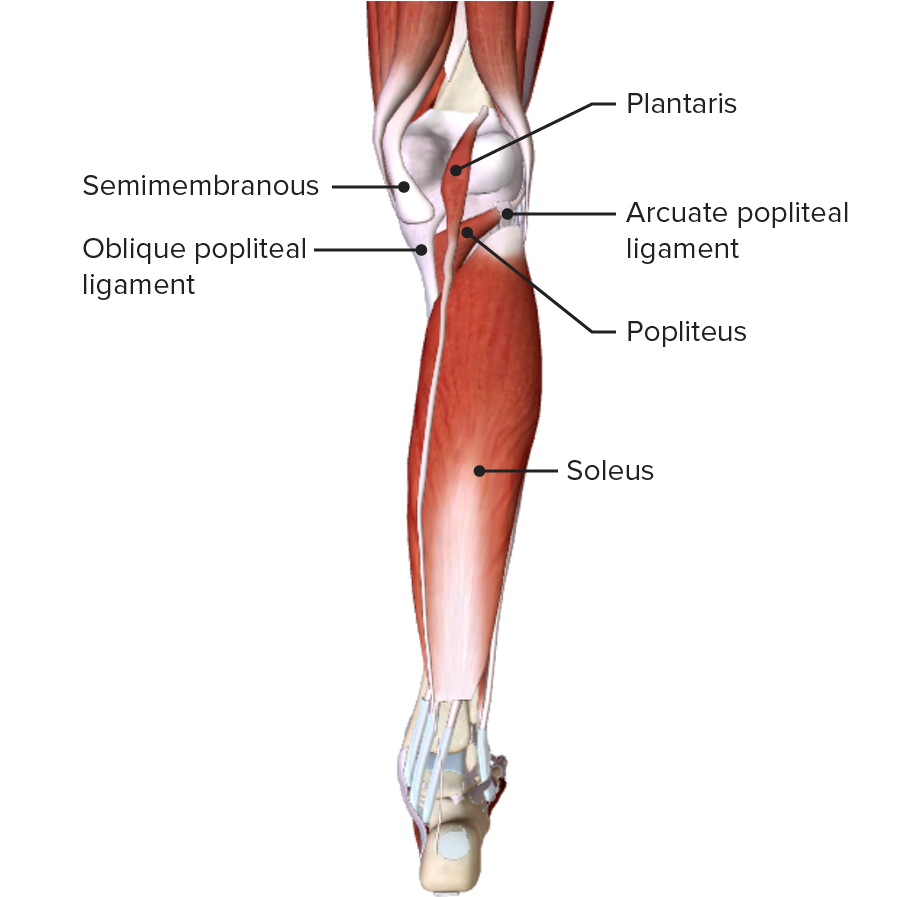
Compartimento posterior: Músculos superficiales
Músculo Origen Inserción Acción Inervación
Gastrocnemio Cóndilos medial y lateral Calcáneo posterior Flexión plantar Nervio tibial
Sóleo Tibia Tibia The second longest bone of the skeleton. It is located on the medial side of the lower leg, articulating with the fibula laterally, the talus distally, and the femur proximally. Knee Joint: Anatomy superior, peroné, membrana interósea Calcáneo posterior Flexión plantar Nervio tibial
Plantar Fémur posterior por encima del cóndilo lateral Tendón calcáneo o calcáneo Flexión plantar Tibial desde ramas anteriores S1 S1 Heart Sounds S2 S2 Heart Sounds
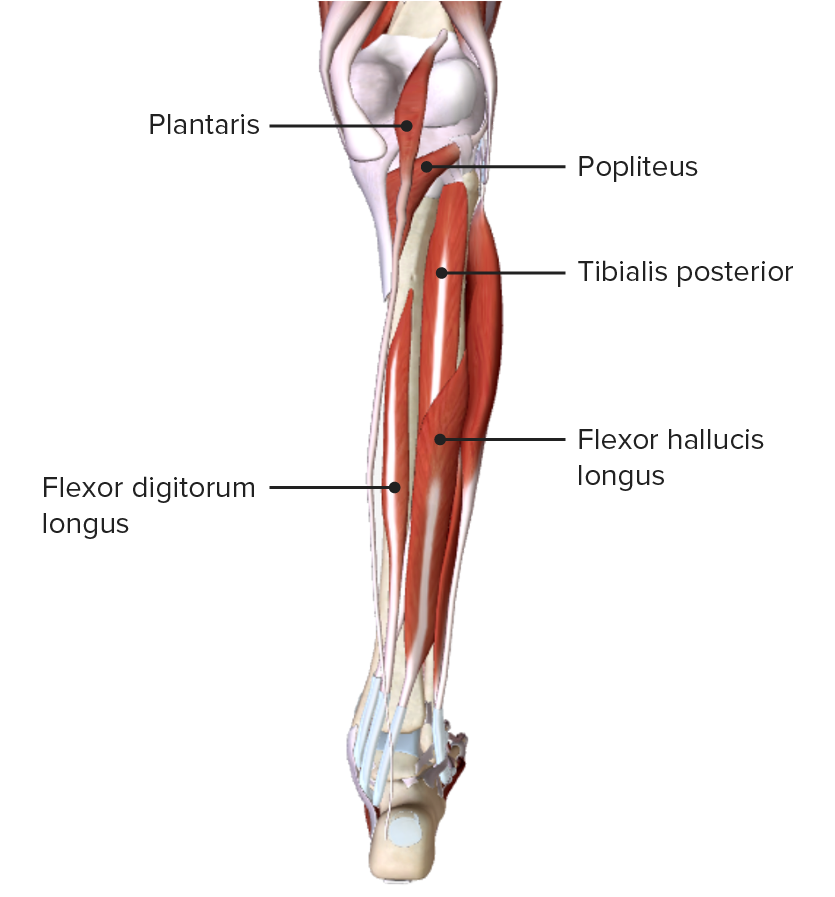
Tibial posterior Tibia Tibia The second longest bone of the skeleton. It is located on the medial side of the lower leg, articulating with the fibula laterally, the talus distally, and the femur proximally. Knee Joint: Anatomy y peroné superiores, membrana interósea Varios tarsianos y metatarsianos 2–4 Inversión y flexión plantar Nervio tibial
Compartimento posterior: Músculos profundos
Músculo Origen Inserción Acción Inervación
Flexor largo de los LOS Neisseria dedos Tibia Tibia The second longest bone of the skeleton. It is located on the medial side of the lower leg, articulating with the fibula laterally, the talus distally, and the femur proximally. Knee Joint: Anatomy posterior Falanges distales 2–5 Flexión plantar, inversión Nervio tibial
Flexor largo del hallux Parte media del peroné, membrana interósea Falange distal del hallux Flexión plantar, inversión Nervio tibial

Irrigación e Inervación

Irrigación

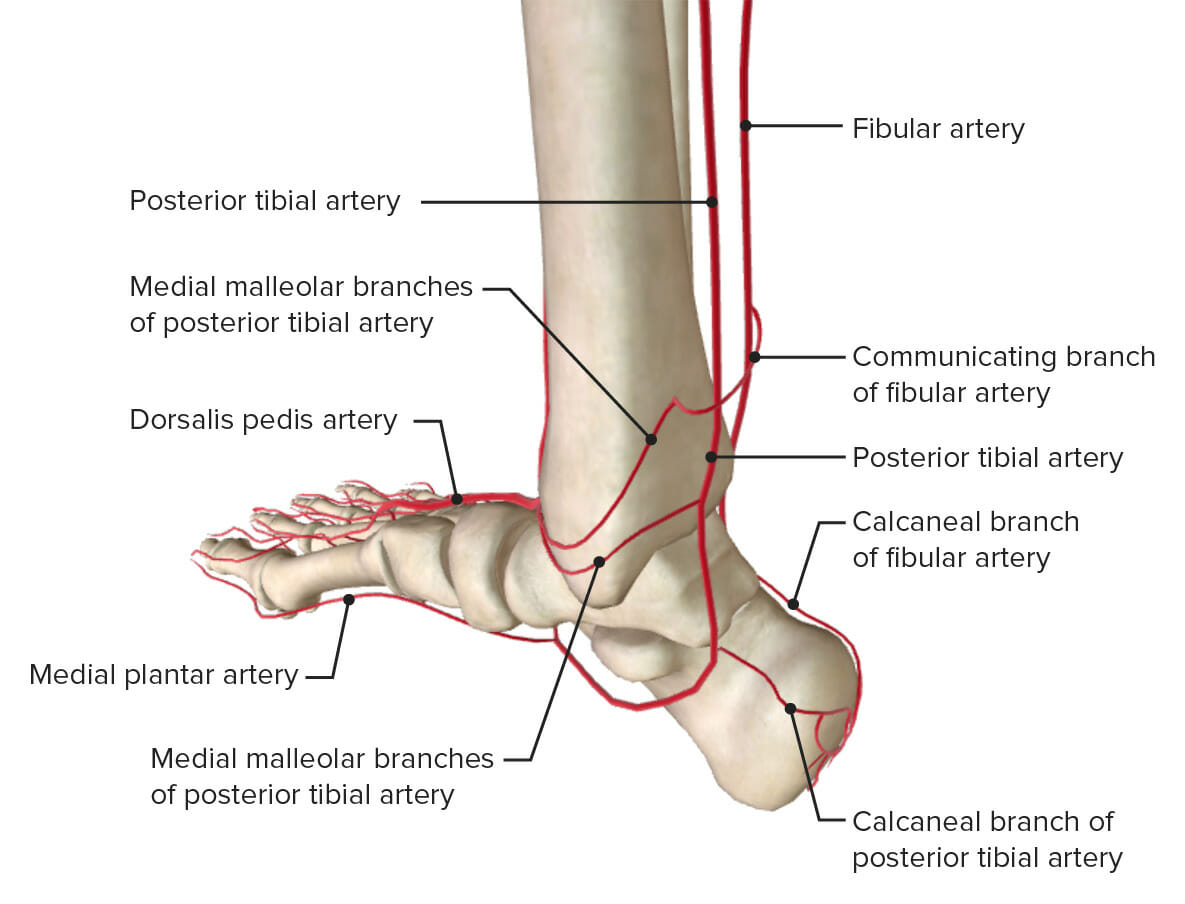
  • Arteria peronea o fibular
    • Una rama de la arteria tibial posterior
    • Irriga los LOS Neisseria componentes posteriores y laterales de las articulaciones de la pierna y el tobillo
    • Rodea el maléolo lateral del peroné como la rama maleolar lateral posterior
    • Proporciona ramas peroneas en EN Erythema nodosum is an immune-mediated panniculitis (inflammation of the subcutaneous fat) caused by a type IV (delayed-type) hypersensitivity reaction. It commonly manifests in young women as tender, erythematous nodules on the shins. Erythema Nodosum el tobillo
  • Arteria tibial posterior
    • Una rama de la arteria poplítea
    • Irriga el compartimento posterior de la pierna, articulación del tobillo y planta del pie
    • Entra en EN Erythema nodosum is an immune-mediated panniculitis (inflammation of the subcutaneous fat) caused by a type IV (delayed-type) hypersensitivity reaction. It commonly manifests in young women as tender, erythematous nodules on the shins. Erythema Nodosum el pie pasando por detrás del maléolo medial de la tibia Tibia The second longest bone of the skeleton. It is located on the medial side of the lower leg, articulating with the fibula laterally, the talus distally, and the femur proximally. Knee Joint: Anatomy, donde proporciona ramas a la articulación del tobillo
    • Sus ramas terminales son las arterias plantares lateral y medial
  • Arteria tibial anterior
    • La rama terminal de la arteria poplítea
    • Transcurre a través del compartimiento anterior (extensor) de la pierna
    • Emite arterias maleolares que se anastomosan alrededor del tobillo:
      • La arteria maleolar medial anterior se conecta con las arterias tibial posterior y plantar medial.
      • La arteria maleolar lateral anterior se conecta con la rama perforante de la arteria peronea y las ramas de la arteria tarsiana lateral.
irrigación arterial del tobillo

La irrigación arterial del tobillo: obsérvese que la arteria tibial anterior se muestra como su continuación, la arteria dorsal del pie.

Imagen por Lecturio.

Inervación

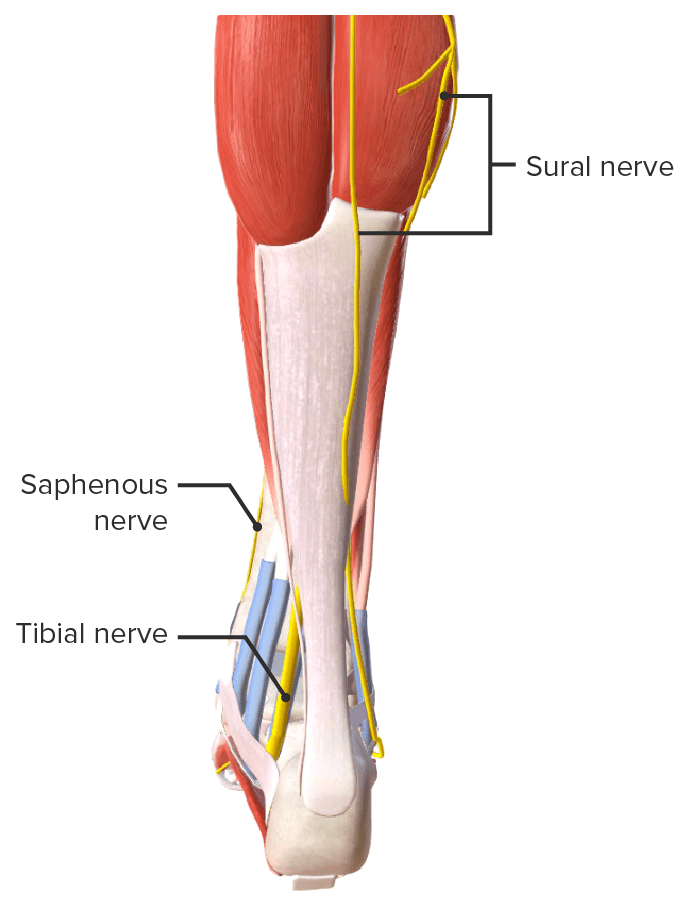
La inervación del tobillo la proporcionan las raíces desde el nivel L4 a S2 S2 Heart Sounds de la médula espinal. Los LOS Neisseria siguientes nervios también dan ramas a la articulación del tobillo:
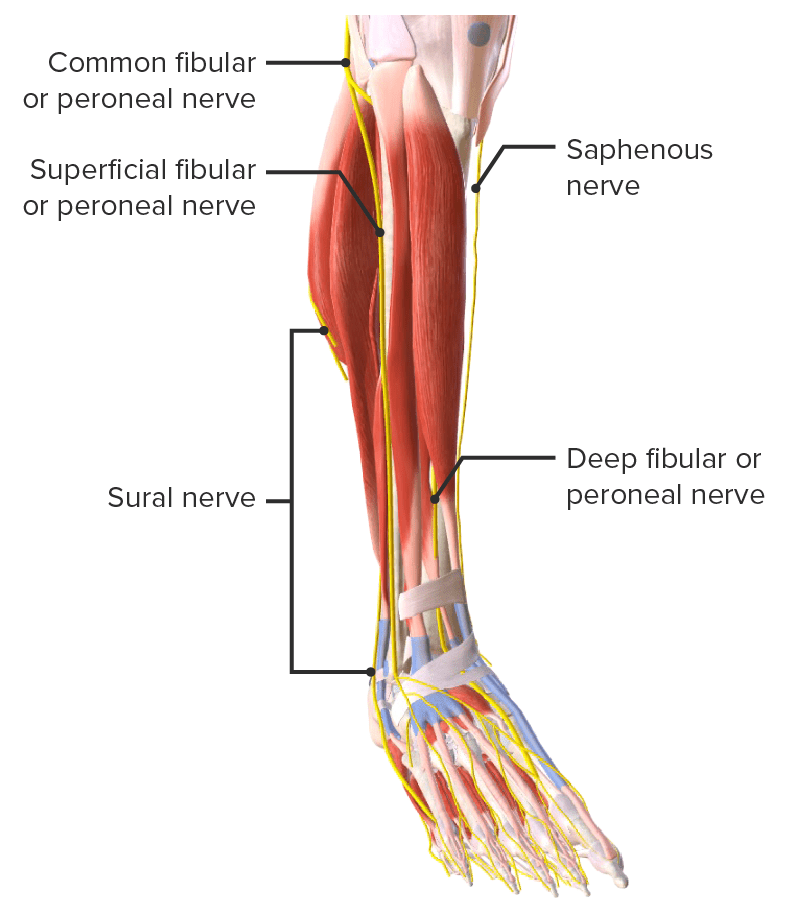
  • Nervio peroneo o fibular profundo
    • 1 de las ramas terminales del nervio peroneo o fibular común
    • Entra en EN Erythema nodosum is an immune-mediated panniculitis (inflammation of the subcutaneous fat) caused by a type IV (delayed-type) hypersensitivity reaction. It commonly manifests in young women as tender, erythematous nodules on the shins. Erythema Nodosum el dorso del pie por debajo del retináculo extensor
    • Da ramas articulares a la articulación del tobillo
    • Una lesión resultaría en EN Erythema nodosum is an immune-mediated panniculitis (inflammation of the subcutaneous fat) caused by a type IV (delayed-type) hypersensitivity reaction. It commonly manifests in young women as tender, erythematous nodules on the shins. Erythema Nodosum debilidad de la dorsiflexión del tobillo y extensión de todos los LOS Neisseria dedos del pie.
  • Nervio tibial
    • 1 de las ramas terminales del nervio ciático
    • Entra en EN Erythema nodosum is an immune-mediated panniculitis (inflammation of the subcutaneous fat) caused by a type IV (delayed-type) hypersensitivity reaction. It commonly manifests in young women as tender, erythematous nodules on the shins. Erythema Nodosum la planta del pie pasando por detrás del maléolo medial a través del túnel tarsiano
    • Proporciona ramas articulares a la articulación tibioperonea inferior y la articulación del tobillo verdadero
  • Nervio sural
    • Formado por la fusión del nervio cutáneo sural medial (del nervio tibial) y el nervio cutáneo sural lateral (del nervio peroneo o fibular común)
    • Sensación en EN Erythema nodosum is an immune-mediated panniculitis (inflammation of the subcutaneous fat) caused by a type IV (delayed-type) hypersensitivity reaction. It commonly manifests in young women as tender, erythematous nodules on the shins. Erythema Nodosum la cara posterolateral del ⅓ distal de la pierna, articulación del tobillo, pie y talón

Relevancia Clínica

  • Esguince de tobillo: rotura parcial o total de los LOS Neisseria ligamentos de la articulación del tobillo. Un esguince de tobillo generalmente ocurre a través de una lesión de tipo inversión en EN Erythema nodosum is an immune-mediated panniculitis (inflammation of the subcutaneous fat) caused by a type IV (delayed-type) hypersensitivity reaction. It commonly manifests in young women as tender, erythematous nodules on the shins. Erythema Nodosum un pie con flexión plantar y que soporta peso. Los LOS Neisseria ligamentos laterales tienen más probabilidades de dañarse debido a su estructura y biomecánica del tobillo. El ligamento astragaloperoneo anterior es el componente del complejo del ligamento lateral que se lesiona con mayor frecuencia. Un esguince de tobillo se presenta con dolor Dolor Inflammation, inflamación y un rango de movimiento limitado después de un trauma físico, y generalmente está relacionado con una caída o una lesión relacionada con el deporte.
  • Esguince de tobillo alto: se produce cuando hay una lesión en EN Erythema nodosum is an immune-mediated panniculitis (inflammation of the subcutaneous fat) caused by a type IV (delayed-type) hypersensitivity reaction. It commonly manifests in young women as tender, erythematous nodules on the shins. Erythema Nodosum la sindesmosis entre la tibia Tibia The second longest bone of the skeleton. It is located on the medial side of the lower leg, articulating with the fibula laterally, the talus distally, and the femur proximally. Knee Joint: Anatomy y el peroné por una lesión de las articulaciones del tobillo o de la membrana interósea. El mecanismo más común de lesión es la rotación externa extrema y dorsiflexión del tobillo.
  • Fractura de tobillo: la fractura más común de la extremidad inferior. Una fractura de tobillo generalmente es causada por torcer el tobillo con una tensión de inversión excesiva, un mecanismo que es más común porque el maléolo medial es más corto que el maléolo lateral y los LOS Neisseria ligamentos deltoides mediales son más fuertes que los LOS Neisseria laterales. Una fractura de tobillo se presenta como dolor Dolor Inflammation en EN Erythema nodosum is an immune-mediated panniculitis (inflammation of the subcutaneous fat) caused by a type IV (delayed-type) hypersensitivity reaction. It commonly manifests in young women as tender, erythematous nodules on the shins. Erythema Nodosum el área afectada, dificultad para soportar peso y rango de movimiento limitado. El diagnóstico se confirma mediante rayos X.
  • Síndrome del túnel tarsal: una neuropatía compresiva causada por la compresión del nervio tibial, que se encuentra debajo del retináculo flexor en EN Erythema nodosum is an immune-mediated panniculitis (inflammation of the subcutaneous fat) caused by a type IV (delayed-type) hypersensitivity reaction. It commonly manifests in young women as tender, erythematous nodules on the shins. Erythema Nodosum la cara posteromedial del tobillo. El síndrome puede ser secundario a traumatismos, artritis reumatoide ( AR AR Aortic regurgitation (AR) is a cardiac condition characterized by the backflow of blood from the aorta to the left ventricle during diastole. Aortic regurgitation is associated with an abnormal aortic valve and/or aortic root stemming from multiple causes, commonly rheumatic heart disease as well as congenital and degenerative valvular disorders. Aortic Regurgitation), cambios postquirúrgicos, quistes ganglionares o traumatismos por calzado y generalmente se presenta como dolor Dolor Inflammation y parestesia en EN Erythema nodosum is an immune-mediated panniculitis (inflammation of the subcutaneous fat) caused by a type IV (delayed-type) hypersensitivity reaction. It commonly manifests in young women as tender, erythematous nodules on the shins. Erythema Nodosum la superficie medial-plantar del pie, particularmente al AL Amyloidosis caminar y estar de pie.
  • Rotura del tendón de Aquiles (calcáneo): un desgarro total o parcial de la porción media del tendón de Aquiles cuando el tendón se estira más allá de su capacidad. La flexión dorsal repentina o inesperada, empujar un pie que soporta peso o la flexión dorsal extrema durante una caída desde una altura puede provocar la rotura del tendón de Aquiles. La lesión se presenta como un dolor Dolor Inflammation agudo, un “pop” (o sonido similar) fuerte e inflamación en EN Erythema nodosum is an immune-mediated panniculitis (inflammation of the subcutaneous fat) caused by a type IV (delayed-type) hypersensitivity reaction. It commonly manifests in young women as tender, erythematous nodules on the shins. Erythema Nodosum la parte posterior del talón. El tendón de Aquiles es el tendón que se rompe con mayor frecuencia en EN Erythema nodosum is an immune-mediated panniculitis (inflammation of the subcutaneous fat) caused by a type IV (delayed-type) hypersensitivity reaction. It commonly manifests in young women as tender, erythematous nodules on the shins. Erythema Nodosum el cuerpo. Las roturas parciales pueden tratarse de manera conservadora, mientras que las completas requieren reparación quirúrgica.

Referencias

  1. Drake, RL, Vogl, AW, & Mitchell, AWM. (2014). Gray’s Anatomy for Students (3rd ed.). Philadelphia, PA: Churchill Livingstone.
  2. Netter, FH. (2006). Atlas of Human Anatomy. Philadelphia, PA: Saunders/Elsevier.
  3. Standring, S, & Gray, H. (2016). Gray’s Anatomy: The Anatomical Basis of Clinical Practice.
  4. Biga, L, Dawson, S, Harwell, A, Hopkins, R, Kaufmann, J, LeMaster, M, Matern, P, Morrison-Graham, K, Quick, D, & Runyeon, J. (n.d.). Anatomy and Physiology: Chapter 11. Oregon State University.

¡Crea tu cuenta gratis o inicia una sesión para seguir leyendo!

Regístrate ahora y obtén acceso gratuito a Lecturio con páginas de concepto, videos médicos y cuestionarios para tu educación médica.

User Reviews

Que tengas una sesión de estudio alegre y navideña 🎁 Ahorra 50% en todos los planes >>

Details