Domina Conceptos Médicos

Estudia para la escuela de medicina y tus examenes con Lecturio.

Articulación de la Rodilla: Anatomía

La articulación de la rodilla está formada por las articulaciones entre los LOS Neisseria huesos del fémur, la tibia Tibia The second longest bone of the skeleton. It is located on the medial side of the lower leg, articulating with the fibula laterally, the talus distally, and the femur proximally. Knee Joint: Anatomy y la rótula, y es una de las articulaciones más grandes y complejas del cuerpo humano. La rodilla se clasifica como una articulación de bisagra sinovial, que principalmente permite la flexión y extensión con un grado más limitado de traslación y rotación. Las estructuras de soporte de la articulación de la rodilla incluyen una cápsula articular, los LOS Neisseria meniscos lateral y medial y múltiples ligamentos que ayudan a garantizar la movilidad y la estabilidad de la rodilla.

Last updated: Dec 15, 2025
Editorial responsibility: Stanley Oiseth, Lindsay Jones, Evelin Maza

Estructura Ósea de la Rodilla

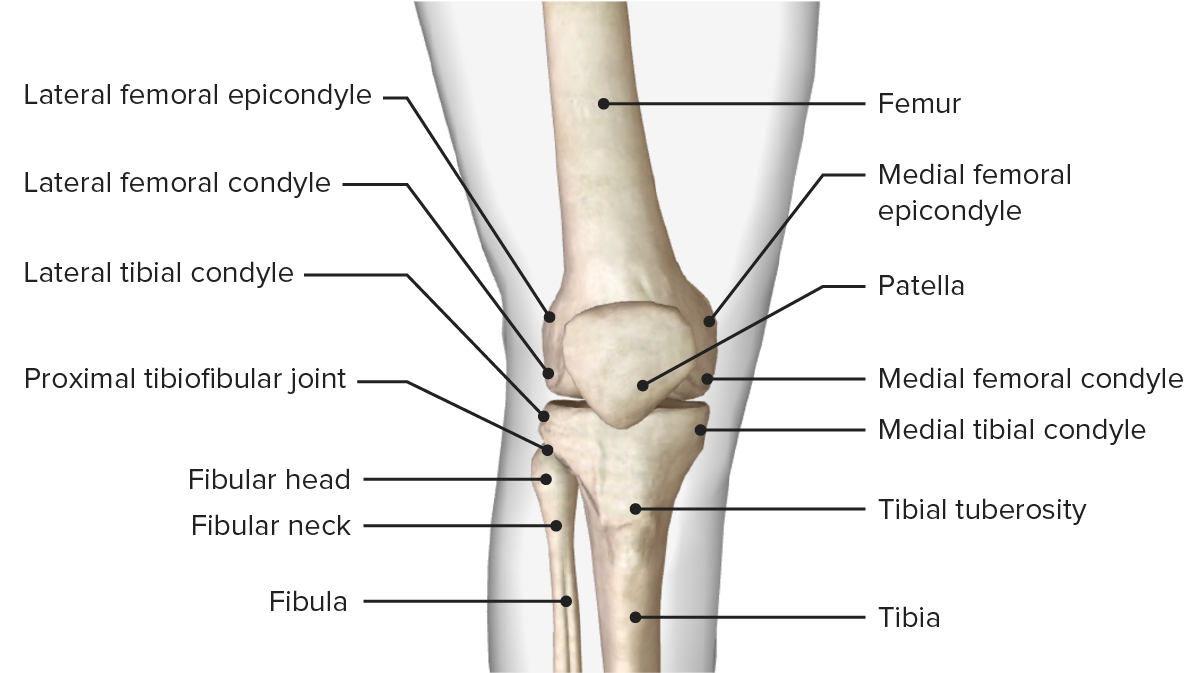
Fémur

  • El hueso más largo y fuerte del cuerpo humano.
  • El fémur se articula con el hueso de la cadera proximalmente y con la rótula y la tibia Tibia The second longest bone of the skeleton. It is located on the medial side of the lower leg, articulating with the fibula laterally, the talus distally, and the femur proximally. Knee Joint: Anatomy distalmente.
  • Articulaciones del fémur distal:
    • Con la tibia Tibia The second longest bone of the skeleton. It is located on the medial side of the lower leg, articulating with the fibula laterally, the talus distally, and the femur proximally. Knee Joint: Anatomy: forma las articulaciones tibiofemorales medial y lateral.
    • Con la rótula: forma la articulación rotulofemoral
  • Puntos de referencia óseos notables del fémur distal:
    • Cóndilos medial y lateral:
      • Cubiertos con cartílago articular
      • Articulan con la tibia Tibia The second longest bone of the skeleton. It is located on the medial side of the lower leg, articulating with the fibula laterally, the talus distally, and the femur proximally. Knee Joint: Anatomy
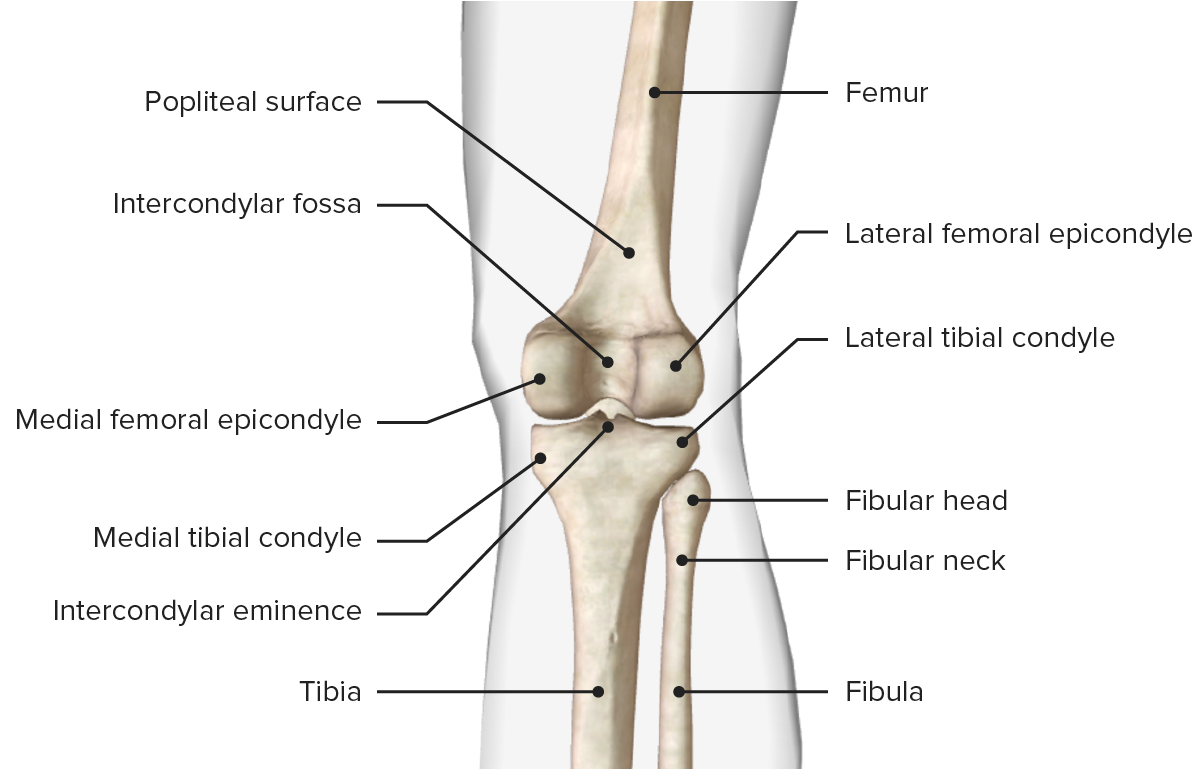
    • La muesca intercondílea separa los LOS Neisseria cóndilos del fémur distal en EN Erythema nodosum is an immune-mediated panniculitis (inflammation of the subcutaneous fat) caused by a type IV (delayed-type) hypersensitivity reaction. It commonly manifests in young women as tender, erythematous nodules on the shins. Erythema Nodosum la parte posterior.
    • Tubérculo aductor:
      • Surge de la porción superior del epicóndilo medial.
      • Sirve como lugar de inserción para los LOS Neisseria músculos aductores.
    • Tróclea femoral:
      • Depresión anterior y distal del fémur
      • Superficie sobre la que se desliza la rótula durante la flexión y extensión

Tibia Tibia The second longest bone of the skeleton. It is located on the medial side of the lower leg, articulating with the fibula laterally, the talus distally, and the femur proximally. Knee Joint: Anatomy

  • También conocida como la espinilla
  • Conecta el fémur con la articulación del tobillo y el pie.
  • Articulaciones de la rodilla:
    • Con el fémur: forma las articulaciones tibiofemorales medial y lateral.
    • Con el peroné: sindesmosis tibioperonea proximal
  • Puntos de referencia óseos notables de la tibia Tibia The second longest bone of the skeleton. It is located on the medial side of the lower leg, articulating with the fibula laterally, the talus distally, and the femur proximally. Knee Joint: Anatomy proximal:
    • Mesetas tibiales medial y lateral: se corresponden anatómicamente con los LOS Neisseria cóndilos femorales
    • Tubérculo de Gerdy: inserción distal de la banda iliotibial en EN Erythema nodosum is an immune-mediated panniculitis (inflammation of the subcutaneous fat) caused by a type IV (delayed-type) hypersensitivity reaction. It commonly manifests in young women as tender, erythematous nodules on the shins. Erythema Nodosum la tibia Tibia The second longest bone of the skeleton. It is located on the medial side of the lower leg, articulating with the fibula laterally, the talus distally, and the femur proximally. Knee Joint: Anatomy anterolateral proximal
    • Tuberosidad tibial: sitio de inserción distal del tendón rotuliano

Rótula

  • Es el hueso sesamoideo más grande del cuerpo.
  • Situado dentro del tendón del cuádriceps femoral
  • Sirve como polea y aumenta la ventaja mecánica durante la extensión de la rodilla.
  • Articulaciones: con el fémur para formar la articulación rotulofemoral

Articulaciones de la Rodilla

Articulación tibiofemoral

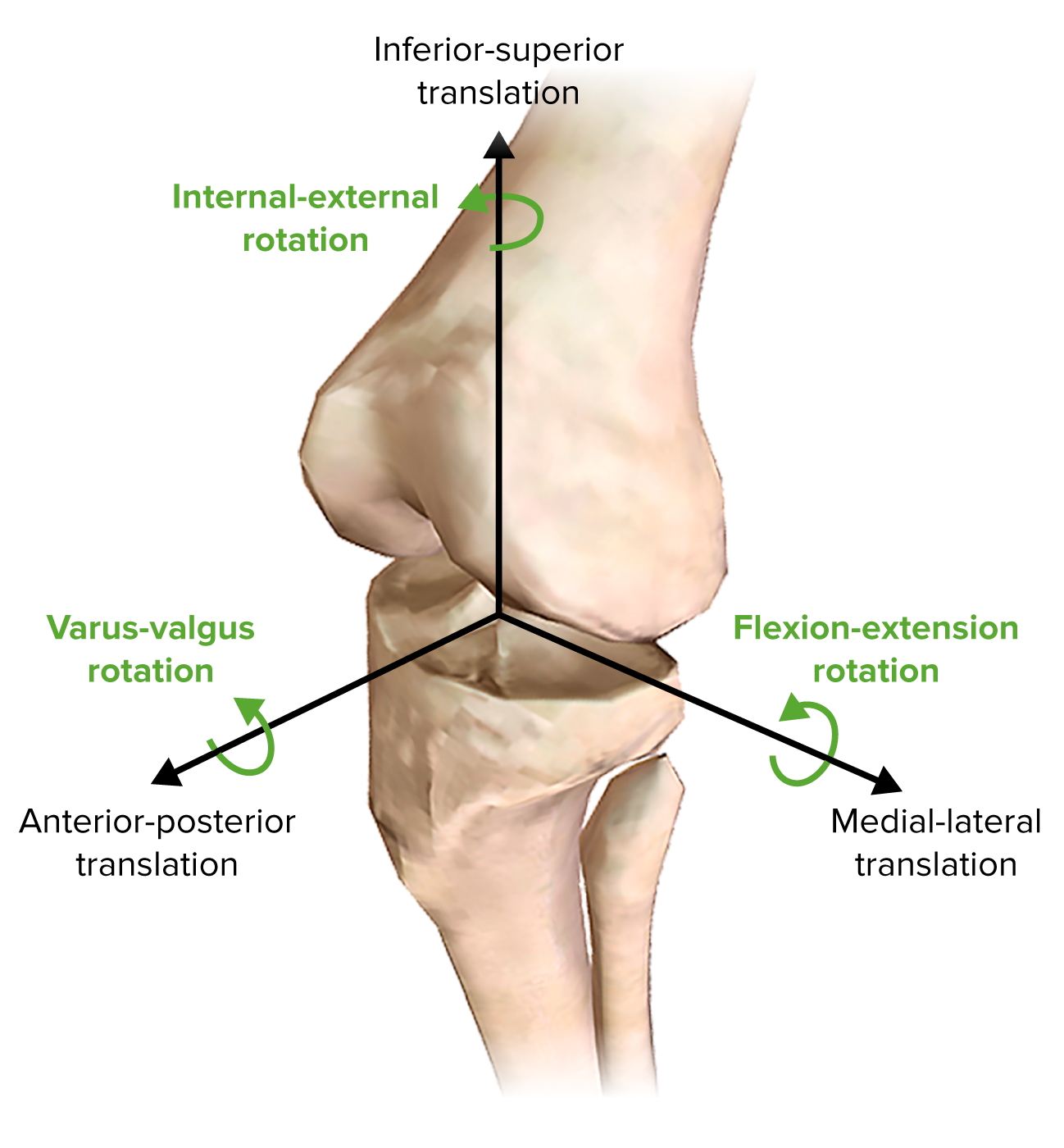
La rodilla es una articulación de bisagra modificada; una doble articulación condiloidea. Aunque los LOS Neisseria movimientos de la rodilla son principalmente de flexión y extensión, tiene un patrón de movimiento complejo que consta de 6 grados de movimiento durante las actividades dinámicas:

  • 3 rotaciones:
    • Flexión/extensión:
      • Movimiento primario
      • El rango de movimiento de la rodilla es de aproximadamente 0–130 grados.
    • Rotación interna/externa: importante al AL Amyloidosis “bloquear” y “desbloquear” la rodilla, pasando de la extensión a la flexión
    • Angulación varo/valgo
  • 3 traslaciones:
    • Compresión/distracción
    • Deslizamiento anterior/posterior: necesario debido a que la superficie más grande de los LOS Neisseria cóndilos femorales distales se desliza sobre las superficies más pequeñas de la meseta tibial
    • Traslación medial/lateral
Movimientos de la rodilla

Movimientos de la rodilla

Imagen por BioDigital, editado por Lecturio
Articulación rotulofemoral

  • El surco troclear del fémur distal se articula con la rótula.
  • La rótula aumenta la ventaja mecánica de la rodilla.
  • La estabilidad la proporciona la anatomía articular más la presencia de múltiples ligamentos rotulofemorales.

Sindesmosis tibioperonea proximal

  • Articulación relativamente inmóvil en EN Erythema nodosum is an immune-mediated panniculitis (inflammation of the subcutaneous fat) caused by a type IV (delayed-type) hypersensitivity reaction. It commonly manifests in young women as tender, erythematous nodules on the shins. Erythema Nodosum la que la porción proximal de la tibia Tibia The second longest bone of the skeleton. It is located on the medial side of the lower leg, articulating with the fibula laterally, the talus distally, and the femur proximally. Knee Joint: Anatomy y el peroné están unidos por ligamentos.
  • Articulación del plano articular entre el cóndilo tibial lateral y la cabeza del peroné
  • Estabilizada por una cápsula robusta y múltiples ligamentos. La cápsula articular recibe apoyo adicional de:
    • Ligamentos tibioperoneo superior anterior y posterior: abarcan la región entre la cabeza del peroné y el cóndilo tibial lateral
    • Ligamento colateral lateral de la articulación de la rodilla
    • Bíceps femoral: proporciona refuerzo al AL Amyloidosis insertarse en EN Erythema nodosum is an immune-mediated panniculitis (inflammation of the subcutaneous fat) caused by a type IV (delayed-type) hypersensitivity reaction. It commonly manifests in young women as tender, erythematous nodules on the shins. Erythema Nodosum la cabeza del peroné
Vista anterior y posterior de la pierna

Vistas anterior y posterior de la tibia, el peroné y las articulaciones tibioperoneas

Imagen por BioDigital, editado por Lecturio
Related videos

Meniscos de la Rodilla

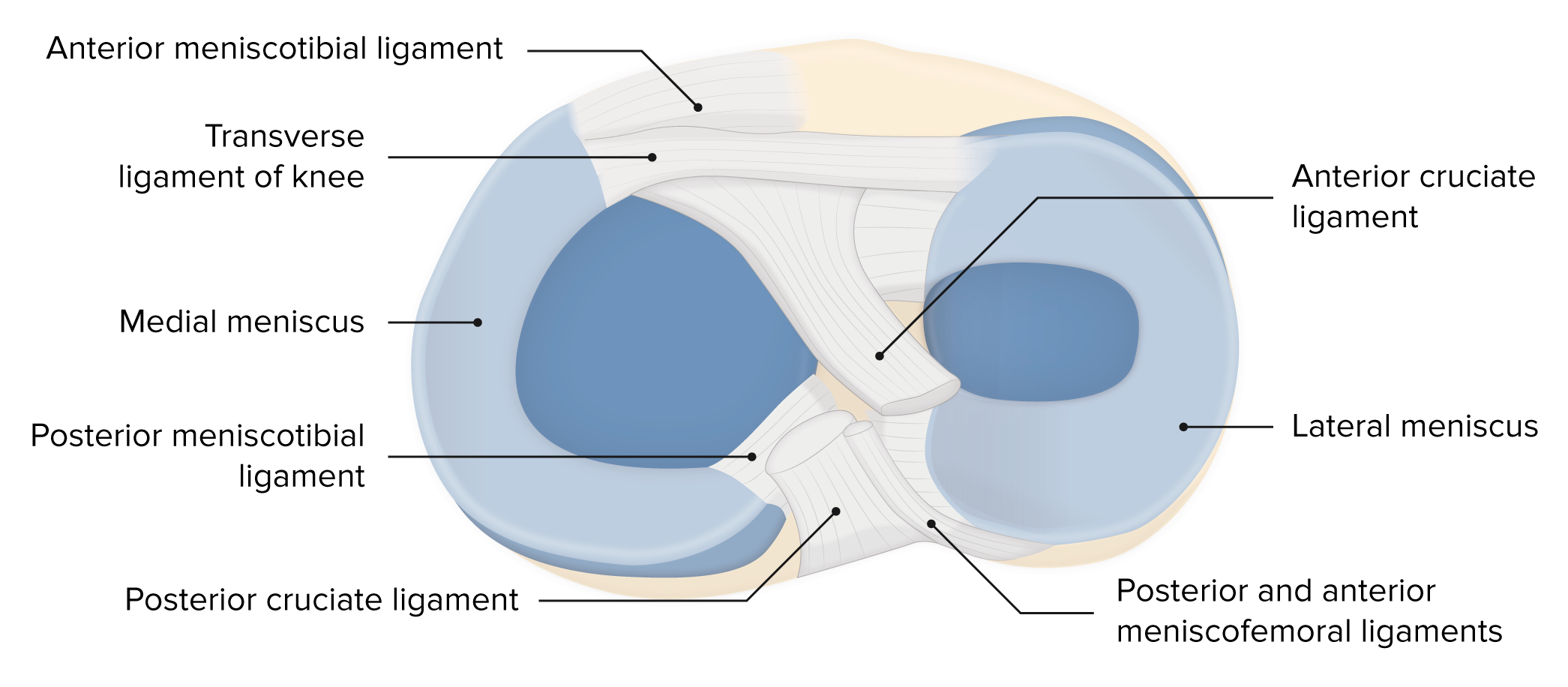
Los LOS Neisseria meniscos son cuñas de fibrocartílago de forma semilunar entre el fémur y la tibia Tibia The second longest bone of the skeleton. It is located on the medial side of the lower leg, articulating with the fibula laterally, the talus distally, and the femur proximally. Knee Joint: Anatomy y están hechos de fibras de colágeno tipo I. Los LOS Neisseria meniscos son amortiguadores, mejoran la congruencia de la articulación tibiofemoral y son vitales para el normal funcionamiento y salud de la rodilla.

Descripción general de la anatomía del menisco

  • El tercio interno es delgado y avascular Avascular Corneal Abrasions, Erosion, and Ulcers.
  • El tercio externo es más grueso y vascularizado.
  • Aumenta la estabilidad de la articulación, mejora la lubricación, limita los LOS Neisseria extremos de flexión y extensión
  • La fijación ligamentosa del menisco aumenta la estabilidad:
    • Los LOS Neisseria ligamentos coronarios (ligamentos meniscotibiales) unen el menisco periférico a las mesetas tibiales.
    • Los LOS Neisseria ligamentos transversos conectan los LOS Neisseria cuernos anteriores del menisco medial y lateral.
    • Los LOS Neisseria ligamentos rotulomeniscales conectan los LOS Neisseria cuernos anteriores del menisco con la rótula.
    • 2 ligamentos meniscofemorales (Wrisberg y Humphrey) unen el menisco lateral posterior al AL Amyloidosis cóndilo femoral medial.

Menisco medial

  • Se superpone a la meseta tibial medial, en EN Erythema nodosum is an immune-mediated panniculitis (inflammation of the subcutaneous fat) caused by a type IV (delayed-type) hypersensitivity reaction. It commonly manifests in young women as tender, erythematous nodules on the shins. Erythema Nodosum forma de C
  • Unido al AL Amyloidosis ligamento colateral tibial, también conocido como ligamento colateral medial

Menisco lateral

  • Se superpone a la meseta tibial lateral, más circular
  • Más móvil que el menisco medial

Movimiento de los LOS Neisseria meniscos

  • Durante la flexión: los LOS Neisseria meniscos se mueven hacia atrás y el menisco lateral se mueve más que el medial.
  • Durante la extensión: los LOS Neisseria meniscos son empujados anteriormente por los LOS Neisseria cóndilos femorales.
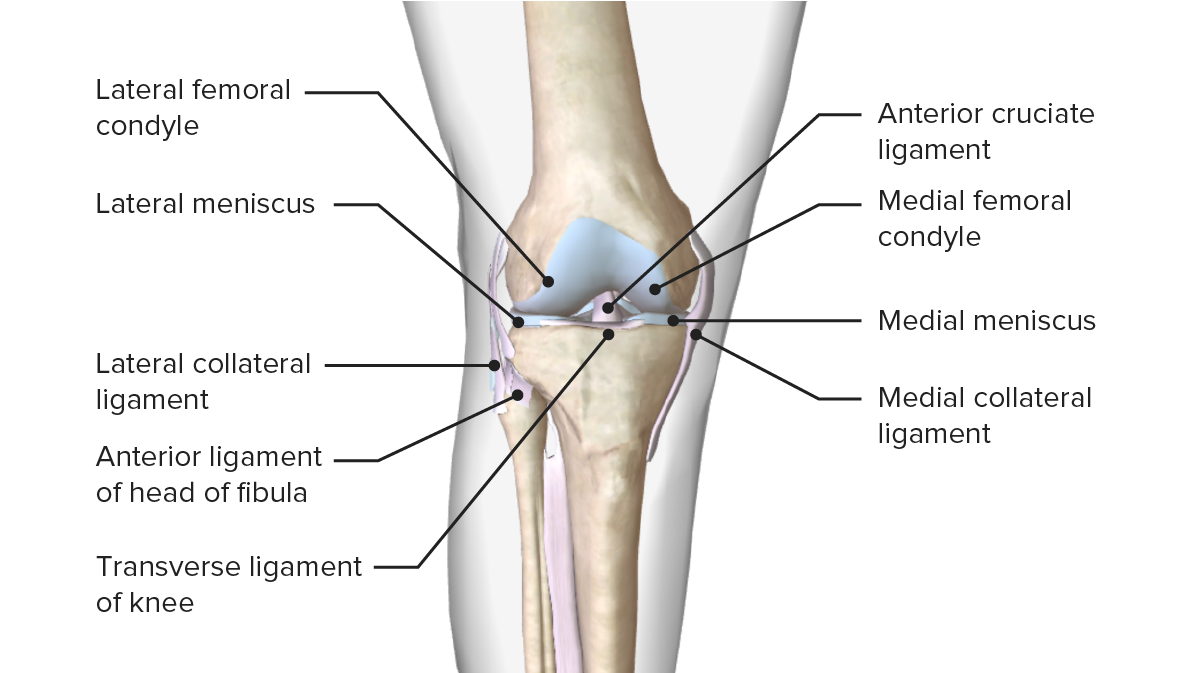
Imagen que muestra los meniscos y su relación con otras superficies articulares que componen la articulación de la rodilla

Imagen que muestra los meniscos y su relación con otras superficies articulares que componen la articulación de la rodilla

Imagen por BioDigital, editado por Lecturio

Estructuras de Soporte de la Rodilla

Membranas

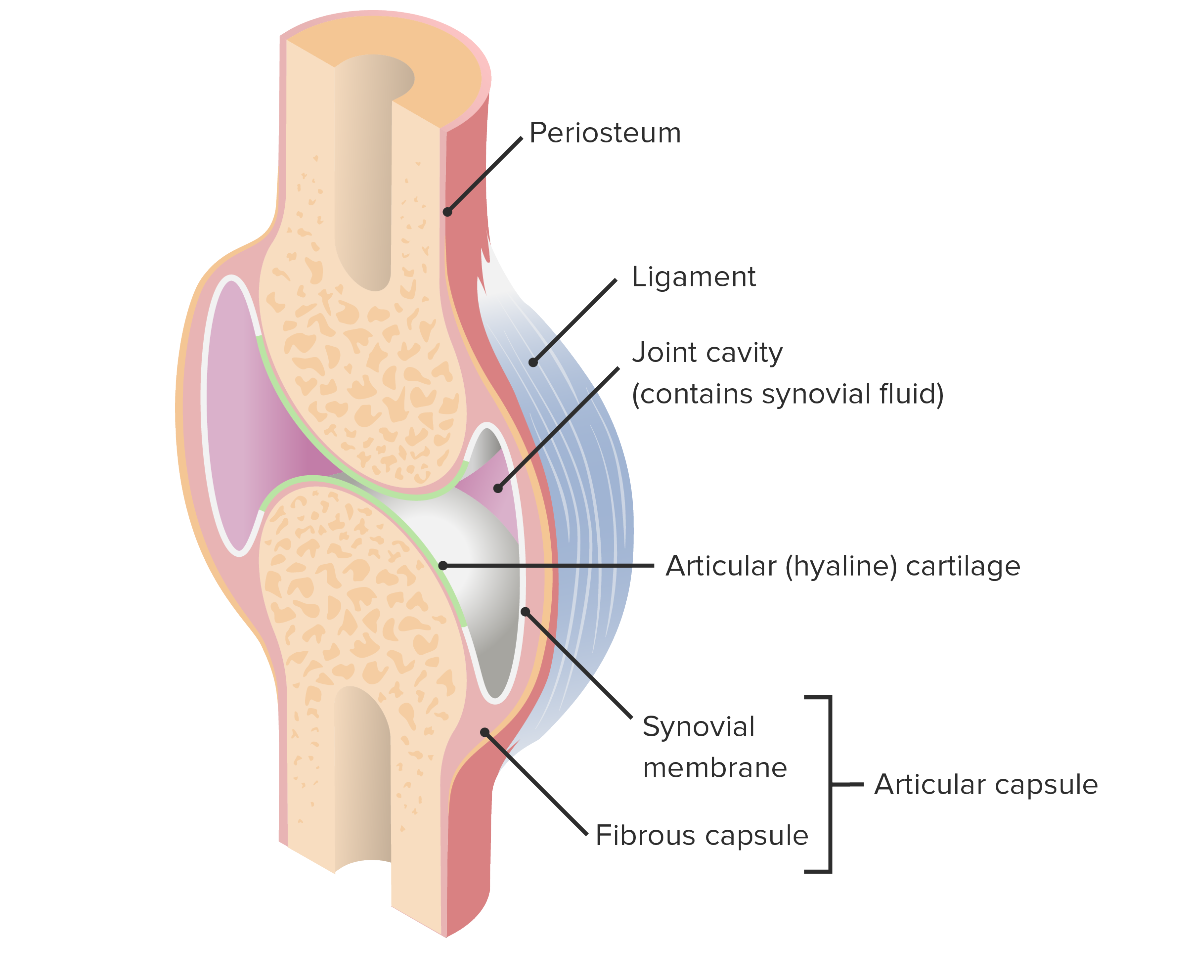
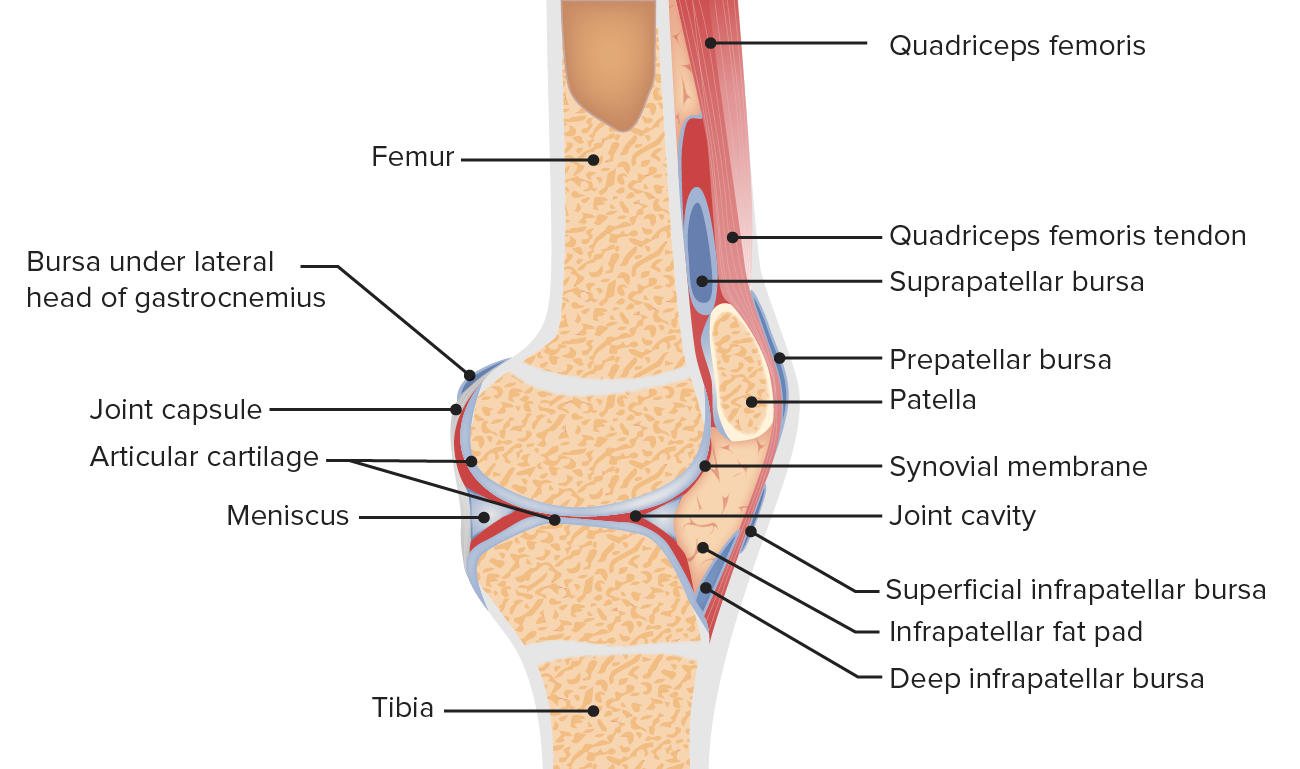
Una cápsula articular de 2 capas proporciona soporte a la rodilla. Estas capas son la membrana fibrosa externa y la membrana sinovial interna.

  • Membrana fibrosa externa:
    • Capa más superficial: Las áreas engrosadas forman los LOS Neisseria ligamentos intrínsecos de la rodilla.
    • Proporciona estabilidad
  • Membrana sinovial interna:
    • Recubre todas las superficies de la cavidad articular dentro de la capa fibrosa, excepto aquellas cubiertas por cartílago articular.
    • Proporciona lubricación; el líquido sinovial lubrica los LOS Neisseria movimientos articulares
    • Se inserta en EN Erythema nodosum is an immune-mediated panniculitis (inflammation of the subcutaneous fat) caused by a type IV (delayed-type) hypersensitivity reaction. It commonly manifests in young women as tender, erythematous nodules on the shins. Erythema Nodosum la periferia del cartílago articular del fémur y la tibia Tibia The second longest bone of the skeleton. It is located on the medial side of the lower leg, articulating with the fibula laterally, the talus distally, and the femur proximally. Knee Joint: Anatomy
Cápsula articular y componentes

Cápsula articular y sus componentes

Imagen por Lecturio. Licencia: CC BY-NC-SA 4.0
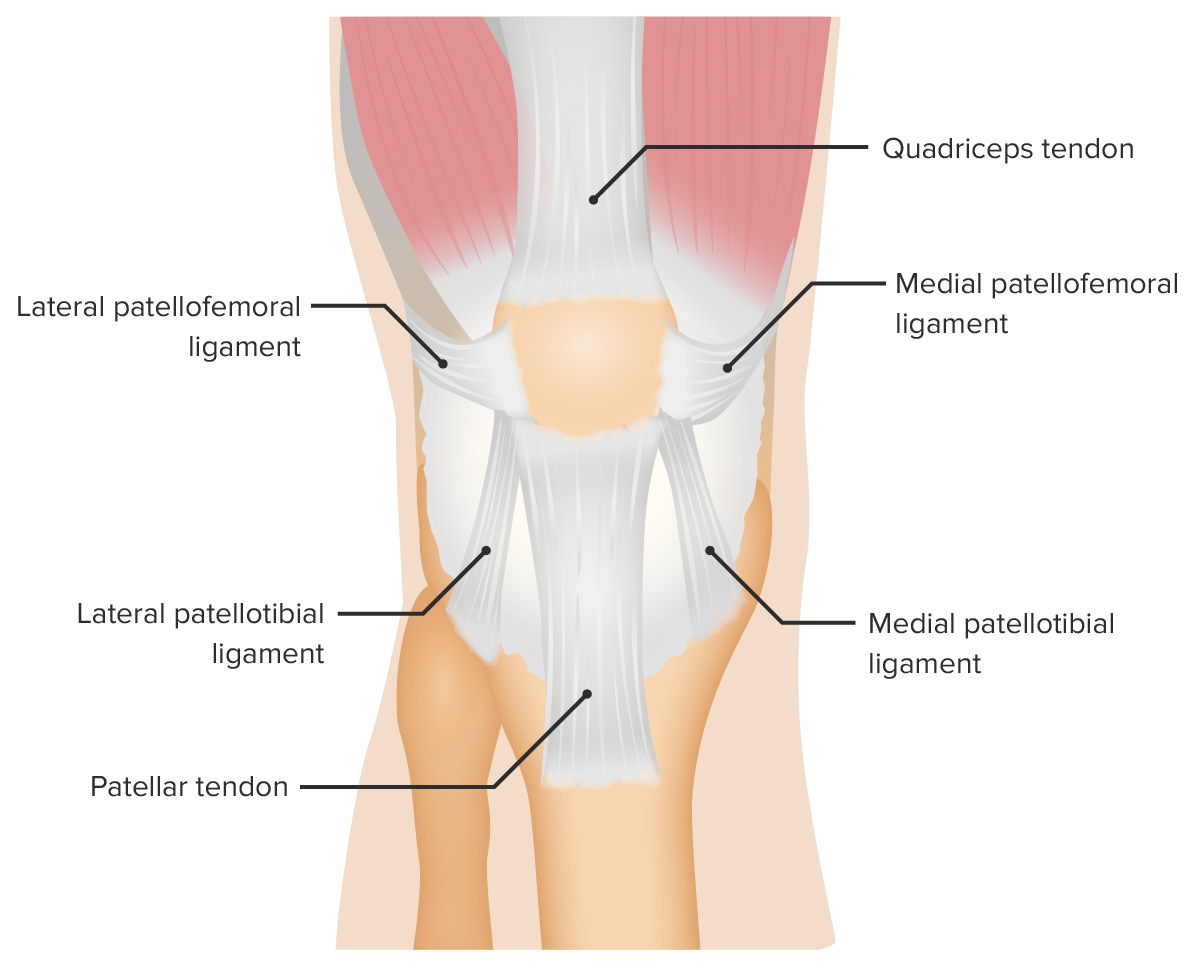
Ligamentos y tendones

Los LOS Neisseria ligamentos y tendones de la rodilla brindan estabilidad a la rodilla durante el movimiento y aumentan la eficiencia de la rodilla.

Tabla: Ligamentos y tendones de la rodilla
Ligamento/tendón Origen Inserción Función
Ligamento cruzado anterior (LCA)
se compone de 2 haces:
  • Haz anteromedial
  • Haz posterolateral
Cóndilo femoral lateral interno Techo de la fosa intercondílea
  • Evita el desplazamiento anterior de la tibia Tibia The second longest bone of the skeleton. It is located on the medial side of the lower leg, articulating with the fibula laterally, the talus distally, and the femur proximally. Knee Joint: Anatomy.
  • Evita la hiperextensión de la rodilla.
  • Evita el deslizamiento posterior del fémur sobre la tibia Tibia The second longest bone of the skeleton. It is located on the medial side of the lower leg, articulating with the fibula laterally, the talus distally, and the femur proximally. Knee Joint: Anatomy
  • Evita el deslizamiento anterior de la tibia Tibia The second longest bone of the skeleton. It is located on the medial side of the lower leg, articulating with the fibula laterally, the talus distally, and the femur proximally. Knee Joint: Anatomy sobre el fémur
Ligamento cruzado posterior (LCP)
se compone de 2 haces:
  • Haz anterolateral
  • Haz posteromedial
Superficie interna del cóndilo femoral medial Área intercondílea posterior de la tibia Tibia The second longest bone of the skeleton. It is located on the medial side of the lower leg, articulating with the fibula laterally, the talus distally, and the femur proximally. Knee Joint: Anatomy
  • Evita el desplazamiento posterior de la tibia Tibia The second longest bone of the skeleton. It is located on the medial side of the lower leg, articulating with the fibula laterally, the talus distally, and the femur proximally. Knee Joint: Anatomy
  • Evita la hiperflexión de la rodilla.
  • Evita el deslizamiento anterior del fémur sobre la tibia Tibia The second longest bone of the skeleton. It is located on the medial side of the lower leg, articulating with the fibula laterally, the talus distally, and the femur proximally. Knee Joint: Anatomy
  • Evita el deslizamiento posterior de la tibia Tibia The second longest bone of the skeleton. It is located on the medial side of the lower leg, articulating with the fibula laterally, the talus distally, and the femur proximally. Knee Joint: Anatomy sobre el fémur
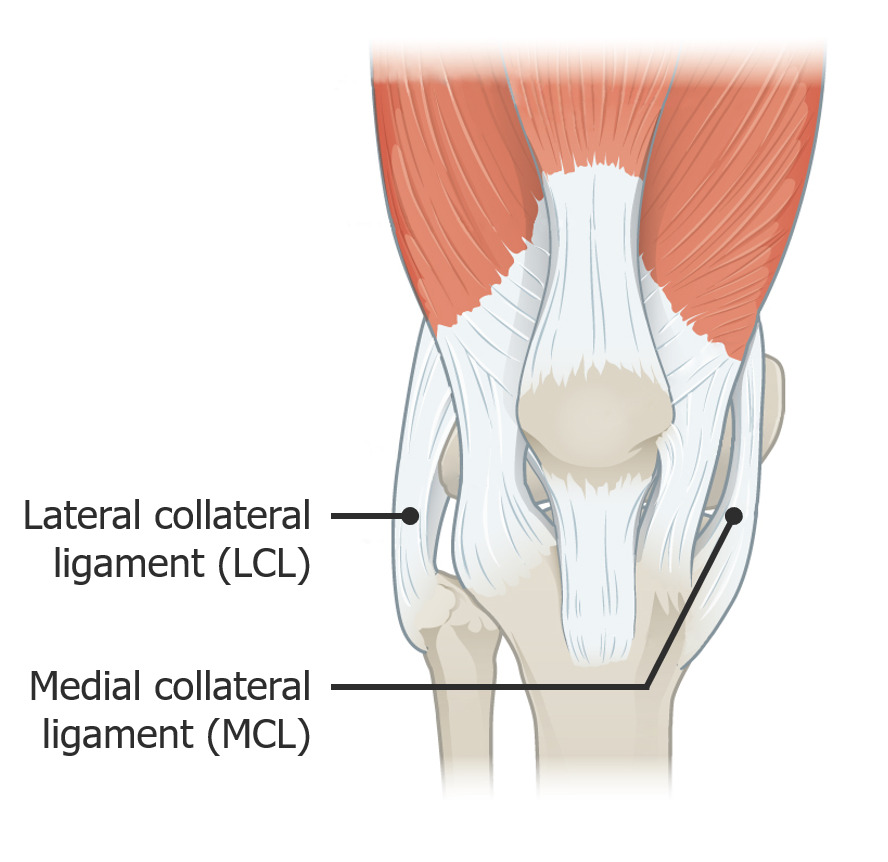
Ligamento colateral medial (LCM) Epicóndilo femoral medial Cóndilo medial de la tibia Tibia The second longest bone of the skeleton. It is located on the medial side of the lower leg, articulating with the fibula laterally, the talus distally, and the femur proximally. Knee Joint: Anatomy Estabiliza la articulación de la rodilla frente al AL Amyloidosis estrés en EN Erythema nodosum is an immune-mediated panniculitis (inflammation of the subcutaneous fat) caused by a type IV (delayed-type) hypersensitivity reaction. It commonly manifests in young women as tender, erythematous nodules on the shins. Erythema Nodosum valgo
Ligamento colateral lateral/peroneo Epicóndilo femoral lateral Cabeza del peroné Estabiliza la articulación de la rodilla frente al AL Amyloidosis estrés en EN Erythema nodosum is an immune-mediated panniculitis (inflammation of the subcutaneous fat) caused by a type IV (delayed-type) hypersensitivity reaction. It commonly manifests in young women as tender, erythematous nodules on the shins. Erythema Nodosum varo.
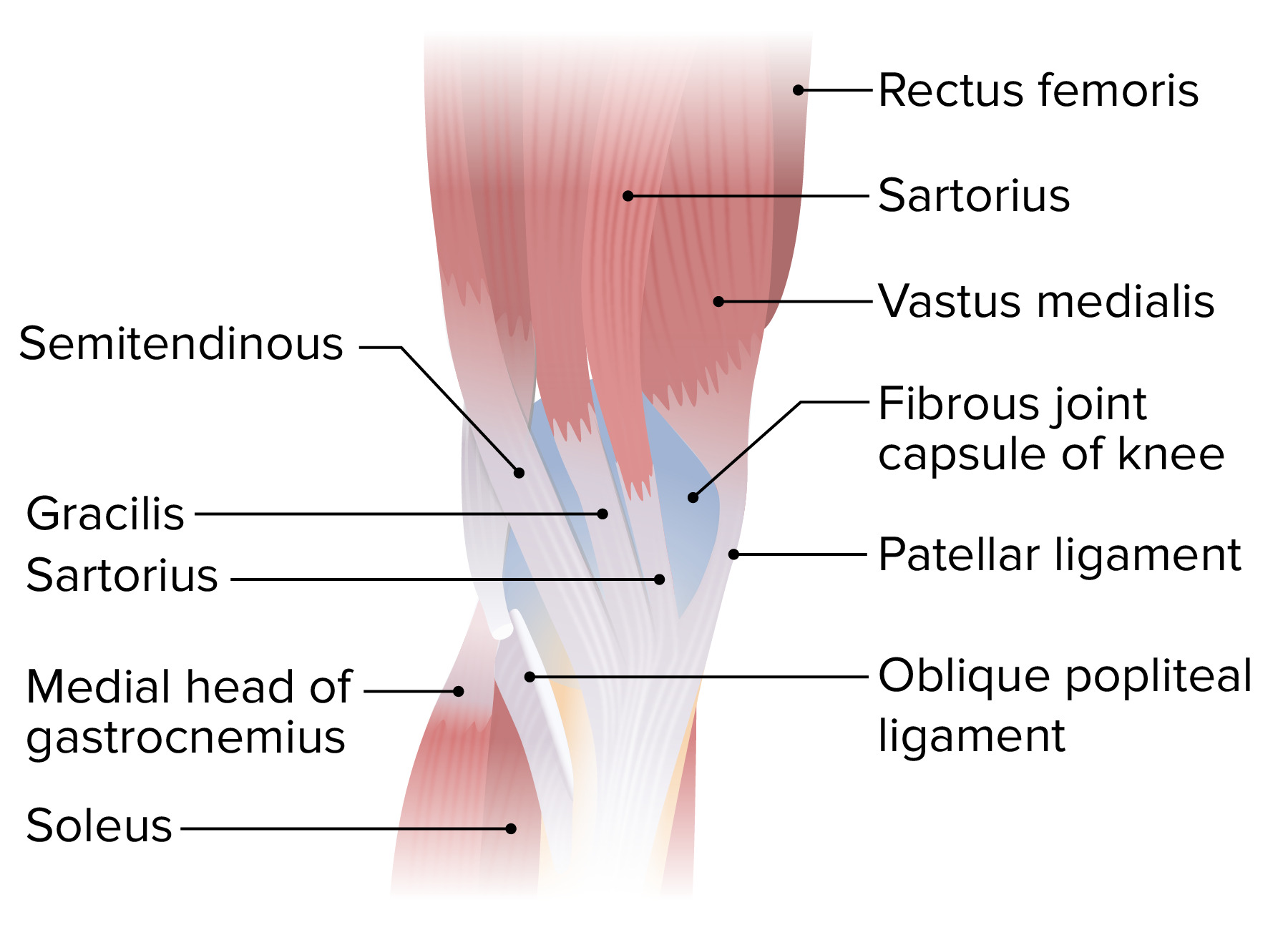
Ligamento rotuliano Rótula distal Tuberosidad de la tibia Tibia The second longest bone of the skeleton. It is located on the medial side of the lower leg, articulating with the fibula laterally, the talus distally, and the femur proximally. Knee Joint: Anatomy Componente del mecanismo extensor de la rodilla
Tendón del cuádriceps Músculos cuádriceps Rótula proximal Componente del mecanismo extensor de la rodilla

Bursas

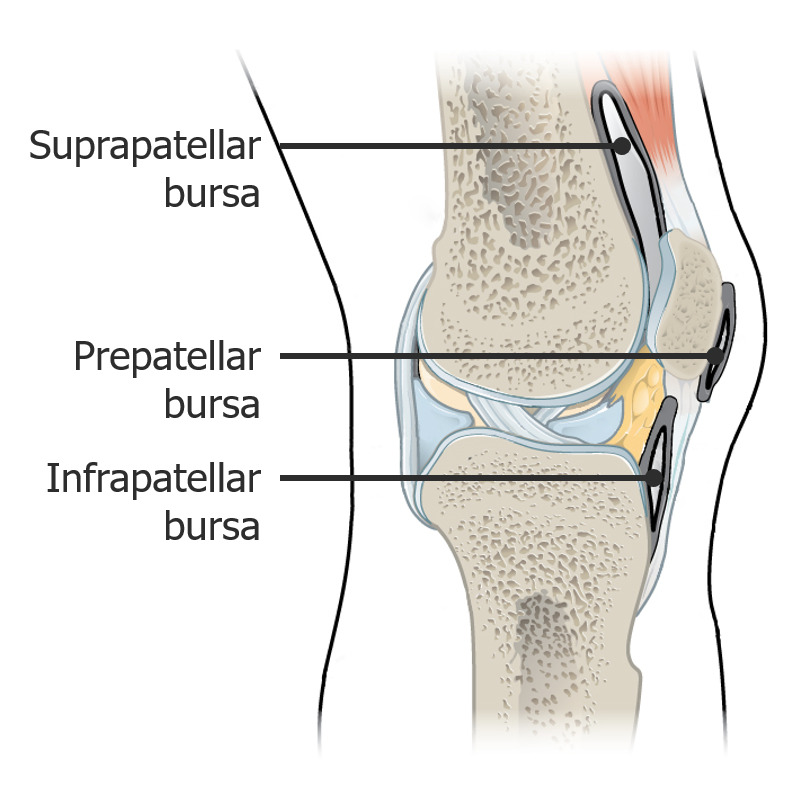
Las bursas son membranas serosas/sacos llenos de líquido sinovial con una pequeña cantidad de líquido que facilita el movimiento alrededor de una articulación. Hay múltiples bursas descritas alrededor de la articulación de la rodilla.

Tabla: Bursas de la articulación de la rodilla
Bursas Localización
Suprapatelar Entre el fémur y el tendón del músculo cuádriceps
Prerrotuliana Entre la rótula y la piel
Infrapatelar (superficial y profunda)
  • Infrapatelar superficial: entre la tuberosidad tibial y la piel.
  • Infrapatelar profunda: entre el tendón rotuliano posterior y la tibia Tibia The second longest bone of the skeleton. It is located on the medial side of the lower leg, articulating with the fibula laterally, the talus distally, and the femur proximally. Knee Joint: Anatomy
Pata de ganso Rodilla medial/ tibia Tibia The second longest bone of the skeleton. It is located on the medial side of the lower leg, articulating with the fibula laterally, the talus distally, and the femur proximally. Knee Joint: Anatomy medial proximal

Irrigación de la Rodilla

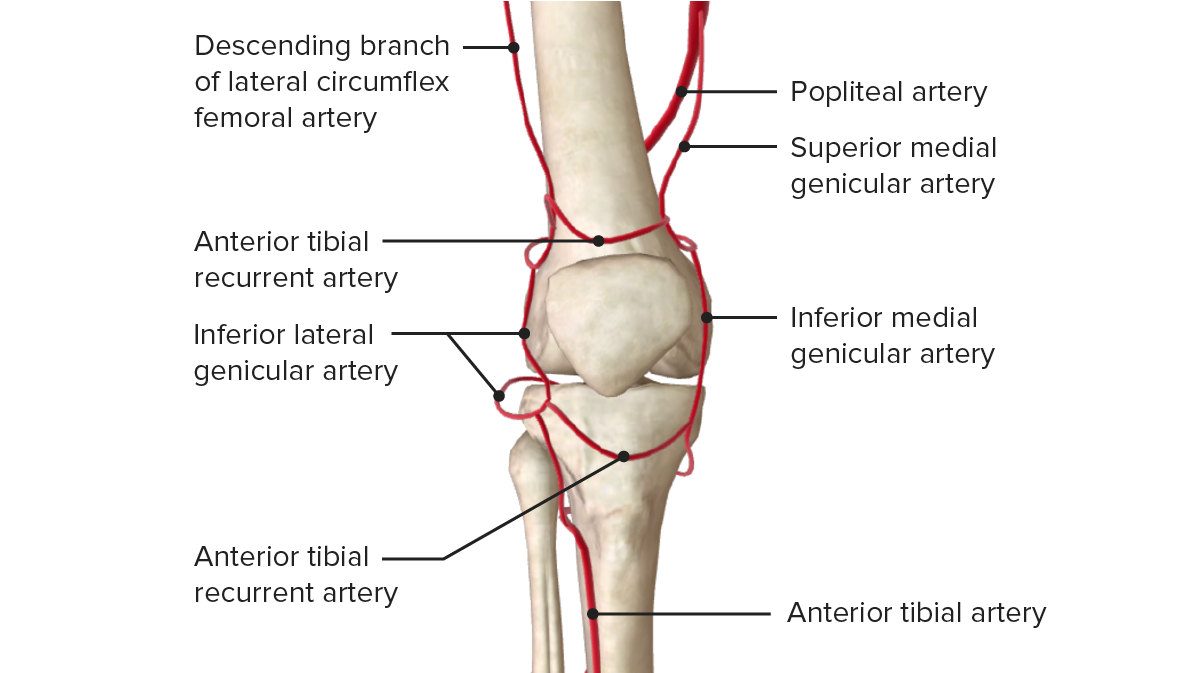
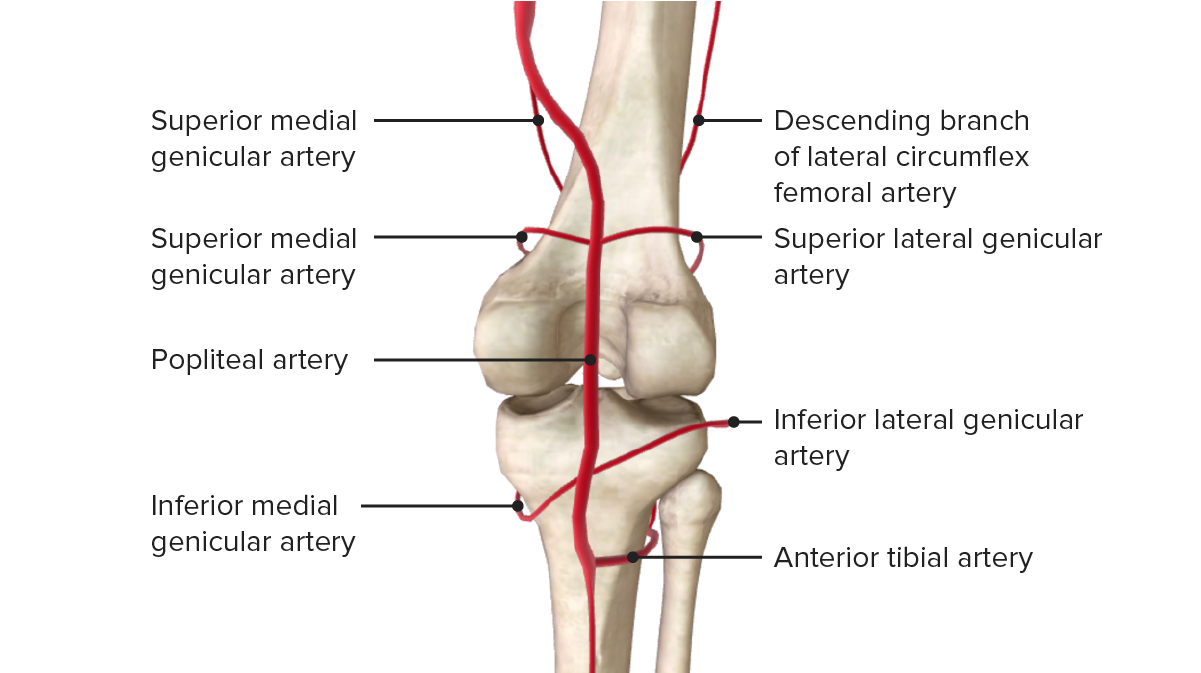
  • La irrigación se logra a través de ramas de la arteria poplítea:
    • Situada en EN Erythema nodosum is an immune-mediated panniculitis (inflammation of the subcutaneous fat) caused by a type IV (delayed-type) hypersensitivity reaction. It commonly manifests in young women as tender, erythematous nodules on the shins. Erythema Nodosum la fosa poplítea posterior a la cápsula posterior.
    • Múltiples ramas a la rodilla
    • Se convierte en EN Erythema nodosum is an immune-mediated panniculitis (inflammation of the subcutaneous fat) caused by a type IV (delayed-type) hypersensitivity reaction. It commonly manifests in young women as tender, erythematous nodules on the shins. Erythema Nodosum el tronco tibioperoneo después del inicio de la arteria tibial anterior
    • El tronco tibioperoneo continúa como la arteria tibial posterior y la arteria peronea hasta la parte inferior de la pierna.
  • Las anastomosis arteriales sobre la rodilla incluyen:
    • Múltiples ramas geniculares de la arteria poplítea
    • Ramas de la arteria tibial anterior y posterior
    • Rama de la arteria circunfleja femoral lateral
  • El sistema venoso:
    • Principalmente las venas poplítea y femoral.
    • Las venas normalmente discurren con sus arterias correspondientes en EN Erythema nodosum is an immune-mediated panniculitis (inflammation of the subcutaneous fat) caused by a type IV (delayed-type) hypersensitivity reaction. It commonly manifests in young women as tender, erythematous nodules on the shins. Erythema Nodosum la rodilla.

Inervación de la Rodilla

  • La inervación de la rodilla se logra principalmente a través de:
    • Nervio femoral al AL Amyloidosis vasto lateral, intermedio y medial
    • Nervio ciático:
      • Ramas geniculares del nervio peroneo común al AL Amyloidosis recto femoral y la cabeza corta del bíceps femoral
      • Nervio tibial a la cabeza larga del bíceps femoral, semimembranoso y semitendinoso
    • División posterior del nervio obturador a través de una rama articular sin nombre a la articulación de la rodilla
  • Ley de Hilton: la inervación de una articulación generalmente se realiza a través de una rama de un nervio motor Motor Neurons which send impulses peripherally to activate muscles or secretory cells. Nervous System: Histology que inerva un músculo, que se extiende y actúa sobre esa articulación.

Relevancia Clínica

Las siguientes afecciones comunes están asociadas con la rodilla:

  • Lesión del ligamento cruzado anterior (LCA): es una lesión común en EN Erythema nodosum is an immune-mediated panniculitis (inflammation of the subcutaneous fat) caused by a type IV (delayed-type) hypersensitivity reaction. It commonly manifests in young women as tender, erythematous nodules on the shins. Erythema Nodosum la rodilla durante las actividades deportivas. La etiología más frecuente es una lesión de pivote sin contacto. Más frecuente en EN Erythema nodosum is an immune-mediated panniculitis (inflammation of the subcutaneous fat) caused by a type IV (delayed-type) hypersensitivity reaction. It commonly manifests in young women as tender, erythematous nodules on the shins. Erythema Nodosum mujeres. La mayoría de las lesiones del LCA se tratan con reconstrucción quirúrgica.
  • Lesión del ligamento cruzado posterior(LCP): una lesión que resulta principalmente de un golpe directo en EN Erythema nodosum is an immune-mediated panniculitis (inflammation of the subcutaneous fat) caused by a type IV (delayed-type) hypersensitivity reaction. It commonly manifests in young women as tender, erythematous nodules on the shins. Erythema Nodosum la tibia Tibia The second longest bone of the skeleton. It is located on the medial side of the lower leg, articulating with the fibula laterally, the talus distally, and the femur proximally. Knee Joint: Anatomy anterior proximal en EN Erythema nodosum is an immune-mediated panniculitis (inflammation of the subcutaneous fat) caused by a type IV (delayed-type) hypersensitivity reaction. It commonly manifests in young women as tender, erythematous nodules on the shins. Erythema Nodosum una rodilla flexionada (lesión del tablero). Una lesión de LCP también puede ocurrir por hiperextensión. El tratamiento es con aparatos ortopédicos y rehabilitación. Algunos atletas pueden requerir una reconstrucción quirúrgica.
  • Luxaciones de rodilla: generalmente son el resultado de traumatismos secundarios de alta energía, como una caída desde una altura o accidentes automovilísticos. La obesidad mórbida es un factor de riesgo para las luxaciones de rodilla de baja energía. Las luxaciones suelen ser anteriores o posteriores, según el mecanismo de la lesión. La lesión por hiperextensión conduce a luxaciones anteriores. El tratamiento implica la reducción inmediata y la evaluación del sistema vascular. La evaluación vascular incluye exámenes seriados y puede implicar la exploración quirúrgica del sistema arterial. La interrupción del suministro de sangre puede provocar isquemia aguda, gangrena e incluso amputación.
  • Luxación de la rótula: puede ocurrir de forma aguda por un traumatismo o de forma crónica debido a la laxitud del ligamento. La rótula suele dislocarse lateralmente. La luxación recurrente puede resultar en EN Erythema nodosum is an immune-mediated panniculitis (inflammation of the subcutaneous fat) caused by a type IV (delayed-type) hypersensitivity reaction. It commonly manifests in young women as tender, erythematous nodules on the shins. Erythema Nodosum artritis rotulofemoral. Los LOS Neisseria factores de riesgo comunes incluyen laxitud ligamentosa generalizada y aumento del ángulo Q. Los LOS Neisseria tratamientos quirúrgicos comunes incluyen la reconstrucción del ligamento rotulofemoral medial y/o la osteotomía de la tuberosidad tibial.
  • Lesiones de menisco: los LOS Neisseria desgarros de menisco se observan de forma aguda en EN Erythema nodosum is an immune-mediated panniculitis (inflammation of the subcutaneous fat) caused by a type IV (delayed-type) hypersensitivity reaction. It commonly manifests in young women as tender, erythematous nodules on the shins. Erythema Nodosum pacientes más jóvenes y generalmente se atribuyen a la degeneración en EN Erythema nodosum is an immune-mediated panniculitis (inflammation of the subcutaneous fat) caused by a type IV (delayed-type) hypersensitivity reaction. It commonly manifests in young women as tender, erythematous nodules on the shins. Erythema Nodosum pacientes mayores. En EN Erythema nodosum is an immune-mediated panniculitis (inflammation of the subcutaneous fat) caused by a type IV (delayed-type) hypersensitivity reaction. It commonly manifests in young women as tender, erythematous nodules on the shins. Erythema Nodosum general, los LOS Neisseria desgarros del menisco medial son más frecuentes. La descripción de los LOS Neisseria desgarros de menisco se basa en EN Erythema nodosum is an immune-mediated panniculitis (inflammation of the subcutaneous fat) caused by a type IV (delayed-type) hypersensitivity reaction. It commonly manifests in young women as tender, erythematous nodules on the shins. Erythema Nodosum la ubicación y el patrón del desgarro.
  • Síndrome de dolor Dolor Inflammation rotulofemoral: es un trastorno común de la rodilla que se manifiesta como dolor Dolor Inflammation que surge de la articulación rotulofemoral o de los LOS Neisseria tejidos blandos que la rodean. Hay muchas etiologías del síndrome de dolor Dolor Inflammation rotulofemoral.
  • Bursitis/tendinopatía del pes anserinus Pes anserinus Thigh: Anatomy (pata de ganso): es el nombre anatómico dado a los LOS Neisseria tendones conjuntos de los LOS Neisseria músculos sartorio, grácil y semitendinoso que se insertan en EN Erythema nodosum is an immune-mediated panniculitis (inflammation of the subcutaneous fat) caused by a type IV (delayed-type) hypersensitivity reaction. It commonly manifests in young women as tender, erythematous nodules on the shins. Erythema Nodosum la superficie anteromedial de la tibia Tibia The second longest bone of the skeleton. It is located on the medial side of the lower leg, articulating with the fibula laterally, the talus distally, and the femur proximally. Knee Joint: Anatomy proximal. Los LOS Neisseria tendones pueden volverse dolorosos debido a bursitis o tendinopatía.

Referencias

  1. Meyler, Z. (2018). Knee Anatomy. Arthritis-health. Retrieved May 24, 2021, from https://www.arthritis-health.com/types/joint-anatomy/knee-anatomy
  2. Drake, R.L., Vogl, A.W., Mitchell, A.W.M. (2014). Gray’s Anatomy for Students (3rd ed.). Philadelphia, PA: Churchill Livingstone.
  3. Moore, K.L., Dalley, A.F., Agur, A.M.R. (2014). Clinically Oriented Anatomy (7th ed.). Philadelphia, PA: Lippincott Williams & Wilkins.

¡Crea tu cuenta gratis o inicia una sesión para seguir leyendo!

Regístrate ahora y obtén acceso gratuito a Lecturio con páginas de concepto, videos médicos y cuestionarios para tu educación médica.

User Reviews

Que tengas una sesión de estudio alegre y navideña 🎁 Ahorra 50% en todos los planes >>

Details