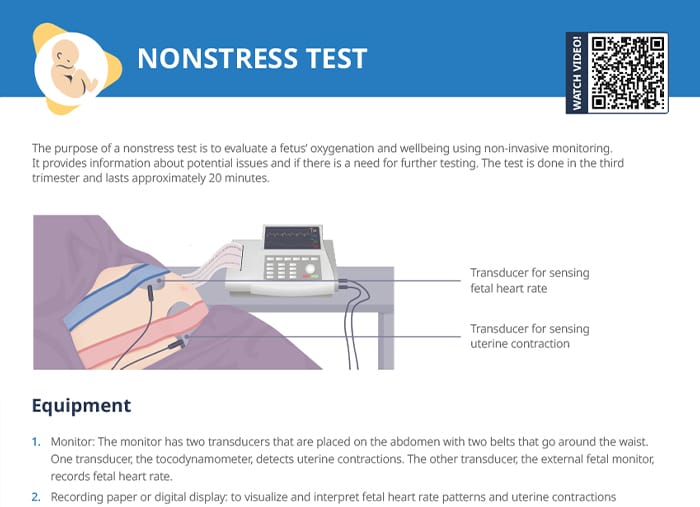


A fetal non-stress test is a noninvasive assessment method used as an indication of fetal oxygenation and confirmation of fetal wellbeing. It determines the fetal heart rate response to its own movement.
Non-stress tests are done during the 3rd trimester. They may be ordered in response to a noted complication or problem, or in higher-risk pregnancies in mothers over 35 or with chronic conditions.
The interpretation of a non-stress test is done by looking at the fetal heart rate. The test result can be classified as reactive or non-reactive. The expectation is that a fetal heart rate responds to the fetus moving.
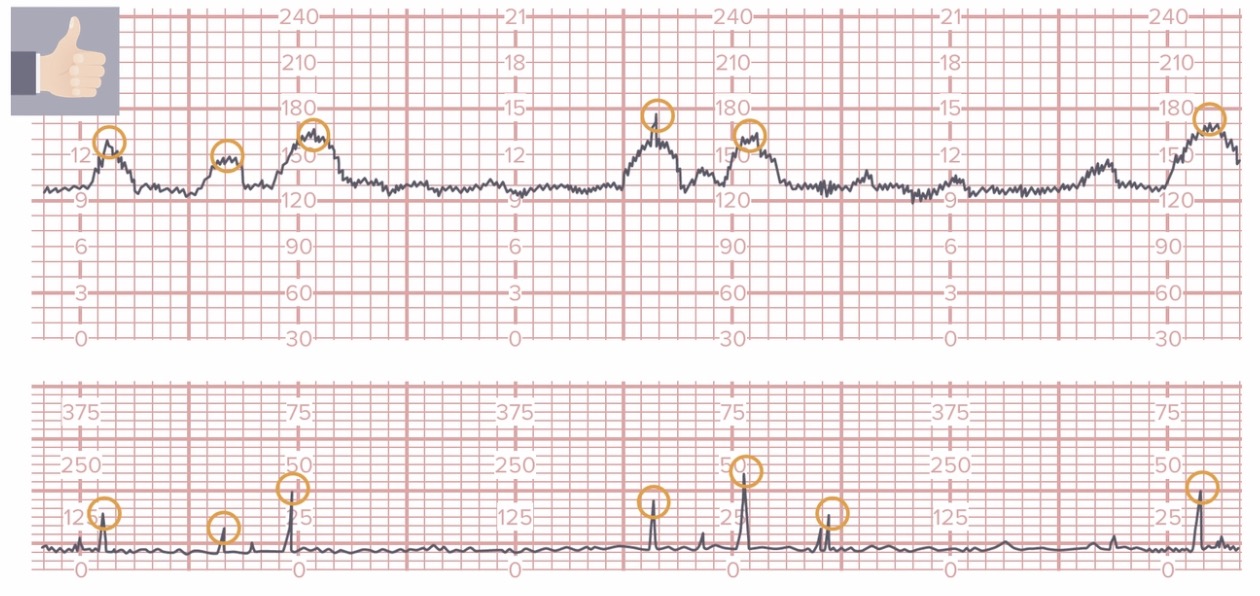
A reactive non-stress test is the reassuring outcome: The fetus should be able to react. It is defined as two or more fetal heart rate accelerations reaching a peak of at least 15/min above the baseline rate; lasting at least 15 seconds from onset to return to baseline, in a 20-minute period.
In the example below, you can see a reactive non-stress test result:
A non-stress test is non-reactive if it does not meet acceleration criteria for a reactive non-stress test.
The fetal heart rate should be monitored for at least 40 minutes before interpreting the test as non-reactive, since sleep cycles or other factors may cause the fetus to be inactive for a while without it being reason for concern.