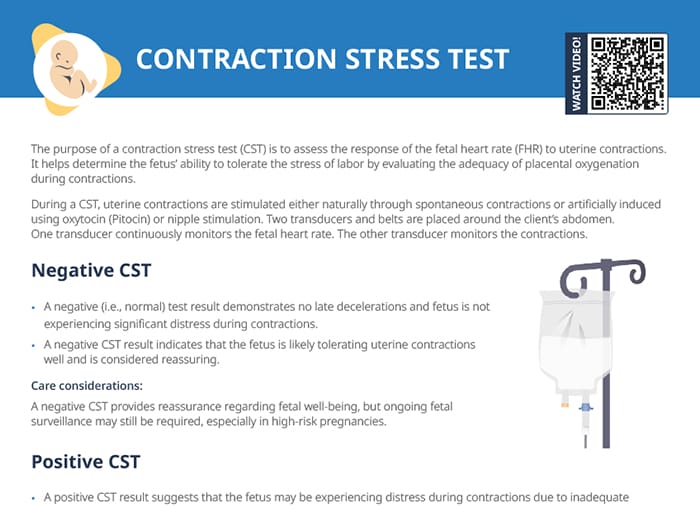


A contraction stress test helps gauge how well the fetus is going to tolerate the stress of labor by assessing how the fetal heart rate responds to uterine contractions.
During the test, uterine contractions are stimulated in one of 2 ways:
With either method, the goal is to achieve three contractions within 10 minutes to mimic labor.
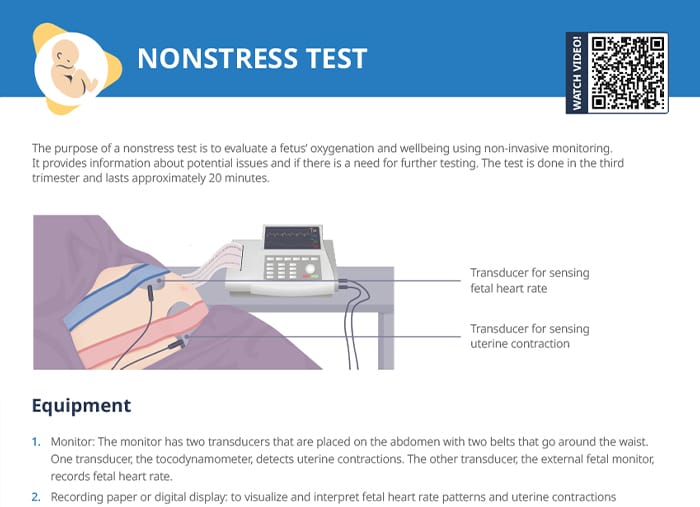
Two transducers and belts are placed around the client’s abdomen. One transducer continuously monitors the fetal heart rate. The other transducer monitors the contractions.
When monitoring the fetal heart rate, the following are expected or unexpected:
The contraction stress test looks for the a fetal response to stress (contractions), while a non-stress test checks for the ability of the fetus’ movements and heart rate to react to changes. Therefore, the outcome of a contraction stress test should ideally be negative, since the fetus should handle stress without showing warning signs, while the ideal outcome of a non-stress test is positive, since the fetus should be able to react.
Tip: For contraction stress tests, a negative result is a good thing, and a positive result is reason for concern.
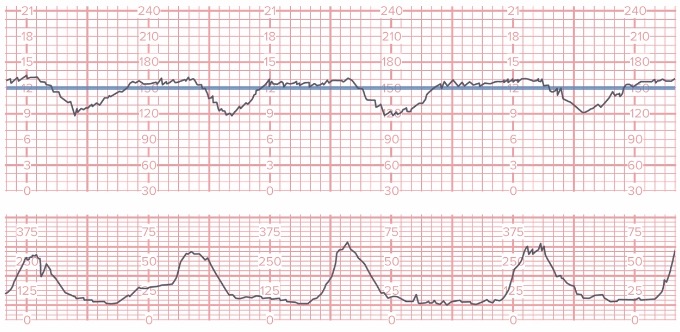
A positive result is defined as late decelerations following >= 50% of contractions. This is caused by uterine placental insufficiency leading to insufficient blood flow between the uterus and the placenta. It indicates that the fetus has shown signs of stress under the contractions.
A positive test result requires further assessment to determine the appropriate management strategy. Interventions such as close monitoring or expedited delivery may be warranted.
Example:
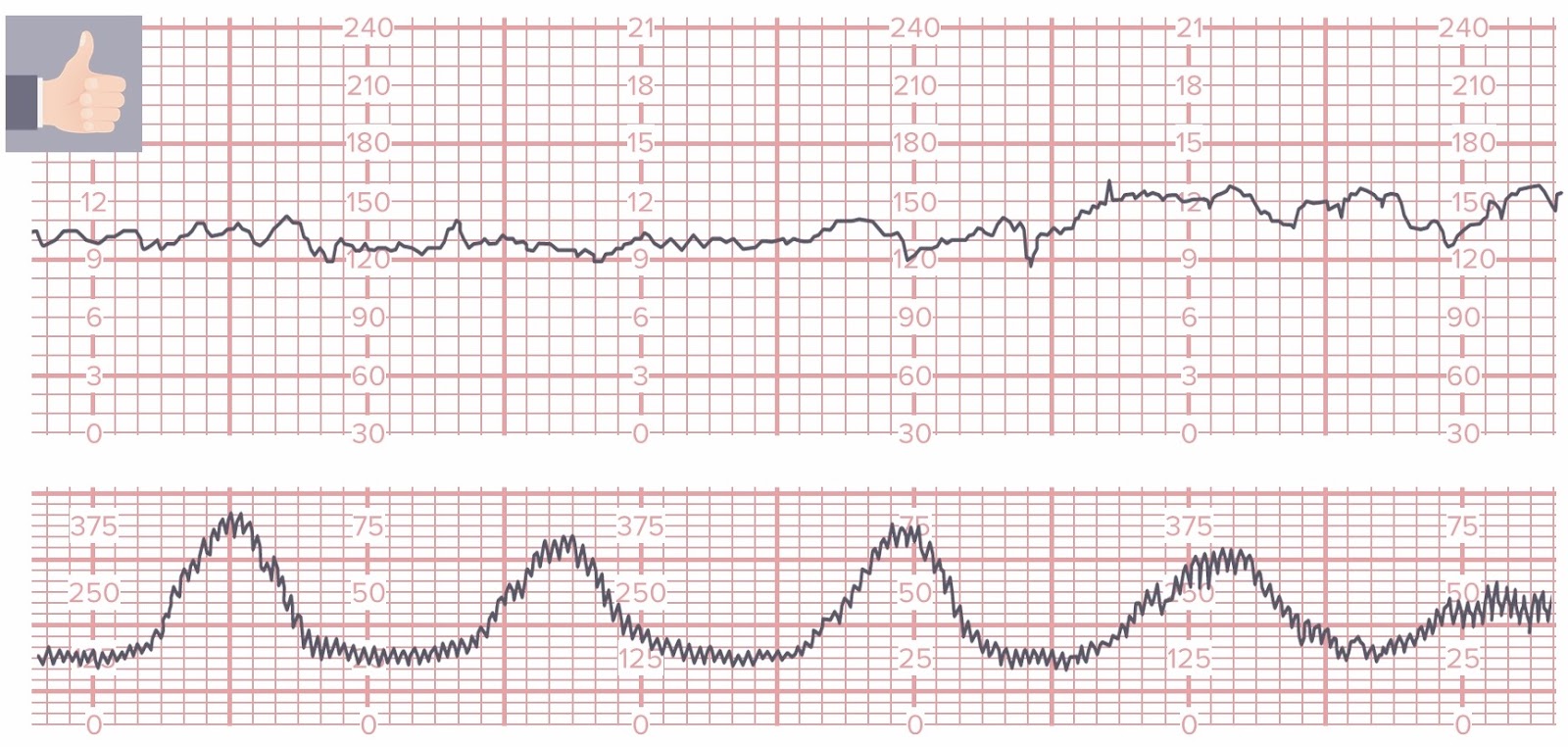
A negative contraction stress test is the normal outcome that has no warning signs or causes for concern. While reassuring regarding fetal wellbeing, ongoing fetal surveillance may still be required especially for high-risk pregnancies.
A negative test result is defined as the fetal heart rate showing no late decelerations or significant variable decelerations during the simulated labor. The image below shows no late or variable decelerations.